As the Earth continues to warm at a worrying rate, scientists continue to work to understand the processes and mechanisms at play. Amidst the myriad of climate-related theories and discussions, the clathrate gun hypothesis stands out not only for its intriguing name but for the profound implications it might have on our understanding of global warming events.
Delving into this hypothesis is akin to reading a detective novel written by Mother Earth, with clues hidden deep beneath the ocean and Arctic ice. It’s a great example of how scientists attempt to predict the future by unpicking the mysteries of the past.
In some ways, we’ve become a little jaded when it comes to news from Mars, which almost always has to do with the Ingenuity helicopter completing yet another successful flight. And so it was with the report of flight number 54 — almost. It turns out that the previous flight, which was conducted on July 22, suffered a glitch that cut the flight short by forcing an immediate landing. We had either completely missed that in the news, or NASA wasn’t forthcoming with the news, perhaps until they knew more. But the details of the error are interesting and appear related to a glitch that happened 46 flights before, way back in May of 2021, that involves dropped frames from the video coming from the helicopter’s down-facing navigational camera. When this first cropped up back on flight six, it was only a couple of missed frames that nearly crashed the craft, thanks to confusion between the video stream and the inertial data. Flight engineers updated the aircraft’s software to allow for a little more flexibility with dropped frames, which worked perfectly up until the aborted flight 53.
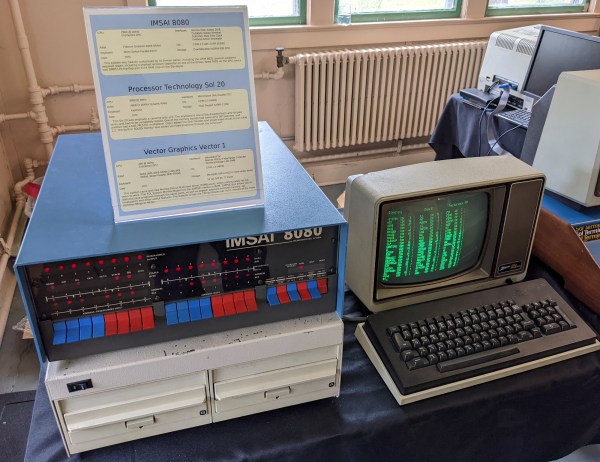
I recently dropped in on one of the Vintage Computer Festival events, and it made me think about why people — including myself — are fascinated with old computer technology. In my case, I lived through a lot of it, and many of the people milling around at VCF did too, so it could just be nostalgia. But there were also young people there.
Out of curiosity, I asked people about the appeal of the old computers on display there. Overwhelmingly, the answer was: you can understand the whole system readily. Imagine how long it would take you to learn all the hardware and software details of your current desktop computer CPU. Then add your GPU, the mass storage controllers, and your network interface. I don’t mean knowing the part numbers, specs, and other trivialities. I mean being able to program, repair, and even enhance it.
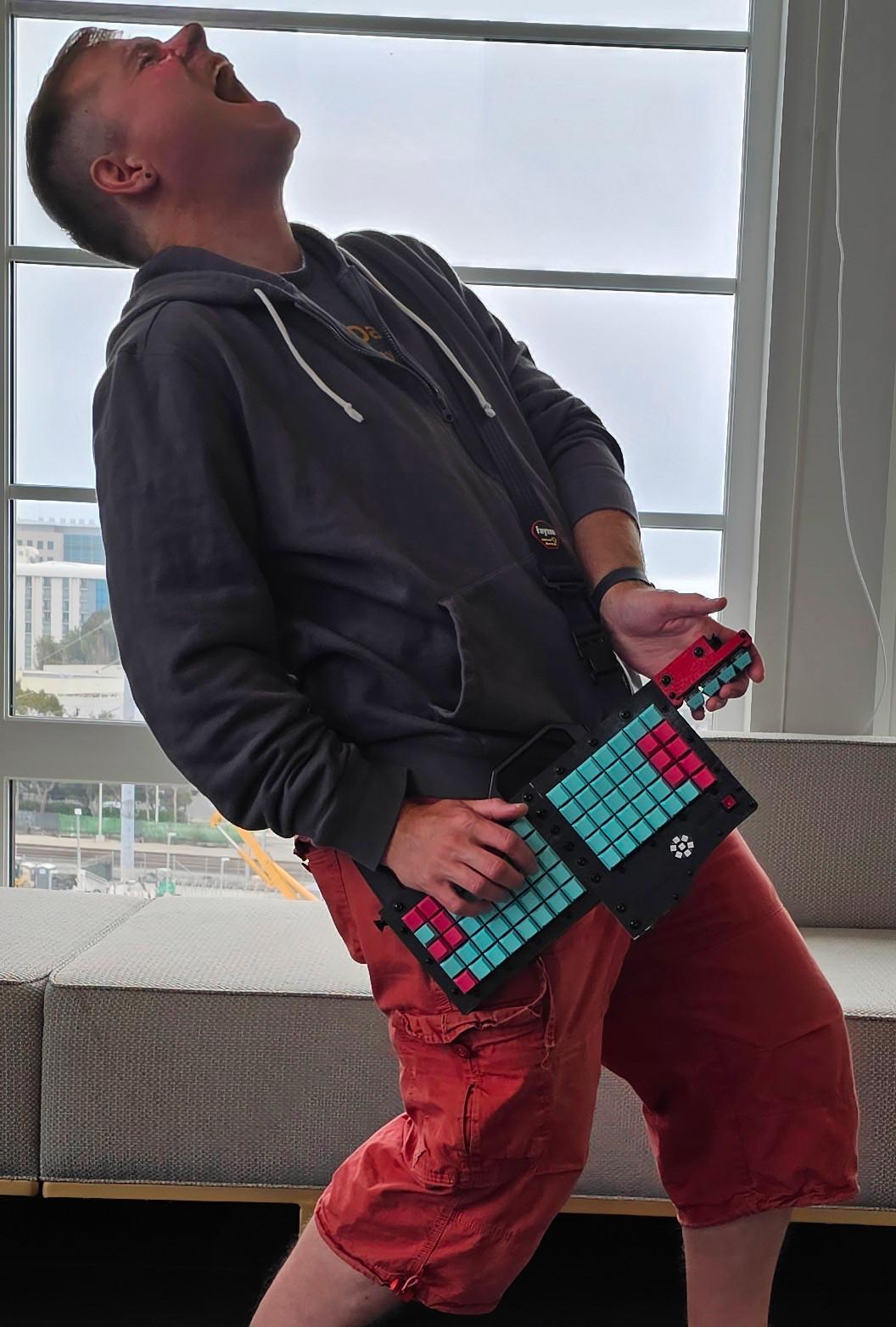
But those left-hand keys aren’t just for show — they’re macro keys. It runs on an Adafruit Feather 32u4 Bluefruit, so [Brian] can forego the cord and rock out all over the room.
I love the construction of this keyboard, which you can plainly see from the side. It’s made up of extruded aluminum bars and 2 mm plywood, which is stacked up in layers and separated with little wooden donuts acting as spacers. Unfortunately, [Brian] accidentally made wiring much harder by putting the key switches and the microcontroller on different planes.
Although you could theoretically use any key switches for this build, [Brian] chose my personal and polarizing favorite, browns. If you’re going to use a travel keyboard, you’re probably going to be around people, so blues are probably not the best choice. With browns, you kind of have yourself a middle ground, best-of-both-worlds thing going on. The keycaps are among the best parts of this build, and it seems [Brian] chose them because the legends are on the sides, which makes it much easier to type on while wearing it. Kismet!
Harry Daghlian and Louis Slotin were two of many people who worked on the Manhattan Project. They might not be household names, but we believe they are the poster children for safety procedures. And not in a good way.
Slotin assembled the core of the “Gadget” — the plutonium test device at the Trinity test in 1945. He was no stranger to working in a lab with nuclear materials. It stands to reason that if you are making something as dangerous as a nuclear bomb, it is probably hazardous work. But you probably get used to it, like some of us get used to working around high voltage or deadly chemicals.
Making nuclear material is hard and even more so back then. But the Project had made a third plutonium core — one was detonated at Trinity, the other over Nagasaki, and the final core was meant to go into a proposed second bomb that was not produced.
The cores were two hemispheres of plutonium and gallium. The gallium allowed the material to be hot-pressed into spherical shapes. Unlike the first two cores, however, the third one — one that would later earn the nickname “the demon core” — had a ring around the flat surfaces to contain nuclear flux during implosion. The spheres are not terribly dangerous unless they become supercritical, which would lead to a prompt critical event. Then, they would release large amounts of neutrons. The bombs, for example, would force the two halves together violently. You could also add more nuclear material or reflect neutrons back into the material.
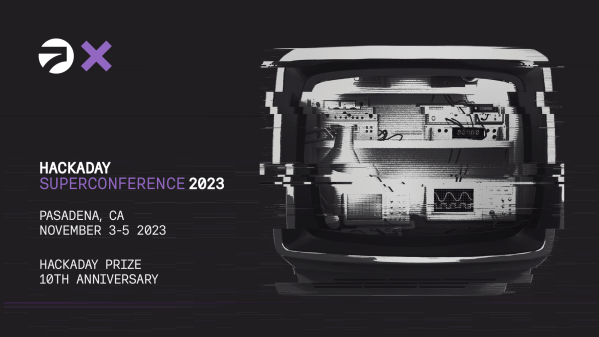
The 2023 Hackaday Superconference isn’t taking place until November, but the time to get your tickets is right now.
Hackaday’s Supercon is far and away the coolest hardware-focused hacker con of the year, and if you’re Hackaday, you absolutely want to be there. Honestly, just the crowd that Supercon brings together is reason enough to attend, but then you throw in the talks, the badge-hacking, the food, and the miscellaneous shenanigans … it’s an event you really don’t want to miss.
We’ll be announcing the speaker and workshop lineups in the upcoming weeks, but as always, we’re opening up a number of True Believer tickets for those of you who know you’ll be coming no matter what. Head on over to Eventbrite now and secure yours before they’re all gone. These usually sell out within the first few hours of being announced, so if you’re reading this right now, don’t hesitate.
Supercon is a small and friendly event, and it will be a long weekend that you’ll be looking back on fondly for the rest of the year. Whether you’ve been every time or whether you have always wanted to see what the hype is about, we can’t wait to see you all there. Come join us!