Cargo Culting And Buried Treasure

I have no idea how true the stories are, but legend has it that when supplies were dropped on some Melanesian islands during WWII, some locals took to replicating runway signs in order to further please the “gods” that were dropping them. They reportedly thought that making landing strips caused laden airplanes to visit. Richard Feynman later turned this into a metaphor about scientific theory – that if you don’t understand what you’re doing deeply, you may be fooling yourself.

I’d like to be a little bit more forgiving of adherents of technological cargo cults. Because the world around us is very complicated, we often just take things as they are rather than understanding them deeply, because there’s simply only so deep you can go into so many fields.

Is someone who doesn’t know the i386 machine language cargo-culting their way through a job as a web backend developer? Probably not. But from the perspective of an assembly-language programmer, any of us who write in compiled or interpreted programming languages are cargo-culting coding. You don’t need to understand a cell phone to dial home, but can you really say that you understand everything about how one works?  Or are you just going through the motions?

So while some reliance on metaphor and “well, it worked last time” is perfectly normal, I think noticing when you cargo-cult is also healthy. It should also be a warning sign, or at least a flag to remind yourself that there may be dragons here. Or maybe just a buried learning opportunity, the X that marks the spot where digging deeper might be productive.


Hackaday Podcast 195: No NABU For You, Self-Assembling 3D Prints, Black Hats Look At EV Chargers

This week, Editor-in-Chief Elliot Williams and Managing Editor Tom Nardi find themselves in the middle of a slow news week, so they dispense with the usual timely chit-chat and dive right into the results of a particularly tricky “What’s that Sound” challenge.

From there they’ll cover the new breed of ATtiny microcontollers (and why you probably won’t be buying them), a recently unearthed Z-80 consumer gadget that’s begging to be reverse engineered, the fine art of electrifying watercraft, and a particularly impressive speech recognition engine. Stick around till the end to hear about the potential dangers of unsecured EV chargers, and take a walk down memory lane to a time when soldering irons and paper schematics ruled the world.

Check out the links below if you want to follow along, and as always, tell us what you think about this episode in the comments!

Download the podcast for safe-keeping!

Continue reading “Hackaday Podcast 195: No NABU For You, Self-Assembling 3D Prints, Black Hats Look At EV Chargers”

This Week In Security: Huawei Gets The Banhammer, Lastpass, And Old Code Breaking

While many of us were enjoying some time off for Thanksgiving, the US government took drastic action against Huawei and four other Chinese companies. The hardest hit are Huawei and ZTE, as the ban prevents any new products from being approved for the US market. The other three companies are Dahua and Hikvision, which make video surveillance equipment, and Hytera, which makes radio systems. FCC Commissioner Brendan Carr noted the seriousness of the decision.

[As] a result of our order, no new Huawei or ZTE equipment can be approved. And no new Dahua, Hikvision, or Hytera gear can be approved unless they assure the FCC that their gear won’t be used for public safety, security of government facilities, & other national security purposes.

There is even the potential that previously approved equipment could have its authorization pulled. The raw FCC documents are available, if you really wish to wade through them. What’s notable is that two diametrically opposed US administrations have both pushed for this ban. It would surely be interesting to get a look at the classified reports detailing what was actually found. Maybe in another decade or two, we can make a Freedom of Information Act request and finally get the full story.

Continue reading “This Week In Security: Huawei Gets The Banhammer, Lastpass, And Old Code Breaking”

Car Batteries: More Than Just Wet Lead

Working on car electrical systems used to be easy. The battery simply provided power for the car’s starter motor when starting or to run the small number of accessories when the engine wasn’t running. The rest of the time, the alternator charged the battery and provided power for the rest of the vehicle and the ignition system. While very early cars didn’t have batteries, and some old cars had 6 V positive ground systems, most of us have lived our entire lives where car batteries come in several sizes (controlled by Battery Council International) and cars have a 12 V, negative ground system.

Times have changed. Cars don’t have distributors anymore, they have computers. They also have lots of gadgets from GPS to backup cameras and cellphone chargers. Batteries have had to get beefier and the modern trend is to also require less maintenance So, today, you’ll find that there isn’t just one kind of car battery. But how do these other batteries work and what was wrong with the good old lead acid wet cell?

For the purposes of this post, I’m not talking about electric car batteries which is a whole different topic — and most of them have a regular car battery, too. Continue reading “Car Batteries: More Than Just Wet Lead”

Ask Hackaday: When It Comes To Processors, How Far Back Can You Go?

When it was recently announced that the Linux kernel might drop support for the Intel 486 line of chips, we took a look at the state of the 486 world. You can’t buy them from Intel anymore, but you can buy clones, which are apparently still used in embedded devices. But that made us think: if you can’t buy a genuine 486, what other old CPUs are still in production, and which is the oldest?

Defining A Few Rules

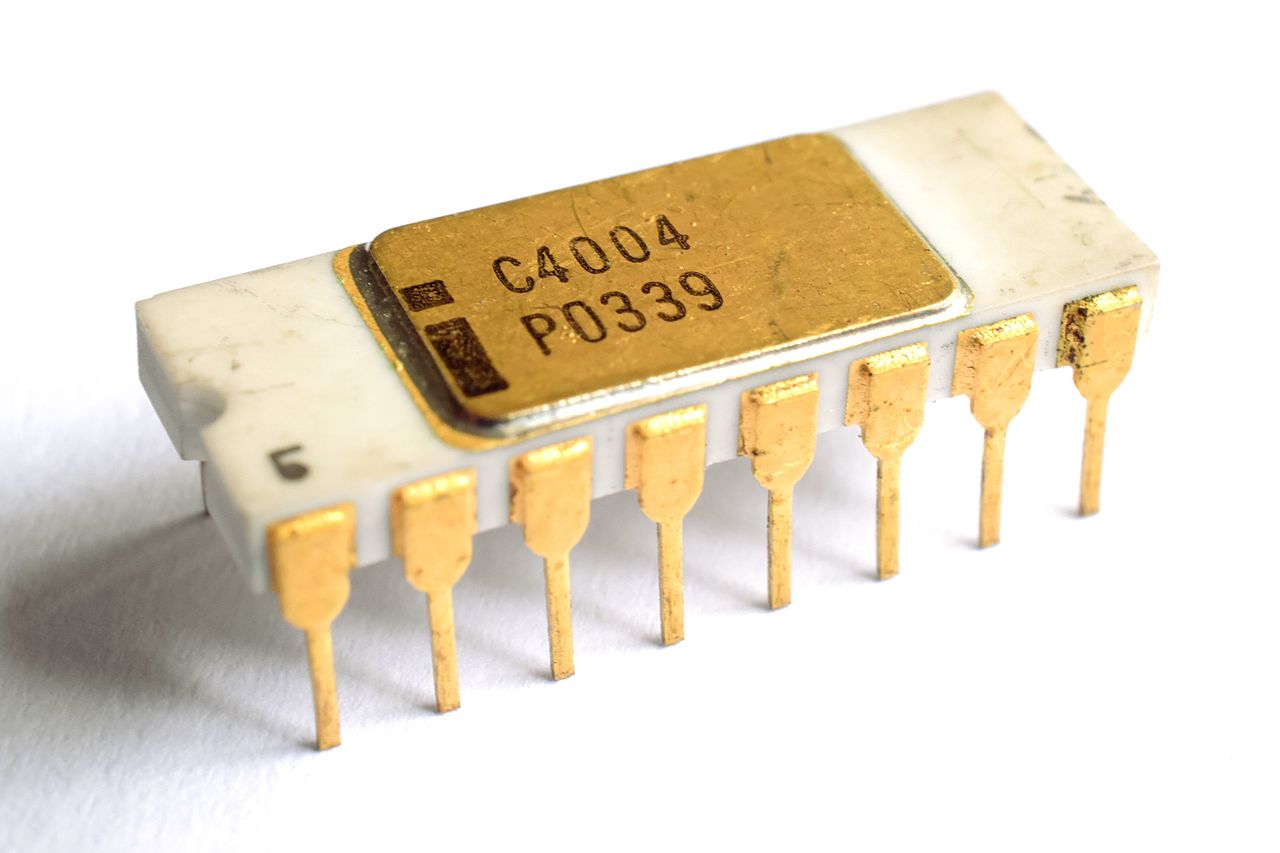
An Intel 4004 microprocessor in ceramic packaging
The daddy of them all, 1972’s Intel 4004 went out of production in 1981. Thomas Nguyen, CC BY-SA 4.0

There are a few obvious contenders that immediately come to mind, for example both the 6502 from 1975 and the Z80 from 1976 are still readily available. Some other old silicon survives in the form of cores incorporated into other chips, for example the venerable Intel 8051 microcontroller may have shuffled off this mortal coil as a 40-pin DIP years ago, but is happily housekeeping the activities of many far more modern devices today. Still further there’s the fascinating world of specialist obsolete parts manufacturing in which a production run of unobtainable silicon can be created specially for an extremely well-heeled customer. Should Uncle Sam ever need a crate of the Intel 8080 from 1974 for example, Rochester Electronics can oblige.

Continue reading “Ask Hackaday: When It Comes To Processors, How Far Back Can You Go?”

JCB Is Exploring Hydrogen Combustion Engines For Construction Machinery

When we think about greening up the planet, solar panels and electric cars are often at the forefront of our mind. However, there’s a whole bunch of other things out there that are spewing out carbon dioxide that also need to be cleaned up. That includes leaf blowers, lawn mowers, and yes – big equipment for construction and agricultural work!

JCB manufactures diesel engines for big machines, but is now looking to switch things up for a cleaner future. To that end, the company is working on hydrogen-burning engines for its big machines.

Continue reading “JCB Is Exploring Hydrogen Combustion Engines For Construction Machinery”

Building Your Own Consensus

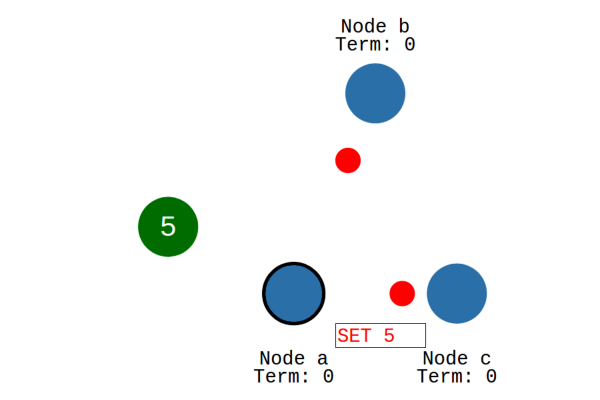
With billions of computers talking to each other daily, how do they decide anything? Even in a database or server deployment, how do the different computers that make up the database decide what values have been committed? How do they agree on what time it is? How do they come to a consensus?

But first, what is the concept of consensus in the context of computers? Boiled down, it is for all involved agents to agree on a single value. However, allowances for dissenting, incorrect, or faulting agents are designed into the protocol. Every correct agent must answer, and all proper agents must have the same answer. This is particularly important for data centers or mesh networks. What happens if the network becomes partitioned, some nodes go offline, or the software crashes weirdly, sending strange garbled data? One of the most common consensus algorithms is Raft. Continue reading “Building Your Own Consensus”