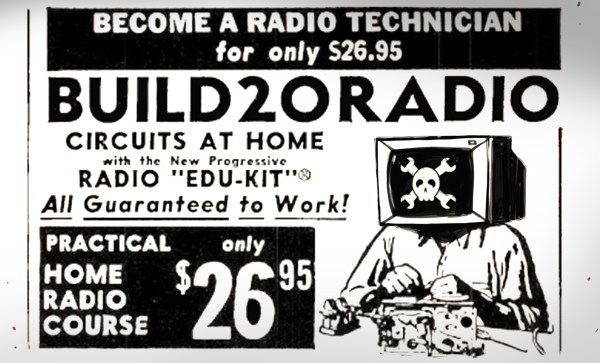
I don’t think there was ever a correspondence school called the “Close Cover Before Striking School” but since book matches — which used to be a thing when most people smoked — always had that text on them anyway perhaps there should have been. There was a time when electronic magazines, billboards, and even book matches were constantly bombarding us with ads to have a career in electronics. Or computers. Or TV repair. So while we think of distance learning as a new idea, really it is just the evolution of these old correspondence schools which date back quite some time.
How far exactly? Hard to say. There’s evidence of some distance learning going back as far as 1728. In 1837, there was a correspondence course to learn shorthand. By 1858, the University of London started its external program for correspondence work and the University of Chicago had a home study division in 1892. Radio was an early choice of topic, too. In the United States, the United Wireless Telegraph company started a training school — later the Marconi Institute — in 1909. However, it is doubtful that there was any correspondence training going on there until much later.
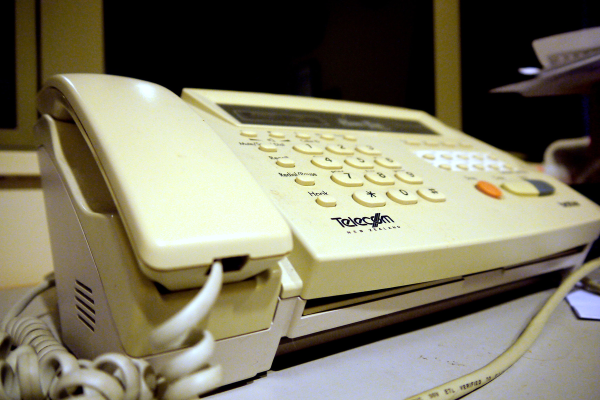
Throughout the 80s and 90s, you couldn’t swing a stapler around any size office without hitting a fax machine. But what is it about the fax machine that makes it the subject of so much derision? Is it the beep-boops? The junk faxes? Or do they just seem horribly outdated in the world of cloud storage and thumb drives? Perhaps all of the above is true. While I may be Hackaday’s resident old school office worker et cetera, it may surprise you to learn that I don’t have a fax machine. In fact, the last time I had to fax something, I recall having to give my email address to some website in order to send a single fax for free.
Over across the pond, the UK government has decided to nix the requirement for fax services under something called the Universal Service Order (USO) legislation, which essentially ensures that residents all across the UK have access to phone services at a price they can afford. The UK’s Office of Communications, aka Ofcom, have announced recently that they are in agreement with the government. Since the industry is moving away from the public switched telephone network (PSTN) to IP telephony, the fax machine won’t work the same way.
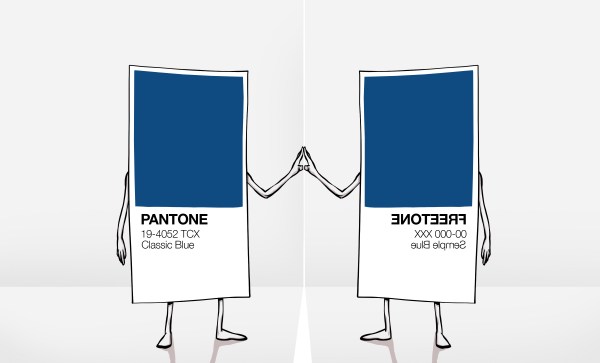
We recently covered the removal of Pantone colour support from the Adobe cloud products, with the two companies now expecting artists and designers to pay an extra subscription for a Pantone plugin or face losing their Pantone-coloured work to a sea of black blocks. Our coverage focused on our community, and on how the absurdity of a commercial entity attempting to assert ownership over colours would have no effect on us with our triple-byte RGB values.
Interview With An Artist And Pigment Activist
The palette that could start a revolution.
It’s fair to say though that in our focus on hardware hackers and open source enthusiasts, we missed its effect on artists and designers. To rectify this omission we needed to step outside our field and talk to an artist, and in that context there’s an obvious person to interview.
Stuart Semple is probably one of the more famous contemporary British artists, but in relation to this story it’s his activism over the issue of colours and intellectual property that makes him an authority. He’s drawn attention to the issue by releasing his own art materials in colours that directly challenge those which companies have tried to claim for themselves, and is perhaps best known in our community for challenging Anish Kapoor’s exclusive licence for VantaBlack, the so-called “world’s blackest pigment”.
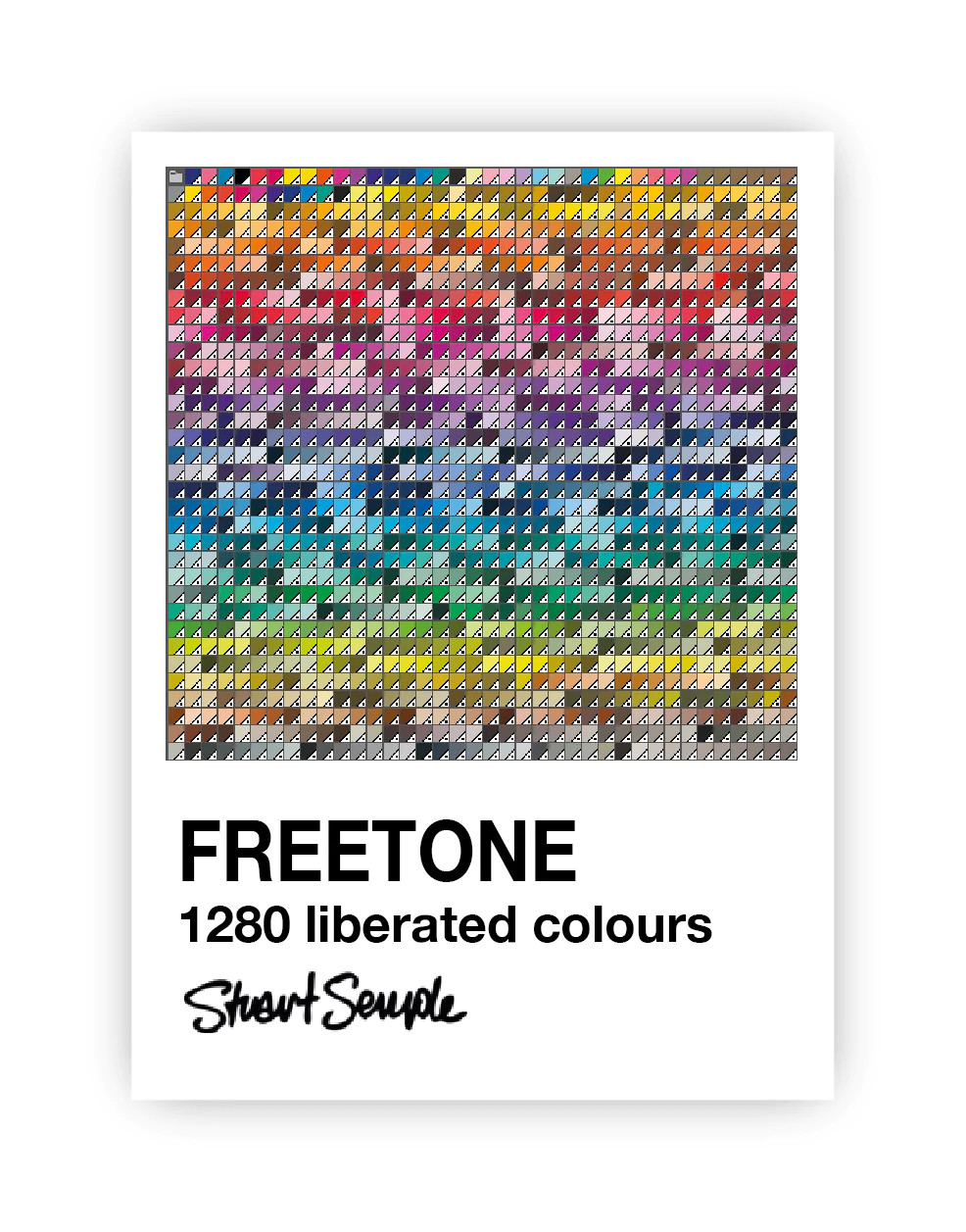
Most recently in response to the Adobe/Pantone controversy he’s released Freetone, a free plugin for the Adobe suite that in the words from its web page contains “1280 Liberated colours are extremely Pantoneish and reminiscent of those found in the most iconic colour book of all time. In fact it’s been argued that they are indistinguishable from those behind the Adobe paywall”. I had a phone conversation with him, in which he explained why Freetone had come into being.
Hackaday I understand Pantone is something used by designers, so I’ve worked for companies in the past where the designer would specify a Pantone index and it would appear on the screen, on the printed box, and on everything else identically. But why why do you as an artist use Pantone?
Art, activism, and a very red pigment.
Stuart Well, I use it in lots of ways. So I make a lot of screen prints as part of my art. So you know, if I’m working with a screen printer, I want to know that the print that they make of my work is the colour that I want it to be, so Pantone’s really useful for me for that.
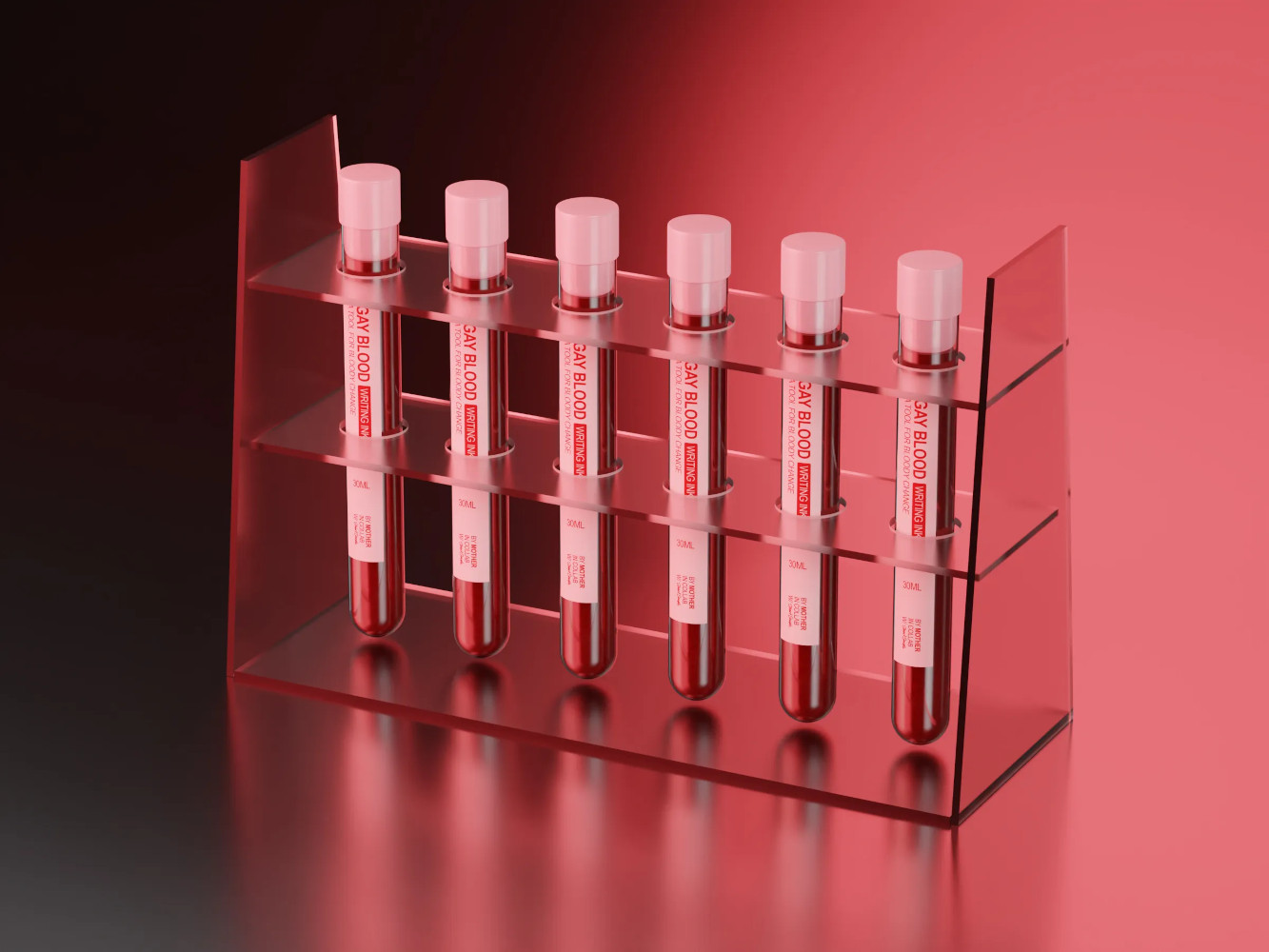
But also, even with within the paints, so I just did a thing where I made some paints, which actually uses the blood of gay men. It was really important to me that the colour of the paint matched the colour of actual blood. So I was working with a lot of people, we’ve been collaborating, and I was working with some friends in New York on it, and we needed a common language.
The red I was talking about was the red they were talking about, and Pantone is super useful for that. In fact, it’s the go-to for that. I just did a record cover for Placebo, the band, that was produced for me by someone that prints, so I had to tell them what spot colours I wanted. So I had to tell them Pantone references, it’s the language they understand.
Hackaday So my next question relates to Freetone. Obviously, as as you’ve distributed it, it’s a Adobe plugin. How does it solve the problem? Because obviously, I can specify a Freetone colour, and anybody else with Freetone can tell yes, that’s that colour. But how do I then go to a printer who buys his inks with Pantone specifications and map one to the other?
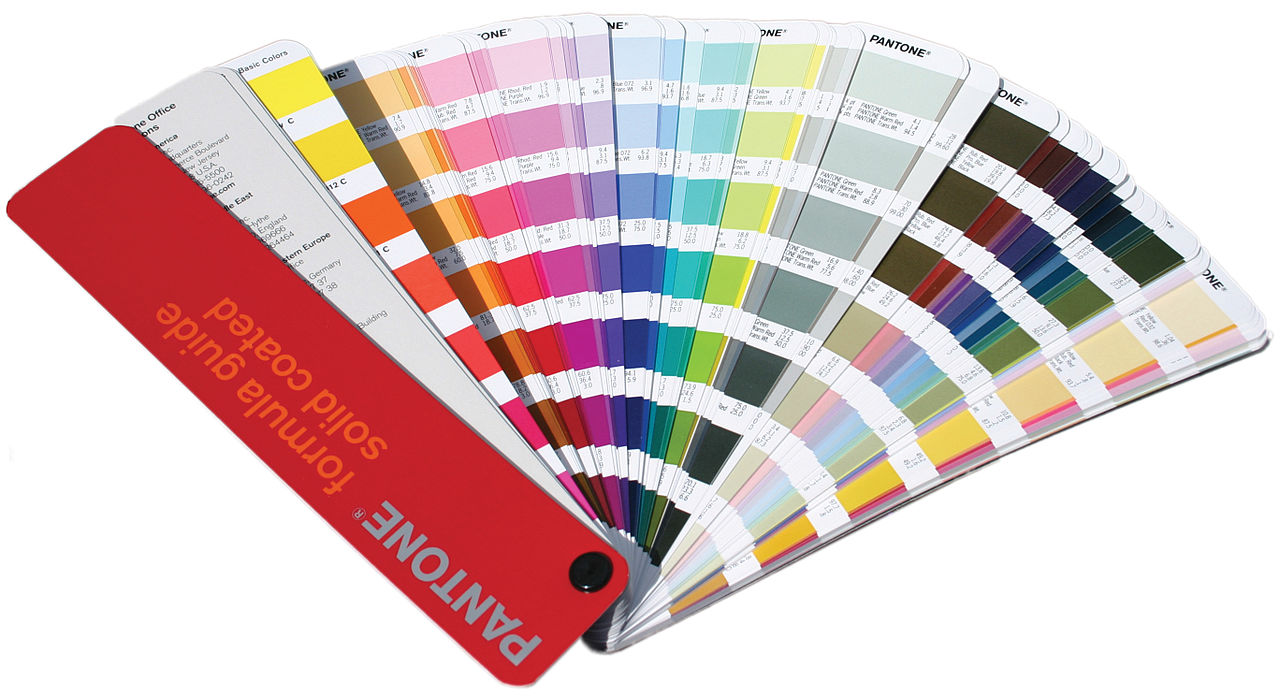
The Pantone swatch book which you’ll see in the hands of artists and designers everywhere. Céréales Killer CC BY-SA 3.0.
Stuart How it works is, if you download Freetone, you’ll find colours in there, and one of them will be called Sempletone 648C. Well, it’s exactly the same as Pantone 648C. If you do your work on the screen, use the Freetones, and then when you send it to the printer, it’s actually blatantly obvious to anyone that 648C is clearly apparent. If you’ve got the Pantone fan book and you look at the colours, it’s the same. 846C in mine is the same as 846C in the fan, in the Pantone book. I’d like to see them try and argue that they own it, but I don’t think they do in the name or the Pantone trademark, but these are Sempletones with a number. So I think it’s gonna be hard.
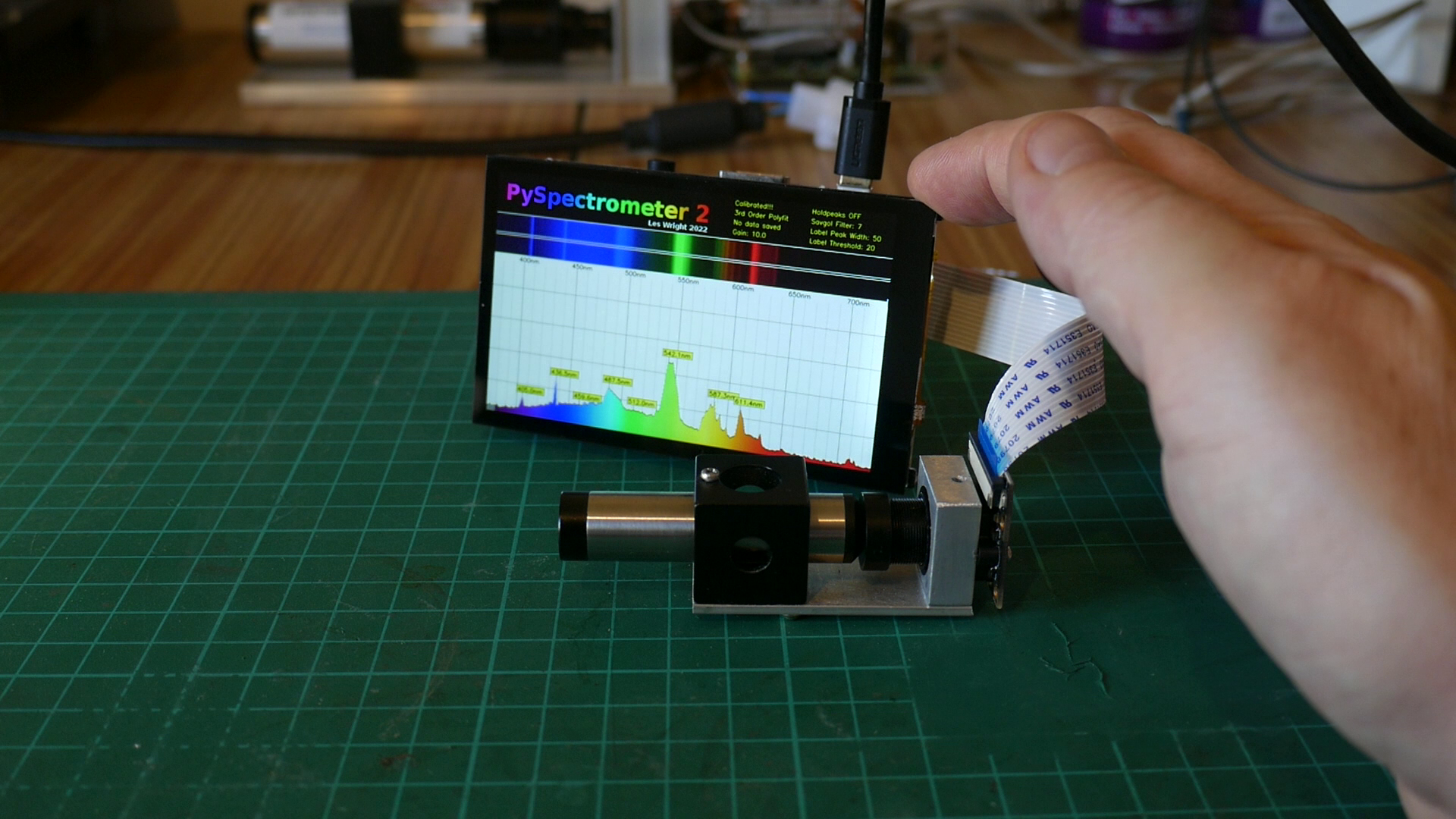
Hackaday My next question is probably getting more into the technology of it all. Do you think it will be possible to replace Pantone’s service completely? So if you took every Sempletone colour and threw it at a spectrometer and published the spectrum, would you then be able to say to an ink manufacturer or similar, here are the full technical details rather than just a colour, and does your paint correspond to this spectrum? I’m curious how far you could push open source in this line.
The PySpectrometer project, something for anyone with an interest in colour.
Stuart That’s really cool. I love it. Like, if you could just give them that spectral data, and if they’ve got a spectrometer they could measure it a their end. But there’s nothing that advanced at the moment, a lot of action is done by eye still. My answer is, I don’t see why not if there was a cool enough device. I don’t know if the spectrometer would be good enough to match it. I don’t see why not, I don’t see why you couldn’t publish the data. But it would have to be the whole spectral information and not just like an RGB value.
(At this point the interview digressed for a moment into a discussion of open-source spectrometers such as the Raspberry Pi project we featured recently, as Stuart’s lament was that a spectrometer can be an extremely expensive instrument. It isn’t the job of an interviewer to lead their interviewee so we’re skipping this part of the transcript, however I think we can all look forward to whatever uses Stuart makes of an affordable spectrometer. We’ll pick up the interview at the next question.)
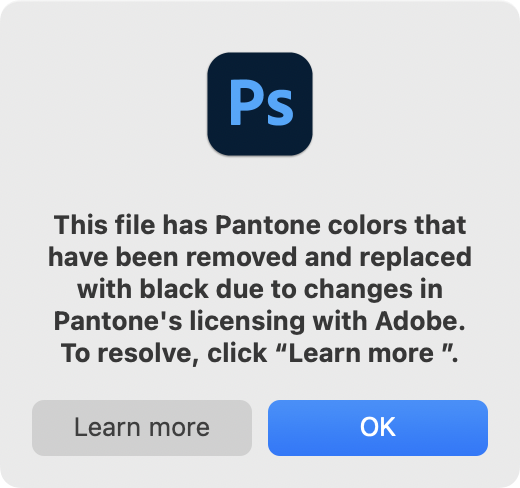
This widely shared screenshot represents the destruction of past work.
Hackaday One of the real problems with the whole Adobe suite, and this has happened in world as well with for instance the Autodesk CAD packages, is that they have gone into the cloud and become software as a subscription. So I understand completely, the frustration of artists at suddenly being told they have to pay an extra subscription to keep their Pantone support, and I’m particularly shocked to find that Photoshop isn’t just displaying black pixels over Pantone colours, I’m told it’s wiping out the Pantone information on saving. Do you think that anything in the open source software ecosystem comes close to replacing proprietary products like the Adobe suite for you as an artist?
Stuart Yes, 100%, there’s loads of stuff. I think open source is just the answer, I believe in freedom. And freedom means freedom to express yourself and freedom to own the thing and tweet the thing and change the thing and all the rest of it. So yeah, 100%. I think there’s actually better things than Photoshop, the problem we’ve got is that Adobe have the industry stranglehold. And if you want to work with someone, you have to be talking that language. And that’s still the problem. It’s like an operating system, but it’s got the monopoly.
So there are other things, for instance, on a Mac, there’s something called Pixelmator, which is as good as Photoshop in my opinion, I use it every day. It’s not free, but you buy it once, and that’s it, free updates. Like software used to be. And there are other things, like GIMP is amazing. It’s awesome, but it doesn’t really replace Photoshop.
We all like using GIMP, perhaps other people could learn to love it too. (gimp.org)
Hackaday Here at Hackaday we can make noises about how wouldn’t it be great if the developers of GIMP or other software could stick Freetone into their products, because they don’t have Pantone as it’s licensed?
Stuart Yeah, that’d be a dream, wouldn’t it? I mean, why not? I made it for everybody. As far as I’m concerned, it’s out there, use it, change it. incorporate it, the more people the better, I think.
A lot of people use GIMP, and it’s good. Really good open source stuff that always has been. We know the future is in the open source stuff, proprietary stuff just won’t last, it’s just not adaptable. It’s putting greed and profits above the user, it can’t work. There’s no freedom in it.
Hackaday To me the most egregious thing is that as I understand it they will delete the Pantone information from your PSD. This really shocked me.
Stuart They’re literally holding it hostage. It’s like 20 quid, or delete from your work, which is, wow. They’re not giving me anything, anyway. I’m renting the software, paying to use the software every month, it’s not free. And the licence fee is a lot. We’re already spending hundreds and hundreds a year on this software, probably about 800 quid a year. Another 20 quid, just to pen the work we make before. I mean, it’s our work! It’s pure corporate greed, isn’t it.
Hackaday Thank you very much for the interview.
As we wrapped up, I asked him about his Black 3.0 pigment, produced as a reaction to VantaBlack and Anish Kapoor. I was curious whether it might have a specially good infra-red response for headsinks or solar collectors, but sadly he informed me that it’s primarily a visual colour for artists. It’s very cool stuff, incredibly black, and I really want to get some to play with, but probably no better than a rattle can for heat purposes. Never mind, an engineer’s curiosity satisfied.
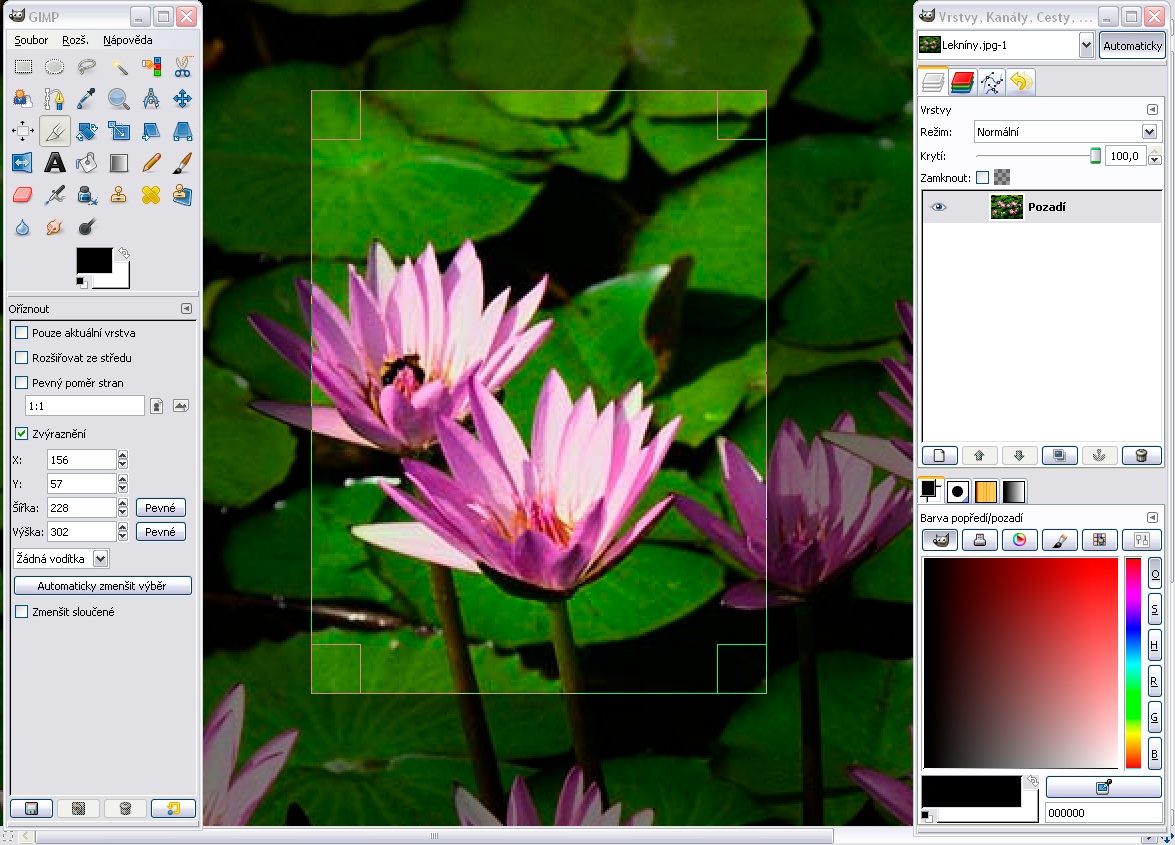
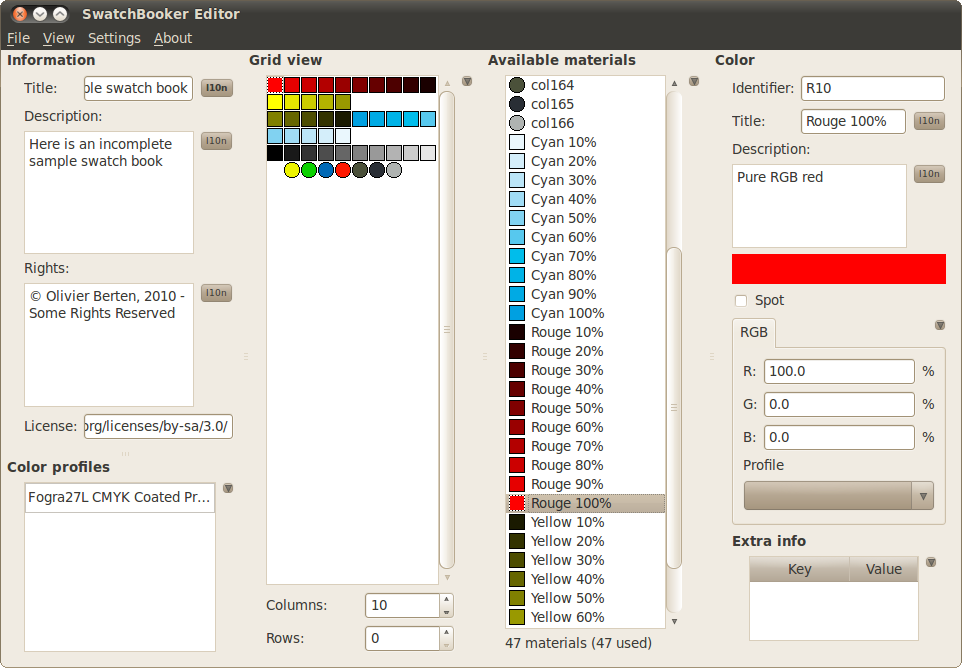
Following the interview, it’s worth looking at the Freetone project from our side of the table as well as his. If we as a community would like to ensure that colours do not become ever more proprietary, then it is probably on us to ensure that where appropriate it is supported within our sphere. GIMP support for instance would at a stroke make open source software an easier choice for millions of artists and designers, and could I think be done relatively easily through its existing palette support. There’s SwatchBooker which appears to perform the necessary interchange, and I found the ASE2GIMP project which imports Adobe palettes into GIMP, but sadly I couldn’t make it work here. If GIMP shipped with a Freetone palette built-in, would that be too much of a development task to contemplate?
From Stuart’s side, having sat down and played with Freetone, if there’s one thing I could ask him it would be to release it as more than just an Adobe plugin, and to give it an open source licence. As it stands it’s a binary available for no charge through his web shop, I think that releasing it as a straightforward list, perhaps even as simple as a CSV file, would make it so much more accessible to developers. And coupled with an open source licence that allowed them to include it within their software, I think it would be unstopable. We’re not open source licence nerds here at Hackaday, but I’m guessing something that does the same for a palette as a library licence such as the LGPL does for libraries would be appropriate.
In our world we’re wrapped up in electronics and code, and it’s sometimes easy to forget that the work we do reaches way beyond our workbenches. If you’ve spent enough time in a hackerspace you’ll know that art and engineering are almost the two sides of the same coin, so it’s pleasing to find such a moment of crossover. Let’s hope Freetone support can find its way into the open source movement, and together we can keep the tentacles of yet another IP land grab at bay.
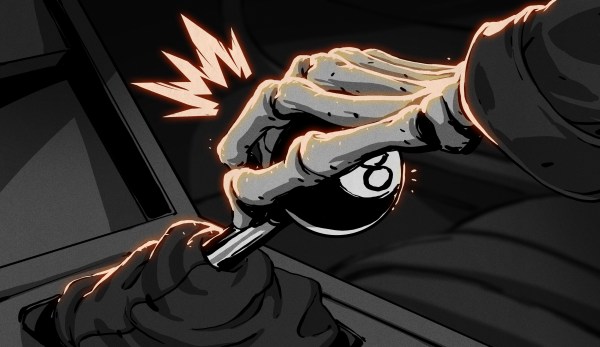
Call me crazy, but I’m ride or die for manual transmissions. I drove enough go-karts and played enough Pole Position as a kid to know that shifting the gears yourself is simply where it’s at when it comes to tooling around in anything that isn’t human-powered. After all, manuals can be roll-started. A driver has options other than braking and praying on slippery roads. Any sports car worth its rich Corinthian leather (or whatever) has a manual transmission, right? And you know that Rush’s Red Barchetta ain’t no automatic. Face it, shifting gears is just plain cooler. And it’s not a chore if it gets you more, although the fuel efficiency thing is a myth at this point.
You can imagine then my horror at the idea that someday within my lifetime, most cars will be twist-and-go electric go-karts. As the age of the combustion engine appears to draw to a close (no, seriously this time), there’s just one thing keeping the door open — marked enthusiasm for manual transmissions. From Audi to the Nissan Z, automakers report that the take rate for manual transmissions is quite high in the US, despite the death knell that has been tolling for two decades or so. Two models of Honda Civic are manual-only. This phenomenon isn’t restricted to sports cars, either — the 2022 Ford Bronco comes in a seven-speed manual, and has seen a take rate over 20%.
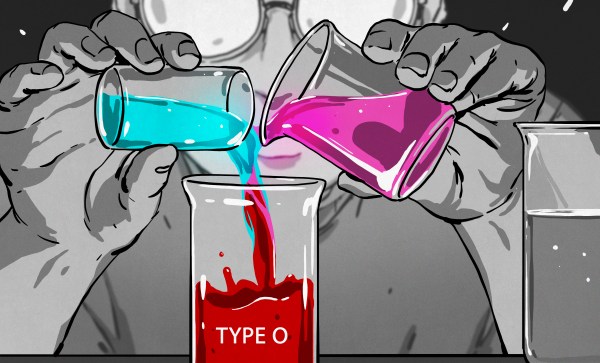
There were news stories afoot this week with somewhat breathless headlines that suggested a medical breakthrough was at hand: “In a 1st, two people receive transfusions of lab-grown blood cells.” A headline like that certainly catches the eye, especially as the holidays approach and the inevitable calls for increased blood donations that always seem to happen this time of year as the supply gets pinched. Does a headline like that mean that someone is working on completely artificial blood?
As always with this sort of thing, the answer is a mixed bag. Yes, a team in the UK has transfused two patients with a small amount of lab-grown red blood cells, and it’s the first time that particular procedure has been performed. But while the headline is technically correct, the amount transfused was very small, so the day when lab-grown whole blood transfusions replace donated blood isn’t exactly here yet. But the details of what was done and why it was attempted are the really interesting part here, and it’s worth a deep dive because it does potentially point the way to a future where totally synthetic blood may be a real thing.
With the rise in voice-driven virtual assistants over the years, the sight of people talking to various electrical devices in public and in private has become rather commonplace. While such voice-driven interfaces are decidedly useful for a range of situations, they also come with complications. One of these are the trigger phrases or wake words that voice assistants listen to when in standby. Much like in Star Trek, where uttering ‘Computer’ would get the computer’s attention, so do we have our ‘Siri’, ‘Cortana’ and a range of custom trigger phrases that enable the voice interface.
Unlike in Star Trek, however, our virtual assistants do not know when we really desire to interact. Unable to distinguish context, they’ll happily respond to someone on TV mentioning their trigger phrase. This possibly followed by a ludicrous purchase order or other mischief. The realization here is the complexity of voice-based interfaces, while still lacking any sense of self-awareness or intelligence.
Another issue is that the process of voice recognition itself is very resource-intensive, which limits the amount of processing that can be performed on the local device. This usually leads to the voice assistants like Siri, Alexa, Cortana and others processing recorded voices in a data center, with obvious privacy implications.