FlowIO Takes Top Honors In The 2021 Hackaday Prize

FlowIO Platform, a modular pneumatics controller for soft robotics and smart material projects, took home Grand Prize honors at the 2021 Hackaday Prize. Aside from the prestige of coming out on top of hundreds of projects and bragging rights for winning the biggest hardware design challenge on Earth, the prize carries an award of $25,000 and a Supplyframe DesignLab residency to continue project development. Four other top winners were also announced at the Hackaday Remoticon virtual conference on Saturday evening.

In a year full of challenges, this year’s Hackaday Prize laid down yet another gauntlet: to “Rethink, Refresh, and Rebuild.” We asked everyone to take a good hard look at the systems and processes that make the world work — or in some cases, not work — and reimagine them from a fresh perspective. Are there better ways to do things? What would you come up with if you started from a blank piece of paper? How can you support and engage the next generation of engineers, and inspire them to take up the torch? And what would you come up with if you just let your imagination run wild?

And boy, did you deliver! With almost 500 entries, this year’s judges had quite a task in front of them. Each of the five challenges — Refresh Displays, Rethink Work-From-Home Life, Reimagine Supportive Tech, Redefine Robots, and Reactivate Wildcard — had ten finalists, which formed the pool of entries for the overall prize. And here’s what they came up with.

Continue reading “FlowIO Takes Top Honors In The 2021 Hackaday Prize”

This Week In Security: Intel Atoms Spill Secrets, ICMP Poisons DNS, And The Blacksmith

Intel has announced CVE-2021-0146, a vulnerability in certain processors based on the Atom architecture, and the Trusted Platform Module (TPM) is at the center of the problem. The goal of the system around the TPM is to maintain system integrity even in the case of physical access by an attacker, so the hard drive is encrypted using a key stored in a secure chip on the motherboard. The TPM chip holds this encryption key and provides it during the boot process. When combined with secure boot, this is a surprisingly effective way to prevent tampering or data access even in the case of physical access. It’s effective, at least, when nothing goes wrong.

Earlier this year, we covered a story where the encryption key could be sniffed directly from the motherboard, by tapping the traces connecting the TPM to the CPU. It was pointed out that TPM 2.0 can encrypt the disk encryption key on the traces, making this attack impossible.

The entire Trusted Compute Model is based on the premise that the CPU itself is trustworthy. This brings us back to Intel’s announcement that a debug mode could be enabled via physical access. In this debug mode, the CPU master key can be extracted, leading to complete compromise. The drive encryption key can be recovered, and unsigned firmware can be loaded to the Management Engine. This means data in the TPM enclave and the TPM-stored encryption key can be compromised. Updated firmware is rolling out through motherboard vendors to address the problem. Continue reading “This Week In Security: Intel Atoms Spill Secrets, ICMP Poisons DNS, And The Blacksmith”

Privacy Report: What Android Does In The Background

We’ve come a long way from the Internet of the 90s and early 00s. Not just in terms of technology, capabilities, and culture, but in the attitude most of us take when accessing the ‘net. In those early days most users had a militant drive to keep any personal or identifying information to themselves beyond the occasional (and often completely fictional) a/s/l, and before eBay and Amazon normalized online shopping it was unheard of to even type in a credit card number. On today’s internet we do all of these things with reckless abandon, and to make matters worse most of us carry around a device which not only holds all of our personal information but also reports everything about us, from our browsing habits to our locations, back to databases to be stored indefinitely.

It was always known that both popular mobile operating systems for these devices, iOS and Android, “phone home” or report data about us back to various servers. But just how much the operating systems themselves did was largely a matter of speculation, especially for Apple devices which are doing things that only Apple can really know for sure. While Apple keeps their mysteries to themselves and thus can’t be fully trusted, Android is much more open which paradoxically makes it easier for companies (and malicious users) to spy on users but also makes it easier for those users to secure their privacy on their own. Thanks to this recent privacy report on several different flavors of Android (PDF warning) we know a little bit more on specifically what the system apps are doing, what information they’re gathering and where they’re sending it, and exactly which versions of Android are best for those of us who take privacy seriously.

Continue reading “Privacy Report: What Android Does In The Background”

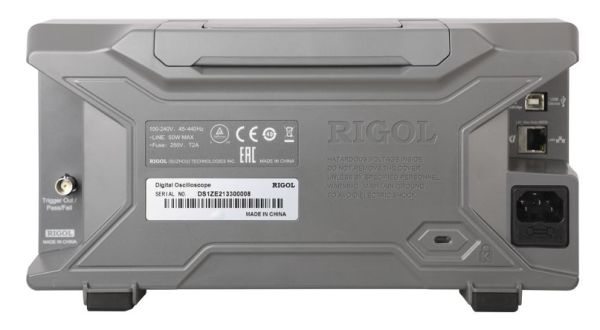
Back of Rigol DS1104Z oscilloscope with the Ethernet and USB ports visible.

SCPI: On Teaching Your Devices The Lingua Franca Of Laboratories

One could be excused for thinking sometimes that the concept of connecting devices with other devices for automation purposes is a fairly recent invention. Yet for all the (relatively) recent hype of the Internet of Things and the ‘smart home’, laboratories have been wiring up their gear to run complicated measurement and test sequences for many decades now, along with factories doing much the same for automating production processes.

Much like the chaotic universe of IoT devices, lab equipment from different manufacturers feature a wide number of incompatible protocol and interface standards. Ultimately these would coalesce into IEEE-488.1 (GPIB) as the physical layer and by 1990 the first Standard Commands for Programmable Instruments (SCPI) standard was released that built on top of IEEE-488.

SCPI defines (as the name suggests) standard commands to interact with instruments. It has over the past decades gone on to provide remote interaction capabilities to everything from oscilloscopes and power supplies to exotic scientific equipment. Many off the shelf devices a hobbyist can buy today feature an SCPI interface via its Ethernet, USB or RS-232C port(s) that combined with software can be used to automate one’s home lab.

Even better is that it’s relatively straightforward to add SCPI functionality to one’s own devices as well, so long as it has at least an MCU and some way to communicate with the outside world.

Continue reading “SCPI: On Teaching Your Devices The Lingua Franca Of Laboratories”

Microplastics Are Everywhere: Land, Sea And Air

Plastics took off in the 20th century, with the new class of materials finding all manner of applications that metal, wood and paper simply couldn’t deliver on. Every field from electronics to the packaging of food found that plastics could play a role.

Now, over 150 years since the development of Parkesine in 1867, we’re now realizing that plastics come with more than a few drawbacks. They don’t break down well in nature, and now microplastics are beginning to appear all over the Earth, even in places where humans rarely tread. It seems they may even spread via the air, so let’s take a look at this growing problem and what can be done about it.

Continue reading “Microplastics Are Everywhere: Land, Sea And Air”

Tech In Plain Sight: Eyeglasses

Glasses wearers, try a little experiment. Take off your glasses and look at this page or, at least, at something you can’t see well without your glasses. Now imagine if you lived in a time where there was nothing to be done about your vision. If you wear contacts or you have good vision — perhaps you had surgery — then congratulations. But for most of us, vision changes with age are a fact of life. Even many young people need glasses or some other intervention to get good eyesight. At first glance, you might think eyeglasses are an obvious invention, but it turns out we didn’t get real glasses for quite some time and modern glasses are truly a piece of high tech that hides — quite literally — right in front of your face.

Continue reading “Tech In Plain Sight: Eyeglasses”

Mining And Refining: Pure Silicon And The Incredible Effort It Takes To Get There

Were it not for the thin sheath of water and carbon-based life covering it, our home planet would perhaps be best known as the “Silicon World.” More than a quarter of the mass of the Earth’s crust is silicon, and together with oxygen, the silicate minerals form about 90% of the thin shell of rock that floats on the Earth’s mantle. Silicon is the bedrock of our world, and it’s literally as common as dirt.

But just because we have a lot of it doesn’t mean we have much of it in its pure form. And it’s only in its purest form that silicon becomes the stuff that brought our world into the Information Age. Elemental silicon is very rare, though, and so getting appreciable amounts of the metalloid that’s pure enough to be useful requires some pretty energy- and resource-intensive mining and refining operations. These operations use some pretty interesting chemistry and a few neat tricks, and when scaled up to industrial levels, they pose unique challenges that require some pretty clever engineering to deal with.

Continue reading “Mining And Refining: Pure Silicon And The Incredible Effort It Takes To Get There”