Unicode: On Building The One Character Set To Rule Them All

Most readers will have at least some passing familiarity with the terms ‘Unicode’ and ‘UTF-8’, but what is really behind them? At their core they refer to character encoding schemes, also known as character sets. This is a concept which dates back to far beyond the era of electronic computers, to the dawn of the optical telegraph and its predecessors. As far back as the 18th century there was a need to transmit information rapidly across large distances, which was accomplished using so-called telegraph codes. These encoded information using optical, electrical and other means.

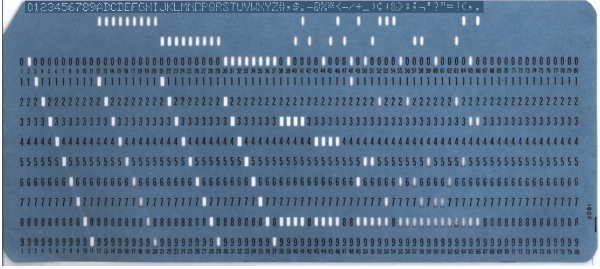
During the hundreds of years since the invention of the first telegraph code, there was no real effort to establish international standardization of such encoding schemes, with even the first decades of the era of teleprinters and home computers bringing little change there. Even as EBCDIC (IBM’s 8-bit character encoding demonstrated in the punch card above) and finally ASCII made some headway, the need to encode a growing collection of different characters without having to spend ridiculous amounts of storage on this was held back by elegant solutions.

Development of Unicode began during the late 1980s, when the increasing exchange of digital information across the world made the need for a singular encoding system more urgent than before. These days Unicode allows us to not only use a single encoding scheme for everything from basic English text to Traditional Chinese, Vietnamese, and even Mayan, but also small pictographs called ‘emoji‘, from Japanese ‘e’ (絵) and ‘moji’ (文字), literally ‘picture word’.

Continue reading “Unicode: On Building The One Character Set To Rule Them All” →

Inputs Of Interest: Marsback M1 Is A Portable Party Peripheral

Again, let’s just get this out of the way up front: I got this lovely little 75% keyboard for free from a gaming accessories company called Marsback. It’s a functioning prototype of a keyboard that they have up on Kickstarter as of March 2nd. It comes in three color schemes: dark, white and sakura pink, which is white and pink with cherry blossoms.

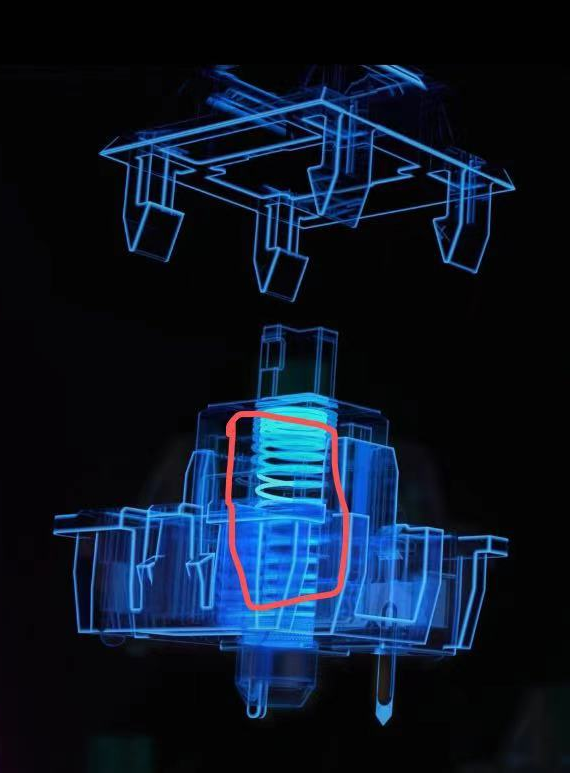
This illustration of the lube points is from my email string with Marsback.

Marsback found me through my personal website and contacted me directly to gauge my interest in this keyboard. I’ll admit that I wasn’t too excited about it until I scrolled further in the email and saw that they are producing their own switches in-house.

I think that’s a really interesting choice given that Cherry MX and other switches exist, and there so many Cherry MX clones out there already. Naturally, I had to investigate, so following a short review, I’ll take it apart.

Continue reading “Inputs Of Interest: Marsback M1 Is A Portable Party Peripheral” →

Design Solutions For The Heat Crisis In Cities Around The World

It was 1999 when Smash Mouth dropped the smash hit All Star, stating “The ice we skate is getting pretty thin, the water’s getting warm so you might as well swim.” Since then, global temperatures have continued to rise, with no end in sight. Political will has been unable to make any grand changes, and the world remains on track to blow through the suggested hard limits set by scientists.

As a result, heatwaves have become more frequent, and of greater intensity, putting many vulnerable people at risk and causing thousands of deaths each year. This problem is worse in cities, where buildings and roads absorb more heat from the sun than natural landscapes do. This is referred to as the heat island effect, with cities often being several degrees warmer than surrounding natural areas. It’s significant enough that experts are worried some cities could become uninhabitable within decades. Obviously, that’s highly inconvenient for those currently living in said cities. How bad is the problem, and what can be done?

Continue reading “Design Solutions For The Heat Crisis In Cities Around The World” →

There’s A Fungus Among Us That Absorbs Sound And Does Much More

Ding dong, the office is dead — at least we hope it is. We miss some of the people, the popcorn machine, and the printer most of all, but we say good riddance to the collective noise. Thankfully, we never had to suffer in an open office.

For many of us, yours truly included, home has become the place where we spend approximately 95% of our time. Home is now an all-purpose space for work, play, and everything in between, like anxiety-induced online shopping. But unless you live alone in a secluded area and/or a concrete bunker, there are plenty of sound-based distractions all day and night that emanate from both inside and outside the house. Headphones are a decent solution, but wearing them isn’t always practical and gets old after a while. Wouldn’t it be nice to be able to print your own customized sound absorbers and stick them on the walls? Continue reading “There’s A Fungus Among Us That Absorbs Sound And Does Much More” →

Rocket Lab Plans Larger Neutron Rocket For 2024

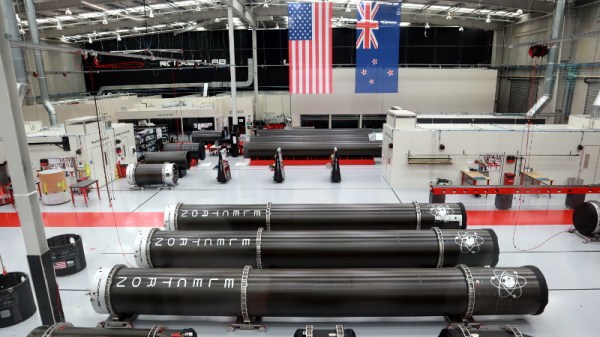
When Rocket Lab launched their first Electron booster in 2017, it was unlike anything that had ever flown before. The small commercially developed rocket was the first to use fully 3D printed main engines, and instead of pumping its propellants with traditional turbines, the vehicle used electric motors that jettisoned their depleted battery packs overboard during ascent to reduce weight. It even looked different than its peers, as rather than a metal fuselage, the Electron was built from a lightweight carbon composite which gave it a distinctive black color scheme.

Packing so many revolutionary technical advancements into a single vehicle was a risk, but Rocket Lab founder Peter Beck believed a technical shakeup was the only way to get ahead in an increasingly competitive market. While that first launch in 2017 didn’t make it to orbit, the next year, Rocket Lab could boast three successful flights. By the end of 2020, a total of fifteen Electron rockets had completed their missions, carrying payloads from both commercial customers and government agencies such as NASA, the United States Air Force, and DARPA.

Rocket Lab’s gambit paid off, and the company has greatly outpaced competitors such as Virgin Orbit, Astra, and Relativity. In fact Electron is now the second most active orbital booster in the United States, behind SpaceX’s Falcon 9. Considering their explosive growth, it’s only natural they’d want to maintain that momentum going forward. But even still, the recent announcement that the company will be developing a far larger rocket they call Neutron to fly by 2024 took many in the industry by surprise; especially since Peter Beck himself had previously said they would never build it.

Continue reading “Rocket Lab Plans Larger Neutron Rocket For 2024” →

Balanced Design And How To Know When To Quit Optimizing

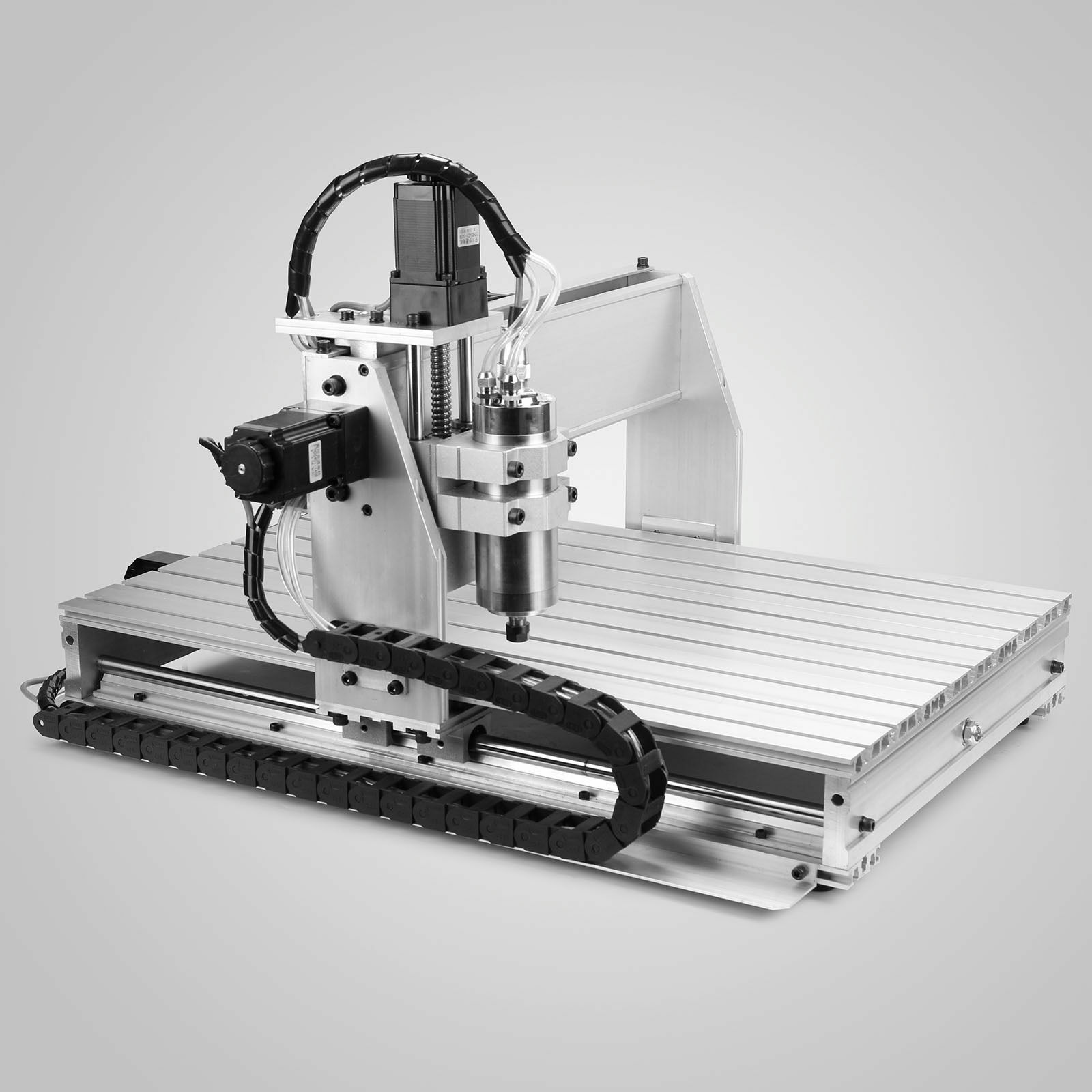
I got a relatively inexpensive 6040 CNC machine, and have been spending most weekends making the thing work, and then cutting stuff, learning the toolchain, and making subsequent improvements. Probably 90% of my machine time has been on making improvements. It’s not that the machine was bad — I got the version with ballscrews and a decently solid frame — but it’s that it somehow didn’t work together as a whole. It’s just an incredibly unbalanced design.

Let’s start with the spindle motor. It’s a 2.2 kW water-cooled beast that is capable of putting tons of work into a piece and spinning at very high speed. Yet to keep up with the high speed spindle, the motors that move it around would have to be capable of high speeds as well — it’s a feeds and speeds thing if you’re not a CNC geek. And they can’t. Instead, the stepper motors that came with the kit are designed for maximum force at low speeds. Which can make sense for some machines, but for one with a slightly flexible X-axis like this one, that’s wasted as well. The frame just can’t handle the low-end grunt that the motors are capable of, so it can’t take advantage of the spindle’s power either. The design is all over the place.
Over the last two months’ of weekends, I’ve been going through this iterative procedure of asking “what is my limiting factor right now?”, working on fixing that thing up, running it some, and then asking the question again. And it’s a good general procedure, and I believe that it’s getting me to the machine I want at the minimum cost of time, money, and effort.

At first, it was the driver hardware/software with its emulated USB parallel port, so I swapped out the controller for an Arduino running GRBL, soldered directly to the DB-25 that comes out of the back. At least it can put out pulses fast enough to order the motors around, but they would still stall out at high speeds. Swapping the stepper motors out for a high-speed pair only cost me €40, which makes you wonder why they didn’t just put the right motors on in the first place. The machine now travels fast enough to make use of the high-speed spindle, and I’m flying through plywood and plastics without leaving burn marks. It’s a huge win for not much money.

The final frontier is taking big bites out of aluminum. The spindle can do it, but I fear I’m up against the frame’s rigidity on the X-axis. For whatever reason, they went with unsupported rods on the X, which are significantly more flexible than an axis that’s backed up by more metal. And this is where the limiting factor may actually be my time and patience, rather than money. I just can’t bear to disassemble and reassemble the thing again. So for now, it’s going to be small nibbles, taking advantage of the machine’s speed, if not yet the spindle’s full horsepower.

But it’s odd, because this machine is a bundle of good parts. It’s just that they haven’t been chosen to work together optimally; the frame doesn’t work with the stepper motors, which don’t work with the spindle. If they went through my procedure of saying “what’s the limiting factor?” they could have saved themselves €100 by just shipping it with a wimpier spindle, which would have been a balanced, if anemic, machine. Or they could have built it with the right motors for more speed. Or supported rails for more grunt. Or both!

I’ll never know why they quit optimizing their design when they did. Maybe they never got past the slow USB/parallel port speed? But I’m near the end of my path, and I can tell because the limiting ingredient isn’t a simple upgrade, or even mere money anymore, but my own willpower.

How can you tell when you’re at the top of a mountain in a dense fog? A step you take in any direction would lead you downhill. How can you tell when you’re satisfied with a project’s state? When you don’t have the need, or desire, to undertake the next most obvious improvement.

Historical Hackers: Hero Builds Vending Machines

We tend to think of mechanical contrivances as products of the industrial revolution and true automation as something computers handle. Yet even before computers, automation existed — using timing motors and cams and other mechanical contraptions. But it might surprise you to know that there was actually some sophisticated automation going way back. Really way back, invented in a world without computers, CAD software, or even electricity. For example, around 50 AD an inventor named Hero — sometimes known as Heron — built machines powered by steam and wind. His inventions included vending machines and music players.

It is hard to imagine what kind of music player or, indeed, vending machine you could build in 50AD. Some of Hero’s inventions were used in temples to, for example, dispense holy water. Others were used in theater to do things like automatically lighting a fire or creating thunder effects. There was even an entirely automated puppet show that used knotted ropes to put on a ten-minute production with no human assistance.

Continue reading “Historical Hackers: Hero Builds Vending Machines” →