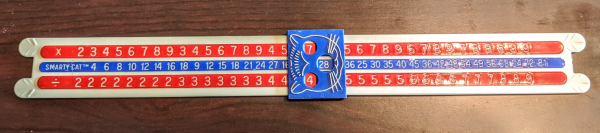
You may remember that I collect slide rules. If you don’t, it probably doesn’t surprise you. I have a large number of what I think of as normal slide rules. I also have the less common circular and cylindrical slide rules. But I recently picked up a real oddity that I had to share: the Smarty Cat. It isn’t exactly a slide rule but it sort of is if you stretch the definition a bit.
Real Slide Rules
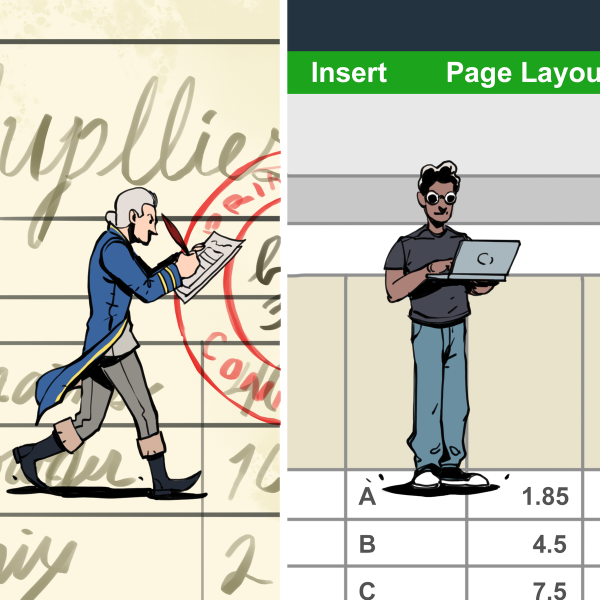
A regular slide rule takes advantage of the fact that you can multiply and divide by adding logarithms. Imagine having two rulers marked in inches or centimeters — it doesn’t matter (see the adjoining image). Suppose you want to add 5 and 3. You count off 5 marks on one ruler and line it with up the zero inch mark on the other ruler. Now you count off 3 marks on the second ruler and that position on the first ruler will indicate the result. Here it lines up with the 8 mark, which is, of course, the correct answer.
That’s a simple addition. But if you can convert your numbers into logarithms, add the logarithms, and then back out to a regular number, you can multiply.
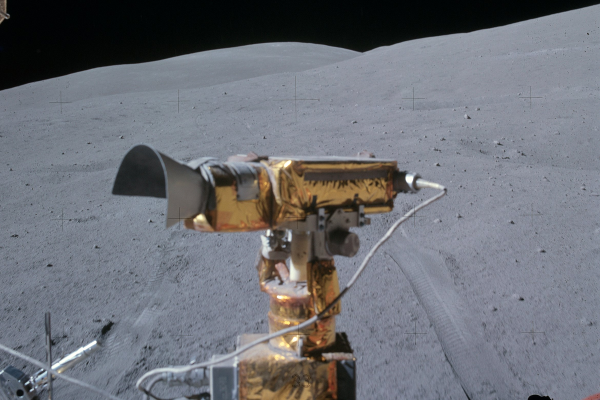
We have all watched videos of concerts and events dating back to the 1950s, but probably never really wondered how this was done. After all, recording moving images on film had been done since the late 19th century. Surely this is how it continued to be done until the invention of CCD image sensors in the 1980s? Nope.
Although film was still commonly used into the 1980s, with movies and even entire television series such as Star Trek: The Next Generation being recorded on film, the main weakness of film is the need to move the physical film around. Imagine the live video feed from the Moon in 1969 if only film-based video recorders had been a thing.
A common sight in automobile-congested cities such as New York are parking meters lining the curbs next to parking spots. They’re an autonomous way for the city to charge for the space taken by cars parked along the sidewalk near high-traffic commercial areas, incentivizing people to wrap up their business and move their vehicle out of a costly or time-limited parking space.
The parking meter is such a mundane device most people wouldn’t look at them twice, but on the inside it’s fascinating to see how they’re engineered, how that’s changed through the years, and how a software bug handicapped thousands of digital meters at the start of 2020.
Parking meters were originally commissioned in the 1930s by the government of Oklahoma City, due to the rapidly increasing number of automobiles, and therefore demand for parking space. Up until then, the city used patrolling policemen to regulate parking space, but they couldn’t keep up with the pace of the increased traffic and the lack of available parking space made business drop around downtown shops.
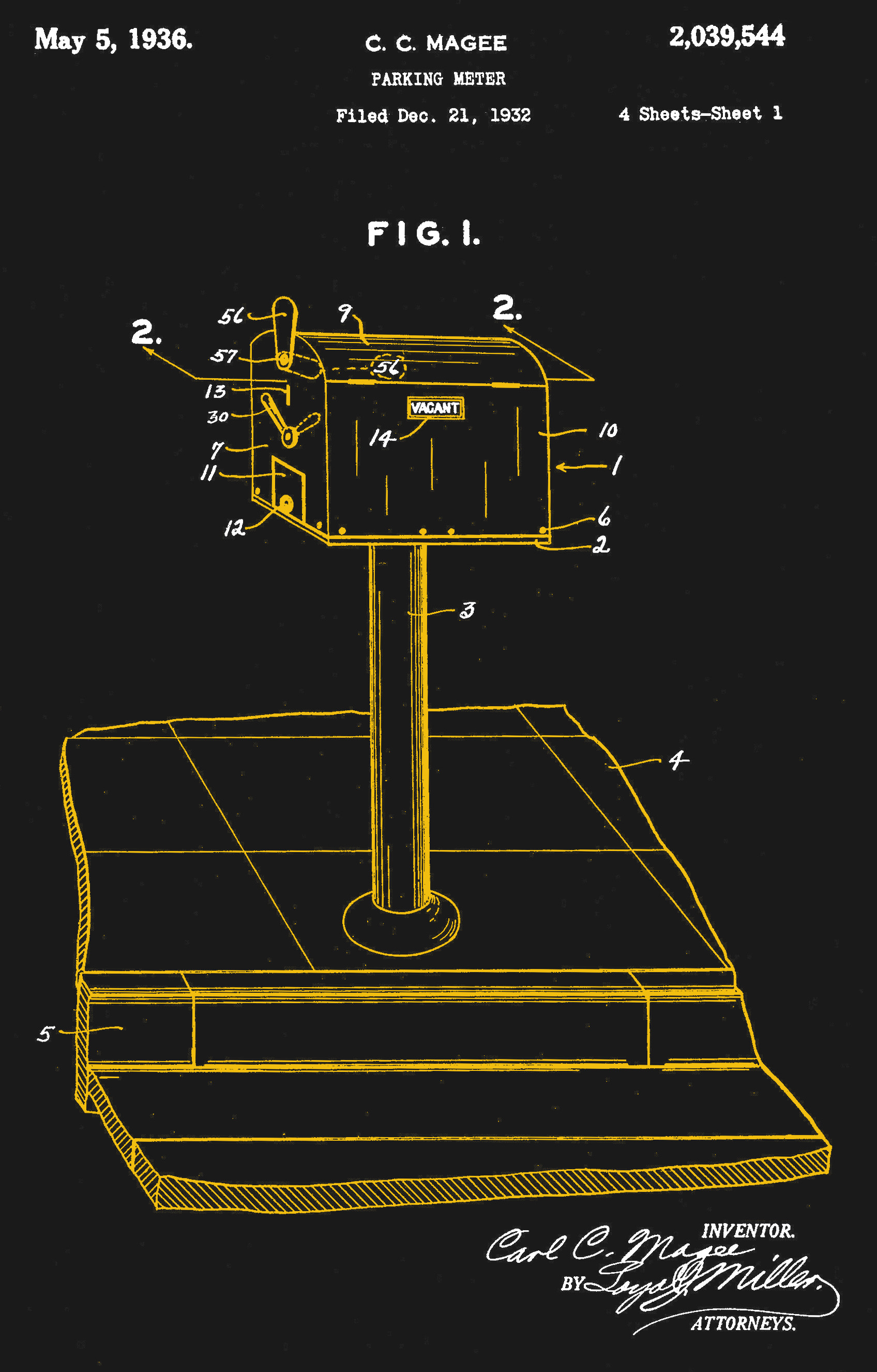
The first widely-adopted parking meter was dubbed “Black Maria”, a machine patented in 1935 by Carl C. Magee and Gerald Hale and first installed in the city in July of that year. This was a completely automated mechanical device made to solve the problem of regulating the time a driver can park their car in a given spot. It would take a nickel as payment, inserted into the mechanism by rotating a handle which also served to wind a clock spring. This clock would then tick down the remaining time the user could remain parked there, which could range from 15 minutes to an hour depending on the location.
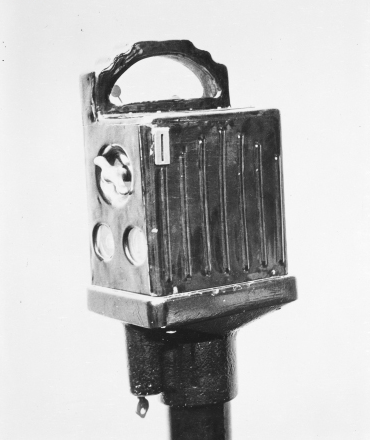
An early Black Maria design, circa 1933.
Within days store owners noticed a positive effect in their profits thanks to the increase in customers with the regulated parking. What’s more, the coins collected from the meters also generated revenue for the city, and so, parking meters started spreading throughout the city. And as decades went, the mechanics were improved upon. A window was added into which a patrolling officer could easily look to check if the right amount of money (or money at all) was inserted. Separate panels for the coins to be easily collected without risking damage to the rest of the internal clockwork were also added.
The evolution of parking meters eventually passed through meters that could take care of parking spaces on either side of it, halving the amount of necessary poles per sidewalk. Electronic models starting appearing in the 1990s and eventually connectivity added. With meters all hooked up to the same network, the symbiotic connection between the parking meter and your spot was severed. It didn’t matter where your car was parked anymore; you could simply take your printed ticket and put it on your dashboard to be legally parked. Further advancements led to numbers spots that can be paid from any kiosk in the city, or though a smartphone app. But those digital advancements don’t always translate into reliability…
With the notable exception of the Space Shuttle, rockets and spacecraft have always been considered disposable. It’s a slow and expensive way to travel, akin to building a new airliner for every flight, but it was the easiest option. These vehicles have always represented the pinnacle of engineering and material science of their time, and just surviving the trip to space once was an incredible accomplishment. To have another go around would have been asking too much of the technology. Even looking back on the Space Shuttle program, there’s plenty of debate about whether or not the reusable design really paid off in the end.
So SpaceX’s ability to land, refurbish, and refly the first stage of their Falcon 9 booster is no small accomplishment. After demonstrating the idea was possible in 2017, the company made numerous changes to the latest iteration of the rocket with reusability in mind. Known as Block 5, this version of the Falcon 9 is designed to be more survivable and require minimal servicing between flights. The company says its cheaper and faster to reuse the Block 5 than it would be to build a new one for each flight, allowing the company to approach spaceflight more like commercial aviation.
Falcon 9 launch and landing streaks. (Source: SpaceX)
With a fleet of Block 5 boosters now in rotation, SpaceX has given them serial numbers not unlike an airplane’s tail number. It might not be the kind of thing the general public would normally be aware of, but these serial numbers have allowed a dedicated community of space aficionados to keep track of the missions each booster has flown.
Unfortunately the story of one of these rockets, officially referred to as “Cores” in SpaceX parlance, was recently cut short. Core B1056, returning from the Starlink 4 mission on February 17th, failed to land on the autonomous spaceport drone ship (ASDS) Of Course I Still LoveYou and splashed down in the ocean. It’s still unclear what condition the booster was in after its soft landing in the water, but when the recovery ships returned to port empty handed, there was no question as to the fate of B1056.
From a purely business standpoint, the failure of any of SpaceX’s boosters means lost time and revenue. But in some ways B1056 had established itself as the vanguard of the fleet, managing to either set or break a number of records in its relatively short life. The destruction of the most thoroughly flight proven Block 5 booster is a stark reminder that there’s very little about spaceflight that could be called routine.
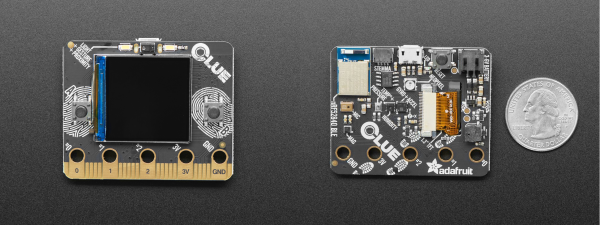
There’s a new development board in town from Adafruit, and it’s called the CLUE. This tiny board can be programmed in Arduino or CircuitPython, and it is absolutely stuffed with sensors and functionality, including Bluetooth. It’s essentially a BBC Micro:bit with more sensors, a screen, and a much beefier processor. Sound interesting? Let’s get out the magnifying glass and take a look, shall we?
(Editor’s note: Adafruit ran out of the first alpha run of the hardware. While we didn’t run into any bugs, the next versions will presumably have even fewer, but will also cost $40 instead of $30. That said, they’re giving out 3,000 of them to attendants of PyCon in April, so you might also get your hands on one that way.)
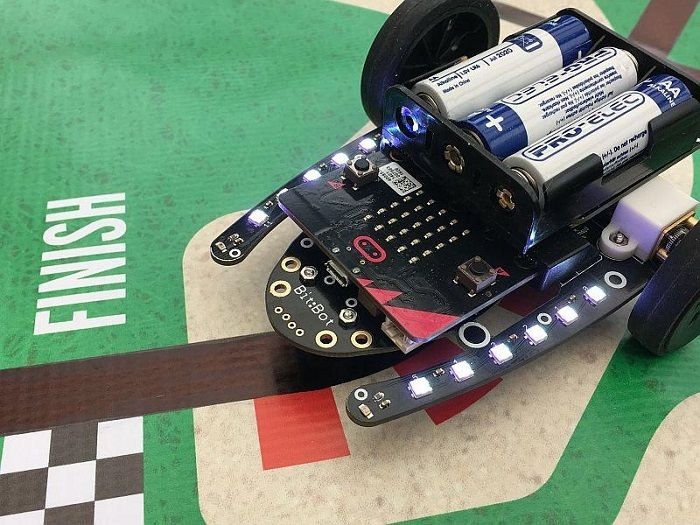
And Bit:Bot takes the checkered flag! Image via Seeed Studio
First and foremost, there’s the form factor — if that bottom edge looks familiar, that’s because the CLUE is designed to work with micro:bit robot kits and anything else with that edge connector, like the CRICKIT for micro:bit, or the Bit:Bot from Seeed Studios. This is big news for the micro:bit ecosystem, and not just because the CLUE brings tons of sensors and a screen to the scene, although a 1.3″ screen at 240×240 resolution is nothing to sneeze at.
The main brain is a Nordic nRF52840, so you can pair it to your phone and stream your collected data. Or, use it to get two CLUE boards talking to each other. This is a major upgrade from the micro:bit’s nRF51822 — the CLUE is four times faster, has four times the flash memory, and has sixteen times as much RAM. We hope someone can find a way to make them into short-range messaging machines with Q10 keyboards.
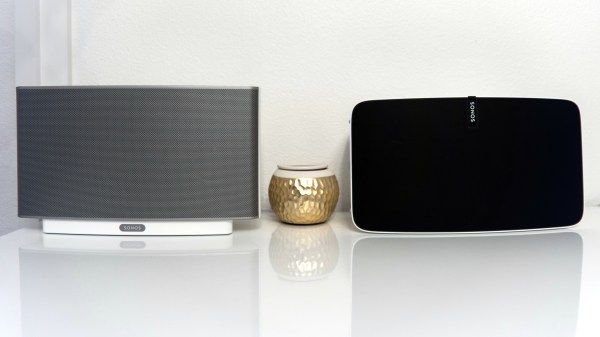
We’re trying to figure out whether Sonos was doing the right thing, and it’s getting to the point where we need pins, a corkboard, and string. Sonos had been increasing the functionality of its products and ran into a problem as they hit a technical wall. How would they keep the old speakers working with the new speakers? Their solution was completely bizarre to a lot of people.
First, none of the old speakers would receive updates anymore. Which is sad, but not unheard of. Next they mentioned that if you bought a new speaker and ran it on the same network as an old speaker, neither speaker would get updates. Which came off as a little hostile, punishing users for upgrading to newer products.
The final bit of weirdness was their solution for encouraging users to ditch their old products. They called it, “trading in for a 30% discount”, but it was something else entirely. If a user went into the system menu of an old device and selected to put it in “Recycle Mode” the discount would be activated on their account. Recycle Mode would then, within 30 days, brick the device. There was no way to cancel this, and once the device was bricked it wouldn’t come back. The user was then instructed to take the Sonos to a recycling center where it would be scrapped. Pictures soon began to surface of piles of bricked Sonos’s. There would be no chance to sell, repair, or otherwise keep alive what is still a fully functioning premium speaker system.
Why would a company do this to their customers and to themselves? Join me below for a guided tour of how the downsides of IoT ecosystem may have driven this choice.
Ah, the humble status LED. Just about every piece of home electronics, every circuit module, and anything else that draws current seems to have one. In the days of yore, a humble indicator gave a subtle glow from behind a panel, and this was fine. Then the 1990s happened, and everything got much much worse.
It’s Not The Technology, It’s How You Use It
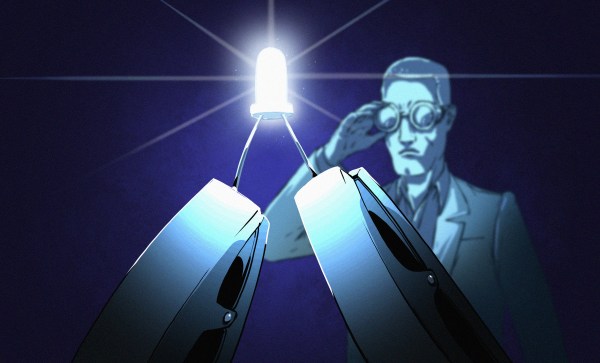
With great brightness, comes great responsibility.
The 1990s brought us much good: Nirvana, Linux, and of course the blue LED. Much like “Teen Spirit”, the latter quickly fell into overuse: the technology rapidly became the sigil of all that was new and great, much to the ocular pain of the buying public.
This decision ranks up there for stupidity with other such questionable choices as hiring a rental car at the airport, or invading Russia in the winter. A status LED, most would agree, is there to indicate status. It need only deliver enough light to be seen when observed by a querying eye. What it need not do is glow with the intensity of a dying star, or illuminate an entire room for that matter. But, in the desperate attempts of product designers to appear on the cutting edge, the new, brighter LED triumphed over all in these applications. Continue reading “We Ruined Status LEDs; Here’s Why That Needs To Change”→