Teardown: VeriFone MX 925CTLS Payment Terminal

Regular Hackaday readers may recall that a little less than a year ago, I had the opportunity to explore a shuttered Toys “R” Us before the new owners gutted the building. Despite playing host to the customary fixture liquidation sale that takes place during the last death throes of such an establishment, this particular location was notable because of how much stuff was left behind. It was now the responsibility of the new owners to deal with all the detritus of a failed retail giant, from the security camera DVRs and point of sale systems to the boxes of employee medical records tucked away in a back office.
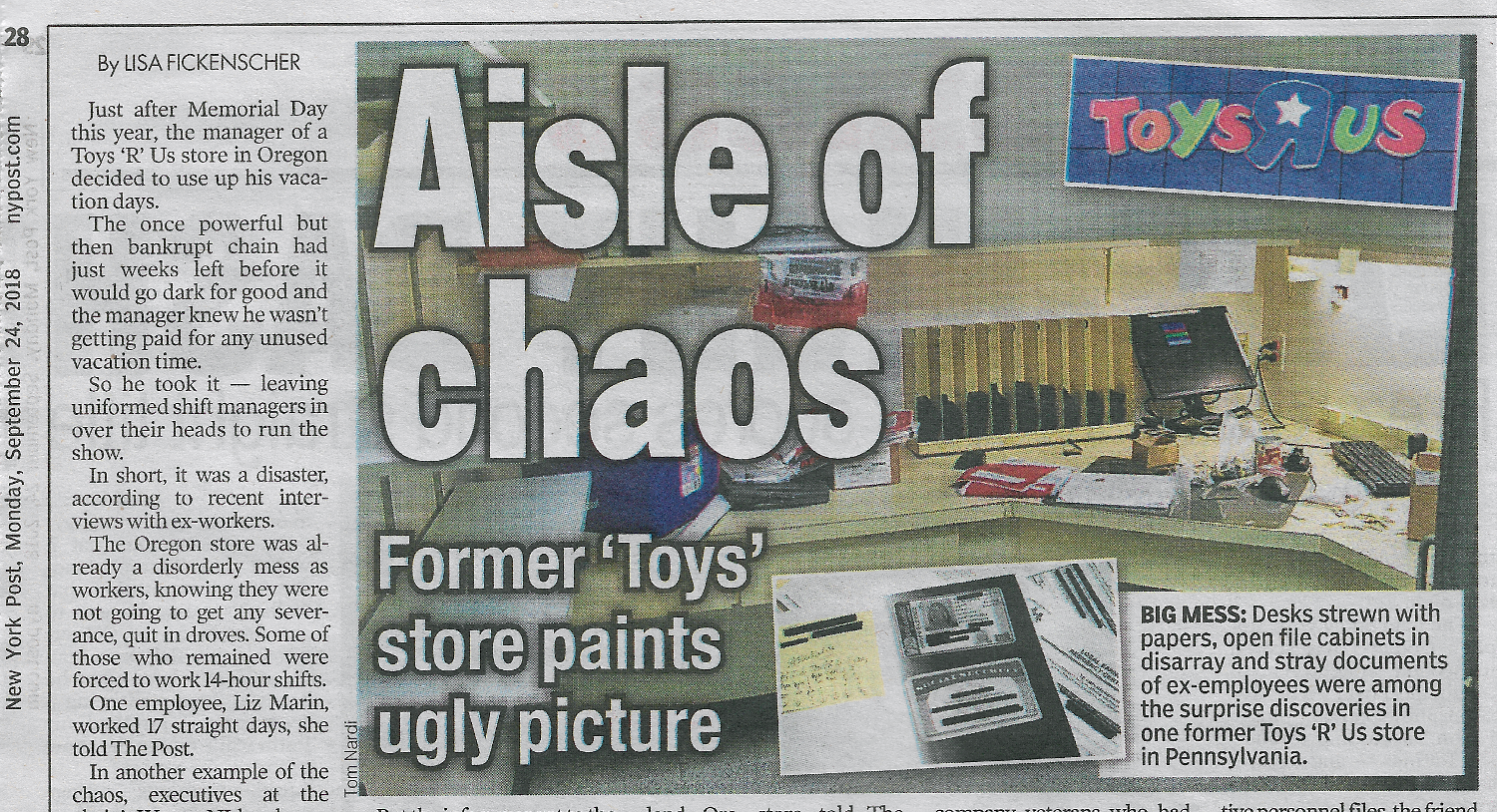
Clipping from New York Post. September 24th, 2018.

The resulting article and accompanying YouTube video were quite popular, and the revelation that employee information including copies of social security cards and driver’s licenses were left behind even secured Hackaday and yours truly a mention in the New York Post. As a result of the media attention, it was revealed that the management teams of several other stores were similarly derelict in their duty to properly dispose of Toys “R” Us equipment and documents.

Ironically, I too have been somewhat derelict in my duty to the good readers of Hackaday. I liberated several carloads worth of equipment from Geoffrey’s fallen castle with every intention of doing a series of teardowns on them, but it’s been nine months and I’ve got nothing to show for it. You could have a baby in that amount of time. Which, incidentally, I did. Perhaps that accounts for the reshuffling of priorities, but I don’t want to make excuses. You deserve better than that.

So without further ado, I present the first piece of hardware from my Toys “R” Us expedition: the VeriFone MX 925CTLS. This is a fairly modern payment terminal with all the bells and whistles you’d expect, such as support for NFC and EMV chip cards. There’s a good chance that you’ve seen one of these, or at least something very similar, while checking out at a retail chain. So if you’ve ever wondered what’s inside that machine that was swallowing up your debit card, let’s find out.

Continue reading “Teardown: VeriFone MX 925CTLS Payment Terminal”
Five Years Of The Raspberry Pi Model B+ Form Factor, What Has It Taught Us?

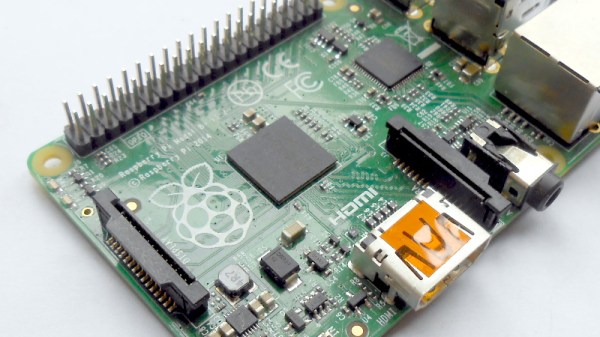
With all the hoopla surrounding the recent launch of the new Raspberry Pi 4, it’s easy to overlook another event in the Pi calendar. July will see the fifth anniversary of the launch of the Raspberry Pi Model B+ that ushered in a revised form factor. It’s familiar to us now, but at the time it was a huge change to a 40-pin expansion connector, four mounting holes, no composite video socket, and more carefully arranged interface connectors.

As the Pi 4 with its dual mini-HDMI connectors and reversed Ethernet and USB positions marks the first significant deviation from the standard set by the B+ and its successors, it’s worth taking a look at the success of the form factor and its wider impact. Is it still something that the Raspberry Pi designers can take in a new direction, or like so many standards before it has it passed from its originator to the collective ownership of the community of manufacturers that support it?

Continue reading “Five Years Of The Raspberry Pi Model B+ Form Factor, What Has It Taught Us?”

Mary Sherman Morgan, Rocket Fuel Mixologist

In the fall of 1957, it seemed as though the United States’ space program would never get off the ground. The USSR had launched Sputnik in October, and this cemented their place in history as the first nation in space. If that weren’t bad enough, they put Sputnik 2 into orbit a month later.

By Christmas, things looked even worse. The US had twice tried to launch Navy-designed Vanguard rockets, and both were spectacular failures. It was time to use their ace in the hole: the Redstone rocket, a direct descendant of the V-2s designed during WWII. The only problem was the propellant. It would never get the payload into orbit as-is.

The US Army awarded a contract to North American Aviation (NAA) to find a propellant that would do the job. But there was a catch: it was too late to make any changes to the engine’s design, so they had to work with big limitations. Oh, and the Army needed it two days before yesterday.

The Army sent a Colonel to NAA to deliver the contract, and to personally insist that they put their very best man on the job. And they did. What the Army didn’t count on was that NAA’s best man was actually a woman with no college degree.

Continue reading “Mary Sherman Morgan, Rocket Fuel Mixologist”

Hands-On: GreatFET Is An Embedded Tool That Does It All

There’s a new embedded hacking tool on the scene that gives you an interactive Python interface for a speedy chip on a board with oodles of GPIO, the ability to masquerade as different USB devices, and a legacy of tricks up its sleeve. This is the GreatFET, the successor to the much loved GoodFET.

I first heard this board was close to launch almost a year ago and asked for an early look. When shipping began at the end of April, they sent me one. Let’s dig in for a hands-on review of the GreatFET from Great Scott Gadgets.

Continue reading “Hands-On: GreatFET Is An Embedded Tool That Does It All”

Ask Hackaday: How Can You Build For A Ten Millennia Lifespan?

There’s been a lot of news lately about the Long Now Foundation and Jeff Bezos spending $42 million or so on a giant mechanical clock that is supposed to run for 10,000 years. We aren’t sure we really agree that it is truly a 10,000 year clock because it draws energy — in part — from people visiting it. As far as we can tell, inventor Danny Hills has made the clock to hoard energy from several sources and occasionally chime when it has enough energy, so we aren’t sure how it truly sustains itself. However, it did lead us to an interesting question: how could you design something that really worked for 10,000 years?

Continue reading “Ask Hackaday: How Can You Build For A Ten Millennia Lifespan?”

NASA’s “Green” Fuel Seeks Safer Spaceflight By Finally Moving Off Toxic Hydrazine

Spaceflight is inherently dangerous. It takes a certain type of person to willingly strap into what’s essentially a refined bomb and hope for the best. But what might not be so obvious is that the risks involved aren’t limited to those who are personally making the trip. The construction and testing of space-bound vehicles poses just as much danger to engineers here on the ground as it does to the astronauts in orbit. Arguably, more so. Far more individuals have given their lives developing rocket technology than have ever died in the cockpit of one of them.

Reddish brown exhaust of hydrazine thrusters

Ultimately, this is because of the enormous amount of energy stored in the propellants required to make a rocket fly. Ground support personnel need to exercise great care even when dealing with “safe” propellants, such as the classic combination of kerosene and liquid oxygen. On the other end of the spectrum you have chemicals that are so unstable and toxic that they can’t be handled without special training and equipment.

One of the most dangerous chemicals ever used in rocket propulsion is hydrazine; and yet from the Second World War to the present day, it’s been considered something of an occupational hazard of spaceflight. While American launch vehicles largely moved away from using it as a primary propellant, hydrazine is still commonly used for smaller thrusters on spacecraft.

When SpaceX’s Crew Dragon exploded in April during ground tests, the release of approximately one and a half tons of hydrazine and nitrogen tetroxide propellants required an environmental cleanup at the site.

But soon, that might change. NASA has been working on a project they call the Green Propellant Infusion Mission (GPIM) which is specifically designed to reduce modern spacecraft’s dependency on hydrazine. In collaboration with the Air Force Research Laboratory at California’s Edwards Air Force Base, the space agency has spearheaded the development of a new propellant that promises to not just replace hydrazine, but in some scenarios even outperform it.

So what’s so good about this new wonder fuel, called AF-M315E? To really understand why NASA is so eager to power future craft with something new, we first have to look at the situation we’re in currently.

Continue reading “NASA’s “Green” Fuel Seeks Safer Spaceflight By Finally Moving Off Toxic Hydrazine”

Building A Foam Machine From A Leaf Blower And A Water Pump

Imagine a tub overflowing with bubble bath, except it’s a club dancefloor and music is pumping all night. This is what is known as a “foam party” — a wild and exciting concept that nonetheless many are yet to experience. The concept exploded in popularity in Ibiza in the 1990s, and foam parties are regularly held at nightclubs and festivals the world over.

Foam is generated with the obviously-named foam machine, and these can be readily purchased or hired for anyone wishing to host such an event. However, that’s not the hacker way. If you’re a little ingenious and take heed of the safety precautions, here’s how you can do it yourself.

Continue reading “Building A Foam Machine From A Leaf Blower And A Water Pump”