How To Hack Your Own Password

[Haseeb] failed the marshmallow test as a kid. He has no self-control. He wastes a lot of time on reddit. There is a solution to this problem — simply lock yourself out of your account. The process is simple, and all you need to do is change your password to something random, change the recovery email address, and click submit. In the blink of an eye, all your imaginary Internet points vanish.

That’s the one guaranteed way to quit reddit. However, [Haseeb] wanted to hold onto those magic Internet points in the event they become worth something. This led to a far more baroque solution. He found a service that would email him at a later date, send an email to himself containing a random password, and quit reddit temporarily. Until that email was delivered, he was officially off reddit. When that email was received, productivity would stop.

A few years pass, and [Haseeb] had some time to kill at his new job. He decided to scrounge up his old password, only to discover he locked himself out of his Reddit account until 2018. What followed is a security exploit of an ’email me in the future’ service, and a great example of how much effort one person will commit to a lifetime of instant gratification.

The email service in question is LetterMeLater, a site that will send an email at some arbitrary point in the future. You can hide the body of the email from yourself, making this a fairly good solution for what [Haseeb] is doing. He was still locked out of his email, though, and emailing the people running LetterMeLater seemed absurd. Dopamine is fun, though, and [Haseeb] eventually found a workaround. This site indexes the body of an email for search. This is great, because the body of the email this site would send [Haseeb] in 2018 contained his reddit password and only his reddit password. With a little bit of code, he can perform substring queries on an email he can’t read. Now, extracting the password is simply a first year CS homework problem.

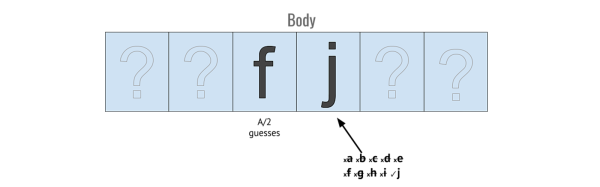
At this point, the only thing [Haseeb] knows about his password is that it’s a long string of random characters that probably doesn’t include upper-case characters. That’s 26 possible characters, 10 possible numbers, and a character bank that can be determined by searching his email one character at a time. [Haseeb] is essentially playing Hangman against his former self here.

After figuring out an API for LetterMeLater, [Haseeb] whipped up a quick bit of code that finds the password by searching substrings. It’s beautiful and recursive, although he did break it down into finding a suffix of the password then determining the remainder of the password. It took 443 iterations of the code to find the password, and when that was complete he logged into reddit. Math works, although [Haseeb] will have to figure out a way to wean himself off the opiate of the millennials again.

BrickerBot Takes Down Your IoT Devices Permanently

There is a new class of virii in town, specifically targeting Internet of Things (IoT) devices. BrickerBot and its variants do exactly as their name says, turning your smart devices into bricks. Someone out there has gotten tired of all the IoT security flaws and has undertaken extreme (and illegal) measures to fix the problem. Some of the early reports have come in from a security company called Radware, who isolated two variants of the virii in their honeypots.

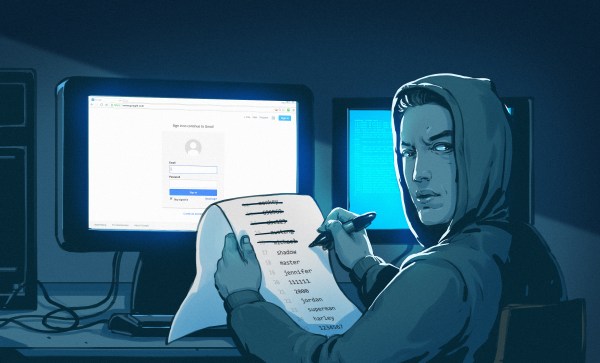
In a nutshell, BrickerBot gains access to insecure Linux-based systems by using brute force. It tries to telnet in using common default root username/password pairs. Once inside it uses shell commands (often provided by BusyBox) to write random data to any mounted drives. It’s as easy as

dd if=/dev/urandom of=/dev/sda1

With the secondary storage wiped, the device is effectively useless. There is already a name for this: a Permanent Denial-of-Service (PDoS) attack.

Now any card carrying Hackaday reader will know that a system taken down like this can be recovered by re-flashing through USB, JTAG, SD, other methods. However, we’re not BrickerBot’s intended audience. We’ve all changed our devices default passwords, right? RIGHT?

For more IoT security, check out Elliot’s excellent article about botnets earlier this year, and its follow-up.

Is My Password Safe? Practices For People Who Know Better

A couple of weeks back a report came out where [Tavis Ormandy], a widely known security researcher for Google Project-Zero, showed how it was possible to abuse Lastpass RPC commands and steal user passwords. Irony is… Lastpass is a software designed to keep all your passwords safe and it’s designed in a way that even they can’t access your passwords, the passwords are stored locally using strong cryptography, only you can access them via a master-key. Storing all your passwords in only place has its downfalls. By the way, there is no proof or suggestion that this bug was abused by anyone, so if you use Lastpass don’t worry just yet.

But it got me thinking, how worried and how paranoid should a regular Internet user should be about his password? How many of us have their account details exposed somewhere online? If you’ve been around long enough, odds are you have at least a couple of accounts on some major Internet-based companies. Don’t go rushing into the Dark Web and try to find if your account details are being sold. The easiest way to get your paranoia started is to visit Have I Been Pwned. For those who never heard about it, it’s a website created by [Troy Hunt], a well-known security professional. It keeps track of all known public security breaches he can get his hands on and provides an answer to a simple question: “Was my account in any major data leak?” Let’s take a look.

Continue reading “Is My Password Safe? Practices For People Who Know Better”

File Format Posters

It’s not uncommon for hackers to have a particular delectation for unusual interior decoration. Maybe it’s a Nixie tube clock, or a vacuum fluorescent display reading out the latest tweets from a favorite chatbot. If this sounds like your living room already, perhaps you’d like some of these file format posters to adorn your walls.

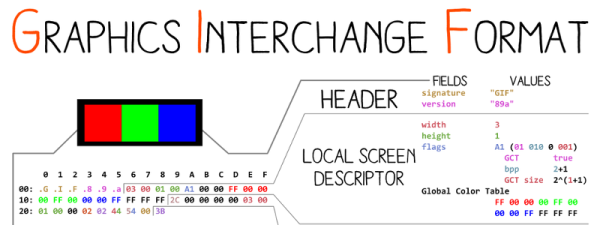
The collection of images includes all kinds of formats — GIF, ZIP and WAV are all represented, but it even gets into some real esoterica — DOLphin format executables are here if you’re a total GameCube fanatic. Each poster breaks down the format into parts, such as the header, metadata and descriptor sections, and come in a variety of formats themselves — most available in SVG, PDF and PNG.

If we’re totally honest, these aren’t all designed for hanging on your wall as-is — we’d consider putting some work into to optimize the color palettes and layouts before putting these to print. But regardless, they’re an excellent visual representation of data structures that you might find particularly useful if you need to do some reverse engineering down the track.

If you still have wall space available after seeing this, here’s the electronic reference poster that should fill it.

[Thanks to JD for the tip!]

3D Printed Key-Code Is Plastic Digital Logic

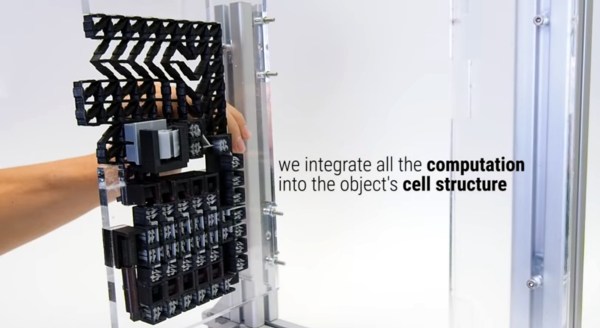
3D printers are great for creating static objects, but if you’re clever, it’s possible to print functional devices. If you’re absolutely brilliant you can go far beyond that, which is the case here. This door handle with a key-code lock does it all with 3D printing using mechanism designs that look like alien technology. This is just one application of a much more interesting mechanical digital logic they’re developing (PDF).

Working from the [Hasso-Plattner-Institut], the research team is focusing on metamaterials as mechanisms in and of themselves. The crux of this lock is a series of bistable springs that — if the correct code is entered — will trigger in series to unlock the door. The project builds on the grid of shearing cells seen in the door handle we featured last year. It happens quickly in the video, but the intricate cascade of the handle unlocking is a treat to witness.

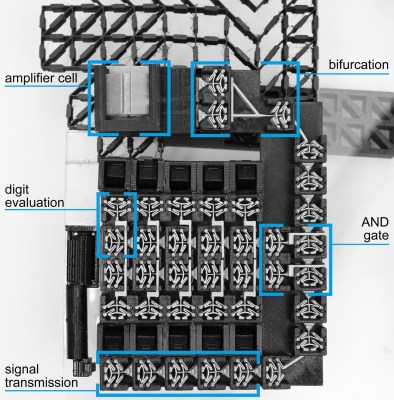
It’s a fascinating show of mechanical design. The common elements of digital electronics are all present: set or unset bits, logic gates, propagation issues, the whole works. But there are added challenges in this system, like the need for special cells that can turn the logic chain by 90 degrees and split the signal into more than one part.

This signal splitting is seen in the upper right (bifurcation) and leads into what is in effect an amplifier. The locking bolt must be moved twice the distance of a normal cell, so a dual-cell input is necessary to offset the loss of force from the incoming smaller cells. Cognitively we understand this, but we’re still trying to gain an intuitive sense of the amplifer mechanism.

One thing’s for sure, the overall concept is far cooler than this admittedly awesome door lock mechanism. The paper is worth your time for a deep dive. It mentions their design editor software. You can play with it online but we don’t think it’s been updated to include the new logic cells yet.

Continue reading “3D Printed Key-Code Is Plastic Digital Logic”

IOT Startup Bricks Customers Garage Door Intentionally

Internet of Things startup Garadget remotely bricked an unhappy customer’s WiFi garage door for giving a bad Amazon review and being rude to company reps. Garadget device owner [Robert Martin] found out the hard way how quickly the device can turn a door into a wall. After leaving a negative Amazon review, and starting a thread on Garadget’s support forum complaining the device didn’t work with his iPhone, Martin was banned from the forum until December 27, 2019 for his choice of words and was told his comments and bad Amazon review had convinced Garadget staff to ban his device from their servers.

The response was not what you would expect a community-funded startup. “Technically there is no bricking, though,” the rep replied. “No changes are made to the hardware or the firmware of the device, just denied use of company servers.” Tell that to [Robert] who can’t get into his garage.

This caused some discontent amoung other customers wondering if it was just a matter of time before more paying customers are subjected to this outlandish treatment. The Register asked Garadget’s founder [Denis Grisak] about the situation, his response is quoted below.

 It was a Bad PR Move, Martin has now had his server connection restored, and the IOT upstart has posted a public statement on the matter.– Garadget

This whole debacle brings us to the conclusion that the IoT boom has a lot of issues ahead that need to be straightened out especially when it comes to ethics and security. It’s bad enough to have to deal with the vagaries of IoT Security and companies who shut down their products because they’re just not making enough money. Now we have to worry about using “cloud” services because the people who own the little fluffy computers could just be jerks.

World Create Day: The Hackaday Event In Your Town

It’s official, World Create Day is on April 22nd. Get together with hackers in your area and create something! This is best way to meet all the Hackaday readers in your area, and a great excuse to carve out a few hours of your busy life to have fun working on a project.

These are really easy to organize, but we can’t do it without you. Sign up now to host a meetup in your town!

The Hackaday community around the world will meetup and spend time building together on Saturday, April 22nd. If you’re like us you have a long list of projects you want to do ‘some day’, this is the day. Pack up your current build (or grab gear to start a new one), get together with some old and new friends, and hack on your projects with each other.

It’s traditional to block out a bit of time at the end for lightning talks to show off the builds each of you has been working on. Don’t forget to take pictures and post the story of your World Create Day meetup. We enjoyed getting a great look at many of last year’s meetups this way and want to expand the builds we feature on the front page this year.

Meetup Organizers Wanted

Fill out this form to let us know you want to host a meetup.

This is the second year of World Create Day. Last year we saw meetups in 64 cities. Many of those will happen again this year, but we also need you to organize an event in your area. We’ll help you get things set up and put your event up on the big map so others in your area will plan to join in. Do it now, if we get your shipping info early we’ll send you stickers and other swag to hand out at your gathering.

Build Something that Matters

The core of World Create Day is to stop making excuses and just build something. Since you’re already getting together with other people consider forming a team to enter the 2017 Hackaday Prize. Currently we’re in the idea phase: Design Your Concept means tackling a problem and planning a build to solve it. When you get a bunch of creative people together in one place, great ideas begin to flow. Seize the moment by turning that creativity into an entry for the Hackaday Prize and see where it takes you!