Hackaday Links Column Banner

Hackaday Links: April 7, 2024

Folks with a bit of knowledge about network security commonly use virtual private networks (VPNs) when out and about. Whether you’re connecting to public WiFi or somebody passes you a questionable Ethernet cable at a hacker con, it’s nice to have a secure endpoint to tunnel all of your traffic. As a secondary bonus, connecting through a VPN can obscure your physical location. It’s that second feature that has a bunch of people jumping on the VPN bandwagon as they try to dodge the recent porn age checks that have gone into effect in a number of states. According to a recent article in PopSci, one particular VPN provider saw a 275% jump in demand on the same day that PornHub cut off access to users in Texas. While the debate over underage users accessing adult content is far outside of our wheelhouse, anything that gets more users connecting to the Internet via encrypted means is arguably a net positive.

If you wanted somebody from the Geek Squad to set up that VPN so you can get back on PornHub to work securely from the local coffee shop, you might be out of luck. Reports have been coming in that Best Buy’s mobile nerd division is seeing sweeping layoffs. Geeks were told to stay home on Tuesday and await a call from corporate, at which point many got the surprising news that they no longer had a job. The /r/GeekSquad subreddit has been a rallying point for staff who got the axe, with the user [jaym026] posting what we assume is an AI-generated inspirational speech from Optimus Prime. Of course, it sucks for anyone to lose their job, especially with the way things are these days. Still, we’re willing to bet almost none of those affected will look back on the day they were let go from an increasingly irrelevant brick-and-mortar electronics store as a low point in their professional careers.

Continue reading “Hackaday Links: April 7, 2024”

Understand Your Tools: Finger Exercises

A dip meter is basically a coil of wire that, when you excite it, you can use to tell if something inside that coil is resonating along. This lets you measure unknown radio circuits to figure out their resonant frequency, for instance. This week, we featured a clever way to make a dip meter with a nanoVNA, which is an odd hack simply because a dip meter used to be a common spare-parts DIY device, while a vector network analyzer used to cost more than a house.

Times have changed, and for the better. Nowadays, any radio amateur can pick up a VNA for less than the cost of all but the cheesiest of walkie talkies, putting formerly exotic test equipment in the hands of untrained mortals. But what good is a fancy-pants tool if you don’t know how to use it? Our own Jenny List faced exactly this problem when she picked up a nanoVNA, and her first steps are worth following along with if you find yourself in her shoes.

All of this reminded me of an excellent series by Mike Szczys, “Scope Noob”, where he chronicled his forays into learning how to use an oscilloscope by running all of the basic functions by working through a bunch of test measurements that he already knew the answer to.

It strikes me that we could use something like this for nearly every piece of measuring equipment. Something more than just an instruction manual that walks you through what all the dials do. Something that takes you through a bunch of example projects and shows you how to use the tool in question through a handful of projects. Because these days, access to many formerly exotic pieces of measuring gear has enabled many folks to have gear they never would have had before – and all that’s missing is knowing how to drive them.

Fictional Computers: The Three Body Problem

If you intend to see the Netflix series “The Three Body Problem” or you want to read the Hugo-winning story from Chinese author [Cixin Liu], then you should probably bookmark this post and stop reading immediately. There will be some mild spoilers. You have been warned.

While the show does have some moments that will make your science brain cringe, there is one scene that shows a computer that could actually be built. Would it be practical? Probably not in real life, but in the context provided by the show, it was perfectly feasible. It could have, however, been done a little better, but the idea was — like many great ideas — both deceptively simple and amazingly profound. The computer was made of human beings. I’m not talking like Dune’s mentats — humans with super brains augmented by drugs or technology. This is something very different.

Background

This is your last chance. There are spoilers ahead, although I’ll try to leave out as much as I can. In the story, top scientists receive a mysterious headset that allows them to experience totally immersive holodeck-style virtual reality. When they put the headset on, they are in what appears to be a game. The game puts you in a historical location — the court of Henry VIII or Ghengis Kahn. However, this Earth has three suns. The planet is sometimes in a nicely habitable zone and sometimes is not. The periods when the planet is uninhabitable might have everything bursting into flames or freezing, or there might not be sufficient gravity to hold them on the planet’s surface. (Although I’ll admit, I found that one hard to grasp.)

Apparently, the inhabitants of this quasi-Earth can hibernate through the “chaotic eras” and wait for the next “stable era” that lasts a long time. The problem, as you probably know, is that there is no general closed-form solution for the three-body problem. Of course, there are approximations and special cases, but it isn’t easy to make long-term predictions about the state of three bodies, even with modern computers.

Continue reading “Fictional Computers: The Three Body Problem”

Reduction of a physical map to a graph.

Where Graph Theory Meets The Road: The Algorithms Behind Route Planning

Back in the hazy olden days of the pre-2000s, navigating between two locations generally required someone to whip out a paper map and painstakingly figure out the most optimal route between those depending on the chosen methods of transport. For today’s generations no such contrivances are required, with technology having obliterated even the a need to splurge good money on a GPS navigation device and annual map updates.

These days, you get out a computing device, open Google Maps or equivalent, ask it how you should travel somewhere, and most of the time the provided route will be the correct one, including the fine details such as train platform and departure times. Yet how does all of this seemingly magical route planning technology work? It’s often assumed that Dijkstra’s algorithm, or the A* graph traversal algorithm is used, but the reality is that although these pure graph theory algorithms are decidedly influential, they cannot be applied verbatim to the reality of graph traversal between destinations in the physical world.

Continue reading “Where Graph Theory Meets The Road: The Algorithms Behind Route Planning”

FLOSS Weekly Episode 777: Asterisk — Wait, Faxes?

This week Jonathan Bennett and David Ruggles sit down with Joshua Colp to talk about Asterisk! That’s the Open Source phone system software you already interact with without realizing it. It started as a side project to run the phones for Linux Support Services, and it turned out working on phone systems was more fun than supporting Linux. The project grew, and in the years since has landed at Sangoma, where Joshua holds the title of Asterisk Project Lead.

Asterisk is used in call centers, business phone systems, and telecom appliances around the world. But how does it handle faxes, WebRTC, and stopping spam calls? Just kidding on that last one, still an unsolved problem.

Continue reading “FLOSS Weekly Episode 777: Asterisk — Wait, Faxes?”

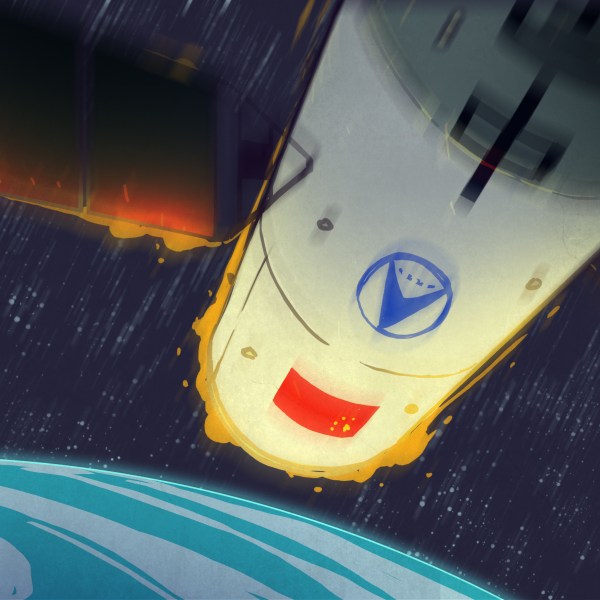
Space Mirrors: Dreams Of Turning The Night Into Day Around The Clock

Recently, a company by former SpaceX employee Ben Nowack – called Reflect Orbital – announced that it is now ready to put gigantic mirrors in space to reflect sunshine at ground-based solar farms. This is an idea that’s been around for a hundred years already, both for purposes of defeating the night through reflecting sunshine onto the surface, as well as to reject the same sunshine and reduce the surface temperature. The central question here is perhaps what the effect would be of adding or subtracting (or both) of solar irradiation on such a large scale as suggested?

We know the effect of light pollution from e.g. cities and street lighting already, which suggests that light pollution is a strongly negative factor for the survival of many species. Meanwhile a reduction in sunshine is already a part of the seasons of Autumn and Winter. Undeniable is that the Sun’s rays are essential to life on Earth, while the day-night cycle (as well as the seasons) created by the Earth’s rotation form an integral part of everything from sleep- and hibernation cycles, to the reproduction of countless species of plants, insects, mammals and everyone’s favorite feathered theropods.

With these effects and the gigantic financial investments required in mind, is there any point to space-based mirrors?

Continue reading “Space Mirrors: Dreams Of Turning The Night Into Day Around The Clock”

Giant Sails Actually Help Cargo Ships Save Fuel, And The Planet In Turn

Shipping is not a clean business. The global economy is fueled by trade, and much of that trade involves hauling product from point A to point B. A great deal of that product goes by water. Shipping it around uses a great deal of fuel, and creates a great deal of greenhouse gas emissions. It’s bad for the environment, and it’s costly for shipping companies.

Any gain in efficiency can be an edge in this regard, and beneficial for the planet to boot. Now, it appears that good old fashioned sails  might just be the tool that companies need to clean up their fleets. And it’s not some theory—real world numbers back it up!

Where The Wind Takes You

Sea transport has been branded as a significant contributor to global greenhouse gas emissions, accounting for about 3% of the total. Shipping companies in turn are under increasing pressure to innovate and adapt, both for the good of the planet and their own coffers. It’s perhaps a small blessing that saving fuel and slashing emissions go hand in hand, and companies are desperate for any technology that can deliver on those goals.

Enter the WindWings, a revolutionary “wind assisted propulsion” concept developed by BAR Technologies. In partnership with ocean freight firm Cargill, these radical sails were installed aboard the Pyxis Ocean, a Kamsarmax bulk carrier chartered from Mitsubishi. These aren’t the canvas and rope constructs of yore . Instead, they’re a set of towering metal sails that stand 123 feet tall, designed to harness the wind’s power and propel the massive bulk carrier across the oceans. Continue reading “Giant Sails Actually Help Cargo Ships Save Fuel, And The Planet In Turn”