Building Air Variable Capacitors

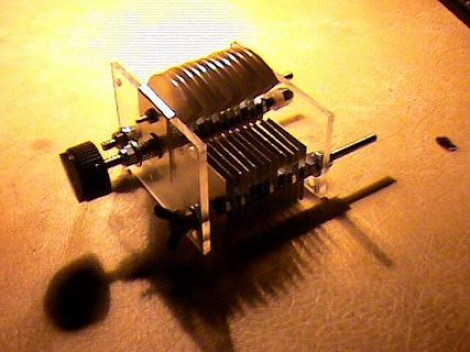
In keeping with our opinion that radio operators were the original electronic hackers here’s a guide to building your own transmitting air variable capacitors. Using some roof flashing, Plexiglas, and various fasteners [David Hammack] was able to make it work. It’s not a perfect solution but he has some ideas to make the next one better. Give this a try after you’re done tweaking your crystals and building input devices.

[Thanks Rich]
5×2 Patch Board

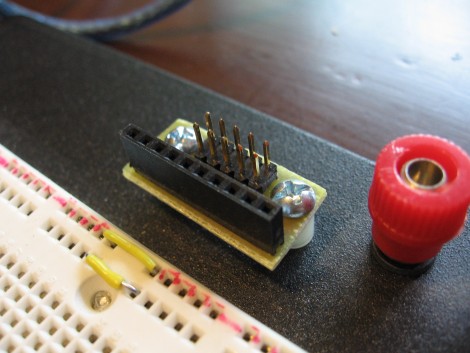
Sometimes we want to sit on the back porch, crack a beer, and do some prototyping. Other times we’d like to do the same but on the couch in the livingroom. To that end we added a 5×2 pin to 10×1 pin patch board to our solderless breadboard.

The 5×2 pin form factor is pretty common, used as an AVR programming header, on development boards like the Dragon Rider 500 and the STK 500, and in small prototyping devices like the Bus Pirate. We like the freedom of using IDC cables as interconnects and that’s where this board comes in. Now we can patch into the IDC cables yet still quickly disconnect them when moving to a different prototyping location. Check out the PCB artwork and this handy device in use after the break.

Continue reading “5×2 Patch Board”

Peltier Cooler Based Cloud Chamber

[youtube=http://www.youtube.com/watch?v=eKfx4Rjf0BU&feature=player_embedded]

[Rich] shares with us his build of a Peltier cooler based cloud chamber. This nifty little tool allows him to see the paths that radioactive particles take through alcohol vapor. The system he has come up with is fairly cheap at roughly $100. He’s using Peltier coolers from computers and a cheap ATX power supply. You can see a more detailed instructable here.

[via Make]

QFN Or MLF Soldering Without Solder Paste

[youtube=http://www.youtube.com/v/c_Qt5CtUlqY&hl=en_US&fs=1&]

Take a few minutes to watch this amazingly informative video on how to solder QFN or MLF components without solder paste.  The quality of the video and the information within is quite nice. Even if you don’t intend to work with these parts, you could pick up some tips for soldering with hot air.

9 Digit Pulse Counter

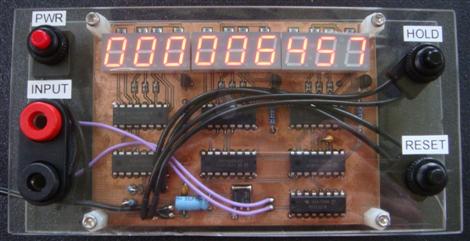
At roughly $20 to build, this 9 digit pulse counter is an excellent example of home built tools. The builder, [Josh] found himself repairing a device and in need of a pulse counter. With the components cheaply available, he just built his own. He says that it has a few limitations, like display brightness, but overall it seems to do the job well. You can download the PCB from his site.

[via MakeZine]

40 MSPS Digital Oscilloscope

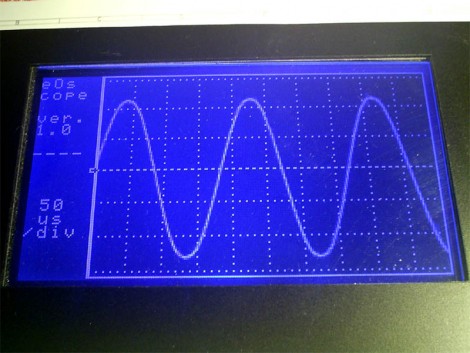
If you can fabricate single-sided circuit boards at home you can build this digital oscilloscope. It uses mostly through-hole components with just a couple of surface mount chips to contend with. An ATmega162 handles the hardware end of things with a CPLD used to manage the sampling rate. Data is displayed on a 240×128 LCD display which will be the most expensive component to acquire. It’s still a lot cheaper than buying a commercially available oscilloscope, even if you get a base model and hack it to unlock all the features.

[Thanks Juan]

Lawnmower Converted To Hoe/scraper

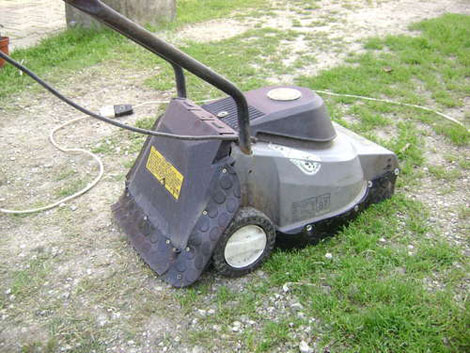
[Torx] wrote this instructable on how to convert a lawnmower to another useful tool.  We’re not sure what language he natively speaks, but we doubt it is english, so you might be better off just looking at the pictures to figure out what he’s doing.  To summarize, he has lowered the mower and reversed/bent the blade to scrape the ground. He has also added thick rubber edges all around to try to keep debris from coming out. You might be wondering why he would need something like this, but the last page sums it up pretty well. We could imagine this possibly getting some use in the garden as well. This one does look pretty dangerous though, so don’t blame us if you cut off a hand or lose an eye to some debris. Then again, a regular lawnmower looks pretty dangerous too.