Busting GPS Exercise Data Out Of Its Garmin-controlled IoT Prison

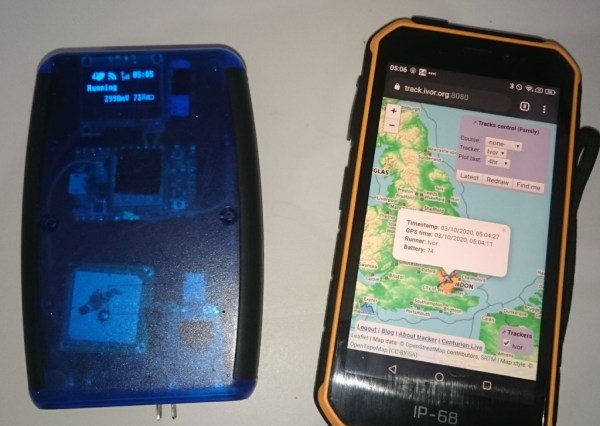
If you take to the outdoors for your exercise, rather than walking the Sisyphusian stair machine, it’s nice to grab some GPS-packed electronics to quantify your workout. [Bunnie Huang] enjoys paddling the outrigger canoe through the Singapore Strait and recently figured out how to unpack and visualize GPS data from his own Garmin watch.

By now you’ve likely heard that Garmin’s systems were down due to a ransomware attack last Thursday, July 23rd. On the one hand, it’s a minor inconvenience to not be able to see your workout visualized because of the system outage. On the other hand, the services have a lot of your personal data: dates, locations, and biometrics like heart rate. [Bunnie] looked around to see if he could unpack the data stored on his Garmin watch without pledging his privacy to computers in the sky.

Obviously this isn’t [Bunnie’s] first rodeo, but in the end you don’t need to be a 1337 haxor to pull this one off. An Open Source program called GPSBabel lets you convert proprietary data formats from a hundred or so different GPS receivers into .GPX files that are then easy to work with. From there he whipped up less than 200 lines of Python to plot the GPS data on a map and display it as a webpage. The key libraries at work here are Folium which provides the pretty browsable map data, and Matplotlib to plot the data.

These IoT devices are by all accounts amazing, listening for satellite pings to show us how far and how fast we’ve gone on web-based interfaces that are sharable, searchable, and any number of other good things ending in “able”. But the flip side is that you may not be the only person seeing the data. Two years ago Strava exposed military locations because of an opt-out policy for public data sharing of exercise trackers. Now Garmin says they don’t have any indications that data was stolen in the ransomware attack, but it’s not a stretch to think there was a potential there for such a data breach. It’s nice to see there are Open Source options for those who want access to exercise analytics and visualizations without being required to first hand over the data.

A Face Mask That’s Functional And Hacker-Certified

[splat238] needed a mask for going out in public, but wanted something that fit his personal style a bit better than the cloth masks everyone else was wearing. So, he upcycled his old airsoft mesh mask using an impressive 104 NeoPixels to create his NeoPixel LED Face Mask.

The NeoPixels are based on the popular WS2812b LEDs. These are individually addressable RGB LEDs with a pretty impressive glow. [splat238] purchased a 144 NeoPixel strip to avoid having to solder each of those 104 NeoPixels one-by-one. He cut the 144-LED strip into smaller segments to help fit the LEDs around the mask. He then soldered the power and data lines together so that he could still control the LEDs as if they were one strip and not the several segments he cut them into. He needed a pretty bulky battery pack to power the whole thing. You can imagine how much power 104 RGB LEDs would need to run. We recommend adding a battery protection circuit next time as these LEDs probably draw a hefty amount of current.

He designed his own controller board featuring an ESP8266 microcontroller. Given its sizable internal memory, the ESP8266 makes it easy to store a variety of LED patterns without worrying about running out of programming space. He’s also hoping to add some WiFi features in later revisions of his mask, so the ESP8266 is a no-brainer. Additionally, his controller board features three pushbuttons that allow him to toggle through different LED patterns on the fly.

Cool project [splat238]! Looking forward to the WiFi version.

Continue reading “A Face Mask That’s Functional And Hacker-Certified”

DIY Stress Meter

Stress monitoring has always been a tricky business. As it turns out, there is a somewhat reliable way of monitoring stress by measuring how much cortisol, the so-called “stress hormone,” the human body produces. With that in mind, bioengineering researchers at the University of Texas at Dallas decided to make CortiWatch, a wearable device for continuously monitoring cortisol excreted in sweat, as a sort of DIY stress meter.

They made their own potentiostat, a device for measure small amounts of current produced by electrochemical reactions, similar to the glucometer. We’ve talked about these types of measurements before. Simply put, the potentiostat contains a voltage reference generator which biases the sensing electrodes at a preset potential. The voltage bias causes local electrochemical reactions at the sensing electrodes (WE in the image above), stimulating electron flow which is then measured by a transimpedance amplifier or “current-to-voltage” converter. The signal is then analyzed by an onboard analog-to-digital converter. Simply put, the more cortisol in the system, the higher the transimpedance amplifier voltage.

To validate their system a bit more thoroughly than simple benchtop studies, the researchers did some “real-life” testing. A volunteer wore the CortiWatch for 9 hours. The researchers found a consistent decrease in cortisol levels throughout the day and were able to verify these measurements with another independent test. Seems reasonable, however, it’s not quite clear to us what cortisol levels they were expecting to measure during the testing period. We do admit that it takes quite a bit of calibration to get these systems working in real-life settings, so maybe this is a start. We’ll see where they go from here.

Maybe the CortiWatch can finally give us a proper lie detectorWe’ll let you be the judge.

Detect COVID-19 Symptoms Using Wearable Device And AI

A new study from West Virginia University (WVU) Rockefeller Neuroscience Institute (RNI) uses a wearable device and artificial intelligence (AI) to predict COVID-19 up to 3 days before symptoms occur. The study has been an impressive undertaking involving over 1000 health care workers and frontline workers in hospitals across New York, Philadelphia, Nashville, and other critical COVID-19 hotspots.

The implementation of the digital health platform uses a custom smartphone application coupled with an Ōura smart ring to monitor biometric signals such as respiration and temperature. The platform also assesses psychological, cognitive, and behavioral data through surveys administered through a smartphone application.

We know that wearables tend to suffer from a lack of accuracy, particularly during activity. However, the Ōura ring appears to take measurements while the user is very still, especially during sleep. This presents an advantage as the accuracy of wearable devices greatly improves when the user isn’t moving. RNI noted that the Ōura ring has been the most accurate device they have tested.

Given some of the early warning signals for COVID-19 are fever and respiratory distress, it would make sense that a device able to measure respiration and temperature could be used as an early detector of COVID-19. In fact, we’ve seen a few wearable device companies attempt much of what RNI is doing as well as a few DIY attempts. RNI’s study has probably been the most thorough work released so far, but we’re sure that many more are upcoming.

The initial phase of the study was deployed among healthcare and frontline workers but is now open to the general public. Meanwhile the National Basketball Association (NBA) is coordinating its re-opening efforts using Ōura’s technology.

We hope to see more results emerge from RNI’s very important work. Until then, stay safe Hackaday.

A Wearable That Jives To The Beat Of Your Heart

We’re always searching for the coolest biohacking projects all over the web, so imagine our excitement when we ran across [marcvila333’s] wearable biometric monitor on Instructables. This was a combined effort between [Marc Vila], [Guillermo Stauffacher], and [Pau Carcellé] as they were wrapping up the semester at their university. Their goal was to develop an integrated device that could modulate the wearer’s heart, and subsequently their mood and stress levels, using music.

Their device includes an LCD screen for user feedback, buttons for user input, an MP3 module, and a heart rate sensor module. The user can measure their heart rate and use the buttons to select the type of music they desire based on whether they would like to decrease or increase their heart rate. The science behind this phenomenon is still unknown, but the general sense is that different music can trigger different chemical signals in your brain, subsequently affecting your mood and other subtle physiological effects. I guess you can say that we tend to jive to the beat of our music.

It would be really cool to see their device automatically change the song to either lower or raise the user’s heart rate, making them calmer or more engaged. Maybe connect it to your tv? Currently, the user has to manually adjust the music, which might be a bit more inconvenient and could possibly lead to the placebo effect.

Either way; Cool project, team. Thanks for sharing!

This Iron Man Suit Is A Hacker’s Dream Come True

[Techmaster], like probably a lot of us, was hugely inspired by the engineering wonder that is the Iron Man suit. So, like any good maker, he decided to build his own. [Techmaster’s] social media pages are filled with promotional videos that are sure to get you excited for your next Comic-Con (when you can go in-person of course).

It’s difficult to summarize all the work [Techmaster] has put into his suit in a single post, so we’ll let his social media pages do the talking. From the knuckle launcher to the repulsor and the beloved Arc rector, [Techmaster] is really putting together an impressive set. Now, we’ve seen our fair share of Iron Man-inspired projects here on Hackaday, but [Techmaster’s] designs might be the closest attempt to a full suit with the projectiles to match.

[Techmaster’s] goal is to develop the most realistic Iron Man suit ever, well..other than the original we suppose. Given the dynamic nature of his development process, there aren’t any DIY instructions for the rest of us to follow as of yet (though he does host live streams), so you’ll have to piece together design ideas from his promotional videos.

[Techmaster] might be living the dream a lot of us wish were our realities and we certainly can’t wait to see an official version 1 release. Feel free to support his development if you feel so inclined.

DIY Filtered Positive Pressure Suit Shows Fine Workmanship

[Andrew]’s Air filtering unit & positive pressure supply might look like something off the set of Ghostbusters, but it’s an experiment in making a makeshift (but feasible) positive pressure suit. The idea is to provide an excess of filtered air to what is essentially an inflatable soft helmet. The wearer can breathe filtered air while the positive pressure means nothing else gets in. It’s definitely an involved build that uses some specific hardware he had on hand, but the workmanship is great and shows some thoughtful design elements.

The unit has three stacked filters that can be easily swapped. The first stage is medical mask material, intended to catch most large particles, which is supported by a honeycomb frame. The next filter is an off-the-shelf HEPA filter sealed with a gasket; these are available in a wide variety of sizes and shapes so [Andrew] selected one that was a good fit. The third and final stage is an activated carbon filter that, like the first stage, is supported by a honeycomb frame. The idea is that air that makes it through all three filters is safe (or at least safer) to breathe. There isn’t any need for the helmet part to be leakproof, because the positive pressure relative to the environment means nothing gets in.

Air is sucked through the filters and moved to the helmet by an HP BLc7000 server fan unit, which he had on hand but are also readily available on eBay. These fan units are capable of shoveling a surprising amount of air, if one doesn’t mind a surprising amount of noise in the process, so while stacked filter stages certainly impede airflow, the fan unit handles it easily. The BLc7000 isn’t a simple DC motor and requires a driver, so for reference [Andrew] has a short YouTube video of how the fan works and acts.

All the 3D models and design files are available online should anyone wish to take a closer look. It’s certainly a neat experiment in making a filtered positive pressure supply and head cover with materials that are fairly common. If [Andrew] ever wants to move to a whole-body suit, maybe repurpose an old Halloween costume into a serviceable positive pressure suit.