Laser Dog Goggles Make Halloween A Nice Night For A Walk

Sure, you could dress your dog up for Halloween in some pre-fab hot dog costume or a little French maid outfit, but what’s the fun in that? Hilarious as it may be, there’s no hack there. [Becky Stern] will help you out of your pet costume rut with the tutorial for her latest creation, laser dog goggles.

First things first: the laser she uses is fairly benign. You can safely stare it down for just under 30 seconds, so your pet should be okay. [Becky] offers other helpful safety suggestions, like covering the delicate battery pack with fabric to avoid scratching damage, and waiting until the adhesives are completely dry before outfitting Rover. But hey, if your dog isn’t into eye wear, don’t force it.

These are based on Doggles brand dog goggles and the Adafruit Trinket. The laser is mounted on a micro servo so that it pivots back and forth, allowing your dog to scan the ground like RoboCop or Terminator. As you might expect, [Becky]’s tutorial includes a comprehensive list of tools and great documentation. Check out her video overview after the break.

Continue reading “Laser Dog Goggles Make Halloween A Nice Night For A Walk”

Using A Standard Coil For NFC Tag Implant Reading

A few months ago Hackaday covered the xNT crowdfunding campaign which aimed at making an NTAG216 based NFC implant for different purposes. I actually backed it, found that standard NFC readers don’t perform well and therefore decided to try using a standard coil as an antenna for better reading performances.

Most NFC readers typically only have a small sweet spot where implant reading is possible. This is due to what we call coupling factor which depends on the reading distance and reader & NFC tag antenna geometries. Having a smaller antenna diameter increases the coupling factor and makes implant positioning easier.

In my detailed write-up you’ll find a good introduction to impedance matching, a process where a few passive components are added in series/parallel with an antenna to bring its complex impedance close to a RF signal transmitter’s. This usually requires expensive tools but allows optimal power transmission at a given frequency.

You may find our xNT coverage here.

Feed That Shoulder Boom Box With A Wrist Tune Transmitter

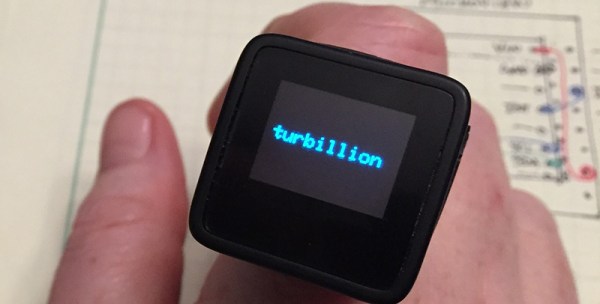
Next time you’re strutting down the block with that hi-fi on you shoulder, don’t subject yourself to the limitations of a radio station’s tight playlist or the short run time of a cassette tape. Pack your tunes on your wrist and beam them directly with this wearable FM transmitter. No wires… it’s like the future is now!

The Raspberry Pi has proven itself to be a dependable FM transmitter. This project follows in those footsteps but moves the goal line a few leaps further. The build has a full user interface which will make it easy to adapt to just about any application you can imagine. And the added twist is shown in the latter third of the video after the break. [Navic209] has included a microphone in the design which allows the wearer to transmit voice to an appropriately tuned radio. It gives the device a very Dick Tracey-esque feel.

Continue reading “Feed That Shoulder Boom Box With A Wrist Tune Transmitter”

Power Glove LED Suit

Prototype LED Light Suit Runs Off Of A NES Power Glove

[Greg’s] been playing around with wearable hacks for quite some time now, and he’s decided to add a new twist for his latest LED light suit (Mk 4) — An ancient NES Power Glove to control it.

He was inspired by the band Hypercrush who had a music video where one of the guys was wearing a laser-shooting power glove — awesome. Having already made light suits before, he thought it’d be fun to do something similar.

The suit is controlled by an Arduino Pro Mini which has been hacked into the Power Glove for ultimate button pushing capabilities. He’s using 5 meter LED strips of the classic WS2812  RGB variety, which allow for individual LEDs to be addressed using a single pin. It’s powered by a 5V 2A USB battery pack, and he’s made all the components very modular, you could even say it’s “plug and play”!

Continue reading “Prototype LED Light Suit Runs Off Of A NES Power Glove”

A Wrist-Mounted Flamethrower? Sure, Why Not?

There are three types of booths at Maker Faire. The first is the strange corporate booth, like Pepsi ‘revolutionizing fluid intake’ or some such nonsense. That one had the longest line of any booth, in case you’re wondering. The second type of booth is the people you would expect to be there – Atmel, TI, and Makerbot all came out in full force.

The third type of booth were a little hard to find. They’re the ‘show and tell’ spirit of Maker Faire, and [Stephen Hawes] was one of the best. Why? Wrist-mounted flamethrower, that’s why.

The flamethrower is fueled with a propane bottle originally meant for a camping stove, with a microcontroller and pot setup taking care of the height of the flame. Buttons underneath [Stephen]’s thumb takes care of the propane flow and tazer-based ignitor. The wrist measurement sensor can rescale to adjust the height of the flame to how far the wearer can move their wrist.

All in all, a great project for the Faire, although we did feel a little sorry for the NYC fire marshal that was assigned to [Stephen] for the entire faire. As an aside, we’re applauding [Stephen] for not referencing whatever comic book character has fire shooting out of his hand.

THP Semifinalist: B10N1C Yourself

The Hackaday Prize has had a few medical devices make the semifinalist cut, and of course wearables are on the list. How about implantables? That’s what Bionic Yourself 2.0 (or B10N1C) is doing with an implantable microcontroller, battery, and sensor system.

The hardware in B10N1C includes a electromyography sensor for measuring muscle activity, an accelerometer, a vibration motor, RFID reader/writer, temperature sensor, and – get this – a LED bar graph that will shine a light through the skin. That’s something we’ve never seen before, and if you’re becoming a cyborg, it’s a nice feature to have.

As with anything you would implant in your body, safety is a prime consideration for Bionic.the Lithium battery can be overcharged (yes, through a wireless charging setup) to 10V without a risk of fire or explosion, can be hit with a hammer, and can even be punctured. The enclosure is medical grade silicone, the contacts are medical grade stainless steel, and there’s a humidity sensor inside that will radio a message saying its time to remove the device if the moisture level in the enclosure increases.

Because the device is implanted under the skin, being able to recharge and update the code without a physical connection is the name of the game. There’s a coil for wireless charging, and a lot of work is going into over the air firmware updating. It’s an astonishing project, and while most people probably won’t opt for a cyborg implant, it will look really cool.


SpaceWrencherThe project featured in this post is a quarterfinalist in The Hackaday Prize.