New Part Day: Espressif ESP32-S3

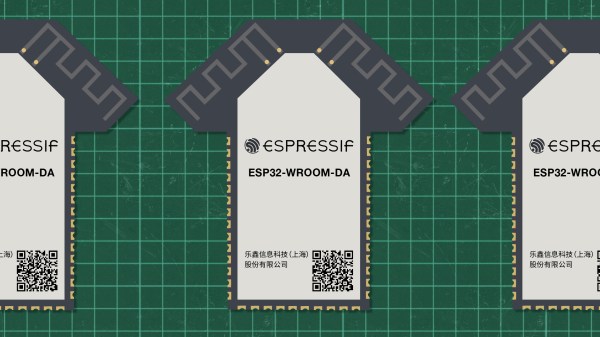
Since Espressif Systems arrived in our collective consciousness they have expanded their range from the ESP8266 to the ESP32, and going beyond the original WROOM and WROVER modules to a range of further ESP32 products. There’s a single-core variant and one that packs a RISC-V core in place of the Tensilica one, and now they’ve revealed their latest product. The ESP32-S3 takes the ESP to a new level, packing as it does more I/O, onboard USB, and an updated version of the two Tensilica cores alongside Bluetooth version 5. It’s still an ESP32, but one that’s more useful, and it’s worth a closer look because we expect it to figure in quite a few projects.

Espressif's block diagram for the chip.
Espressif’s block diagram for the chip.

Sadly the data sheet does not seem to have been released, but we do have some tidbits to consider. Espressif are anxious to tell us about its “AIOT” capabilities thanks to the vector instructions in the EXTensa LX7 cores (PDF) that were not present in the previous model’s LX6. They claim that this will speed up software neural networks; this does have an air of marketing about it but we’ll withhold judgement until we see it in use. The new core certainly will offer a performance improvement across the board though, which should be of interest to all ESP32 developers. Meanwhile the ultra-low-power core that existing ESP32 developers will be familiar with remains.

Then there is that USB support, which appears in the feature block diagram but has little information elsewhere. It’s listed as USB OTG which raises the possibility of the ESP32 being the host, but what it should also bring is the ability to emulate other USB devices. We’ve seen badges mount as WebUSB devices using STM32 clones as peripherals for an ESP32, but in future these tricks should be possible on the Espressif chip itself.

Probably the most anticipated piece of the new device’s specification comes in the addition of 10 new I/O lines. This has historically been a weakness of the ESP line, that it’s an easy chip with which to run out of available pins. These extra lines will make it more competitive with for example the STM32 series of microcontrollers that have larger package options, and will also mean that designs can have more in the way of peripherals without the use of port expanders.

In summary then, the latest member of the ESP32 family delivers a significant and useful update, and brings some of the features first seen in the single core version to the more powerful line of chips. Sadly it doesn’t have the hoped-for on-chip RAM boost, but it brings enough in the way of new capabilities to be of interest. At the moment it doesn’t look like the ESP32-S3 is available to order, but we hope to have engineering samples soon and should be bringing you a hands-on report in due course.

DIY Laser Tag System Comes With All The Bells And Whistles

While VR is becoming really immersive, it still can’t compete with a game of good old laser tag to get the blood pumping and spending quality time with friends. [Xasin] has been working on a DIY laser tag system for a while now, and it has grown to include an impressive array of features and customizability.

Named LZRTag, the project started back in 2018 with simple ATmega328 based prototypes on breadboards. It has since evolved to a fully-featured system with ESP32s in the 3D printed pistol communicating with a Raspberry Pi/Linux game server over MQTT. Each pistol also features an accelerometer, I2S audio amp and speaker for game sounds, and WS2812 RGP LEDs for light effects. IR Lasers are used as emitters to target wearable IR receivers with more RGB LEDs wired to the pistol.

A Ruby server on a Linux machine takes care of all the communications, game management, shot validation, and scoring. It can handle up to 255 players and is designed to be extremely customizable for game modes, weapons classes, or any other feature you would like to have. [Xasin] has also created IR beacons to add even more possibilities, such as capture the flag, safe zones, and revive zones.

We really like the flexibility of the system, and it would make an awesome group project for a hackerspace. You could also add a shock module to motivate players a bit more to avoid getting shot. If you want more gun, take a look at the laser tag rifle with a HUD we featured earlier in the year Continue reading “DIY Laser Tag System Comes With All The Bells And Whistles”

A Wi-Fi Enabled Dog!

Our canine friends have been at our side for millennia, their prehistoric wolf ancestors evolving alongside us into the breeds we know today. But astoundingly until now no dog has been Wi-Fi enabled, at least according to [Entropy], whose dog [Kaya] now sports a colourful Wi-Fi enabled collar.

Light-up dog collars and harnesses have been with us for a while, and serve the very useful purpose of protecting the animals from accidents by making them visible at night, but [Kaya]’s colar was a particularly disappointing example. Its single light and lacklustre optical fibre coupled with disappointing battery life left much to be desired, so when it broke there was ample excuse to upgrade it. In went a strip of addressable LEDs and an ESP32 module, along with an 18650 lithium-ion cell. We’re a bit unsure whether lights can be controlled from a mobile phone, but perhaps the most significant benefit lies elsewhere. The Wi-Fi hotspot from the ESP32 serves as a beacon to find [Kaya] within a short distance should she wander off, which as any dog owner will tell you can be a boon when they’re investigating some fascinating new smell and ignoring your calls. You can see her modelling the collar in the video below the break.

Canine hacks appear on these pages from time to time. One of our favourites is this not very successful but highly amusing remote controlled dog.

Continue reading “A Wi-Fi Enabled Dog!”

Augmented Reality On The Cheap With ESP32

Augmented reality (AR) technology hasn’t enjoyed the same amount of attention as VR, and seriously lags in terms of open source development and accessibility.  Frustrated by this, [Arnaud Atchimon] created CheApR, an open source, low cost AR headset that anyone can build at home and use as a platform for further development

[Arnaud] was impressed by the Tilt Five AR goggles, but the price of this cutting edge hardware simply put it out of reach of most people. Instead, he designed and built his own around a 3D printed frame, ESP32, cheap LCDs, and lenses from a pair of sunglasses. The electronics is packed horizontally in the top of the frame, with the displays pointed down into a pair of angled mirrors, which reflect the image onto the sunglasses lenses and into the user’s eyes. [Arnaud] tested a number of different lenses and found that a thin lens with a slight curve worked best. The ESP32 doesn’t actually run the main software, it just handles displaying the images on the LCDs. The images are sent from a computer running software written in Processing. Besides just displaying images, the software can also integrate inputs from a MPU6050 IMU and  ESP32 camera module mounted on the goggles. This allows the images to shift perspective as the goggles move, and recognize faces and AR markers in the environment.

All the design files and software is available on GitHub, and we exited to see where this project goes. We’ve seen another pair of affordable augmented reality glasses that uses a smartphone as a display, but it seems the headset that was used are no longer available.

A Tracker For Radio Sondes

Radiosondes – the telemetry packages carried aloft by sounding balloons for atmospheric weather data measurements – are regularly used by weather bureaus around the world to collect data, and there are quite a number of launches daily. Most of them are in Europe, but they also happen at many locations in North and South America, Japan, and Australia. The balloons burst when they reach a high enough altitude, the radiosonde falls back, and most often there is no effort made to recover them since they are deemed “expendable”. So it’s Finders Keepers, and rich pickings for any hacker who is fortunate enough to grab the fallen radiosondes. For successful recovery, you need to first be able to track those radiosondes, and that’s why leet guy [Robert Stefanowicz aka p1337] built his Weather ballon tracker (sic) project.

The hardware is all off-the-shelf, packaged in a pretty cool 3D printed package designed to make it look like the hand held radio that it is. At its heart is the ESP32 based TTGO T-BEAM V1.0 which has almost everything needed for this project. Add an OLED display, 18650 Li-Po cells, antenna and connectors and you can put it all together in an evening over your favourite beverage.

[DL9RDZ] wrote the software which runs on the T-Beam, available at the RDZ-Sonde repo on Github, that allows hunting these balloons. Setup is straightforward, and you need to fiddle with just a couple of well-explained config parameters. Once connected to your WiFi, config and settings can be accessed via convenient web URL’s and the single user action button on the TTGO offers quick access to different functional modes. At the moment, the software is written to decode signals from the widely used Vaisala RS41, Graw DFM06 and Graw DFM09 radiosondes. This LINK provides details for some of the popular radiosonde models.

Once you’re done building this piece of hunting gear, you’ll need some additional help finding out when and where the launches are taking place. If you’re in Europe, you luck out – there is a live radiosonde tracker map, thanks to the great work done by [Michał Lewiński – SQ6KXY]. If you live else where and know of similar resources, let us know in the comments. As a side note, Wikipedia tells us there are about 1300 launch sites worldwide and twice a day missions, so there’s quite a number of fallen pieces of hardware lying around just waiting to be picked up. At the very least, each will have a GPS module and temperature and humidity sensors that you can recover.

So, what do you do with the recovered radiosondes ? Here’s a tip on a “Fallen Radiosonde reborn as active L-band antenna“. And If you’d like to get the skinny on radiosondes, check out “Radiosondes: getting data from upstairs

Thanks for the tip, [Alex aka MD23F3].

Ringing In The Holidays With Self-Playing Chimes

The holiday season is here, and along with it comes Christmas music. Love them or hate them, Yuletide tunes are a simple fact of life each December. This year, [Derek Anderson] put a modern spin on a few classic melodies and listened to them via his set of self-playing chimes.

Inspired by [Derek]’s childhood Ye Merry Minstrel Caroling Christmas Bells (video), these chimes really bring the old-school Christmas decoration into the 21st century. Each chime is struck by a dedicated electromagnetically-actuated mallet, which is in turn controlled by an ESP32 running MicroPython.

Winding the electromagnets

The chimes play MIDI files, so you could, of course, play music unrelated to Christmas if you wanted to. And they even feature an OLED screen that displays what song is being played. For added flair, the entire thing is beautifully framed in black walnut, not to mention the custom-wound solenoids.

This project incorporated mechanical and electrical design, woodworking, 3D printing, programming, and song arrangement. It’s a wonder that [Derek] was able to create the entire product in the 40-80 hour time frame he estimated. (Though it looks like he had a bit of help.)

We always love to see projects like this, ones in which several disciplines get rolled together to create a beautiful finished piece.


Continue reading “Ringing In The Holidays With Self-Playing Chimes”

Racing The Old Clock

[Keenan Rebera] recently found himself with an old racing clock (a chronoix cc3000) left behind by a roommate. How the roommate obtained such a clock seems murky at best, but undeterred [Keenan] set to work bringing the clock to life with Bluetooth functionality. The mechanical nature of the digits provided a satisfying auditory click, making it a good candidate for some upgrading. The new brain transplant is the venerable ESP32 with an RTC for good measure. He created a custom PCB with QWIC connectors to daisy chain together the driver boards together. Each PCB has four TBD62083 for driving the digits, two MCP expanders to increase the address space. This allows the ESP32 to address all the various segments over I2C. By soldering different pads together, he can change the address of each MCP, giving a maximum of 16 digits (9 possible MCP’s each driving 2 digits).

A handsomely designed app accompanies the clock, making updating the RTC and setting the timezone a breeze. Currently, it is displaying a count down to the time when 2020 is officially over. While 2020 will certainly go down in the books as a tumultuous year, it was a great year for DIY clocks at Hackaday. Just in the past few weeks, we’ve seen big LED workshop clocks, esoteric domino clocks, and beautiful clocks that double as works of art. Come 2021, we’re quite confident that [Keenan] will still have a gorgeous clock on his wall ticking and clicking away.
Continue reading “Racing The Old Clock”