Organic Audio: Putting Carrots As Audio Couplers To The Test

[Boltz999]'s carrot interconnect.
[Boltz999]’s carrot interconnect.
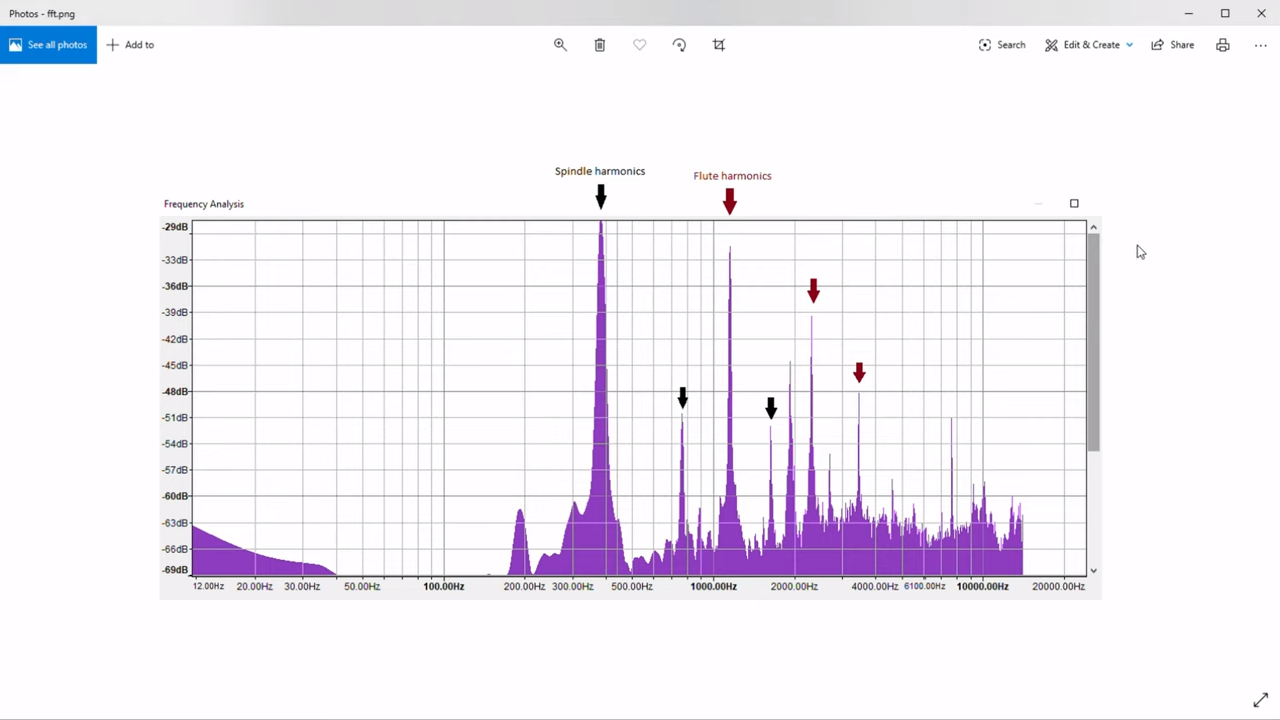
If there’s one thing that gives us joy here at Hackaday it’s a story of audio silliness. There is a rich vein of dubious products aimed at audiophiles which just beg to be made fun of, and once in a while we oblige. But sometimes an odd piece of audio equipment emerges with another purpose. Take [Boltz999]’s interconnects for example, which were born of necessity when there were no female-to-female phono adapters to connect a set of cables. Taking a baby carrot and simply plugging the phonos into its flesh delivered an audio connectivity solution that worked.

Does this mean that our gold-nanoparticle-plated oxygen-free directional audio cables are junk, and we should be heading for the supermarket to pick up a bag of root vegetables instead? I set out to test this new material in the secret Hackaday audio lab, located on an anonymous 1970s industrial estate in Milton Keynes, UK.

Continue reading “Organic Audio: Putting Carrots As Audio Couplers To The Test”

Secret C64 Program Found On A Christian Rock Band’s Vinyl Record

How often do you find Easter eggs in old vinyl records?

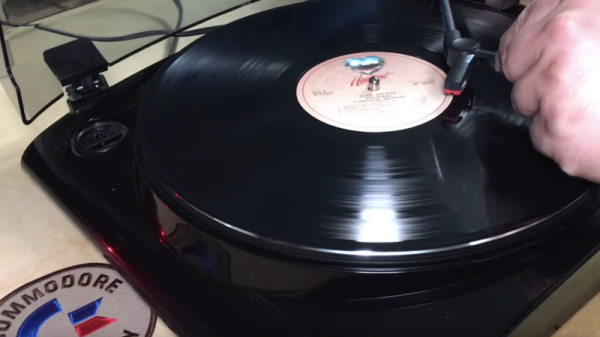
It sure was a surprise for [Robin Harbron] when he learned about a Commodore 64 program hidden on one of the sides of a record from the 1985 album of Christian rock band Prodigal. The host of the YouTube channel 8-Bit Show and Tell shows the “C-64” etching on one side of the vinyl, which he picked up after finding out online that the record contained the hidden program.

The run-out groove on records is typically an endless groove that keeps the record player from running off the record (unless there is an auto-return feature, which just replays the record). On side one of the vinyl, the run-out groove looks normal, but on side two, it’s a little thicker and contains some hidden audio. Recording the audio onto a cassette and loading it onto a dataset reveals a short C64 program.

The process is a little more troublesome that that, but after a few tries [Harbron] reveals a secret message, courtesy of Albert Einstein and Jesus Christ. It’s not the most impressive program ever written, but it’s pretty cool that programmers 35 years ago were able to fit it into only a few seconds of audio.

Unfortunately, we won’t be hearing much actual music from the album – [Harbron] chose not to play the songs to avoid copyright issues on YouTube.

Continue reading “Secret C64 Program Found On A Christian Rock Band’s Vinyl Record”

InstaBeat Started Out Of Spite

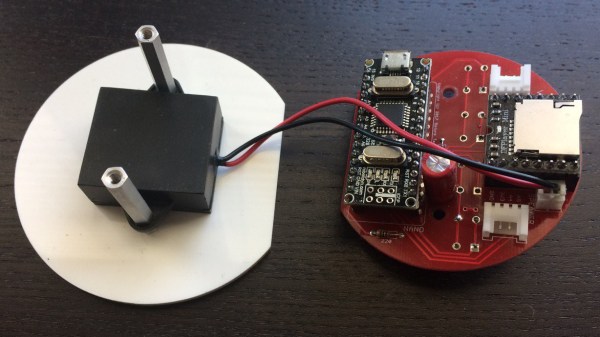
[Tom] teaches electronics with this small programmable MP3 player, but it didn’t get its start as a teaching tool.

As all parents are sometimes required to do, [Tom] was acting as chauffeur for his daughter and his friends. When he played the Beatles one of his passengers informed him that she was completely devoid of taste and didn’t like them at all. So he decided what the world needed was a Beatles appliance. This way all the ignorant plebs could educate themselves at the push of a button.

The machine is based around some SEED studio parts and a simple PCB. It was able to hold all 12 original albums and even announced their titles in a generated voice. Since the kit is easy to put together it was quickly re-purposed as a teaching aid. They get to learn the laser cutter and do some through-hole soldering.

He has plans to turn it into a more formal how-to workshop that anyone can duplicate.He’d also like to make a small software suite for playing with text-to-speech and hacking the speaker into other roles such as a multi meter.

Audio Processing In Rust

[Michael] volunteers with emergency services, and sometimes has to monitor radio traffic. Sometimes there’s a lot to review, and to make it easier he wrote a noise gate — think of it as a squelch — to break apart recorded audio into parts. Rust has been gaining popularity for writing low level software, and that’s the language he uses. However, you’ll see even if you don’t know Rust, it is pretty easy to figure out.

For test data, [Michael] took some publicly-available recordings of air traffic control. Using some ready-made audio processing functions and a simple state machine makes the code easy to write.

Continue reading “Audio Processing In Rust”

Use Your Earbud’s Media Controls On Your Laptop With This Useful Dongle

[David] sends in his very nicely designed “Thumpware Media Controller” that lets your mobile phone headphones control the media playback on your PC.

We realize that some PCs have support for the extra pins on cellphone earbuds, but at least some of us have experienced the frustration (however small) of habitually reaching up to touch the media controls on our earbuds only to hear the forlorn click of an inactive-button. This solves that, assuming you’re still holding on to those 3.5mm headphones, at least.

The media controls are intercepted by a PIC16 and a small board splits and interprets the signals into a male 3.5mm and a USB port. What really impressed us is the professional-looking design and enclosure. A lot of care was taken to plan out the wiring, assembly, and strain relief. Overall it’s a pleasure to look at.

All the files are available, so with a bit of soldering, hacking, and careful sanding someone could put together a professional looking dongle for their own set-up.

Laser-Based Audio Injection On Voice-Controllable Systems

In one of the cooler hacks we’ve seen recently, a bunch of hacking academics at the University of Michigan researched the ability to flicker a laser at audible sound frequencies to see if they could remotely operate microphones simply by shining a light on them. The results are outstanding.

While most Hackers will have heard about ‘The Thing’ – a famous hack where Russian KGB agents would aim a radio transmitter at the great seal in the US embassy,  almost none of us will have thought of using lasers shined in from distant locations to hack modern audio devices such as Alexa or Google Assistant. In the name of due diligence, we checked it out on Wikipedia: ‘The Photoacoustic Effect’ , and indeed it is real – first discovered in 1880 by Alexander Bell! The pulsing light is heating the microphone element and causing it to vibrate along with the beam’s intensity. Getting long range out of such a system is a non-trivial product of telescopes, lasers, and careful alignment, but it can be made to work.

Digging deeper into the hack, we find that the actual microphone that is vulnerable is the MEMS type, such as the Knowles SPV0842LR5H. This attack is relatively easy to prevent; manufacturers would simply need to install screens to prevent light from hitting the microphones. For devices already installed in our homes, we recommend either putting a cardboard box over them or moving them away from windows where unscrupulous neighbors or KGB agents could gain access. This does make us wonder if MEMS mics are also vulnerable to radio waves.

As far as mobile phones are concerned, the researchers were able to talk into an iPhone XR at 10 metres, which means that, very possibly, anybody with a hand held ultra violet / infra red equipped flashlight could hack our phones at close range in a bar, for example. The counter-measures are simple – just stick some black electrical tape over the microphone port at the bottom of the phone. Or stay out of those dodgy bars. Continue reading “Laser-Based Audio Injection On Voice-Controllable Systems”

Tearing Down IKEA’S Sonos Speaker

There’s little better way to learn about a piece of electronics than by tearing it down. Taking a peek under the hood can reveal all manner of things about a device’s design, manufacturing, and origins. [This Does Not Compute] does a great job of doing just that, digging into the guts of IKEA’s Symfonisk speaker.

Symfonisk is a WiFi-enabled speaker, working with the Sonos ecosystem. Tearing down the device reveals some similarities to IKEA’s earlier Eneby speaker, with both devices sharing similar speaker drivers, apparently sourced from GGEC. However, upon digging deeper, it’s revealed that the Symfonisk has more in common with a speaker from another manufacturer entirely.

The video does a great job of not only investigating the manufacturing origins of the device, but breaking down the way it all works. This shows how the speaker relies on an Atheros WiFi-only chipset, thus explaining the lack of Bluetooth functionality, as well as discussing things like the neat solutions for cable management. Interestingly, the speaker uses a two-channel DAC and Class-D amplifier, but only operates in mono. Instead, the two channels are instead used to separately drive the tweeter and woofer, allowing EQ to be done in software on the main CPU, negating the need for analog crossover electronics.

It’s a teardown that would serve as a great primer for anyone considering building a piece of consumer electronics, but particularly those involved in the hi-fi space. To see how it was done way back when, perhaps try this 8-track teardown instead. Video after the break.

Continue reading “Tearing Down IKEA’S Sonos Speaker”