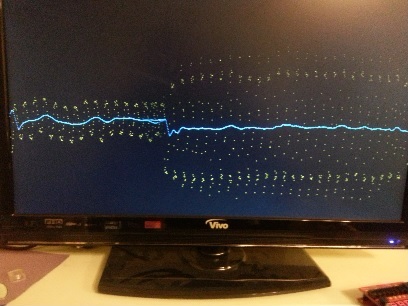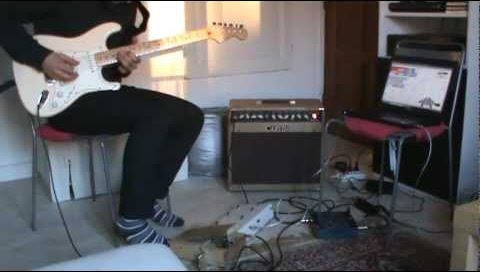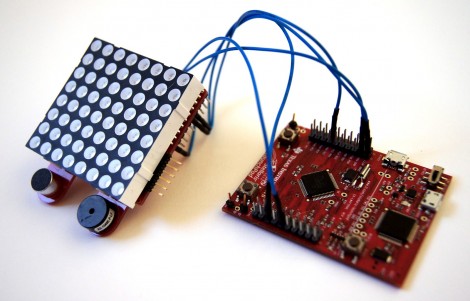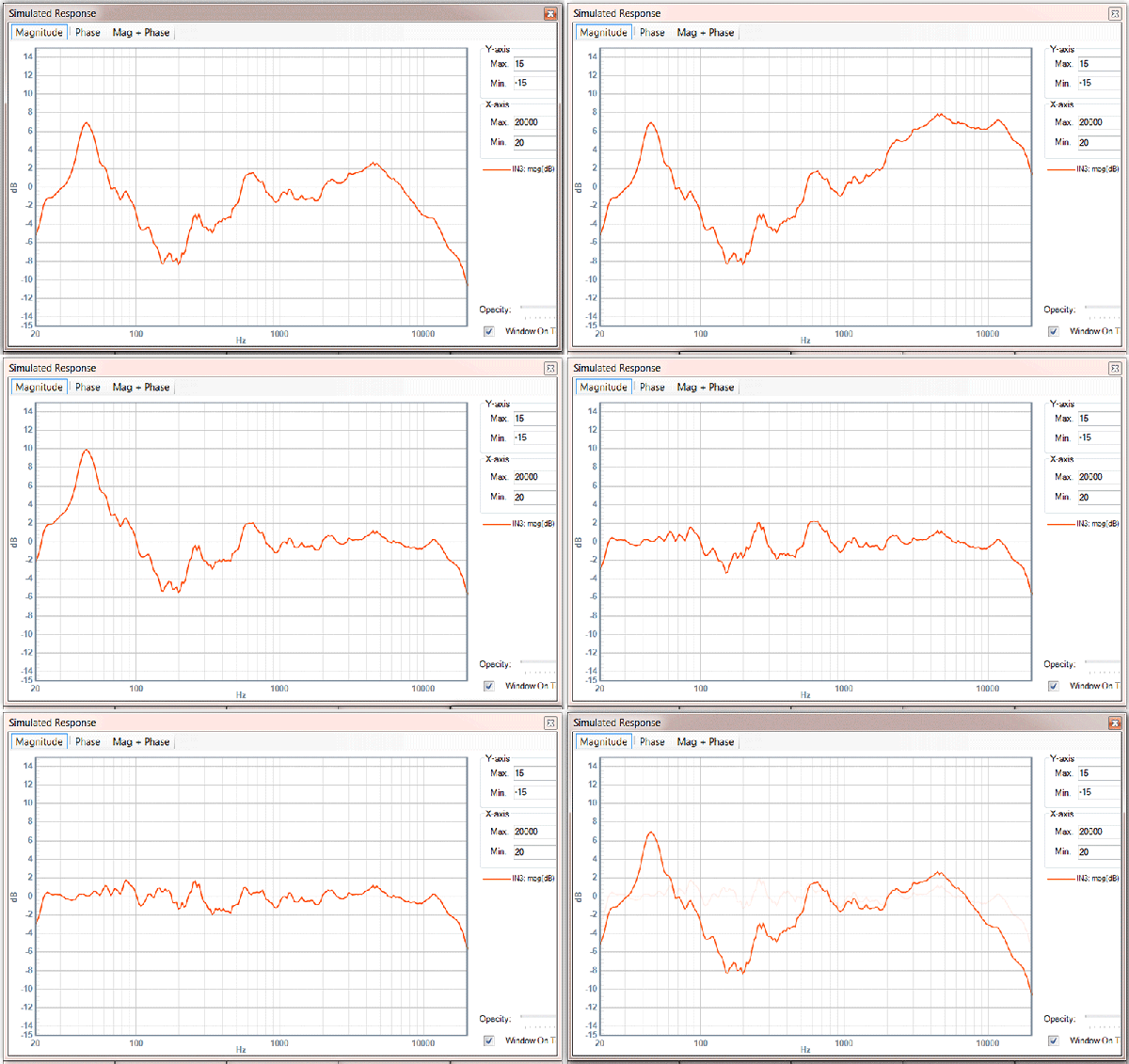
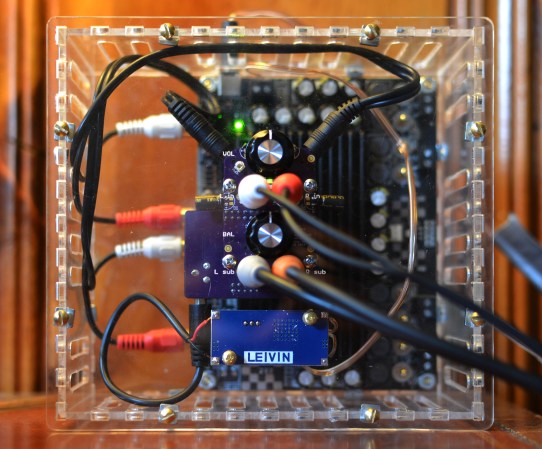
About six months ago, we saw [tshen2]’s work on the DSP 01, a 2-input, 6-output DSP and crossover for extreme audiophiles, and we’re not talking about oxygen free rooms here. The DSP 01 turns a USB audio output into six outputs that will give you perfectly flat eq across bass, mids, and highs, integrates with a 6x100W amplifier, and compensates for room noise. There was a huge update to the project recently and [tshen] is more than happy to share the details
Getting to this phase of the project hasn’t been without its problems. To get the DSP communicating to a computer through a USB port, [tshen2] found a potential solution in the CP2114 USB to I2S Bridge. This device should function as a USB audio sink, translating digital audio into something the DSP understands. This chip did not work in [tshen]’s design. The CP2114 simply does I2S wrong; the I2S spec says the clock must be continuous. This chip implements I2S with a SPI, firmware, and a few other things, making it incompatible with to-spec I2S.
While there was some problems with getting audio in to the device, the core of the device has remained unchanged. [tshen2] is still using the Analog Devices DSP, with the interesting SigmaStudio being used to compensate for the frequency response of the room. This real, legit, science-based audiophile territory here, and an impressive development for a field that – sometimes understandably – doesn’t get the respect it deserves.
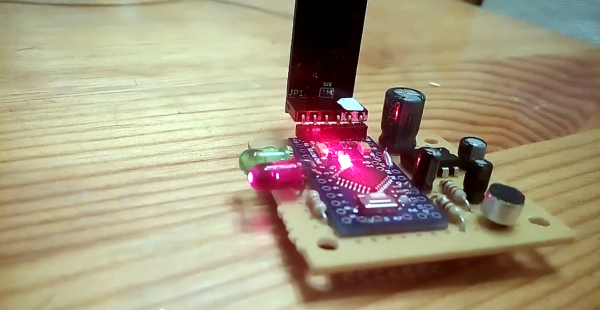

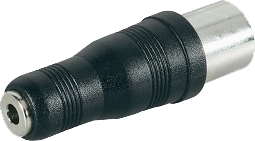 The heart of the DSP-G1 is a micro from NXP modeling an analog synthesizer with 15 digitally controlled oscillators with Sine, Triangle, Pulse and Saw outputs, a low frequency oscillator, two envelope filters, and a low pass filter, or about the same accouterments you would find in a MiniMoog or other vintage synth from the 70s. Since this is basically a synth on an NXP LPC-810, [Jan] has packaged it in something akin to a MIDI to 3.5mm cable adapter: Plug a MIDI keyboard into one end, an amp into the other, and you have a synth smaller than the