3D Printed Mars Rover Smiles For The Camera

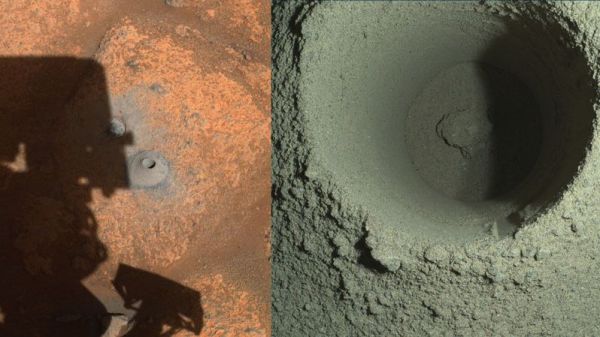
You’d be forgiven for thinking these pictures of NASA’s Perseverance Mars rover were renderings of the real deal on the Red Planet, if it wasn’t for the golf ball tucked in for scale, anyway. What you’re actually looking at is a 3D printed model made by [Alex Givens] that he brought out to the desert for a photo shoot by his friend [Josh Jalil].

[Alex] printed the parts for the model on the Ender 5 Pro, while [Josh] snapped the shots using a Canon EOS 90D. The realism of the final shots serves as a testament to how well they’ve honed their respective tools, but credit for the 3D model itself has to go to the good folks over at NASA.

The highly detailed Perseverance model came from the space agency’s extensive “3D Resources” collection, which has models for an incredible array of present and historical spacecraft. They’ve also got models for a number of interesting astronomical objects, just in case you’re in the market for a 3D printed asteroid or two.

We know, this isn’t exactly a hack in the traditional sense. But it’s a fantastic reminder of a great resource from NASA, as well as a practical demonstration of how high quality photographs can really bring a project to life.

jellyandmarshmallows windTunnel close-up

Perfecting Paper Planes Peering Past Perspex Portals

This wind tunnel is a pile of junk and we love it! When making science and engineering accessible to kids, it really helps to show that it doesn’t require a fancy research lab. [Jelly & Marshmallows] show kids that it takes little more than cardboard, duct tape, and dumpster-diving to up your paper airplane game to NASA levels of engineering.

[Jelly & Marshmallows] built their wind tunnel for a Maker Faire using the aforementioned cheap and free materials for the straightener, collector, diffuser, and fan sections. We especially love the efficient hack of using stacked ceiling light diffusers rather than hundreds of straws for the straightener.


The most time went into the working section, custom-built from plywood frames and acrylic windows. Many 3D printed parts came together to convert a smoke-ring gun to emit smoke trails and LEDs were employed to make those trails a little easier to see. We think the magnetic clips for quick changes of aircraft and their position along a steel ruler were inspired.

The kids attending the Maker Faire (we miss those!) loved the exhibit, having the best time hitting a big green arcade button to spin up the fan. It’s the little things in life. How would you get the kids even more involved with analyzing aerodynamics and make the smoke trails more visible?


Thanks for the tip [Rómulo Antão]

Alone, But Not Lonely: Remembering Astronaut Michael Collins

With many of the achievements of the Space Race now more than half a century behind us, it’s no wonder that we’re steadily losing the men who rode the rockets of the Mercury, Gemini, and Apollo programs into space. They were all very much in their primes at the time, but no matter what you’ve accomplished in life, even if it includes a trip to the Moon, time eventually catches up to you.

Still, it was quite a shock to learn today that astronaut Michael Collins passed away today at the age of 90. Collins made his trip to the Moon aboard Apollo 11, the mission which would see his crewmates Neil Armstrong and Edwin “Buzz” Aldrin descend to the surface in the Lunar Module Eagle and take the historic first steps on its surface in July of 1969.

Continue reading “Alone, But Not Lonely: Remembering Astronaut Michael Collins”

The Wright Stuff: First Powered Flight On Mars Is A Success

When you stop to think about the history of flight, it really is amazing that the first successful flight the Wright brothers made on a North Carolina beach to Neil Armstrong’s first steps on the Moon spanned a mere 66 years. That we were able to understand and apply the principles of aerodynamics well enough to advance from delicate wood and canvas structures to rockets powerful enough to escape from the gravity well that had trapped us for eons is a powerful testament to human ingenuity and the drive to explore.

Ingenuity has again won the day in the history of flight, this time literally as the namesake helicopter that tagged along on the Mars 2020 mission has successfully flown over the Red Planet. The flight lasted a mere 40 seconds, but proved that controlled, powered flight is possible on Mars, a planet with an atmosphere that’s as thin as the air is at 100,000 feet (30 km) above sea level on Earth. It’s an historic accomplishment, and the engineering behind it is worth a deeper look.

Continue reading “The Wright Stuff: First Powered Flight On Mars Is A Success”

Crew Dragon’s Short Hop Begins The Era Of Valet Parking At The ISS

They weren’t scheduled to return to Earth until April 28th at the earliest, so why did NASA astronauts Michael Hopkins, Victor Glover, and Shannon Walker, along with Japan Aerospace Exploration Agency (JAXA) astronaut Soichi Noguchi, suit up and climb aboard the Crew Dragon Resilience on April 5th? Because a previously untested maneuver meant that after they closed the hatch between their spacecraft and the International Space Station, there was a chance they weren’t going to be coming back.

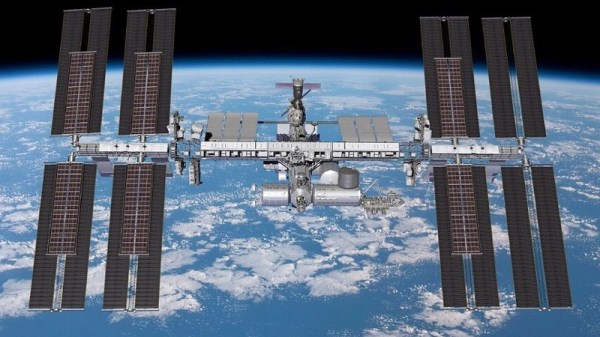
On paper, moving a capsule between docking ports seems simple enough. All Resilience had to do was undock from the International Docking Adapter 2 (IDA-2) located on the front of the Harmony module, itself attached to the Pressurized Mating Adapter 2 (PMA-2) that was once the orbital parking spot for the Space Shuttle, and move over to the PMA-3/IDA-3 on top of Harmony. It was a short trip through open space, and when the crew exited their craft and reentered the Station at the end of it, they’d only be a few meters from where they started out approximately 45 minutes prior.

The maneuver was designed to be performed autonomously, so technically the crew didn’t need to be on Resilience when it switched docking ports. But allowing the astronauts to stay aboard the station while their only ride home undocked and flew away without them was a risk NASA wasn’t willing to take.

What if the vehicle had some issue that prevented it from returning to the ISS? A relocation of this type had never been attempted by an American spacecraft before, much less a commercial one like the Crew Dragon. So while the chances of such a mishap were slim, the crew still treated this short flight as if it could be their last day in space. Should the need arise, all of the necessary checks and preparations had been made so that the vehicle could safely bring its occupants back to Earth.

Thankfully, that wasn’t necessary. The autonomous relocation of Crew Dragon Resilience went off without a hitch, and SpaceX got to add yet another “first” to their ever growing list of accomplishments in space. But this first relocation of an American spacecraft at the ISS certainly won’t be the last, as the comings and goings of commercial spacecraft will only get more complex in the future.

Continue reading “Crew Dragon’s Short Hop Begins The Era Of Valet Parking At The ISS”

Space Shuttle Program: 40th Anniversary Of The First Launch Of Columbia

For those who grew up watching the endless coverage of the Apollo program in the 60s and 70s, the sight of OV-102, better known as the Space Shuttle Columbia, perched on pad 39A at the Kennedy Space Center was somewhat disconcerting. Compared to the sleek lines of a Saturn V rocket, the spacecraft on display on April 12, 1981, seemed an ungainly beast. It looked like an airplane that had been tacked onto a grain silo, with a couple of roman candles attached to it for good measure. Everything about it seemed the opposite of what we’d come to expect from spaceflight, but as the seconds ticked away to liftoff 40 years ago this day, we still had hope that this strange contraption wouldn’t disappoint.

At first, as the main engines ignited, it seemed that Columbia would indeed disappoint. The liquid hydrogen exhaust plume seemed anemic, at least compared to the gout of incandescent kerosene that had belched out from every rocket I’d ever seen launched. But then those magnificent — and as it later turned out, deadly dangerous — solid rocket boosters came to life, and Columbia fairly leaped off the launchpad. Americans were on their way to space again after a six-year absence, and I remember cheering astronauts John Young and Bob Crippen on as I watched the coverage with my dad that early Sunday morning.

Continue reading “Space Shuttle Program: 40th Anniversary Of The First Launch Of Columbia”

NASA’s Lucy Stretches Its Wings Ahead Of Trojan Trek

The good news about using solar power to explore space is there are no clouds to block your sunlight. Some dust and debris, yes, but nowhere near what we have to deal with on planets. The bad news is, as you wander further and further out in the solar system, your panels capture less and less of the sunlight you need for power. NASA’s Lucy spacecraft will be dependent on every square inch, so we’re happy to hear technicians have successfully tested its solar panel deployment in preparation for an October 2021 launch.

An animation of Trojan asteroids and inner planets in orbit around the Sun.
Trojan asteroids (in green) orbit the Sun ahead of and behind Jupiter.

Lucy’s 12-year mission is to examine one Main Belt asteroid and seven so-called Trojans, which are asteroids shepherded around the Sun in two clusters at Lagrange points just ahead and behind Jupiter in its orbit. The convoluted orbital path required for all those visits will sling the spacecraft farther from the sun than any solar-powered space mission has gone before. To make up for the subsequent loss of watts per area, the designers have done their best to maximize the area. Though the panels fold up to a package only 4 inches (10 centimeters) thick, they open up to an enormous diameter of almost 24 feet (7.3 meters); which is enough to provide the roughly 500 watts required at literally astronomical distances from their power source.

Near-Earth asteroids are exciting targets for exploration partly because of the hazards they pose to our planet. Trojan asteroids, thought to be primordial remnants of the same material that formed the outer planets, pose no such danger to us but may hold insights about the early formation of our solar system. We’re already eagerly anticipating the return of OSIRIS-REx’s sample, and Hayabusa2 continues its mission after so many firsts. An extended tour of these farther-off objects will keep us watching for years to come. Check out the video embedded below for Lucy’s mission overview.

Continue reading “NASA’s Lucy Stretches Its Wings Ahead Of Trojan Trek”