Pokemon Go Had Players Capturing More Than They Realized

Released in 2016, Pokemon Go quickly became a worldwide phenomenon. Even folks who weren’t traditionally interested in the monster-taming franchise were wandering around with their smartphones out, on the hunt for virtual creatures that would appear via augmented reality. Although the number of active users has dropped over the years, it’s estimated that more than 50 million users currently log in and play every month.

From a gameplay standpoint, Go is brilliant. Although the Pokemon that players seek out obviously aren’t real, searching for them closely approximates the in-game experience that the franchise has been known for since its introduction on the Game Boy back in 1996.

But now, instead of moving a character through a virtual landscape in search of the elusive “pocket monsters”, players find them dotted throughout the real world. To be successful, players need to leave their homes and travel to where the Pokemon are physically located — which often happens to be a high-traffic area or other point of interest.

As a game, it’s hard to imagine Pokemon Go being a bigger success. At the peak of its popularity, throngs of players were literally causing traffic jams as they roamed the streets in search of invisible creatures. But what players may not have realized as they scanned the world around them through the game was that they were helping developer Niantic build something even more valuable.

Continue reading Pokemon Go Had Players Capturing More Than They Realized”

Wiggling Pokéball Detects Rare Pokémon

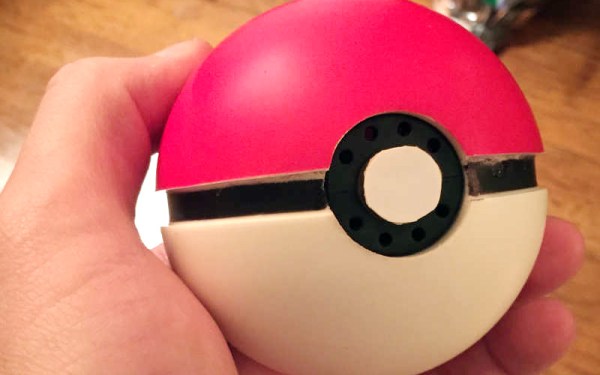
[TJ Hunter] wanted to find some of the rarer Pokémon without draining his smartphone battery while staring on a screen. The handy ø 25 cm Pokéball he built to make the endless marches more tolerable detects nearby Pokémon and wiggles to alert its owner if there’s a rare catch in sight.

Continue reading “Wiggling Pokéball Detects Rare Pokémon”

Pokemon Go Physical Pokeball Catches ‘Em All

There’s something irresistible about throwing Pokeballs at unexpectedly appearing creatures. But wait. When did you actually, physically throw a Pokeball? Swiping over colored pixels wasn’t enough for [Trey Keown], so he built a real, throwable, Pokemon-catching Pokeball for Pokemon Go.

Continue reading “Pokemon Go Physical Pokeball Catches ‘Em All”

Pokemon Go Cheat Fools GPS With Software Defined Radio

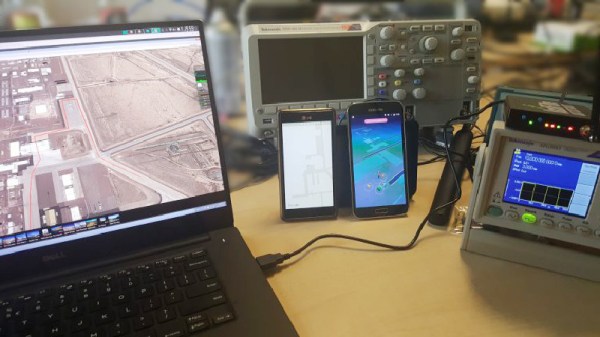
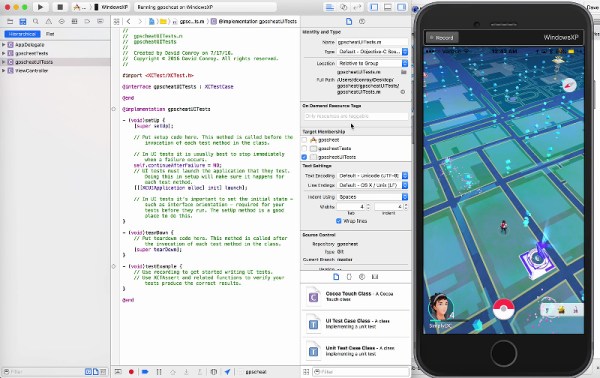
Using Xcode to spoof GPS locations in Pokemon Go (like we saw this morning) isn’t that much of a hack, and frankly, it’s not even a legit GPS spoof. After all, it’s not like we’re using an SDR to spoof the physical GPS signal to cheat Pokemon Go.

To [Stefan Kiese], this isn’t much more than an exercise. He’s not even playing Pokemon Go. To squeeze a usable GPS signal out of his HackRF One, a $300 Software Defined Radio, [Stefan] uses an external precision clock. This makes up for the insufficient calibration of the HackRF’s internal clock, although he points out that this might also be fixed entirely in software.

Continue reading “Pokemon Go Cheat Fools GPS With Software Defined Radio”

Pokemon Go GPS Cheat (If You Don’t Fear Getting Banned)

Pokemon Go inherits a certain vulnerability to GPS location spoofing from it’s predecessor Ingress, but also the progress that has been made in spoof detection. Since taking advantage of a game’s underlying mechanisms is part of the winner’s game, why not hook up your smartphone to Xcode and see if you can beat Niantic this time? [Dave Conroy] shows you how to play back waypoints and activate your Pokemon Go warp drive.

Continue reading “Pokemon Go GPS Cheat (If You Don’t Fear Getting Banned)”