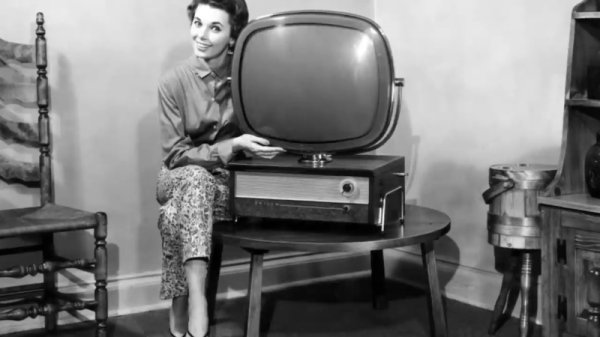
Philco Bet The Farm On The Predicta… And Lost

Philco was a common household brand for many years. The company started in 1892, making street lights. Then they pivoted to batteries. This was big business when early radios were all battery-operated. But in the 1920s, line-powered radios threatened to shrink their customer base, so they pivoted again. This time, they started making radios. So what happened? [The Last Shift] has the story, and you can see the video below.

Philco used advanced manufacturing techniques to make radios more affordable. By 1930, they were the number one radio maker in the world. After World War II, they moved into everything electric: mostly appliances, but also the new king of the electronics market, the television.

Continue reading “Philco Bet The Farm On The Predicta… And Lost”

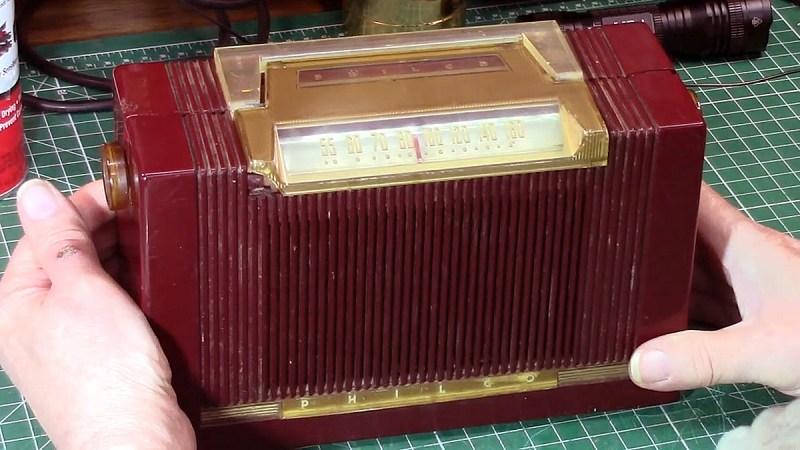
Red and gold bakelite Philco farm radio on a workbench

Hacking A Heavyweight Philco Radio

There’s something magical about the clunk of a heavy 1950s portable radio – the solid thunk of Bakelite, the warm hum of tubes glowing to life. This is exactly why [Ken’s Lab] took on the restoration of a Philco 52-664, a portable AC/DC radio originally sold for $45 in 1953 (a small fortune back then!). Despite its beat-up exterior and faulty guts, [Ken] methodically restored it to working condition. His video details every crackling capacitor and crusty resistor he replaced, and it’s pure catnip for any hacker with a soft spot for analog tech. Does the name Philco ring a bell? Lately, we did cover the restoration of a 1958 Philco Predicta television.

What sets this radio hack apart? To begin with, [Ken] kept the restoration authentic, repurposing original capacitor cans and using era-appropriate materials – right down to boiling out old electrolytics in his wife’s discarded cooking pot. But, he went further. Lacking the space for modern components, [Ken] fabbed up a custom mounting solution from stiff styrofoam, fibreboard, and all-purpose glue. He even re-routed the B-wiring with creative terminal hacks. It’s a masterclass in patience, precision, and resourcefulness.

If this tickles your inner tinkerer, don’t miss out on the full video. It’s like stepping into a time machine.

Continue reading “Hacking A Heavyweight Philco Radio”

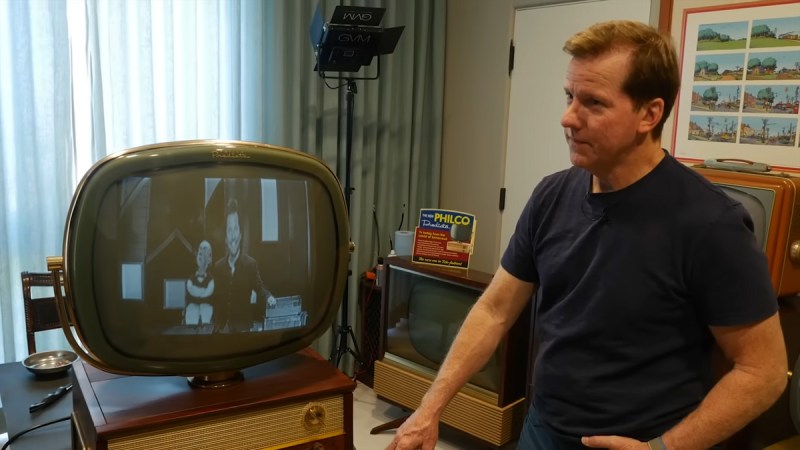
Jeff Dunham next to a Philco Predicta TV

Jeff Dunham Finds A NOS 1958 Philco Predicta

When you see a ventriloquist like [Jeff Dunham], you probably expect to see him with a puppet. This time – spoilers ahead – you won’t. Besides his fame on stage, [Dunham] is also a collector of vintage tech and a die-hard television enthusiast. In the video below, [Dunham] has gotten his hands on a rarity: an unboxed 1958 Philco Predicta TV. The original tape was still on the box. We get to follow along on his adventure to restore this sleek, retro-futuristic relic!

[Dunham]’s fascination with the Predicta stems from its historical significance and bold design. At a time when television was making its way into American homes, the Predicta dared to be different with its swivel-mounted picture tube and early printed circuit boards. Despite its brave aesthetics, the Predicta’s ambition led to notorious reliability issues. Yet, finding one in pristine condition, sealed and untouched for over six decades, is like unearthing a technological time capsule.

What makes this story unique is [Dunham]’s connection to both broadcasting and his craft. As a ventriloquist inspired by Edgar Bergen — whose radio shows captivated America — [Dunham] delights in restoring a TV from the same brand that first brought his idol’s voice to airwaves. His love for storytelling seamlessly translates into this restoration adventure.

After unboxing, [Dunham’s] team faces several challenges: navigating fragile components, securing the original shipping brace, and cautiously ramping up voltage to breathe life into the Predicta. The suspense peaks in the satisfying crackle of static, and the flicker of a 65-year-old screen finally awakened from slumber.

Have you ever come across an opportunity like this? Tell us about your favorite new old stock find in the comments. Buying these can be a risk, since components have a shelf life. We appreciate when these old TVs play period-appropriate shows. Who wants to watch Game of Thrones on a Predicta?

Continue reading “Jeff Dunham Finds A NOS 1958 Philco Predicta”

A 1940s Car Radio Receives Some Love

The entertainment systems in modern vehicles is akin to a small in-dash computer, and handles all manner of digital content. It probably also incorporates a radio, but increasingly that’s treated as something of an afterthought. There was a time though when any radio in a car was a big deal, and if you own a car from that era it’s possible that you’ve had to coax an aged radio into life. [The Radio Mechanic] is working on a radio from a 1946 Packard, which provides a feast for anyone with a penchant for 1940s electronics.

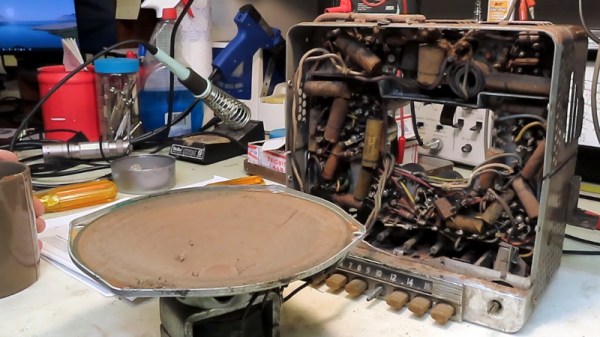
The unit, manufactured by Philco, is an all-in-one, with a bulky speaker in the chassis alongside the tubes and other components. It would have sat behind the dash in the original car, so some external cosmetic damage is not critical. Less easy to pass off is the cone rubbing on the magnet, probably due to water damage over the last eight decades. Particularly interesting are the controls, as we’re rather enamored with the multicolored filter attached to the tone control. A laser cutter makes short work of recreating the original felt gasket here.

The video below is the first of a series on this radio, so we don’t see it working. Ahead will be a lot more cleaning up and testing of components, and we’d expect a lot of those paper capacitors to need replacement. We can almost smell that warm phenolic smell.

If tube radio work is your thing, we’ve been there before.

Continue reading “A 1940s Car Radio Receives Some Love”

Vintage Philco Radio Looks Stock, Contains Modern Secret: A Raspberry Pi

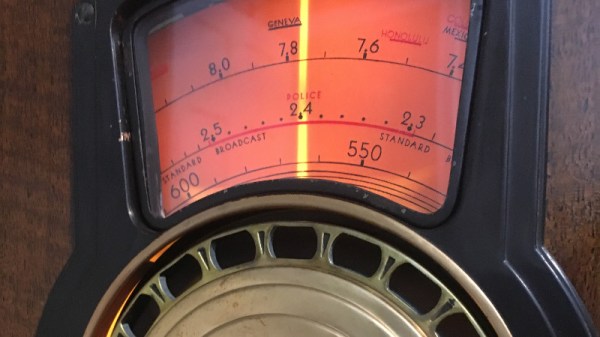
Antique radio receivers retain a significant charm, and though they do not carry huge value today they were often extremely high quality items that would have represented a significant investment for their original owners. [CodeMakesItGo] acquired just such a radio, a Philco 37-11 made in 1937, and since it was it a bit of a state he set about giving it some updated electronics. Vintage radio purists, look away from the video below the break.

Stripping away the original electronics, he gave it a modern amplifier with Bluetooth capabilities, and a Raspberry Pi. Vintage radio enthusiasts will wince at his treatment of those classic parts, but what else he’s put into it makes up for the laying waste to a bit of ’30s high-tech.The original tuning dial was degraded so he’s given it a reproduction version, and behind that is an optical encoder and two optical sensors. This is used to simulate “tuning” the radio between different period music “stations” being played by the PI, and for an authentic feel he’s filled the gaps with static. The result is a functional and unusual device, which is probably better suited than the original to a 2019 in which AM radio is in decline.

If you think of a high-end set like this Philco as being the ’30s equivalent of perhaps an 8K TV set, you can imagine the impact of AM radio in those early days of broadcasting. We recently took a look at some of the directional antenna tricks that made so many AM stations sharing the band a possibility.

Continue reading “Vintage Philco Radio Looks Stock, Contains Modern Secret: A Raspberry Pi”

Cloning Knobs For Vintage Testing Equipment

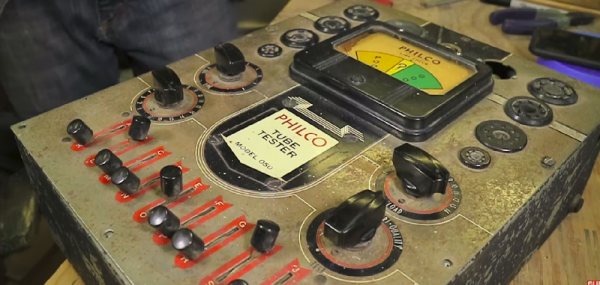
Knobs! Shiny candy-colored knobs! The last stand of skeuomorphism is smart light switches! Everyone loves knobs, but when you’re dealing with vintage equipment with a missing knob, the odds of replacing it are slim to none. That’s what happened to [Wesley Treat] when he picked up a vintage Philco tube tester. The tester looked great, but a single knob for a rotary switch was missing. What to do? Clone some knobs! You only need some resin and a little bit of silicone.

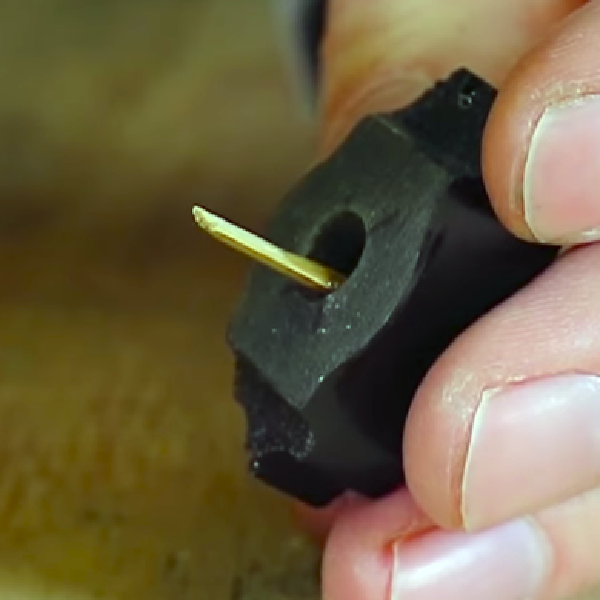
The process of copying little bits of plastic or bakelite is fairly standard and well-tread territory. Go to Michaels or Hobby Lobby, grab some silicone and resin, make a box, put your parts down, cover them in silicone, remove the parts, then put resin in. For simple parts, and parts with flat bottoms like knobs, this works great. However, there’s something weird about the knob on this old Philco tube tester. Firstly, it doesn’t fit a standard 1/4″ shaft — it’s a bit bigger. There’s also no set screw. Instead, this knob has a stamped spring aligning it with the flat part of the D-shaft in this rotary switch. This means a copy of this knob wouldn’t be useful to anyone else, and that no other knob would work with this tube tester.

However, a bit of clever engineering would make a copy of this knob fit the existing switch. Once the resin was cured, [Wesley] drilled out the hole, then sanded a dowel down to fit into the flat of the D-shaft. It took a little kergiggering, but the knob eventually fit onto one of the rotary switches. Not bad for a few bucks in silicone and resin.

You can check out the entire build process below.

Continue reading “Cloning Knobs For Vintage Testing Equipment”

Retrotechtacular: Reading And Sorting Mail Automatically

We often read about the minicomputers of the 1960s, and see examples of their use in university research laboratories or medium-sized companies where they might have managed the accounts. It’s tempting though to believe that much of the world in those last decades of the analogue era remained untouched by computing, only succumbing in the decade of the microcomputer, or of the widespread use of the Internet.

What could be more synonymous with the pre-computing age than the mail system? Hundreds of years of processing hand-written letters, sorted by hand, transported by horses, boats, railroads and then motor transport, then delivered to your mailbox by your friendly local postman. How did minicomputer technology find its way into that environment?

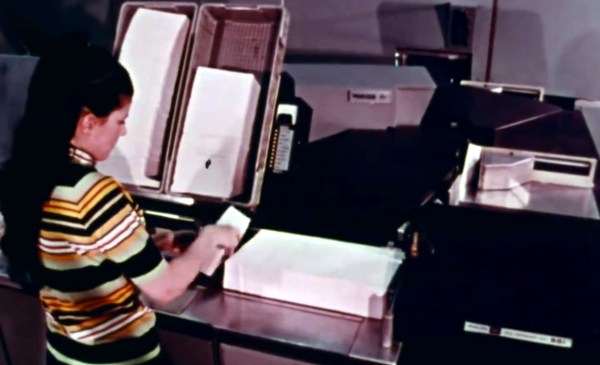
Thus we come to today’s film, a 1970 US Postal Service short entitled “Reading And Sorting Mail Automatically”. In it we see the latest high-speed OCR systems processing thousands of letters an hour and sorting them by destination, and are treated to a description of the scanning technology.

If a Hackaday reader in 2017 was tasked with scanning and OCR-ing addresses, they would have high-resolution cameras and formidable computing power at their disposal. It wouldn’t be a trivial task to get it right, but it would be one that given suitable open-source OCR software could be achieved by most of us. By contrast the Philco engineers who manufactured the Postal Service’s  scanners would have had to create them from scratch.
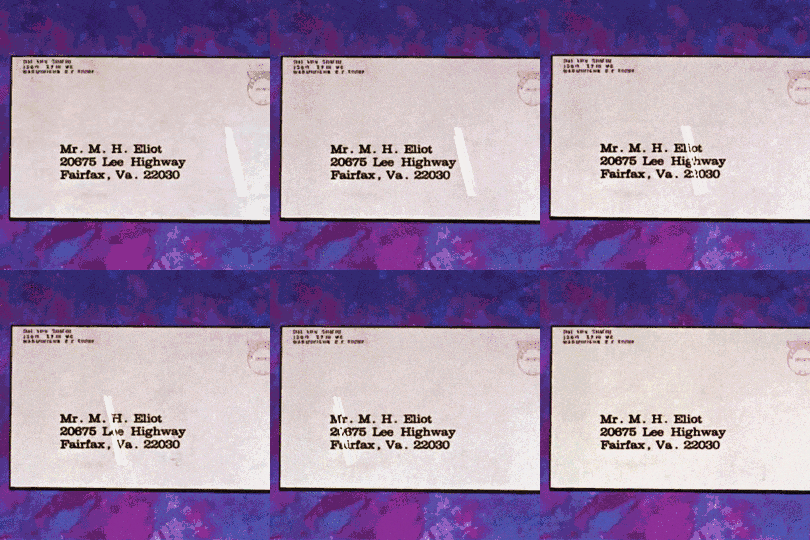
This they performed in a curiously analogue manner, with a raster scan generated by a CRT. First a coarse scan to identify the address and its individual lines, then a fine scan to pick out the line they needed. An optical sensor could then pick up the reflected light and feed the information back to the computer for processing.

The description of the OCR process is a seemingly straightforward one of recognizing the individual components of letters which probably required some impressive coding to achieve in the limited resources of a 1960s minicomputer. The system couldn’t process handwriting, instead it was reserved for OCR-compatible business mail.

Finally, the address lines are compared with a database of known US cities and states, and each letter is routed to the appropriate hopper. We are shown a magnetic drum data store, the precursor of our modern hard drives, and told that it holds an impressive 10 megabytes of data. For 1970, that was evidently a lot.

It’s quaint to see what seems to be such basic computing technology presented as the last word in sophistication, but the truth is that to achieve this level of functionality and performance with the technology of that era was an extremely impressive achievement. Sit back and enjoy the film, we’ve placed it below the break.

Continue reading “Retrotechtacular: Reading And Sorting Mail Automatically”