Controlling The Power Of A Flash With A Tv Remote

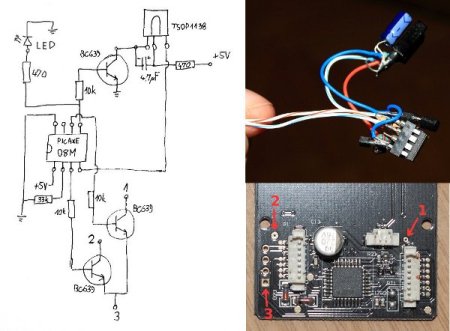
For those who do fancy photography, setting up the lighting ends up being one of the larger tasks of each session. There are flashes out there that can be controlled via a remote control to help ease the process, but they can cost a considerable amount more. [Dsvilko] shares with us a fairly simple circuit that allows you to use a tv remote to control your flash. He’s using a picaxe 08m and he states that before this project, he had never messed with microcontrollers. We say great job on your first microcontroller project. You can catch a video of it in action after the break.

Continue reading “Controlling The Power Of A Flash With A Tv Remote”
Take Better Pictures Of Your Projects

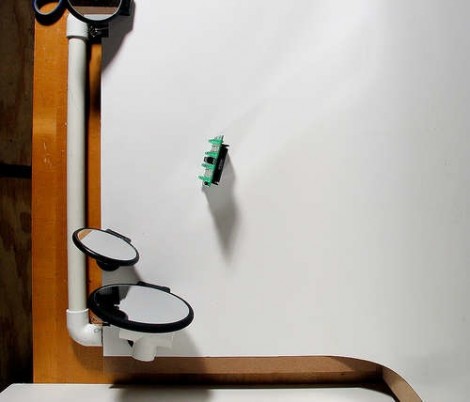
[PT] let us know about a fantastic guide to taking better photographs of your projects. It’s a hefty read but well worth the effort. Author [Johngineer] helps us understand how to use simple (and possibly inexpensive) tools like lights, mirrors, and a background material. He also gives some tips on how to recognize what your image processing software is telling your about your photography skills (get the correct camera setup and you won’t need correct your levels in The GIMP). There’s even some tips on photographing LEDs, a topic we’ve seen before, which you’re bound to find useful when trying to make that blinky thing you built into an Internet sensation.

Aerial Photography platforms

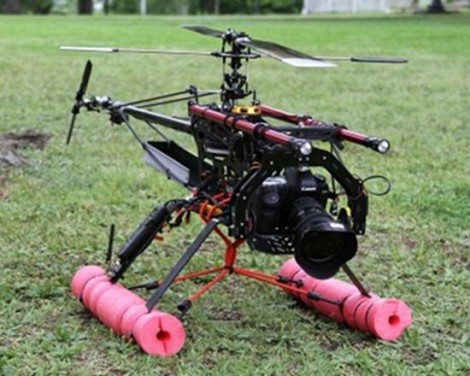
[Eric Austin] is using a Canon 7D with this RC helicopter to capture some amazing HD video. His success has manifested itself in a company that is now manufacturing these platforms ready-to-use. Take a look at their blog to see some of the hardware they’re working on, such as a tricopter and hexacopter photo platforms. We’ve also embedded a video after the break of the unit seen above and the stunning shots it’s able to grab.

Continue reading “Aerial Photography platforms”

Lightdrawing Robot

Long exposure “light drawing” photography has become pretty popular lately. We see images pop up all the time that look pretty cool. [Nils] wasn’t feeling particularly artistic himself, so he made a robot to do the hard work for him. he can program patterns in, and it will replay them by changing the color of the light on top while it drives around. Though it may lack a little of the fluidity of the hand made images, it can probably make up for it with complexity. This isn’t the first time we’ve seen this style of photography mixed with robotics, though this one seems fairly more flexible. Tune in after the break to see a video of it in action.

Continue reading “Lightdrawing Robot”

Axe Your Camera (again!)

[Maurice] let us know that his latest photography tool for hackers, the Camera Axe 3.0, is now available. The original allowed you to trigger a high-speed flash and camera from a multitude of sensors, including light and sound. The new one does all that, but also: allows multiple cameras or multiple flashes, clean up of software to make it more user adaptable, and the best (arguably the most important) part – cheaper components! All that and more under the Creative Commons that we do love so much. Keep up the amazingly detailed and just pure awesome work [Maurice].

Beauty In Destruction

[youtube=http://www.youtube.com/watch?v=QfDoQwIAaXg]

This is not a hack. In fact it’s a promotional montage for a collection of scientific equipment that few of us could likely afford. But like yesterday’s giant marionettes over Berlin, sometimes even a costly and delicately-orchestrated achievement transcends its own not-a-hack-ness, fulfilling our brains’ lust for wonderment all the same.

Kurzzeit of Germany produces ballistics measurement equipment. The video depicts various combinations of projectiles and targets at up to one million frames per second, revealing unexpected beauty in hitherto unseen phenomena, and is the best damn ten minutes you will waste on the internet all day!

Laser Triggered Photography

FFU0B63FZG43RK5.MEDIUM

Popped balloons or bullets fired into apples, anyone can photograph with a quick sound based camera rig. Lasers have been used forever in motion detection. And even door bell chimes have been used before for remote camera shutter releases. No, [SaskView] wanted to go further and created his Laser Triggered High-Speed Photography setup, to photograph (of all things) milk splashes. We liked the simplicity of the project however;  requiring no programmed microchips or overly complicated circuitry – rather he took a quick trip to the local dollar shop, used the amazing CHDK firmware, and he produced perfect results every time.

[Update: CHDK, not CHKD firmware. My mind must be elsewhere. Thanks jbot and agent smith]