Radio And Phone Speaker Has Style

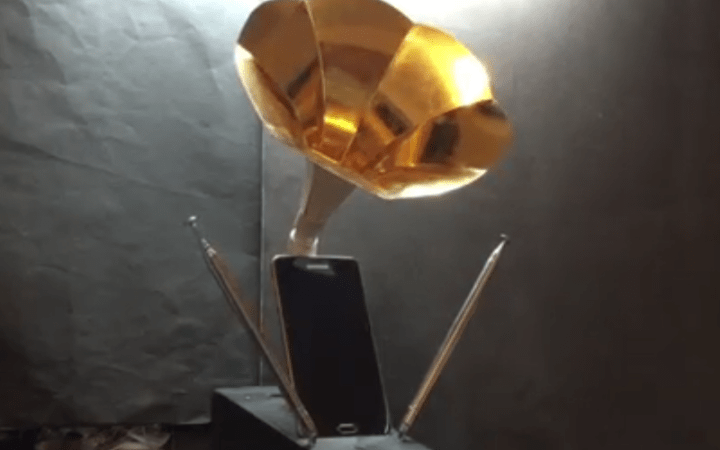
Building a crystal radio isn’t exactly rocket science. Some people who build them go for pushing them technically as far as they can go. Others, like [Billy Cheung], go for style points. The modular radio and phone speaker looks like it came out of the movie Brazil. The metallic gramophone-like speaker horn adds to the appeal and mechanically amplifies the sound, too.

The video (see below) isn’t exactly a how-to, but if you watch to the end there is enough information that you could probably reproduce something at least similar. There are actually several horns. One is made from copper, another from paper, and one from a plastic bottle.

Continue reading “Radio And Phone Speaker Has Style”

A Real Star Trek Communicator Badge

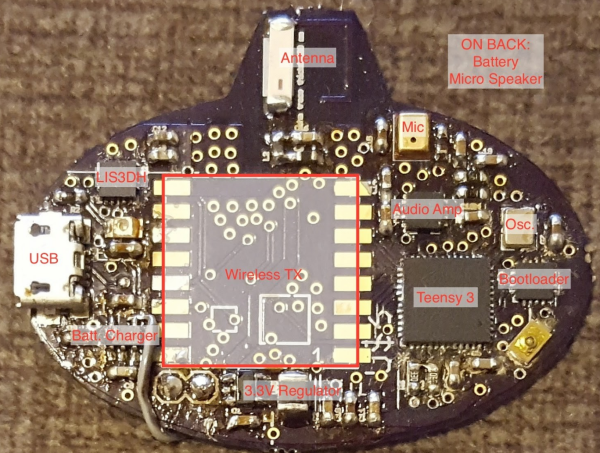
Star Trek has never let technology get in the way of a good story. Gene Roddenberry and the writers of the show thought up some amazing gadgets, from transporters to replicators to the warp core itself. Star Trek: The Next Generation brought us the iconic communicator badge. In 1987, a long-range radio device which could fit in a pin was science fiction. [Joe] is bringing these badges a bit closer to the real world with his entry in the 2017 Hackaday Sci-Fi Contest.

trek-thumbThe first problem [Joe] dealt with was finding a radio which could run from watch batteries, and provide decently long-range operations. He chose the HopeRF RFM69HCW. Bringing fiction a bit closer to reality, this module has been used for orbital communications with low-cost satellites.
The Badge’s processor is a Teensy LC. [Joe] is rolling his own Teensy, which means using bootloader chips from PJRC, as well as the main microcontroller. Kicking the main micro into operation is where [Joe] is stuck right now. Somewhere between the breadboard and the first spin of the surface mount PCB things went a bit sideways. The oscillators are running, but there are no USB communications. [Joe] is trying another board spin. He made a few improvements and already has new boards on the way. Switching to a toaster oven or skillet paste and solder setup would definitely help him get the new badges up and running.

An Overview Of The Dreaded EMC Tests

There is one man whose hour-long sessions in my company give me days of stress and worry. He can be found in a soundless and windowless room deep in the bowels of an anonymous building in a town on the outskirts of London. You’ve probably driven past it or others like it worldwide, without being aware of the sinister instruments  that lie within.

The man in question is sometimes there to please the demands of the State, but there’s nothing too scary about him. Instead he’s an engineer and expert in electromagnetic compatibility, and the windowless room is a metal-walled and RF-proof EMC lab lined with ferrite tiles and conductive foam spikes. I’m there with the friend on whose work I lend a hand from time to time, and we’re about to discover whether all our efforts have been in vain as the piece of equipment over which we’ve toiled faces a battery of RF-related tests. As before when I’ve described working on products of this nature the specifics are subject to NDAs and in this case there is a strict no-cameras policy at the EMC lab, so yet again my apologies as any pictures and specifics will be generic.

There are two broadly different sets of tests which our equipment will face: RF radiation, and RF injection. In simple terms: what RF does it emit, and what happens when you push RF into it through its connectors and cables? We’ll look at each in turn as a broad overview pitched at those who’ve never seen inside an EMC lab, sadly there simply isn’t enough space in a Hackaday article to cover every nuance.

Continue reading “An Overview Of The Dreaded EMC Tests”

World’s Thinnest Morse Code Touch Paddle

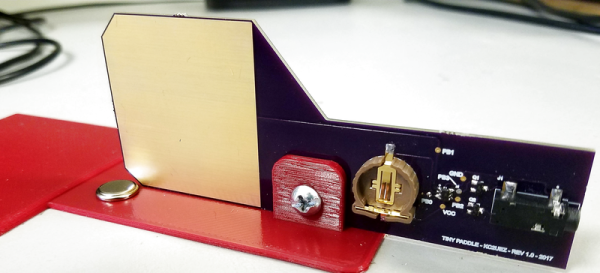
Morse code enthusiasts can be picky about their paddles. After all, they are the interface between the man and the machine, and experienced telegraphers can recognize each other by their “hands”. So even though [Edgar] started out on a cheap, clicky paddle, it wouldn’t be long before he made a better one of his own. And in the process, he also made what we think is probably the thinnest paddle out there, being a single sheet of FR4 PCB material and a button cell battery. This would be perfect for a pocketable QRP (low-power) rig. Check it out in action in the video below.

There’s not much to a Morse code paddle. It could, of course, be as simple as two switches — one for “dit” and one for “dah”. You could make one out of a paperclip. [Edgar]’s version replaces the switches with capacitive sensing, done by the ATtiny4 on board. Because this was an entry in the 1kB challenge, he prioritized code size over features, and got it down to a ridiculous 126 bytes! Even so, it has deluxe features like autorepeat. We’d have to dig into the code to see if it’s iambic.
Continue reading “World’s Thinnest Morse Code Touch Paddle”

Baofeng Handy Talkie Meets GNU Radio

There was a time when just about every ham had a pricey VHF or UHF transceiver in their vehicle or on their belt. It was great to talk to friends while driving. You could even make phone calls from anywhere thanks to automatic phone patches. In 1980 cell phones were uncommon, so making a call from your car was sure to get attention.

Today, ham radio gear isn’t as pricey thanks to a flood of imports from companies like Baofeng, Jingtong, and Anytone. While a handheld transceiver is more of an impulse buy, you don’t hear as much chat and phone calls, thanks to the widespread adoption of cell phones. Maybe that’s why [Bastian] had bought a cheap Baofeng radio but never used it.

He was working on a traffic light project and wanted to send an RF signal when the light changes. He realized the Baofeng radio was cheap and cheerful solution. He only needed a way to have the PC generate an audio signal to feed the radio. His answer was to design a UDP packet to audio flow graph in GNU Radio. GNU Radio then feeds the Baofeng. The radio’s built-in VOX function handles transmit switching. You can see a video demonstration, below.

Continue reading “Baofeng Handy Talkie Meets GNU Radio”

More Power: Powel Crosley And The Cincinnati Flamethrower

We tend to think that there was a time in America when invention was a solo game. The picture of the lone entrepreneur struggling against the odds to invent the next big thing is an enduring theme, if a bit inaccurate and romanticized. Certainly many great inventions came from independent inventors, but the truth is that corporate R&D has been responsible for most of the innovations from the late nineteenth century onward. But sometimes these outfits are not soulless corporate giants. Some are founded by one inventive soul who drives the business to greatness by the power of imagination and marketing. Thomas Edison’s Menlo Park “Invention Factory” comes to mind as an example, but there was another prolific inventor and relentless promoter who contributed vastly to the early consumer electronics industry in the USA: Powel Crosley, Jr.

Continue reading “More Power: Powel Crosley And The Cincinnati Flamethrower”

Books You Should Read: Making A Transistor Radio

When a Hackaday article proclaims that its subject is a book you should read, you might imagine that we would be talking of a seminal text known only by its authors’ names. Horowitz and Hill, perhaps, or maybe Kernigan and Ritchie. The kind of book from which you learn your craft, and to which you continuously return to as a work of reference. Those books that you don’t sell on at the end of your university career.

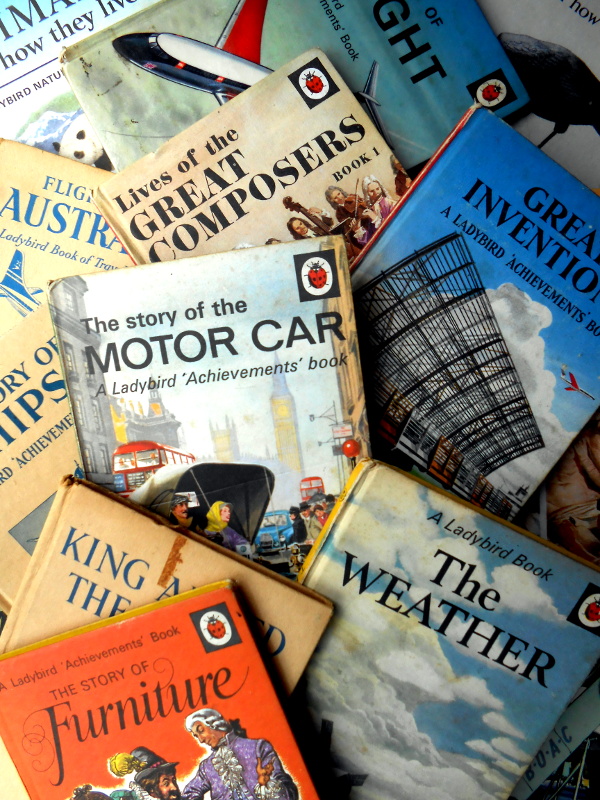
Ladybird books covered a huge range of topics.

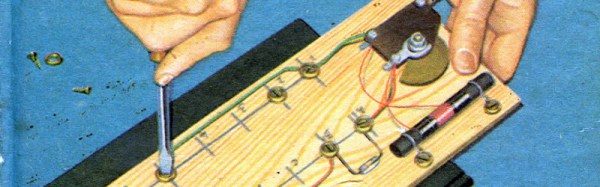
So you might find it a little unexpected then that our subject here is a children’s book. Making A Transistor Radio, by [George Dobbs, G3RJV] is one of the huge series of books published in the UK under the Ladybird imprint that were a staple of British childhoods for a large part of the twentieth century. These slim volumes in a distinctive 7″ by 4.5″ (180 x 115 mm) hard cover format were published on a huge range of subjects, and contained well written and informative text paired with illustrations that often came from the foremost artists of the day. This one was published at the start of the 1970s when Ladybird books were in their heyday, and has the simple objective of taking the reader through the construction of a simple three transistor radio. It’s a book you must read not because it is a seminal work in the vein of Horrowitz and Hill, but because it is the book that will have provided the first introduction to electronics for many people whose path took them from this humble start into taking the subject up as a career. Including me as it happens, I received my copy in about 1979, and never looked back. Continue reading “Books You Should Read: Making A Transistor Radio”