Mining projects are approved or disapproved based on all kinds of reasons. There are economic concerns, logistical matters, and environmental considerations to be made. Mining operations can be highly polluting, or they can have outsized effects on a given area by sheer virtue of the material they remove or the byproducts they leave behind.
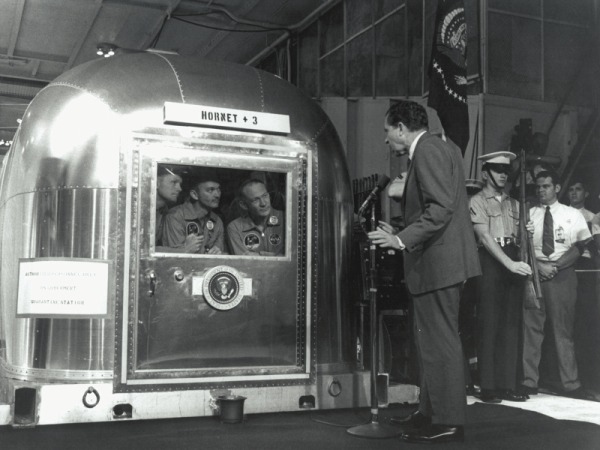
We aren’t much into theories denying the moon landing around here, but [Dagomar Degroot], an associate professor at Georgetown University, asserts that the Apollo 11 quarantine efforts were bogus. Realistically, we think today that the chance of infection from the moon, of all places, is low. So claiming it was successful is like paying for a service that prevents elephants from falling through your chimney. Sure, it worked — there hasn’t been a single elephant!
According to [Degroot], the priority was to protect the astronauts and the mission, and most of the engineering money and effort went towards that risk reduction. The — admittedly low — danger of some alien plague wiping out life on Earth wasn’t given the same priority.
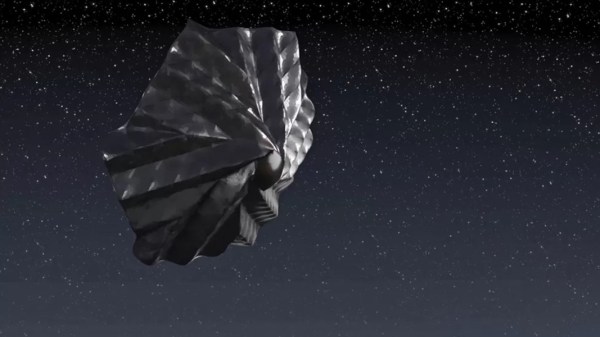
Badminton is not a sport that most of us think about often, and extremely rarely outside of every four years at the summer Olympics and maybe at the odd cookout or beach party here or there. But the fact that it’s a little bit unique made it the prime inspiration for this new heat shield design, which might see a space flight and test as early as a year from now.
The inspiration comes from the shuttlecock, the object which would otherwise be a ball in any other sport. A weighted head, usually rubber or cork, with a set of feathers or feather-like protrusions mounted to it, contributes to its unique flight characteristics when hit with a racquet. The heat shield, called Pridwen and built by Welsh company Space Forge, can be folded before launch and then expanded into this shuttlecock-like shape once ready for re-entry. It’s unlikely this will protect astronauts anytime soon, though. The device is mostly intended for returning materials from the Moon or from asteroids, or for landing spacecrafts on celestial bodies with atmospheres like Mars or Venus.
With some testing done already, Space Forge hopes this heat shield will see a space flight before the close of 2023. That’s not the end of the Badminton inspiration either, though. It’s reported that this device can slow a re-entering craft so much that it can be caught in a net. Not exactly the goal when playing the sport, but certainly a welcome return home for whichever craft might use this system. Of course, getting down from space is only half the battle. Take a look at this other unique spacecraft that goes up in a fairly non-traditional way instead.
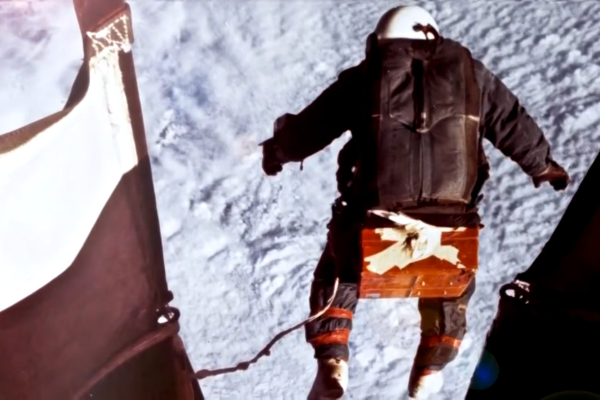
That altitude is considerably short of what would be called “space”, but it’s still an awfully long way up and the air there is very thin compared to on the surface. Space is generally (but not universally) considered to be beyond 100 km above sea level, a human-chosen boundary known as the Kármán line. 35 km is a long ways into the stratosphere, but still within Earth’s atmosphere.
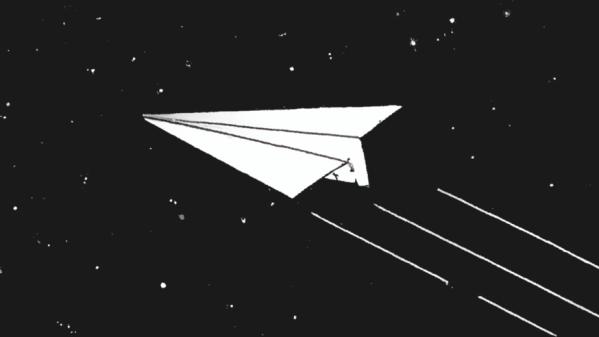
Even so, that doesn’t mean there haven’t been efforts to go considerably higher. There was a Japanese proposal to drop airplanes made from special heat-resistant paper from the International Space Station, roughly 400 km above Earth. Success would show that low-speed, low-friction atmospheric reentry is feasible — for pieces of paper, anyway. But one of the challenges is the fact that there is no practical way to track such objects on their way down, and therefore no way to determine where or when they would eventually land.
There have been many other high-altitude paper plane launches, but the current record of 35,043 meters was accomplished by David Green in the United Kingdom as part of a school project. Such altitudes are in the realm of things like weather balloons, and therefore certainly within the reach of hobbyists.
As for the airplanes themselves, the basic design pictured here probably won’t cut it, so why not brush up on designs with the Paper Airplane Design Database? Even if you don’t send them into the stratosphere (or higher), you might find something worth putting through a DIY wind tunnel to see how they perform.
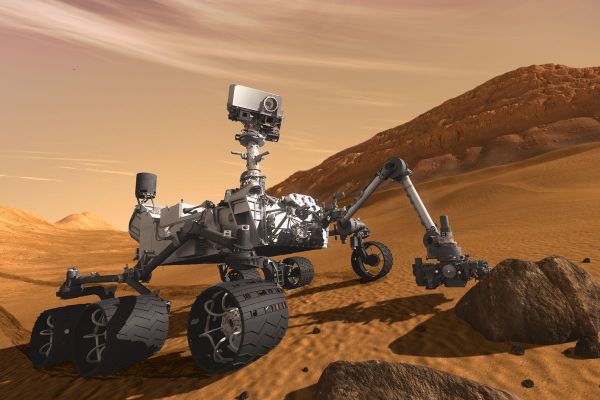
Although the Curiosity rover has been well out of the reach of human hands since it touched down on Mars’ surface in 2012, this doesn’t mean that it isn’t getting constant upgrades. Via its communication link with Earth it receives regular firmware updates, with the most recent one being the largest one since 2016. In addition to code clean-up and small tweaks to message formats, this new change should make Curiosity both smarter and have its wheels last longer.
The former helps to avoid the long idle times between navigating, as unlike its younger sibling, Curiosity does not have the dedicated navigation computer for more autonomous driving. Although it won’t make the 11-year old rover as nimble as its sibling, it should shorten these pauses and allow for more navigating and science to be done. Finally, the change to reduce wear on the wheels is fairly simple, but should be rather effective: this affects the amount of steering that Curiosity needs to do while driving in an arc.
With these changes in place, Curiosity should be all ready to receive its newest sibling as it arrives in a few years along with even more Mars helicopters.
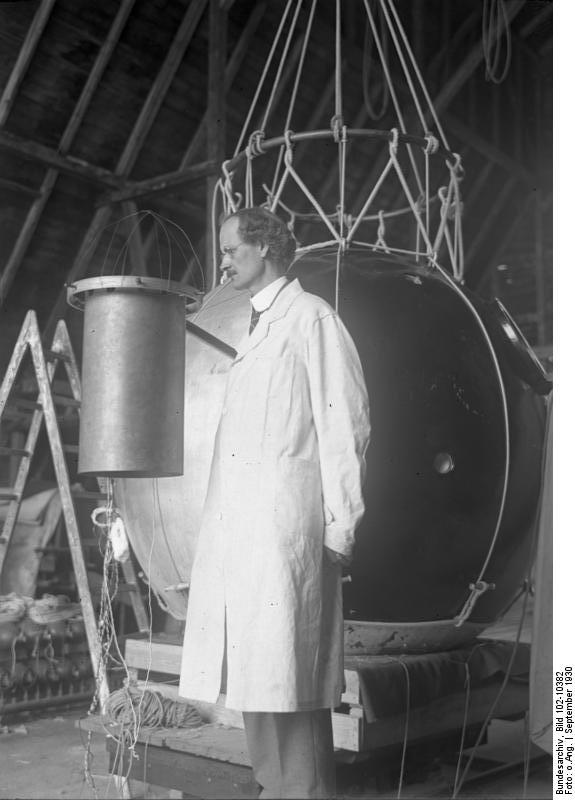
Piccard inspects an instrument on his balloon (Image: Bundesarchiv, Bild 102-10382 / CC-BY-SA 3.0)
We think of human flight as a relatively modern affair, with a few claims to the first airplane all around the turn of the last century. But people flew much earlier than that by using hot air balloons as well as gas-filled ones. While the Montgolfier brothers get most of the credit for hot air ballooning in 1783, there are some reports that a Brazilian priest may have lifted himself with a balloon as early as 1709.
Regardless, we’ve had balloons a good century earlier than winged flight, if not longer. While the device is deceptively simple, it is possible to get a balloon to very high altitudes without a lot of specialized technology. Airplanes at high altitudes need a way to get enough oxygen to fuel their engines, or they have to rely on rockets. Either way, there are plenty of design and operational challenges.
Balloons, of course, can simply rise to the occasion. Auguste Piccard and an assistant took a gas-filled balloon to 15,781 meters in 1931. Their gondola was pressurized, and they were the first humans to see the curvature of the Earth and the dark sky above. That record wouldn’t stand for long, though.
CCCP-1
The Soviet Union was keenly interested in Piccard’s flight, and the Soviet Air Force set about to build a research vessel, CCCP-1 (in English, USSR-1), that flew in 1933. The envelope was a large amount of thin fabric impregnated with latex and filled with hydrogen. The air-tight gondola presented several challenges in design. Most of the science experiments were outside, of course, and in 1933, you didn’t have an Arduino and RC servos to control things.
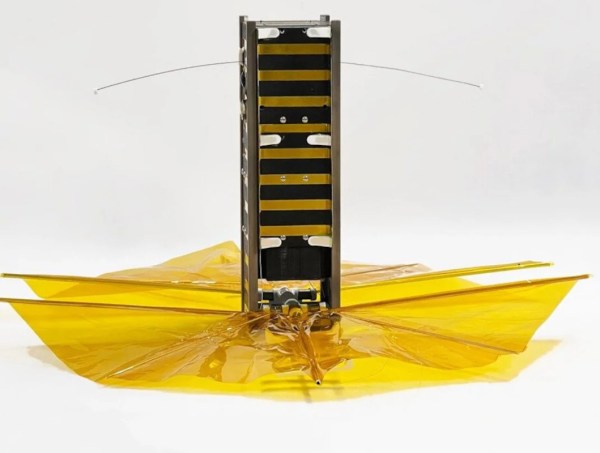
When sending satellites into space, the idea is to place them into as stable an orbit as possible in order to maximize both the time the satellite is useful and the economics of sending it there in the first place. This tends to become rather untenable as the amount of space junk continues to pile up for all but the lowest of orbits, but a team at Brown University recently tested a satellite that might help solve this problem, at least for future satellite deployments.
The main test of this satellite was its drag sail, which increases its atmospheric drag significantly and reduces its spaceflight time to around five years. This might make it seem like a problem from an economics standpoint, as it’s quite expensive to build satellites and launch them into space, but this satellite solves these problems by being both extremely small to minimize launch costs, and also by being built out of off-the-shelf components not typically rated for spaceflight. For example, it gets its power solely from AA batteries and uses an Arduino for its operation and other research.
The satellite is currently in orbit, and has already descended from an altitude of 520 km to 470 km. While it won’t help reduce the existing amount of debris in orbit, the research team hopes to demonstrate that small satellites can be affordable and economically feasible without further contributing to the growing problem of space junk. If you’re looking to launch your own CubeSat one day, take a look at this primer which goes over most of the basics.