Game Boy Printer USB Cable And Software

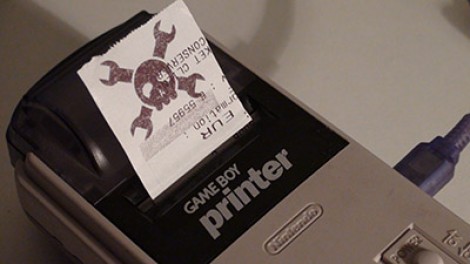
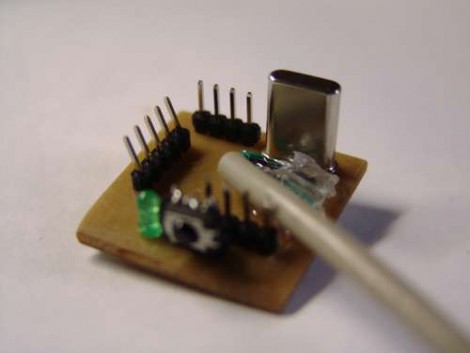
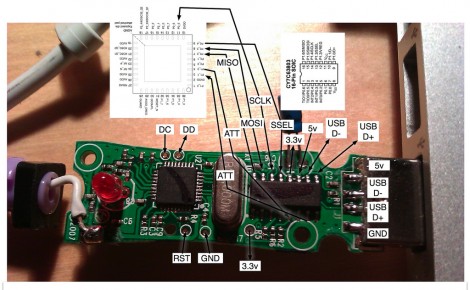
[Furrtek] hooked up his Game Boy printer for use with a PC (translated). The two-part hack started with a cable to attach the device via USB. A Nokia interface cable was used as a base to translate the USB signals into serial, and an ATtiny45 microcontroller added to talk to the printer. He did a great job of free-forming the circuit alterations and fitting it back into the plastic USB plug housing.The next step was to write some software. Using VB6 he coded an application that loads in an image, scales it to fit, and allows you to adjust the contrast that the thermal printer produces. For testing purposes he’s reusing old receipts. See it in action after the break.

Continue reading “Game Boy Printer USB Cable And Software”

Munchausen Makes NES A Cartridge Programmer

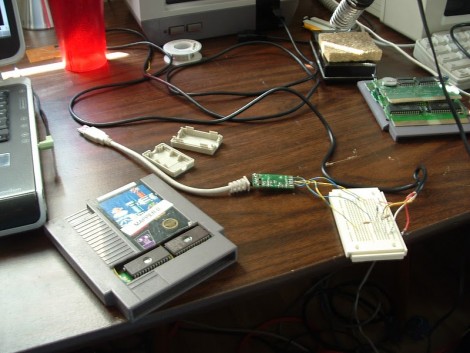
What a beautiful image of NES cartridges showing their private parts. These are the raw materials for the Munchausen Flash Cartridge project. A combination of a modified game cartridge and special USB cable makes it possible to program NES cartridges while inside an unmodified console. The cartridge has an added flash chip that is running a bootloader. By connecting a USB-to-NES cable to the second controller port a game image (or custom code image) can be flashed to one of the three game slots on the writable cartridge. The bootloader provides a menu at power-up to select between the three stored images, or can go straight to the previously selected image by holding down A when the console is turned on. There’s even a recovery routine in case of problems. Check out the demo after the break.

One thing we find interesting from the forum thread is a mention that it is technically possible to run code on the NES directly from the PC. That would sure make it easy to perform live chiptunes on NES.

Continue reading “Munchausen Makes NES A Cartridge Programmer”

IR Receiver As USB Keyboard

[Arthur] built an IR receiver to use with XBMC. Because it’s software specific he identifies the device on USB as a keyboard, and passes the IR commands as keystrokes used by the popular media platform.

Normally, homebrew IR receivers would use LIRC, the Linux Infrared Remote Control software. But this method doesn’t require you to have that running. In fact, it doesn’t need any setup on the PC end of things. Any remote that uses the Sony SIRC protocol will work off the bat.

[Arthur] chose a PIC 18f2550 for the project. It is a popular microcontroller because it has built-in USB handling. We’re a bit skeptical of the hardware design though. We didn’t see specifically which IR receiver he’s using, but many require some type of filtering so check the suggested layout in the datasheet for your module.

R/C PPM Hacked

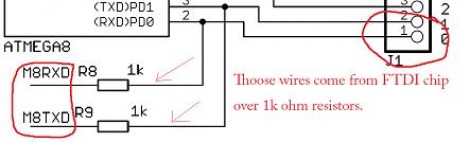
[Thomas Pfeifer] has taken the PPM signal produced by model aircraft wireless controllers, and with an ATMega8, converted the signal to act as a USB joystick. Which means you can now use a standard R/C remote control to fly model aircrafts on your computer. Of course now with PPM decoded you could also use the signal to control any electronic device. Like your mower, iPod, and we’ve even seen remote controlled pellet guns. Catch a video of [Thomas] flying a simulated quadrotor helicopter after the jump.

[Thanks Max]

Continue reading “R/C PPM Hacked”

USB Ports Hidden Inside Gaming Mouse

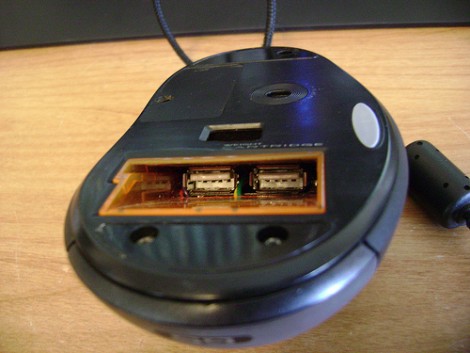
[Gigawatts] built a pair of USB ports into his mouse and there’s enough room to plug-in small USB drives and dongles. After seeing Thursday’s storage mouse hack he decided to tip us off about the post.

He started with a Logitech G5 gaming mouse. The wireless version of this mouse has a battery pack, but on the corded version this space is used for a weight cartridge. Since he didn’t really care about that feature he ditched the weights, added a USB hub inside, and positioned the dual ports as seen in the photo. The void is deep enough for the mouse to function normally while hosting medium to small-sized devices. This is a fantastic solution that’s at least as impressive as Apple adding USB ports to a keyboard. We’d love to see it as a factory option.

Update: Video after the break

Continue reading “USB Ports Hidden Inside Gaming Mouse”

USB Mouse With Storage Added

[Thice] wanted to try his hand at incorporating a USB driving into other devices. He chose to add storage to his USB mouse but didn’t want to alter the factory look provided by a color-changing LED inside. To make things fit he ended up cutting a good portion of a USB hub’s circuit board off and placing it beneath the mouse circuitry. You can see the board from the thumb drive wedged into one end of the case in the image above.

He sees this as a way of hiding data in plain sight. This is true, and it’s along the same lines we’ve seen before with a WiFi dongle in a mouse, or the thumbdrive in a controller hacks. To be truly hidden we’d like to see someone incorporate a microcontroller that monitors the mouse buttons for a certain code, and then toggles the voltage to the USB storage. This would simulate plugging and unplugging the drive, hiding it virtually as well as physically.

Woot Lights And Mice Transplants

[Nathan Long] sent in two fairly simple mods he’s been working on. The first is the control of Woot-off Lights via LPT port. A computer checks Woot for the Woot-off logo, and if the logo is spotted, on go the lights. It’s really just a twist on the LED/Arduino email message system, but the creativity is nice.

His other modification is the stuffing of a Microsoft Intellimouse inside of a Logitech Wingman. With the goal of giving the old PS/2 mouse USB capabilities and removing the terrible ball. For those that are asking themselves “why bother? Terrible ergonomics, no scroll wheel, etc.” [Nathan] claims it’s for Quake 2 nostalgia, to each their own we suppose.