SNES Controller + USB + Accelerometer

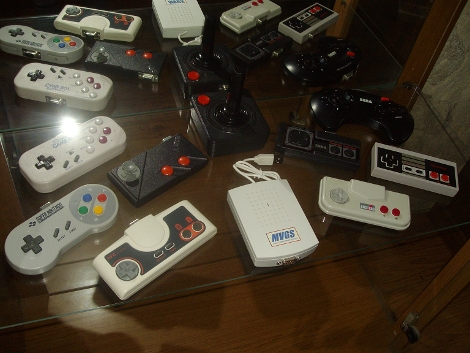
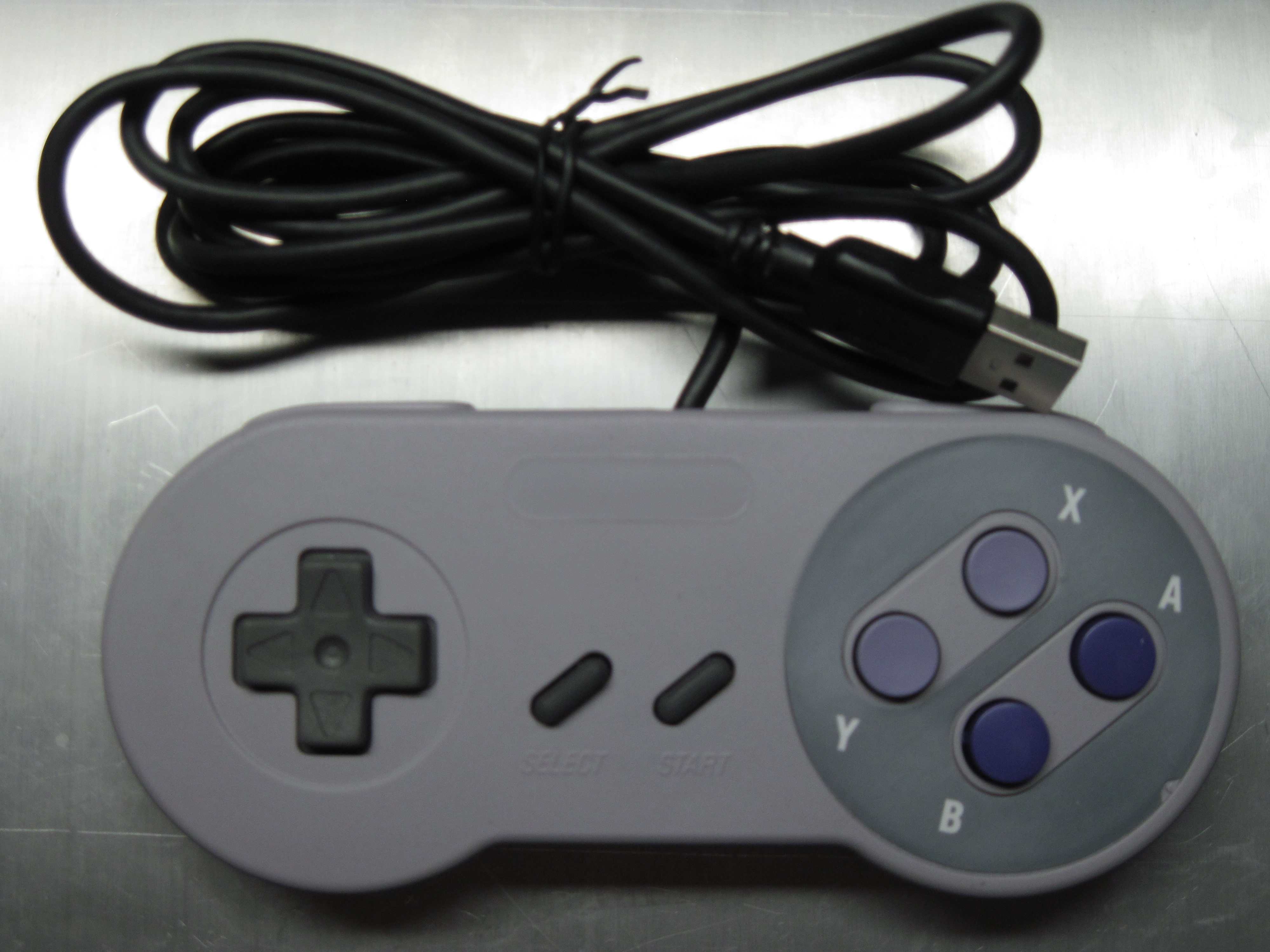
As we posted about [Atarity]’s XBMC hiding in an SNES controller, we were finishing work on a tutorial for [Adafruit]. The tutorial combines a Teensy USB development board with a 3D accelerometer inside of an SNES controller. The Teensy is programmed to poll the SNES controller buttons and read the accelerometer values. The buttons are set to keystrokes and mouse buttons, and the accelerometer values are processed into mouse movement. Programmed to play Portal, we created a video showing how to use the device. You can see it after the break.

It was not quite as easy or quick as the typical PC gamer left hand: WASD, right hand: mouse stance. However, we can think of a number of other games that could be improved with the use of a device that, with a bit of hacking, could time keystrokes as the user needed. With a bit more hacking, the device could be made to brute-force passwords. What else would you do with this?

Continue reading “SNES Controller + USB + Accelerometer”

PIC USB Host Shortcuts

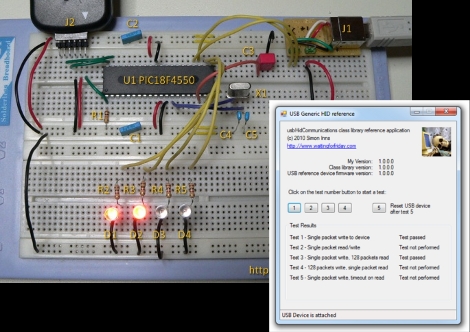
[Simon Inns] is still hard at work making USB connectivity for PIC microcontrollers easier for the hobbiest. He’s released a framework for PIC based USB devices under Windows. It includes the firmware needed for USB compatible 18F PIC chips as well as a C# class library and example programs for the Windows side of things. This goes quite a bit further than his PIC-USB tutorial but with little added effort on your end of things.

We do our USB prototyping on a breadboard just like [Simon] did in this example. He’s got a nice little USB-B connector breakout that is easy to plug into the breadboard. If you prefer to have a more stable development area, check out the one he designed. It’s a single-sided PCB made for through-hole components with just a handful of jumper wires.

Program Your Own Mayhem-causing USB Dongle

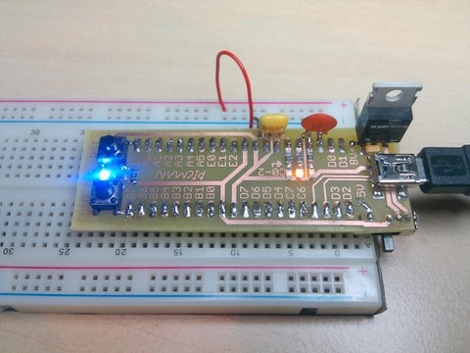
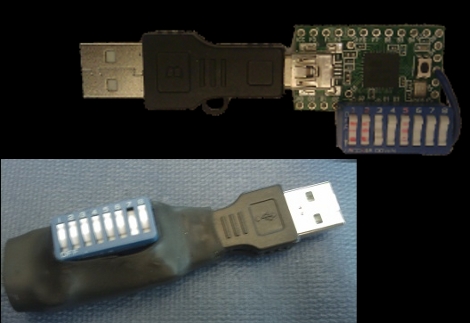
[Adrian Crenshaw] is up to no good with this programmable USB device. [Adrian’s] creation identifies itself as a USB keyboard and can be programmed to do whatever you want. That’s because it’s based around the Teensy board which sports an ATmega32 that will cost you only $18. He’s added a set of DIP switches for easy in-field changes to the firmware. There’s also a light sensor that can be used to activate a command once an unknowing victim has shut off the lights in the office and left for the day. Check out his talk after the break to see his proposed uses for such a device.

Continue reading “Program Your Own Mayhem-causing USB Dongle”

USB Host For Propeller Micros

[Micah Dowty] has implemented full speed USB host control on a Propeller microcontroller. He’s motivated by the thought of using USB based WiFi and Bluetooth dongles in his projects as ready-made solutions.We’ve seen USB host control with the Arduino and it really opens up the flood gates for advancing your projects through storage, wireless connectivity, and user interface.

So far his work is fairly preliminary but the results seen from other participants in the Parallax forums are very positive. Check out his code from the subversion repository and lend a hand with the development.

[Thanks Stefan via Adafruit]

Add USB Playback To Some European LG Televisions

Here’s a pretty simple hack to enable playback from a USB drive on LG televisions. It only works on European hardware, the LH, LF, and some LU models. The hack consists of downgrading the firmware to version 3.15, then navigating through some service menus.

It’s not quite as hardcore as the Samsung firmware hacking, but the added functionality is really great.

[Thanks Jeton]

XBMC Hiding In An SNES Controller

Here’s another SNES controller converted to house a USB system. The one we saw last time used a kit as an adapter for the controller but this version uses a home-built PCB and an ATmega8 microcontroller with the latest revision of an open source adapter for NES and SNES controllers. As you can see after the break, [Atarity] built the adapter, then added it along with a USB hub and thumb drive so that he could run a copy of XBMC from the controller. Now he’s got XBMC as a way to launch emulators for those classic games, as well as play traditional media.

You will be seeing more of this type of mod soon. We were tipped off that an in-depth tutorial for SNES controller hacking is on its way, although that is unrelated to [Atarity’s] work.

Continue reading “XBMC Hiding In An SNES Controller”

PIC Based USB Input Devices

USB is convenient and that makes it desirable in many many projects. [Simon Inns] has the process down and is sharing it with his recent PIC based USB tutorial. Prompted by requests for help on the matter after having published a post about his Commodore 64 interface, he set out to detail the particulars when it comes to using the PIC 18F family as USB input devices. This example uses a PIC 18F4550 with the circuit built on a breadboard. There’s not much required here, an oscillator, a few passives, and a USB B connector. The magic really happens in the code. Take a look at this well-written guide and give it a try with your next project.

Don’t need USB? [Simon’s] game hack, the Ultimate Simon is always worth another look too.