Fighting Food Poisoning With A Patch

Food poisoning is never a fun experience. Sometimes, if you’re lucky, you’ll bite into something bad and realize soon enough to spit it out. Other times, you’ll only realize your mistake much later. Once the tainted food gets far enough into the digestive system, it’s too late. Your only option is to strap in for the ride as the body voids the toxins or pathogens by every means available, perhaps for several consecutive days.

Proper food storage and preparation are the key ways we avoid food poisoning today. However, a new development could give us a further tool in the fight—with scientists finding a way to actively hunt down and destroy angry little pathogens before they can spoil a good meal.

Continue reading “Fighting Food Poisoning With A Patch”

Antiviral PPE For The Next Pandemic

In what sounds like the plot from a sci-fi movie, scientists have isolated an incredibly rare immune mutation to create a universal antiviral treatment.

Only present in a few dozen people worldwide, ISG15 immunodeficiency causes people to be more susceptible to certain bacterial illnesses, but it also grants the people with this condition immunity to known viruses. Researchers think that the constant, mild inflammation these individuals experience is at the root of the immunoresponse.

Where things get really interesting is how the researchers have found a way to stimulate protein production of the most beneficial 10 proteins of the 60 created by the natural mutation using 10 mRNA sequences inside a lipid nanoparticle. Lead researcher [Dusan Bogunovic] says “we have yet to find a virus that can break through the therapy’s defenses.” Researchers hope the treatment can be administered to first responders as a sort of biological Personal protective equipment (PPE) against the next pandemic since it would likely work against unknown viruses before new targeted vaccines could be developed.

Hamsters and mice were given this treatment via nasal drip, but how about intranasal vaccines when it comes time for human trials? If you want a short history of viruses or to learn how smartwatches could help flatten the curve for the next pandemic, we’ve got you covered.

Smartwatches Could Flatten The Curve Of The Next Pandemic

While we’d like to think that pandemics and lockdowns are behind us, the reality is that a warming climate and the fast-paced travel of modern life are a perfect storm for nasty viruses. One thing that could help us curb the spread of the next pandemic may already be on your wrist.

Researchers at Aalto University, Stanford University, and Texas A&M have found that the illness detection features common to modern smartwatches are advanced enough to help people make the call to stay home or mask up and avoid getting others sick. They note we’re already at 88% accuracy for early detection of COVID-19 and 90% for the flu. Combining data from a number of other studies on smartwatch accuracy, epidemiology, behavior, and biology, the researchers were able to model the possible outcomes of this early detection on the spread of future diseases.

“Even just a 66-75 percent reduction in social contacts soon after detection by smartwatches — keeping in mind that that’s on a par with what you’d normally do if you had cold symptoms — can lead to a 40-65 percent decrease in disease transmission compared to someone isolating from the onset of symptoms,” says Märt Vesinurm.

We’ve got you covered if you’re looking for a smartwatch that looks a bit like a hospital wristband and we’ve also covered one that’s alive. That way, you’ll have a slimy friend when you’re avoiding other humans this time around. And when it’s time to develop a vaccine for whatever new bug is after us, how do MRNA vaccines work anyway?

A Virus For The BBC Micro

If you work at all with British software or hardware engineers, you’ll find that there’s an entire generation perhaps now somewhere between their mid-40s and mid-50s, who stand slightly apart from their peers in their background and experience. These were the lucky teenagers who benefited from the British government’s 1980s push to educate youngsters in computing, and who unlike those before or who followed, arrived at university engineering courses fresh from school fully conversant with every facet of a computer from the hardware upwards.

[Alan Pope] is from that generation, and he relates a tale from his youth that wasn’t so out of place back in those days, of how he wrote what we’d now call a simple virus for the BBC Micro. Better still, he’s re-created it.

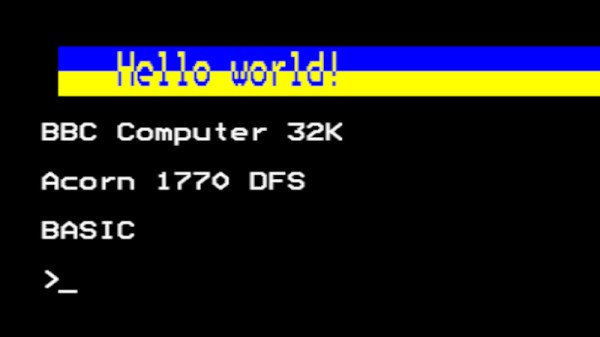
The post is as much a delightful trip back through that era of microcomputing, including an entertaining aside as he shared an airline journey with BBC Micro designer Chris Turner, and it serves as a reminder of how the BBC Micro’s disk operating system worked. There was a !boot file, which was what would be run from the disk at startup, and his bit of code would subvert that and hide itself in the machine’s so-called sideways RAM. The payload was pretty simple, every 32 soft reboots it would print a “Hello world” message, but it seems that was enough back in 1989 to get him into trouble. The 2023 equivalent works, but we’re guessing no teacher will come for him this time.

If you can’t find a real BBC Micro but still want one on hardware, we’ve brought you an FPGA version in the past.

Self-Assembling Virus Model Is 3D Printed

Sometimes a visual or tactile learning aid can make all the difference to elucidating a concept to an audience. In the case viruses and their methods of self-assembly, [AtomicVirology] made a 3D printed device to demonstrate how they work. 

The result of this work is a printed dodecahedron, assembled from multiple components. Each face of the dodecahedron consists of a 5-sided pentagon, and is a separate piece. Each face contains magnets which allow the various faces to stick together. Amazingly, when a bunch of these faces are all thrown into a container and jumbled together, they eventually assemble themselves into complete dodecahedrons.

While it’s no virus, and the parts can’t replicate themselves en masse,  the demonstration is instructive. Viruses themselves self-assemble in a similar fashion, thanks to sub-units that interact with each other in the tumultuous environment of a host cell.

We love a good teaching tool around these parts. 3D printing has the benefit of allowing teachers to create their own such devices with just a few hours spent in some CAD software.

Continue reading “Self-Assembling Virus Model Is 3D Printed”

Trojans Can Lurk Inside AVR Bootloaders

If there’s one thing we’ve learned over the years, it’s that if it’s got a silicon chip inside, it could be carrying a virus. Research by one group focused on hiding a trojan inside an AVR Arduino bootloader, proving even our little hobbyist microcontrollers aren’t safe.

The specific aim of the research was to hide a trojan inside the bootloader of an AVR chip itself. This would allow the trojan to remain present on something like a 3D printer even if the main firmware itself was reinstalled. The trojan would still be able to have an effect on the printer’s performance from its dastardly hiding place, but would be more difficult to notice and remove.

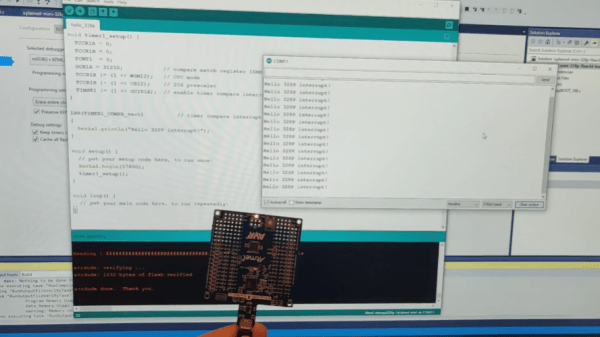
The target of the work was the ATmega328P, commonly used in 3D printers, in particular those using the Marlin firmware. For the full technical details, you can dive in and read the research paper for yourself. In basic terms, though, the modified bootloader was able to use the chip’s IVSEL register to allow bootloader execution after boot via interrupt. When an interrupt is called, execution passes to the trojan-infected bootloader’s special code, before then returning to the program’s own interrupt to avoid raising suspicion. The trojan can also execute after the program’s interrupt code too, increasing the flexibility of the attack. Continue reading “Trojans Can Lurk Inside AVR Bootloaders”

Hackers Beware: Shenzhen Is Closing

If you’re among those of us with immediate plans for a PCB or parts order from China, watch out – Shenzhen just recently got put on a week-long lockdown. Factories, non-essential stores and public places are closed, and people are required to spend time at home – for a city that makes hardware thrive, this sounds like a harsh restriction. Work moves to remote where possible, but some PCB fabs and component warehouses might not be at our service for at least a week.

It might be puzzling to hear that the amount of cases resulting in closures is as low as 121, for a city of 12.6 million people. The zero-tolerance policy towards COVID has been highly effective for the city, with regular testing, adhered-to masking requirements and vaccinations – which is how we’ve been free to order any kinds of boards and components we needed throughout the past two years. In fact, 121 cases in one day is an unprecedented number for Shenzhen, and given their track record and swift reaction, it is reasonable to expect the case count dropping back to the regular (under 10 cases per day) levels soon.

Not all manufacturing facilities are located in Shenzhen, either. Despite what certain headlines might have you believe, supply chain shortages aren’t a certainty from here. A lot of the usual suspects like PCBWay and JLCPCB are merely reporting increased lead times as they reallocate resources, and while some projects are delayed for now, a lot of fabs you’d use continue operating with minor delays at most. SeeedStudio has its operations impacted more severely, and your Aliexpress orders might get shipped a bit later than usual – but don’t go around calling this a Chinese New Year v2 just yet. For those who want to keep a closer eye on the situation and numbers, the [Shenzhen Pages] Twitter account provides from-the-ground updates on the situation.

Wondering how your supply chain might be affected? We’ve talked about this way back in February 2020, addressing then-warranted worries that Chinese New Year would grow into a longer disruption than planned due to COVID becoming into a factor to manage. If you’re yet to discover the significance of Shenzhen, books have been written on this marvellous city, where you can build a successful hardware company in a week’s time. We’ve even had a meetup there once!

Header image: Charlie fong, CC BY-SA 4.0.