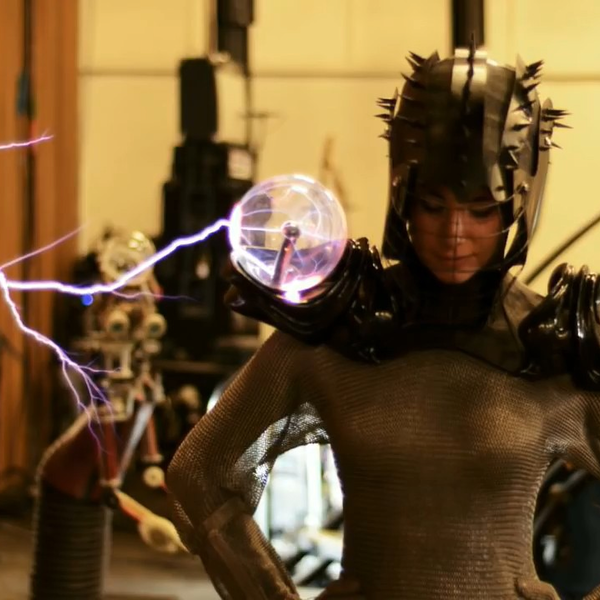
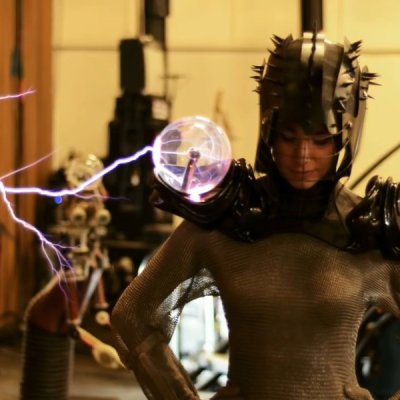
 Anouk Wipprecht‘s hackerly interests are hard to summarize, so bear with us. She works primarily on technological dresses, making fashion with themes inspired by nature, but making it interactive. If that sounds a little bit vague, consider that she’s made over 40 pieces of clothing, from a spider dress that attacks when someone enters your personal space too quickly to a suit with plasma balls that lets her get hit by Arc Attack’s giant musical Tesla coils in style. She gave an inspiring talk at the 2017 Hackaday Superconference, embedded below, that you should really go watch.
Anouk has some neat insights about how the world of fashion and technology interact. Technology, and her series of spider dresses in particular, tends to evolve over related versions, while fashion tends to seek the brand-new and the now. Managing these two impulses can’t be easy.
For instance, her first spider was made with servos and laser-cut acrylic, in a construction that probably seems familiar to most Hackaday readers. But hard edges, brittle plastic, and screws that work themselves slowly loose are no match for human-borne designs. Her most recent version is stunningly beautiful, made of 3D printed nylon for flexibility, and really nails the “bones of a human-spider hybrid” aesthetic that she’s going for.
The multiple iterations of her drink-dispensing “cocktail dress” (get it?!) show the same progression. We appreciate the simple, press-button-get-drink version that she designed for a fancy restaurant in Ibiza, but we really love the idea of being a human ice-breaker at parties that another version brings to the mix: to get a drink, you have to play “truth or dare” with questions randomly chosen and displayed on a screen on the wearer’s arm.
Playfulness runs through nearly everything that Anouk creates. She starts out with a “what if?” and runs with it. But she’s not just playing around. She’s also a very dedicated documenter of her projects, because she believes in paying the inspiration forward to the next generation. And her latest project does something really brilliant: merging fashion, technology, and medical diagnostics.
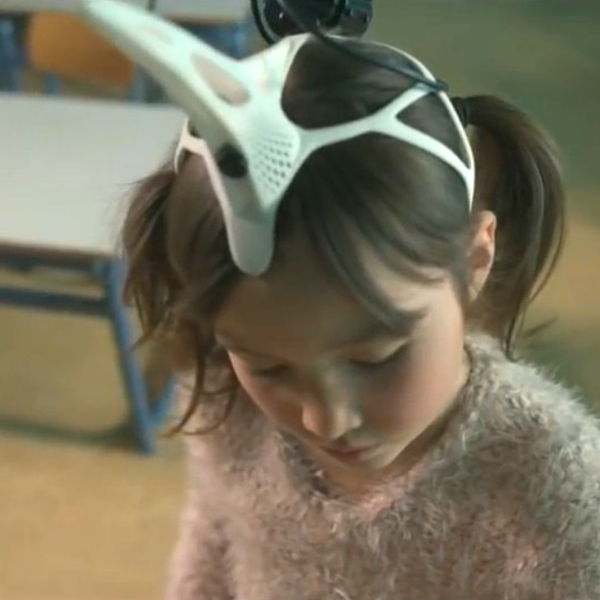
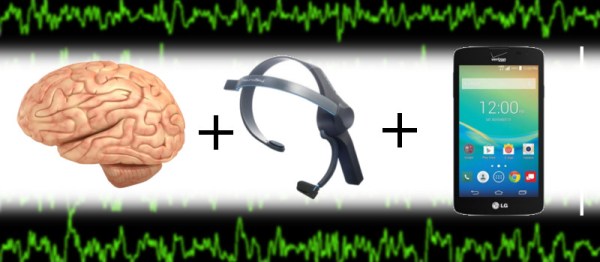
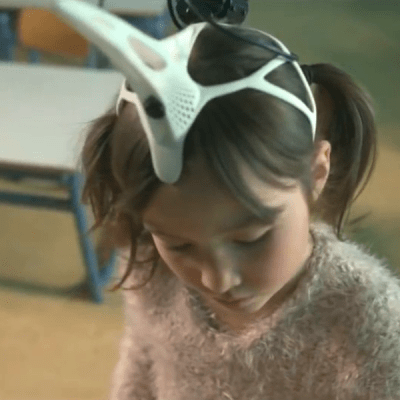 It’s a stripped-down EEG that kids with ADHD can wear around in their daily lives that triggers a camera when their brains get stimulated in particular ways. Instead of a full EEG that requires a child to have 30 gel electrodes installed, and which can only be run in a medical lab, stripping down the system allows the child to go about their normal life. This approach may collect limited data in comparison to the full setup, but since it’s collected under less intimidating circumstances, the little data that it does collect may be more “real”. This project is currently in progress, so we’ll just have to wait and see what comes out. We’re excited.
There’s so much more going on in Anouk’s presentation, but don’t take our word for it. Go watch Anouk’s talk right now and you’ll find she inspires you to adds a little bit more of the human element into your projects. Be playful, awkward, or experimental. But above all, be awesome!
Continue reading “Anouk Wipprecht: Robotic Dresses And Human Interfaces” →