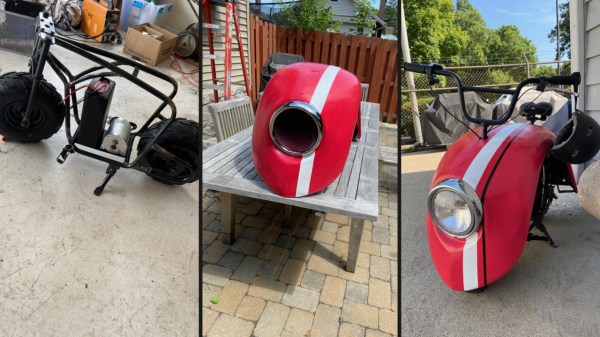
For anyone involved in the construction of small electric vehicles it has become a matter of great interest that a cheap high-power electric motor can be made from a humble car alternator. It’s a conversion made possible by the advent of affordable three-phase motor controllers, and it’s well showcased by [austiwawa]’s electric bicycle build video (embedded below).
The bike itself is a straightforward conversion in which the motor powers the rear wheel via an extra sprocket. He tried a centrifugal clutch with limited success, but removed it for the final version. Where the interest lies in this build is in his examination of Hall effect sensor placement.
Most alternator conversions work without sensors, though for better control it’s worth adding these magnetic sensors to allow the controller to more directly sense the rotation. He initially placed them at the top of the stator coils and found them to be ineffectual, with the big discovery coming when he looked at the rotor. The electromagnet in the rotor on a car alternator has triangular poles with the field concentrated in the centre of the stator, thus a move of the sensors to half way down the stator solved the problem. Something to note, for anyone converting an alternator.
Should you wish to give it a try, a year ago we published a primer on turning car parts into motors.
Continue reading “An Alternator Powered Electric Bicycle Gives Rotor Magnetic Field Insight”
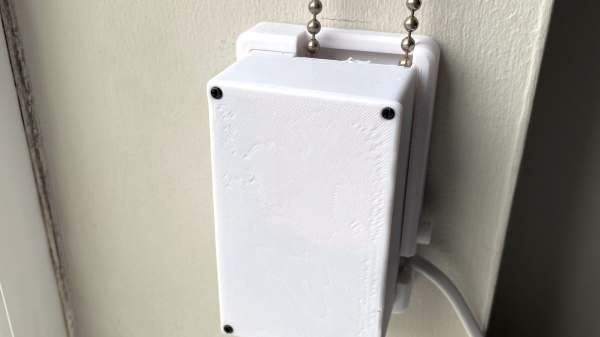
 The main part of this build is a motor and a ball chain gear – a wheel that captures the balls of a ball chain so that the chain can be pulled. The wheel was designed using Fusion3D and then printed out. The motor requires enough power to pull the chain — [HumanSkunk87] figures it needs to be able to pull about 2.5kg in order to raise the blind. After giving up on stepper motors, a DC motor with a worm gear was found to have enough torque to work. A WEMOS D1 Mini controls the motor controller that drives the ball chain wheel. Two micro switches tell the WEMOS when to stop at the bottom and top of the window.
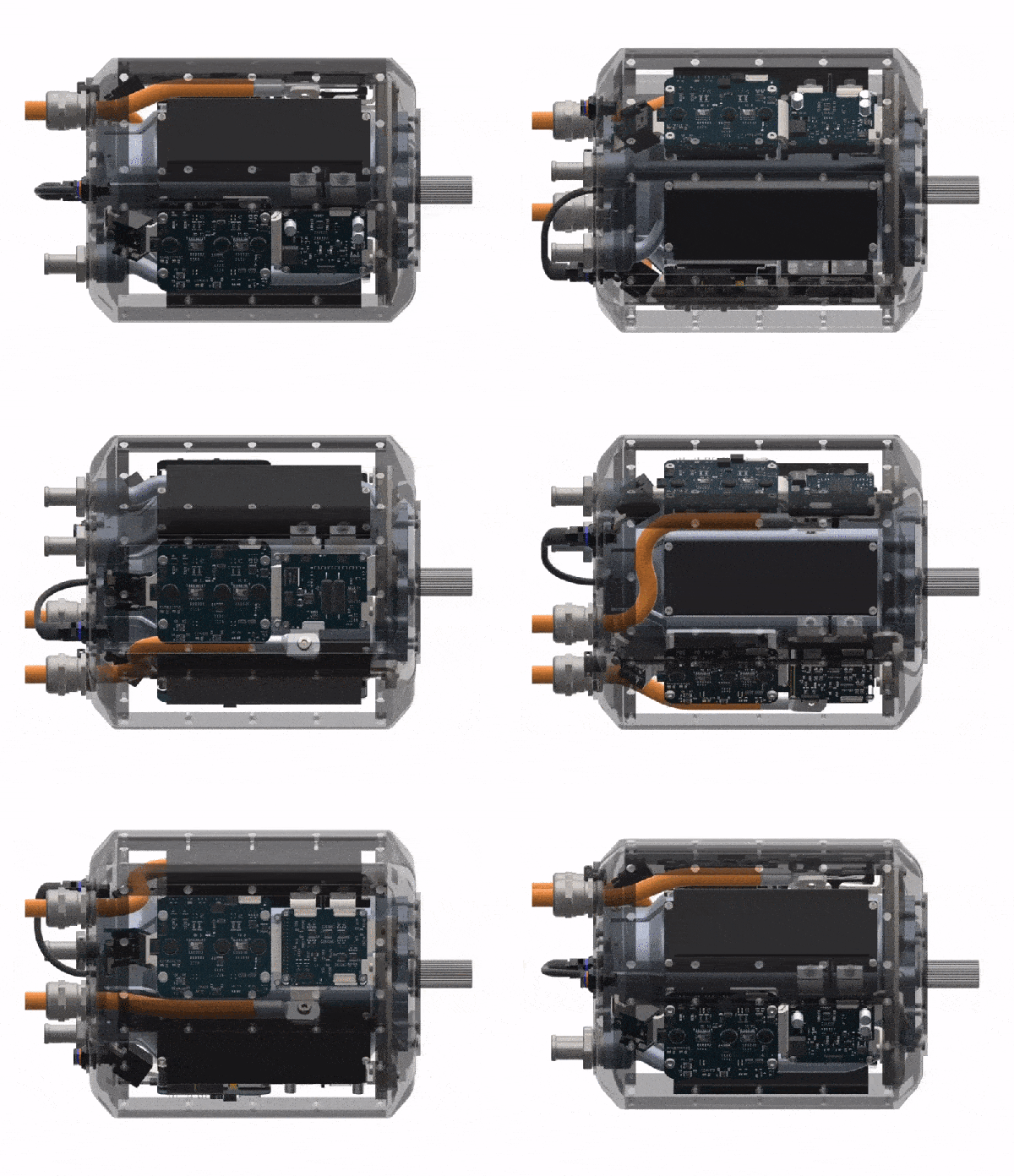


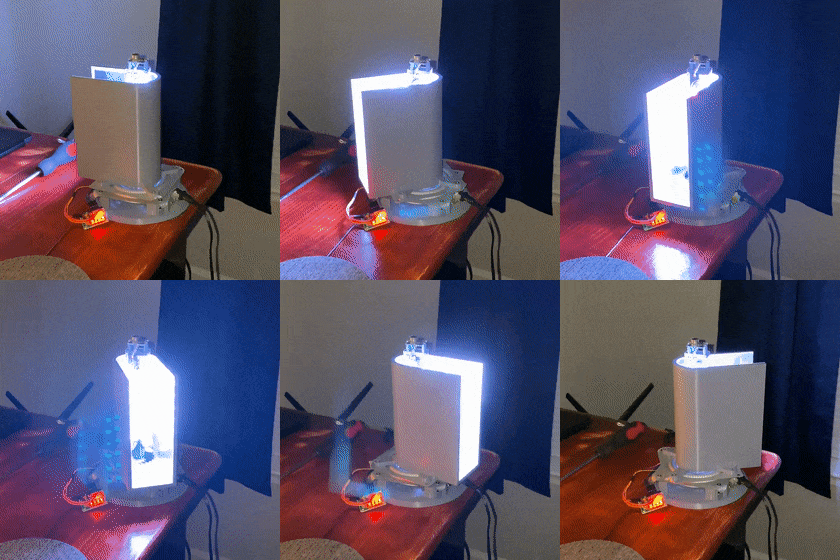 That is the point of [Jake Ammons’] attention-getting lighthouse, designed and built in two weeks’ time for Architectural Robotics class. It detects ambient noise and responds to it by focusing light in the direction of the sound and changing the color of the light to a significant shade to indicate different events. Up inside the lighthouse is a Teensy 4.0 to read in the sound and spin a motor in response.