Cascade Failures, Computer Problems, And Ohms Law: Understanding The Northeast Blackout Of 2003

We’ve all experienced power outages of some kind, be it a breaker tripping at an inconvenient time to a storm causing a lack of separation between a tree and a power line. The impact is generally localized and rarely is there a loss of life, though it can happen. But in the video below the break, [Grady] of Practical Engineering breaks down the Northeast Blackout of 2003, the largest power failure ever experienced in North America. Power was out for days in some cases, and almost 100 deaths were attributed to the loss of electricity.

[Grady] goes into a good amount of detail regarding the monitoring systems, software simulation, and contingency planning that goes into operating a large scale power grid. The video explains how inductive loads cause reactance and how the effect exacerbated an already complex problem. Don’t know what inductive loads and reactance are? That’s okay, the video explains it quite well, and it gives an excellent basis for understanding AC electronics and even RF electronic theories surrounding inductance, capacitance, and reactance.

So, what caused the actual outage? The complex cascade failure is explained step by step, and the video is certainly worth the watch, even if you’re already familiar with the event.

It would be irresponsible to bring up the 2003 outage without talking about the Texas ERCOT outages just one year ago– an article whose comments section nearly caused a blackout at the Hackaday Data Center!
Continue reading “Cascade Failures, Computer Problems, And Ohms Law: Understanding The Northeast Blackout Of 2003”

Hacking An Extra SATA Port Into A Thin Client

Thin clients were once thought by some to be the future of computing. These relatively low-power machines would rely on large server farms to handle the bulk of their processing and storage, serving only as a convenient local way for users to get access to the network. They never quite caught on, but [Jan Weber] found an old example and set about repurposing it as a NAS.

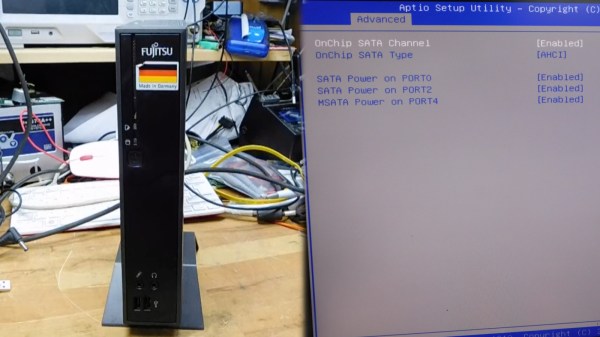
The Fujitsu Futro S900 was built up to 2013, and only had one SATA port from the factory. [Jan] wanted to add another as this would make the device more useful as a network attached storage server.

The motherboard design was intended primarily for industrial control or digital signage applications, and thus has plenty of interfaces onboard. [Jan]’s first target was some unpopulated footprints for SATA ports onboard, but after soldering on a connector, it was found that the BIOS wouldn’t recognise the extra ports anyway.

However, after reflashing the BIOS with one from an alternate model, the port worked! The system also seemed to then imagine it was connected to many additional LAN interfaces, but other than that glitch, the hack is functional. Now, with a pair of 2 TB SSDs inside, the S900 is a great low-power NAS device that can store [Jan]’s files.

It’s a tidy hack, and one that will likely appeal to those who prefer to run their own hardware rather than relying on the cloud. If you’re working on your own innovative NAS project, be sure to let us know!

Surgically Implanted Bluetooth Devices Don’t Help Would-Be Exam Cheats

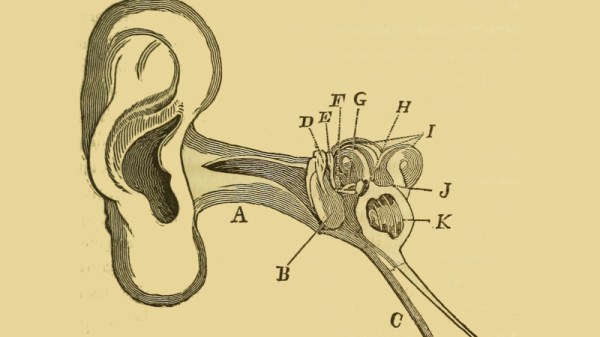
A pair of would-be exam cheats were caught red-handed at the Mahatma Gandhi Memorial Medical College in Indore, India, as they tried to use Bluetooth devices surgically implanted in their ears for a bit of unauthorised exam-time help.

It’s a news story that’s flashed around the world and like most readers we’re somewhat fascinated by the lengths to which they seem to have been prepared to go, but it’s left us with a few unanswered questions. The news reports all have no information about the devices used, and beyond the sensationalism of the story we’re left wondering what the practicalities might be.

Implanting anything is a risky and painful business, and while we’ve seen Bluetooth headphones and headsets of all shapes and sizes it’s hardly as though they’re readily available in a medically safe and sterile product. Either there’s a substantial rat to be smelled, or the device in question differs slightly from what the headlines would lead us to expect.

Continue reading “Surgically Implanted Bluetooth Devices Don’t Help Would-Be Exam Cheats”

bending the wood

Better Kerf Cuts With A CNC Bit

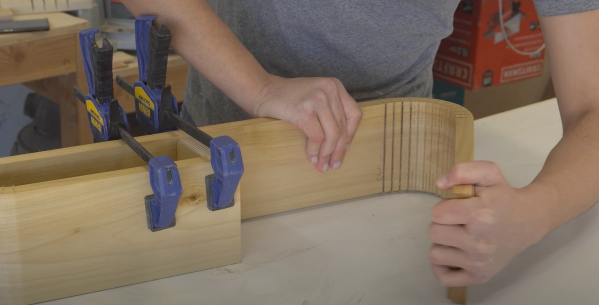
Bending wood is a complex affair. Despite the curves inherent in trees, most wood does not naturally want to bend. There are a few tricks you can use to bend it however, such kerf cutting and steaming. [JAR made] has a clever hack to make better kerf cuts using a CNC bit.

Typically kerfs are cut with a table saw or a miter saw set to trench. Many laser-cut box generations use kerfs to allow the piece to bend. The downside is that the cuts are straight cuts that are the same thickness throughout. This means that when the wood is bent into its shape, there are large gaps that need to be filled if you want the wood to look continuous. The hack comes in by using a router (not the networking kind) with a 6.2-degree taper. This means that the kerfs that it makes are angled. By placing the right amount of cuts and spacing them out equally, you get a perfectly rounded curve. To help with that even spacing, he whipped up a quick jig to make the cuts repeatable. Once all the cuts were made, the time to bend came, and [JAR made] used some hot water with fabric softener to assist with the bend. His shelves turned out wonderfully.

He makes the important statement that this CNC bit isn’t designed with this use case in mine and the chances of it snapping or breaking are high. Taking precautions to be safe is key if you try to reproduce this technique. Perhaps you can bust out some framing lumber and bend it into some beautiful furniture.

Continue reading “Better Kerf Cuts With A CNC Bit”

Classic Chat: Arko Takes Us Inside NASA’s Legendary JPL

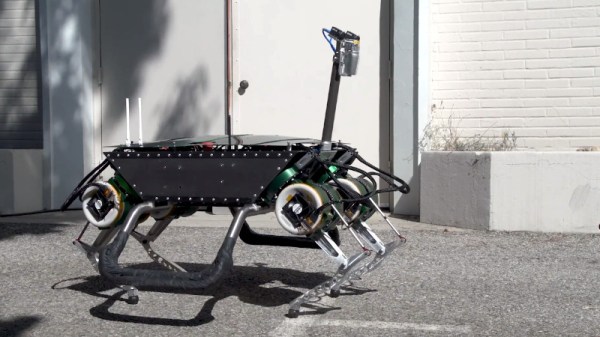
Started by graduate students from the California Institute of Technology in the late 1930s, the Jet Propulsion Laboratory (JPL) was instrumental in the development of early rocket technology in the United States. After being tasked by the Army to analyze the German V2 in 1943, the JPL team expanded from focusing purely on propulsion systems to study and improve upon the myriad of technologies required for spaceflight. Officially part of NASA since December of 1958, JPL’s cutting edge research continues to be integral to the human and robotic exploration of space.

For longtime friend of Hackaday Ara “Arko” Kourchians, getting a job JPL as a Robotics Electrical Engineer was a dream come true. Which probably explains why he applied more than a dozen times before finally getting the call to join the team. He stopped by the Hack Chat back in August of 2019 to talk about what it’s like to be part of such an iconic organization, reminisce about some of his favorite projects, and reflect on the lessons he’s learned along the way.

Continue reading “Classic Chat: Arko Takes Us Inside NASA’s Legendary JPL”

Hackaday Podcast 157: Airtag Security, Warped 3D Printing, Suturing Grapes With A DIY Robot Arm, And The Wizard’s Calculator

This week Hackaday Editor-in-Chief Elliot Williams and Managing Editor Tom Nardi look at the week’s most interesting stories and projects, starting with the dystopian news that several people have had their bionic eye implants turn off without warning. We then pivot into an only slightly less depressing discussion about the poor security of Apple’s AirTags network and how it can be used to track individuals without their knowledge. But it’s not all doom and gloom. We’ll look at new projects designed to push the envelope of desktop 3D printing, and marvel at a DIY robotic arm build so accurate that it can put stitches in the skin of a grape. You’ll also hear about the surprisingly low cost of homebrew hydrophones, the uncomfortable chemistry behind wintergreen, and an early portable computer that looks like it came from Hogwarts School of Witchcraft and Wizardry.

Take a look at the links below if you want to follow along, and as always, tell us what you think about this episode in the comments!

You wouldn’t Direct Download a Podcast, would you?

Continue reading “Hackaday Podcast 157: Airtag Security, Warped 3D Printing, Suturing Grapes With A DIY Robot Arm, And The Wizard’s Calculator”

Grocery Store Rocket Fuel: Don’t Try This At Home!

It seems like whenever the topic of rocket science comes up, the conversation quickly shifts to that of rocket fuels. As discussed in the excellent [Scott Manley] video below the break, there are many rocket fuels that can be found in some way, state, or form at your local grocery or liquor store. The video itself is a reaction to some college students in Utah who caused an evacuation when the rocket fuel they were cooking up exploded.

[Scott] himself theorizes that the fuel they were cooking was Rocket Candy, a volatile mix of sugar and potassium nitrate that is known to go Kaboom on occasion. And as it turns out, the combination might not even be legal in your area because as much as it can be used as rocket fuel, it can also be used for other things that go boom.

So, what else at your local megamart can be used to get to orbit? [Scott] talks about different kinds of alcohols, gasses, cleaners- all things that can be used as rocket fuel. He also talks about all of the solid reasons you don’t want to do this at home.

If this type of things gets your molecules excited, you might enjoy a bit we posted recently about using another grocery store staple to save Martian colonists from being held back by gravity.