Ester, The Open Source SLS Printer

Filament printers are here to stay, and in the past year there have been a number of SLA and DLP resin printers that can create objects at mind-boggling high resolutions. Both of these technologies have their place, but printing really complex objects without also printing supports is out of the question.

[Brandon] has been working to create an open source printer using a different technology, selective laser sintering. That’s a laser melting tiny particles of stuff to create an object. This printer can work with any material that can be turned into a powder and melted by a laser, and also has the neat bonus of printing without any supports.

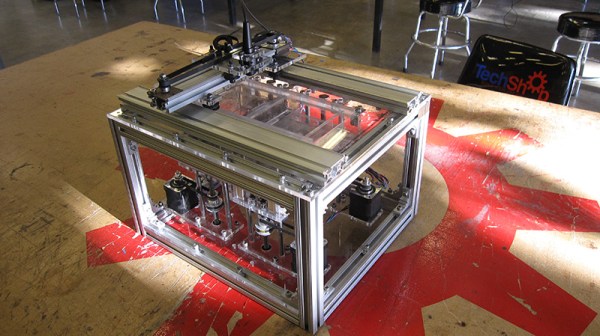
[Brandon]’s printer, Ester, uses small meltable polyester dust as both a print material and support structure. The object to be printed is created by shining a laser over a bed filled with polyester, drawing one layer, and putting another small layer of material over the previous layer.

The machine is using a diode laser, with a few experiments with a 1 Watt diode providing some very nice parts. The mechanics of the machine were built at [Brandon]’s local TechShop, and already he has an IndieGoGo for future development and a $3000 development kit. That’s a bit expensive as far as project printers go, but SLS is an expensive technology to get right; ‘pro’ SLS printers are in the hundreds of thousands of dollars.
A Raspberry Pi In A Game Boy Advance SP

It’s not the biggest use of a Raspberry Pi, but running emulators for old game systems is by far the most visible use of the Pi. In fact, putting Pis inside old game systems has led to a resurgence of case modding not seen since the heyday of the Mini-ITX craze of the early ‘aughts.

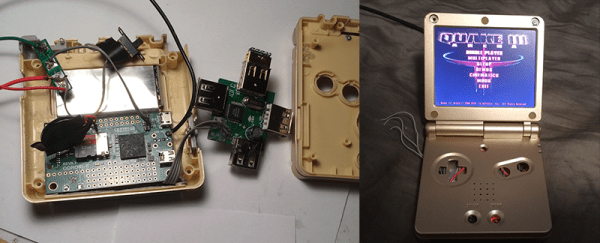
You’d think every possible Pi casemod had been done by now, but [frostedfires] is still raising the bar with a Pi casemod that stuffs a clone of everyone’s favorite credit card sized computer into a Game Boy Advance SP.

[frostedfires] isn’t using a real Raspi from The Foundataion. Instead, he found the Odroid W, a raspi compatible board that’s about half the size of a model B. It still has everything needed to complete the build – analog video out, a reasonable Linux system, and enough processing power to run Quake III. Right now, [frostedfires] has the screen working – that was taken from a car backup camera. Other than that, the only portion of the build left to go is a few buttons.

This is officially the smallest derivative casemod we’ve ever seen. the previous record holder was the still tiny Game Boy Pocket build from last summer. That build required heavy modifications to the Model B board, though, so if you’re aiming for a smaller build, the Odroid is the way to go.

Thanks to the Bacman forums for yet another great build.

Interview With A Printer

The Hackaday European tour continues, this time in Prague with Josef Průša (Google translate), core developer in the RepRap project, feature at all the Maker Faires and cons, and creator of his namesake, the Prusa Mendel and i3 printers.

[Prusa]’s involvement with the RepRap project started with a RepRap Mendel, the second iteration of RepRap hardware, but the first popular and easy to build version. [Jo] found the Mendel rather difficult to build, so he loaded OpenSCAD and started to design his own version of the hardware. This version became the de facto standard RepRap for a few years, with many inspired by and derivative printers making their way to hackerspaces and workshops around the world.

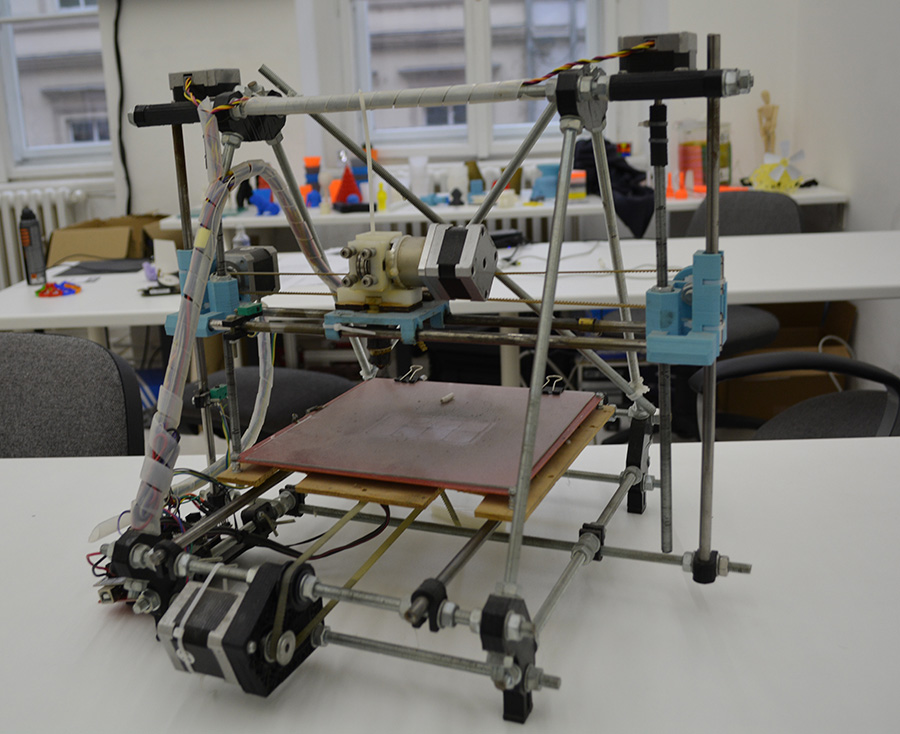
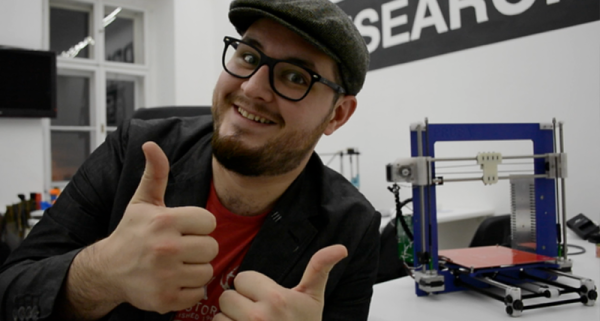
The first Prusa printer, derived from the RepRap Mendel.

A few years ago, [Prusa] was one of the first to make a complete break with the traditional ‘threaded rod and nut’ construction of RepRaps with the introduction of the Prusa i3. This was the first model that had a metal plate as the frame, another feature that would be seen in dozens of other models. It’s not something that was without controversy, either; using a metal plate for the frame doesn’t allow for as much self-replication, something that’s a core value of the RepRap project. That didn’t matter to the community; the Prusa i3 or a similar design is the third most popular printer on 3Dhubs.

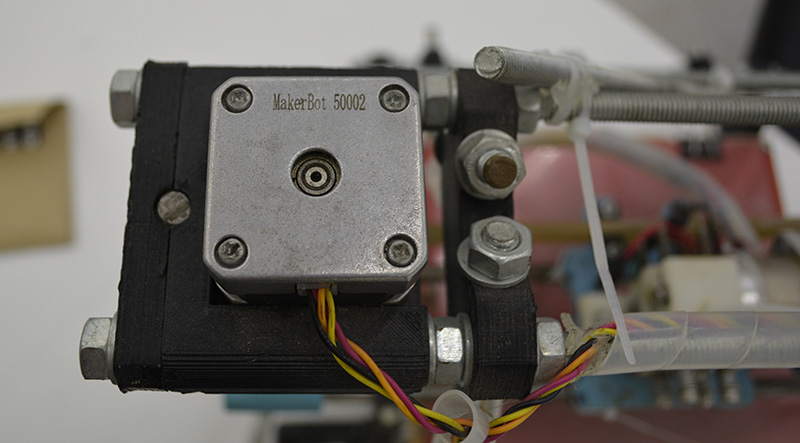
The first Prusa printer showing off its Makerbot heritage

What’s the future of the Prusa name? There is an i4 in the works, and I’m pretty sure that’s all I can tell you. Someone already bought the Prusai4 domain, so there may be a name change.

In the interview below, [Prusa] goes over his involvement with the RepRap project, his business, what he considers to be the latest advances in 3D printing for the past year, what the worst things about the 3D printing scene is (it’s Kickstarter), the state of the RepRap project, and thoughts on SLS, DLP, and SLA printing technologies. Video below.

Continue reading “Interview With A Printer”

RTL SDR As A Spectrum Analyzer

RTL-SDR, the USB TV tuner turned software-defined radio is an amazing device, capable of listening to nearly anything from 25MHz to 1750MHz, fits in your pocket, and costs about $20. Even more astonishing is that it’s also a kinda-okay spectrum analyzer. [Kerry D. Wong] tested out one of these USB TV tuner, and the results are exactly what you would expect: it lacks a little precision, and sampling bandwidth is only a tiny bit terrible, but it does work.

A stock USB TV tuner doesn’t come with a connector that would normally be used for spectrum analysis. A BNC connector can be easily attached, as can a terminator to match the 75Ω impedance of the SDR. This isn’t really necessary; the frequencies being measured are low enough that you can get away without one.

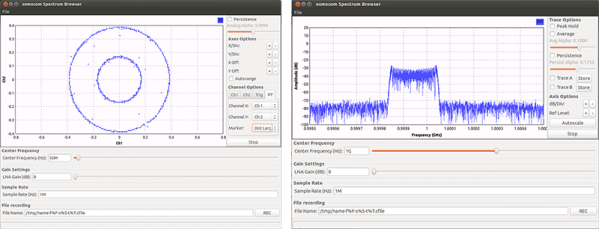
As far as software goes, [Kerry] first pulled out the usual suspects of the SDR world; rtlsdr-scanner distorted the measured spectrum, as did a lot of other SDR receivers. Gqrx SDR was the first one that worked well, but the king of this repurposing of USB TV tuners was OSMOCOM. There’s a huge number of tools for spectrum analysis right out of the box with this package.

How did the RTL SDR fare as a spectrum analyzer? Feeding some stuff in from a signal generator, [Kerry] discovered the LO in the RTL SDR was off by a hair. Also, OSMOCOM only measures amplitude in dB, not the dBm found in every other spectrum analyzer ever made. By measuring a 0 dBm signal whatever value displayed can be shifted up or down.

So, does it work? Yes, it does. If, for some reason, you need a spectrum analyzer now, can you use this? Yep. Pretty cool.

Hackerspace Tours: MuCCC

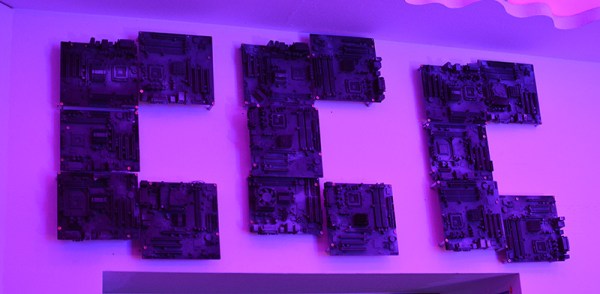
Our trip to Germany wouldn’t be complete without a trip to a proper European hackerspace, and the Munich Chaos Computer Club was more than accommodating in allowing us to invade their space.

Before even walking in the door, you’re greeted with one of the coolest displays you’ve ever seen. Half of the front of their building is a gigantic flipdot display. It’s astonishing in person, and although no dots were flipped during our visit, we can imagine the noise would be deafening. Simply awesome.

Walking in the door, you’re greeted with the general meeting area, conference room, couches, and a Twilight Zone pinball machine. The machine didn’t quite work when we arrived, but within five minutes, [Sprite_TM] was behind the backglass and had everything fixed within an hour.

The back room and basement have the usual assortment of tools – a 3D printer, CNC, lathe, and electronics workbench. If you need a key made, head to the basement. You’ll also find an ATM in the basement. The story with that is that the news station in Munich wanted to do a story on how easy it was to get USB access to the Windows system in an ATM. The station couldn’t do it – but they faked it – and put the ATM up on eBay. Not much money later, the ATM found its way to the space’s basement.

MuCCC is more than just a space with tools, though: in the european hackerspace tradition, there are frequent presentations and talks that would fit in at an academic conference. Last Tuesday, [nicolas] presented a few techniques to protect cryptographic keys from physical integrity attacks, i.e. an evil maid attack or a SWAT team invading your router closet. It’s a daemon that listens to an AVR loaded up with sensors through a GPIO pin. If there is physical intrusion in the device – barometric pressure or light – keys resident in memory can be erased.

You can check out a gallery of pics from the space below.

Thalmic Labs Shuts Down Free Developer Access Update: It’s Back Again

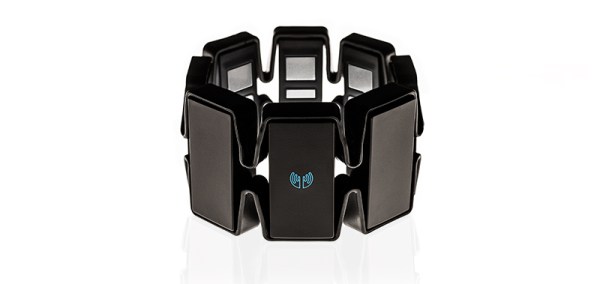
The Thalmic Myo is an electronic arm band with an IMU and myoelectric sensors, able to measure the orientation and muscle movements of an arm. This device has uses ranging from prosthetics to Minority Report-style user interfaces. Thalmic is also a Y Combinator company, with $15 million in funding and tech press gushing over the possible uses of this futuristic device. Truly, a remarkable story for the future of user interfaces and pseudo-medical devices that can get around most FDA regulations.

A few months ago, Thalmic released a firmware update to the Myo that blocks raw access to the myoelectric sensors. Anyone wanting to develop for the Myo now needs to submit an application and pay Thalmic and their investors a pound of flesh – up to $5000 for academic institutions. The current version of the firmware only provides access to IMU data and ‘gestures’ – not the raw muscle data that would be invaluable when researching RSI detection, amputee prosthetics, or a hundred other ideas floating around the Thalmic forums.

Thalmic started their company with the idea that an open SDK would be best for the community, with access to the raw sensor data available in all but the latest version of the firmware. A few firmware revisions ago, Thalmic removed access to this raw data, breaking a number of open source projects that would be used for researchers or anyone experimenting with the Thalmic Myo.  Luckily, someone smart enough to look at version numbers has come up with an open library to read the raw sensor data. It works well, and the official position of Thalmic is that raw sensor data will be unavailable in the future. If you want to develop something with the Myo, this library just saved your butt.

Thalmic will have an official statement on access to raw sensor data soon.

Quick aside, but if you want to see how nearly every form of media is crooked, try submitting this to Hacker News and look at the Thalmic investors. Edit: don’t bother, we’re blacklisted or something.

Update: Thalmic has updated their policy, and will be releasing a firmware version that gives access to the raw EMG sensor data later on. The reasons for getting rid of the raw sensor data is twofold:

  • Battery life. Streaming raw data out of the armband takes a lot of power. Apparently figuring out ‘gestures’ on the uC and sending those saves power.
  • User experience. EMG data differs from person to person and is hard to interpret.


Because You Can’t Go To Germany Without Seeing Model Trains

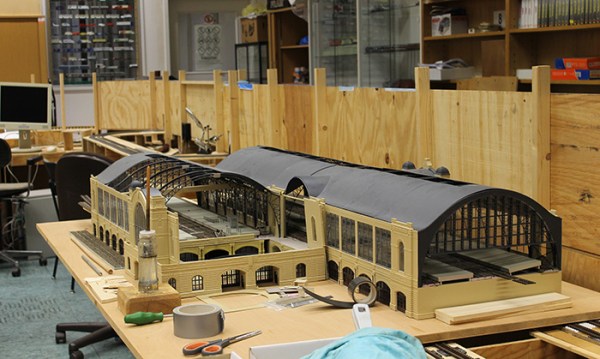
As with all our extracurricular adventures, we needed to visit a few hackerspaces while in Munich. The first one was MCSM/Make Things Munich, formerly the Siemens Club for model engines. We’ve been to a few hackerspaces and have the passport stamps to prove it, and we can say without a doubt this space is unique.

MCSM was a hackerspace before the concept of hackerspaces existed. Originally, this was the Siemens Club for Model Engines, filled with engineers from the Siemens plant tinkering with model trains, model boats, and models of anything that moves. One of the members that guided us through the space, [Carlos Morra] told us when he joined, he alone dropped the average age of the space’s membership by a decade.

Inside the space, you’ll find the usual tools and equipment – lathes, CNC mills, an electronics workbench, and a bunch of old but still valuable equipment. Most of this equipment was salvaged from the Siemens plant. The organization for this space, though, cannot be compared to anything I’ve ever seen. There are floor to ceiling cabinets filled with everything you can imagine, all carefully indexed and sorted.

Of course, being formerly called the Model Engine club, there will be an immense train layout. I counted at least five gauges of track in two sprawling layouts, one of which was easily 15 square meters. It’s a true hackerspace built from a model train club, how can it get better than that?

Pictures below.

Continue reading “Because You Can’t Go To Germany Without Seeing Model Trains”