Veronica 6502 Gets Keyboard Input Via USB

PS2

When building a homebrew computer, there are a few milestones that make all the work seem worth it. Of course, seeing the CPU step through address lines on the blinkenlights is near the top, but even more important is being able to type a character on a keyboard and have it show up on a display. [Quinn] didn’t want her Veronica computer to deal with serial terminals or PS/2 keyboards when she typed her first characters in; instead she wanted to read a USB keyboard using 80s-era hardware.

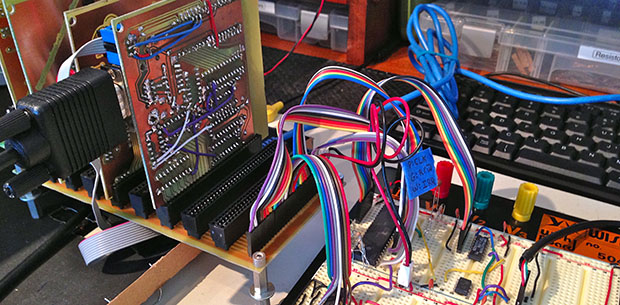
Back in the early days of USB, design specs and keyboard manufacturers included a legacy mode in nearly every USB keyboard ever manufactured. This allows a USB keyboard to work with the ancient PS/2 protocol. [Quinn] tapped into that functionality nearly every PS/2 keyboard has using a 6522 Versatile Interface Adapter. This VIA is in the same family of chips as the venerable 6502 CPU that provides GPIO pins and timers.

[Quinn] connected the keyboard connector tapped for PS/2 input to an ATtiny13. This microcontroller reads the scan codes from the keyboards and sends them to the VIA and the rest of Veronica. It’s quite a bit of work to get to this point, but [Quinn] finally has a computer she can type on, the first step to developing software for her homebrew computer.

The Best Photo Booth For Really Small Stuff

tank

[Doog] builds plastic models, and like anyone who makes really small stuff, he needed a good photo booth to show off his wares and techniques. He was working with the very common ‘poster board and work light’ setup we’ve all put together, but after photoshopping seam lines one too many times, he decided to upgrade his booth to something a little better.

The new setup consists of an aluminum frame with a 40×80 inch sheet of translucent plexiglass forming the bottom and backdrop of the booth. Two lights in diffuser bags illuminate the subject from the top, while the old worklights are attached to the bottom of the table frame to light the subject from beneath.

Compared to the ‘poster board and work light’ technique of the past, [Doog]’s new photo booth is absolutely incredible for taking pictures of very small things. This model of a Spitfire looks like it’s floating and this snap of a Thunderbolt is good enough to grace magazine covers.

Of course this photobooth isn’t just limited to models, so if you’re looking at taking some pictures of hand-soldered BGA circuits in the future, you may want to think about upgrading your studio setup.

MacBook Pro Retina Display With A Normal Computer

If you’ve seen one of the fancy, expensive MacBook Pro laptops with a Retina display, you’ll know how awesome having that much resolution actually is. This incredible resolution comes with a price, though: the MBP with a Retina display is about $500 more expensive than the normal resolution MPB model, and it’s very difficult to find a laptop of comparable resolution without cries of fanboyism being heard.

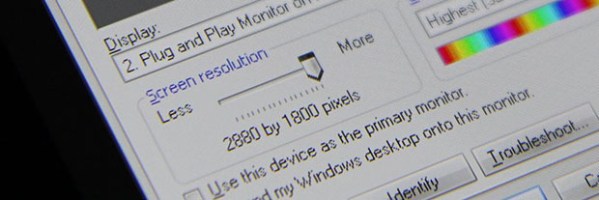
[Daniel] over at Rozsnyo came up with a neat solution that connects one of these fancy 15-inch Retina displays to just about any computer. The build is the beginning of a product that works just like the previous DisplayPort adapter for the iPad retina display, but with the possibility of a few added features such as HDMI input and use of the internal webcam and WiFi antennas.

This build isn’t really a finished product anyone can buy and plug into a replacement Retina display just yet. Even if it were, it’s extraordinarily difficult to find a replacement display for the high-end MacBook for under the price of a really good monitor, anyway. In a few years, though, when the old, busted Retina laptops are traded up for a new, shiny model, though, we’ll be the first to try out this mod and get some serious desktop space.

Building A 70-foot Sailboat In Oklahoma

boat

Call it a retirement plan, a hobby, or a beautiful expression of a mental imbalance, but [Doug and Kay Jackson] of Tulsa, OK are building a seventy-four foot steel sailboat in their backyard.

For the last few years, the couple has been working on the SV Seeker, a motor sail junk, since late 2011. They have a wonderful build log, but they’ve also gone the extra mile and documented the entire build process on video. Their YouTube channel is one of the best subscriptions you can have on the site, constantly updated with new portions of the build.

Yes, building an oceangoing ship in a landlocked state may seem like an ill-informed idea, but Tulsa, OK is the home of the port of Catoosa, about 400 miles and 20 locks from the Mississippi river, then another 600 miles to the Gulf of Mexico and the open ocean.

Below you can find some of the highlights of [Doug] and [Kay] fabricating the prop for their ship. First, a pattern was created with a CNC machine, then a mold was made to cast each blade in brass. It’s an impressive bit of work putting all these tools together, and you really get a sense of the challenge of building something this big.

Continue reading “Building A 70-foot Sailboat In Oklahoma”

LegoDuino For Kid-friendly Microcontrollers

Lego

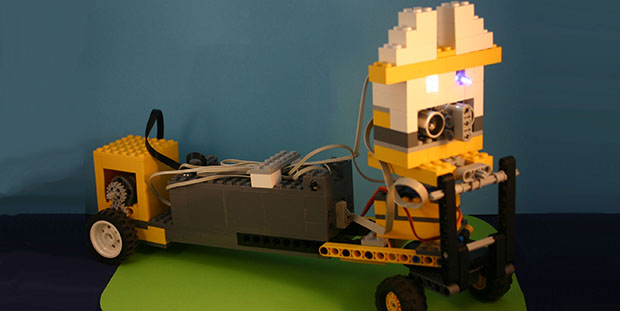
[J. Benschop] is teaching his nine-year-old son electronics by giving him a few wires, LEDs, and batteries. Eventually, the son looked over at his dad’s workbench and wondered what the little bug-shaped rectangles did. Microcontrollers and embedded programming are just a bit too advanced for someone who hasn’t hit a double-digit age, but [J] figured he could still have his son experience the awesomeness of programming electronics by building a custom electronic Lego microcontroller system.

This isn’t as complex as a Lego Mindstorms system. Really, it’s only an ATMega and a 2.4 GHz wireless transceiver. Still, that’s more than enough to add a few sensors and motor drivers, and an awesome introduction to electronics development. The enclosure for the LegoDuino is, of course, compatible with every Lego brick on the planet. It’s made from a 6×16 plate, three blocks high, with enough room for the electronics, three AA batteries, and the IO headers.

Programming an ATMega, even with the Arduino IDE, is a little beyond the capacity of [J. Benschop]’s nine-year-old son, so he made a few changes to the Minibloq programming environment to support the newly created LegoDuino. It’s a graphical programming language that kids of just about any age can pick up quickly, and with the included RF transceiver inside the ‘Duino, it can even be programmed wirelessly.

It’s an amazing piece of work, and much, much simpler than even the noob-friendly Lego Mindstorms. Not as powerful, though, but when you’re just teaching programming and electronics, you really don’t need much.


From Maple And Spruce To An Archtop Guitar

archtop

While the violin maker gets most of the acclaim and prestige for turning lumber into musical instruments, you can’t deny the sheer beauty and grandeur of a jazz-style archtop guitar. Much larger than a violin or viola, the scale of a guitar can still lend itself to the exacting artistry of a master luthier, while adding some interesting engineering challenges not found in smaller stringed instruments.

Last year, [Bert van der Meij] built an archtop guitar for his daughter by following the bible written by a modern master, [Robert Benedetto]. The build began by sourcing huge blocks of quartersawn maple and spruce, carefully carving the spruce for the top and the maple for the back. The neck is made of three laminated strips of maple, carefully contoured with only hand tools.

In [Bert]’s video, there’s some interesting examples of the tools used in the creation of this fine instrument. Instead of carving the inside and outside of the top independently, [Bert] only carved the top and used a drill press set to a certain depth to rough out the back. With only a minimum of planing, this ensures the top has a constant thickness with a minimum of work.

The end product is  a fine enough instrument to find its way onto the stage of any jazz club, as shown in a demo video of a few different musicians rocking out. A magnificent piece of work, and a wonderful gift to [Bert]’s daughter.


A Custom Starcraft Keyboard

keybaord

What do you do if you’re looking for a project, but don’t know what to do? If you’re [gltovar], just look around at your hobbies. He’s been playing Starcraft for a while and finally decided to build a custom Starcraft keyboard.

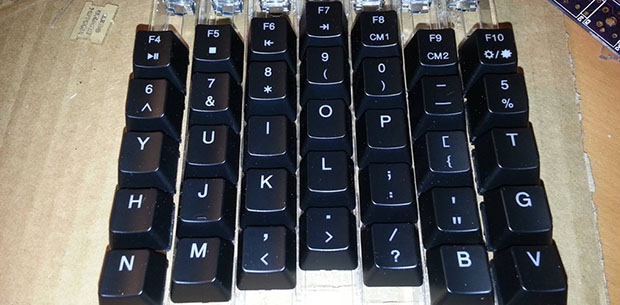
[gltovar] came across an interesting keyboard layout known as TheCore. Ostensibly, this layout allows the player faster access to the commands most used when playing Starcraft. [gltovar] decided he needed a keyboard specifically designed for TheCore, and set about making one of his own design.

The keyboard matrix is designed around a 1×5 row of keys, each attached to a Teensy microcontroller acting as a USB device. Each of these rows are a separate circuit board, allowing [gltovar] to move the rows up and down ergonomically in a custom enclosure.

It’s everything [gltovar] wanted in a custom keyboard. Whether it improves his Starcraft game is another story entirely, but we’re sure he’s at least having fun.

Continue reading “A Custom Starcraft Keyboard”