Reverse Engineering A Wireless Protocol

logic

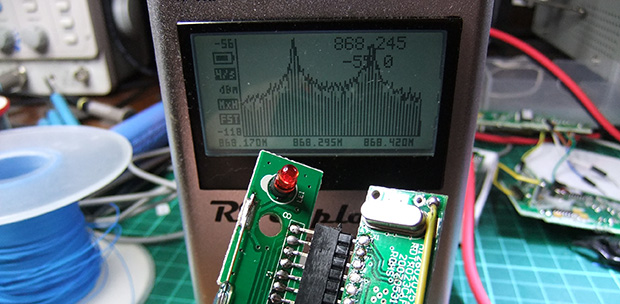
Like all good tinkerers, [Andrew] decided to figure out how his wireless security system worked. Yes, it’s an exercise in reverse engineering, and one of the best we’ve seen to date.

After breaking out the handheld spectrum analyzer and TV tuner SDR, [Andrew] cracked open a few devices and had a gander at the circuit boards. The keypad, PIR sensor, and base station all used a TI radio chip – the CC11xx series – that uses SPI to communicate with a microcontroller.

Attaching a logic analyzer directly to the radio chip and reading the bits directly, [Andrew] started getting some very good, if hard to understand data. From the security system specs, he knew it used a ’20-bit code’, but the packets he was reading off the SPI bus were 48 bits long. The part of this code was probably the system’s address, but how exactly does the system read its sensors?

The easiest way to figure this out was to toggle a few of the sensors and look at the data being transmitted. With a good bit of reasoning, [Andrew] figured out how the alarm system’s code worked. This theory was tested by connecting one of the radios up to an Arduino and having his suspicions confirmed.

While [Andrew]’s adventure in reverse engineering is only a benefit for people with this model of security system, it’s a wonderful insight into how to tear things apart and understand them.

Retrotechtacular: Bell Labs Introduces A Thing Called ‘UNIX’

dennis

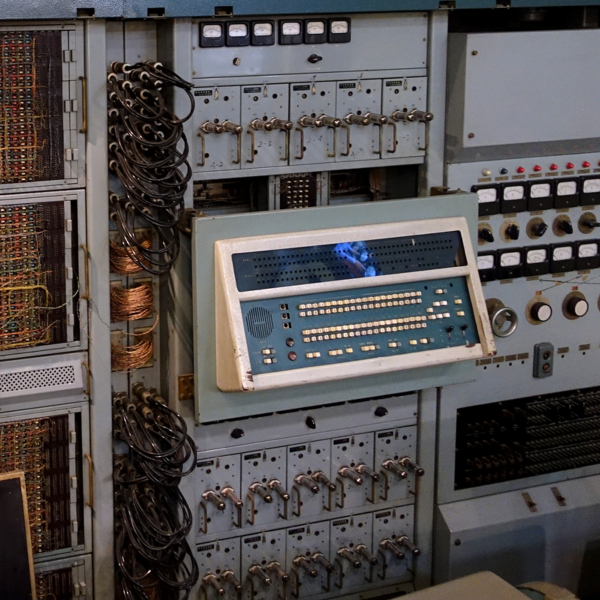
Modern operating systems may seem baroque in their complexity, but nearly every one of them  – except for Windows, natch – are based on the idea of simplicity and modularity. This is the lesson that UNIX taught us, explained perfectly in a little film from Bell Labs in 1982 starring giants of computation, [Dennis Ritchie], [Ken Thompson], [Brian Kernighan], and others.

At the time this film was made, UNIX had been around for about 10 years. In that time, it had moved far from an OS cloistered in giant mainframes attached to teletypes to slightly smaller minicomputers wired up to video terminals. Yes, smallish computers like the Apple II and the VIC-20 were around by this time, but they were toys compared to the hulking racks inside Bell Labs.

The film explains the core concept of UNIX by demonstrating modularity with a great example by [Brian Kernighan]. He took a short passage from a paper he wrote and found spelling errors by piping his paper though different commands from the shell. First the words in the paper were separated line by line, made lowercase, and sorted alphabetically. All the unique words were extracted from this list, and compared to a dictionary. A spell checker in one line of code, brought to you by the power of UNIX.

Bringing ELua To The Mbed

[Karl] loved his mbed – a tiny little ARM-powered microcontroller platform – but he wanted an interactive programming environment. BASIC just wasn’t cutting it, so he decided to bring eLua to his mbed.

When choosing an interactive development environment for microcontrollers, you generally have two choices: old or huge. Sure, there is a middle ground with Python on an ARM, but why not use something explicitly designed for microcontrollers?

To get eLua running on his mbed, [Karl] downloaded the latest version and plopped it on his mbed. The current version, 0.9, doesn’t have support for an SD card, severely limiting its usefulness. [Karl] got around this by wiring up an SD card to the mbed, giving him gigabytes of space for all his development work.

While the AVRs and PICs of the world are stuck with languages like C or worse, the new ARM boards available are more than capable of running a complete eLua development environment, with everything accessible through a terminal. [Karl] even wrote his own editor for the mbed and he’ll shortly be working on a few dozen embedded projects he has in mind.

Send An Arduino To The Moon For $300

sat

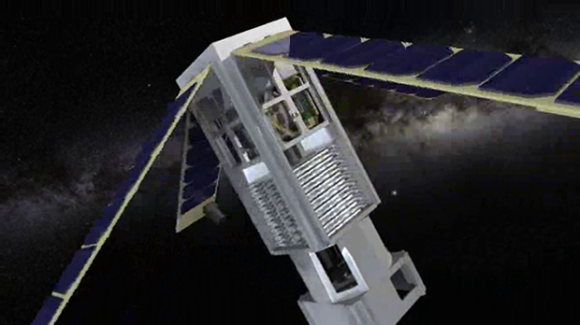
We’ve seen Kickstarter campaigns to put a single satellite into space and one to launch your own personalized postage-stamp sized satellite into low Earth orbit. This time, though, you can break the bonds of Earth and send your own Arduino compatible satellite on a collision course with the moon. The project is called Pocket Spacecraft, and exactly as its name implies, it allows you to send a small, flat, 8 cm diameter spacecraft to the surface of the moon.

The pocket spacecraft are made of metallized kapton, a very thin membrane stretched inside a loop of wire. On board this paper-thin spacecraft are a pair of solar cells and a bare die MSP430 microcontroller connected to a suite of sensors. Before launch, you can program your tiny space probe with commands to relay data back to Earth, either useful scientific data or a simple tweet.

These pocket spacecraft will be launched from a cubesat – a highly successful line of amateur spacecraft that are usually launched by hitching a ride with larger commercial satellites. To get from low Earth orbit to the moon is much harder than just hitchhiking, so the cubesat mothership comes equipped with either a solar sail or its own engine that electrolysed water into hydrogen and oxygen, the perfect rocket fuel.

Pocket Spacecraft is an amazingly impressive feat; there are literally dozens of amateur-built spacecraft orbiting above our heads right now, but so far none have ventured more than a few hundred miles away from their home planet. Getting to the moon with an amateur spacecraft is an amazing accomplishment, and definitely worthy of the $300 price tag.

The Trials Of Repairing A MacBook

mac

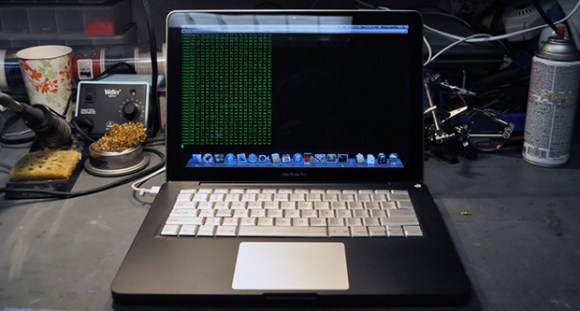
As a favor to a friend, [Phil] traded a unibody MacBook logic board for one with a broken headphone jack, a busted keyboard controller, and a nonfunctional fan. Not one to let bad hardware go to waste, he set off to repair this now-broken laptop by scavenging parts wherever he could. The whole thing ended up working, and became a very impressive display of soldering skill in the process.

The first step for the keyboard transplant was to cut a properly sized hole in the newer unibody MacBook for an older, pre-unibody MacBook Pro 17″ keyboard. This was done by cutting out the keyboard pan of the pre-unibody case and very carefully epoxying it into the unibody chassis. The MBP had a separate keyboard and trackpad controller, so of course [Paul] needed to find some space inside the chassis for these new electronics. This space was found next to the internal hard drive, and a liberal application of hot glue held everything together.

In the future, [Phil] plans on adding more LEDs, a 3.5 mm jack, and a USB to TTL converter – a necessity for any true ‘hacker’ laptop. It’s still a wonderful piece of work, and an incredible amount of effort and skill to get it where it is today.

The Thunderball Jetpack Becomes A Quadcopter

thunderball

At the beginning of the fourth Bond film, 007 escapes from a French château with a jetpack. While the jetpack has yet to take off for those of us who aren’t secret agents, there is a way for anyone to fly just like Bond. It can’t lift a full-scale human yet, but [Rodger]’s Project Thunderball can let a mannequin hover for several minutes.

The stand in for [Sean Connery] in [Rodger]’s build is a 2.2 lb mannequin – actually an ‘inflatable companion’, if you will – stuffed with styrofoam peanuts. The actual jet pack is a quadcopter souped up with larger motors, propellers, and enough batteries to deliver 1kW. There’s no belt for this quad; the mannequin rides the machine like you would a horse, straddling the electronics while very high-speed props spin just inches away from the tender bits of an inflatable plastic doll.

[Rodger] is able to get about 8 minutes of hover time out of his quadpack, an impressive feat that also allows his flying machine to deliver beer and pizzas.

Continue reading “The Thunderball Jetpack Becomes A Quadcopter”

Measuring Ketosis With An Arduino

key

A bit of biology and nutrition before we roll into this: Ketosis is when your body runs on fat reserves instead of carbohydrates. This is the basis of diets such as Atkins, and despite the connotations of eating hamburger patties and butter, you can actually lose weight on these diets. One problem with a keto diet is the difficulty of measure how many ketones your liver is processing; this can be done with a urine sample, but being able to measure small amounts of acetone in your breath would be the ideal way to measure ketosis. [Jens] came up with a device that does just that. It’s called Ketosense, and it will tell you how well your keto diet is doing by just having you blow into a sensor.

[Jens]’ device consists of an Arduino, LCD display, and two sensors – one for acetone, and another for temperature and humidity. By carefully calibrating a TGS822 sensor, [Jens] was able to measure the acetone content of an exhaled breath along with temperature and pressure. This gave him a reading in parts per million, and with a short bit of math was able to convert that into something that made sense when talking about ketosis, mmol/l.

Without access to a lab that can measure blood ketone levels, it’s difficult to say if [Jens] device really works as intended. If he were to find his way into a lab, though, it would be possible to correlate his sensor’s values with blood ketone results and improve the accuracy of his sensor.