Waterproofing An RC Plane

A few years ago, the EasyStar RC plane took the remote control community by storm, launching dozens of clone ready to fly planes that found their way onto many fields, rooftops, and trees. [hammydude] wanted to take his EasyStar with him while also playing around with his jetski, so he did the reasonable thing: he waterproofed his remote control plane.

The EasyStar is made of foam, but that doesn’t mean it’s ready to land on a lake. To prevent any damage to the electronics, servos, and pushrods, [hammy] slightly modified the fuselage of his plane and potted the electronics in silicone glue. Now this excellent RC plane is capable of landing on calm water with a slow self-destruction.

[hammy] has flown his EasyStar seaplane in salt water, but that is a terrible environment for the exposed brushless motor. Before packing it in for the day, [hammy] pours a bit of fresh water over the motor and throttles up for a minute or two. This seems to be good enough for the bearings in the motor; in the video after the break, you can see [hammy] submerge his plane in the water and take it for a short test flight. There’s some great in-flight shots taken from the EasyStar – surely an awesome way to enjoy a trip to the shore.


Continue reading “Waterproofing An RC Plane”

Hackaday Links: June 3, 2012

When pigs fly…. close enough.

There are too many jokes to be made about this one. It’s a quadcopter made out of a dead cat. [Bert Jansen], the artist behind this, calls him Orville. He died from natural causes, and what better way to remember a feline friend that liked chasing birds?

Refurbishing an Apple ][

That thirty year old computer in your parent’s attic isn’t going to clean itself, is it? [Todd] put up a series of videos tearing down a 1982 Apple ][ plus, cleaning everything along the way, and doing a very nice demo of AppleSoft BASIC. This is where the revolution started, people.

Ohm sweet Ωhm

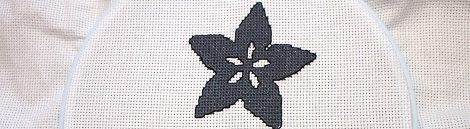
Cross stitch isn’t for grandmothers anymore. Adafruit put up a cross stitch tutorial to go along with their resistor color code cross stitch kit. Now down to Hobby Lobby to find black cross stitch cloth and make the ‘ol skull ‘n wrenches.

Welcome! To the world of yesterday!

Boing Boing found an amazing cyberpunk photo spread that appeared in the Mondo 2000 ‘zine back around 1992 or 1993. Even when keeping in mind that this is a self-parody, it’s still incredible. Hackers have laser pointers? And pagers?

Making Arduino projects smaller

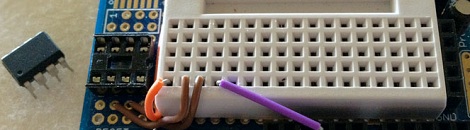
[Scott] caught wind of a way to shrinkify Arduino projects, so he turned an Arduino protoboard into an ATtiny85 programmer. As a neat bonus, [Scott] can use the attached breadboard to build circuits around the ’85.


Copying Complex Objects In Wood

[Matthias], eminent woodworker he is, designed and built an awesome machine to make copies of just about any object imaginable. With a few scrap 2x4s, and a few bolts, screws, and skateboard bearings, you too can copy anything into a solid block of wood.

The theory of operations for [Matthias]’ copy carver is mounting a router and ‘follower’ to the same piece of wood. Put that on an XY table with a rotation axis, and just about any object can be copied in wood or plastic. It’s not too dissimilar to a Dulplicarver, a routing machine meant to copy everything from gun stocks to guitar and violin bodies.

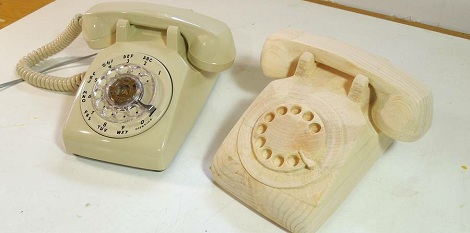
So far, [Matthias] has copied a rotary phone and a sadly non-functional wrench.  It’s the perfect follow-up for [Matthias]’ 3 axis pantograph router that can copy and enlarge any random flat object you can throw at it.

via Make

PCB Manufacturing Tutorial

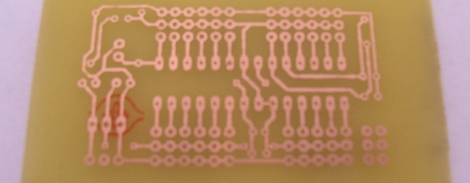
There comes a time in every maker’s career where solderless breadboards won’t do, perfboard becomes annoying, and deadbug is impossible. The solution is to manufacture a PCB, but there’s a learning curve. After learning a few tricks from [Scott]’s awesome DIY PCB guide, it’s easy to make your own printed circuit boards.

There are a few basic steps to making a PCB. First is designing the board in Eagle or KiCad. The next step, putting the design into copper, has a lot of techniques to choose from. Photo transfer, direct printing, and CNC milling have huge benefits, but by far the most common means hobbyists produce boards is with toner transfer using a laminator.

Unless you’re doing SMD-only circuits, a drill is required. Most people can get away with a Dremel or other rotary tool, but Hackaday has a favorite drill press that is perfect for drilling holes in FR-4. In part two of [Scott]’s tutorial, he goes over solder masks, silk screens before jumping into vias. These small bits of copper conducting electricity through a circuit board are extremely hard for the garage-bound builder to achieve on their own, but there are a few solutions – copper rivets (anyone have a US source for these?) and copper foil can be used, but sometimes the most effective solution is just hitting the board with a lot of solder and heat.

Thanks [Upgrayd] for the title pic.

Charting The Efficiencies Of Boiling Water

Water takes a lot of energy to heat up. If you’d like evidence of this, simply jump into a 50° F swimming pool on Memorial Day. Despite the difficulty of heating water, that simple act accounts for a lot of industrial processes. From cooking a steak to running a nuclear reactor, there isn’t much that doesn’t involve heating water.

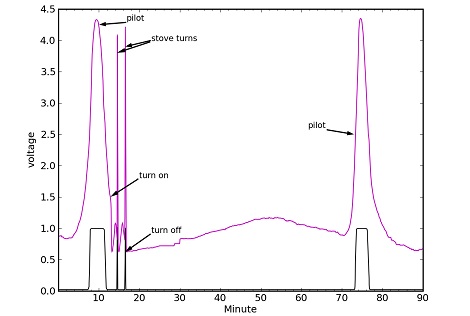
[Tom Murphy], Physics prof at UCSD decided to test out exactly how efficiently he could boil water. Armed with a gas stove, electric kettle, microwave, and a neat laser pointer/photodiode setup on his gas meter to measure consumption, he calculated exactly how much energy he was using to make a cup of tea.

The final numbers from [Tom]’s experiment revealed that a gas stove – using a pot with and without a lid on large and small burners – was about 20% efficient. A gas-powered hot water heater was much better at 55% efficiency, but the microwave and electric kettle had a miserable efficiencies of around 15 and 25%, respectively. There is a reason for the terrible inefficiency of using electricity to heat water; if only the power from the wall is considered, the electric kettle put 80% of energy consumed directly into the water. Because the electricity has to come from somewhere, usually a fossil-fueled power plant that operates at around 30% efficiency, the electric kettle method of turning dinosaurs into hot water is only about 25% efficient.

The take-home from this is there’s a lot of power being wasted every time you run a bath, make some coffee, or wash the dishes. We would all do better by decreasing how much energy we use, much like [Tom]’s efforts in using 5 times less power than his neighbor. Awesome job, [Tom].

Visualizing Sound Without A Computer

[Emre] sent in a cool art piece he’s been working on that visualizes your voice without the use of a microcontroller.

The project is called Visible Voice only consists of a laser, mirror, audio speaker and a phosphorescent disk. The laser shines onto a mirror mounted on the speaker and is reflected onto the disk. When an audio signal is played through the speaker, the light bounces off the mirror and produces a waveform on the disk. Think of it as the lowest tech way of building a model of a CRT; the laser is the electron gun and the speaker is a deflection coil.

Right now, [Emre]’s project displays a waveform along a circular path on the slowly rotating phosphorescent disk. Anyone wanting to copy this project could use a moving belt of the same material giving a much more linear (and straighter) waveform trace.

After the break you can see [Emre]’s friend [Ivan] testing out the glowing laser waveform visualizer.

Continue reading “Visualizing Sound Without A Computer”

Making Color Matched Perler Bead Art

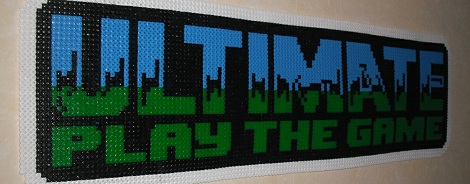
You may remember Perler beads from first or second grade; these small plastic beads are placed into a peg board and then ironed to produce a solid multicolored piece of plastic. Recently, Perler beads have seen somewhat of a revival due to a few people creating 8 and 16-bit video game sprites in plastic, but there’s still the enormous effort of color matching beads to make a passable Sonic or Mega Man.

[Jon Wilson] sent in an awesome bead pattern generator that takes those color images of video game sprites – and just about any other picture –  and translates them into Perler bead patterns. One awesome feature is color matching; [Jon] found the RGB values of every color of Perler beads and his program chooses the closest match from the original image.

[Jon] started on a GUI app for his bead pattern generator, but because his kids aren’t into beads anymore the GUI is still unfinished. There is a command line Python script that takes an image and shoots out a PDF of the bead pattern, which should be more than enough for all but the most complicated design.