Adjustable, Low-Impact Keeb Is About As Comfortable As It Gets

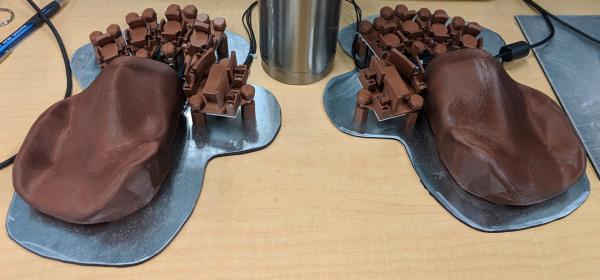
What’s the coolest-looking way to ease the repetitive stress of typing without quitting altogether? Move nothing but your fingers, and move them as little as possible without any stretching or reaching. We’ve been fans of the weirdly wonderful DataHand keyboard since we first laid eyes on one, but [Ben Gruver] has actually been using these out-of-production keyboards for years as a daily driver. And what do we do when we love something scarce? Make our own, improved version like [Ben] has done, with the lalboard.
[Ben] has been using the lalboard for about two years now and has a laundry list of improvements for version two, a project we are proud to host over on IO. Many of the improvements are designed to make this massive undertaking a bit easier to print and put together. Version one uses copper tape traces, but [Ben] is working on a fab-able PCB that will use something other than a pair of Teensy 2.0s, and perhaps QMK firmware.

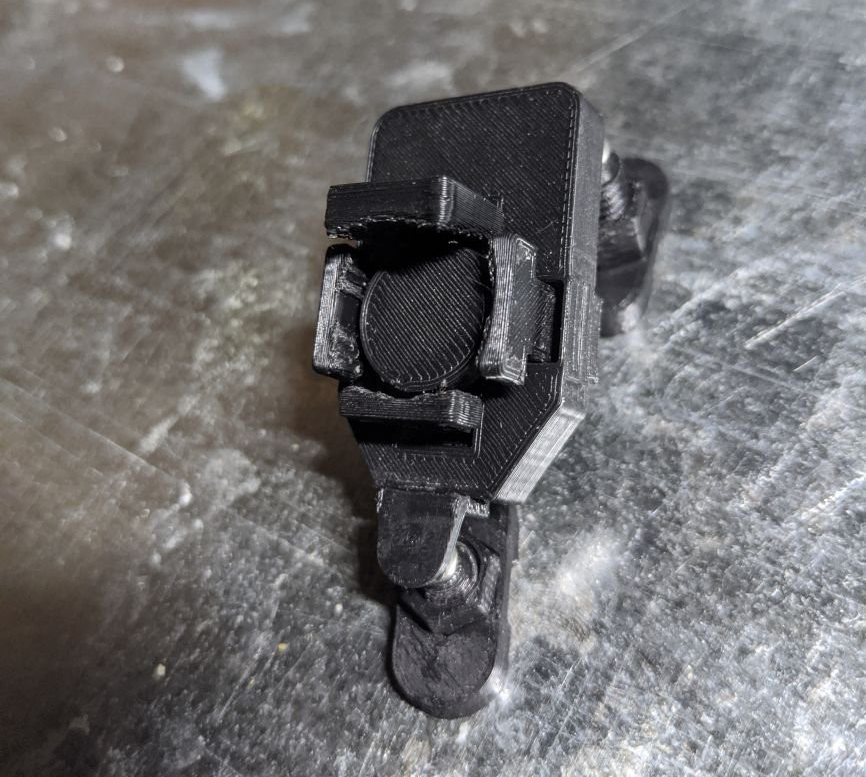
Something that won’t be changing is the fantastic optical key switch design that uses an IR LED and phototransistor to capture key presses, and tiny square magnets to return the key to the home position and deliver what we’re quite sure is a satisfying clack.

The absolute coolest part of this keyboard is that it’s so adjustable. Every key cluster can be adjusted in 6 directions, which includes the ability to dial in different heights for each finger if that’s what works best. Once that’s all figured out, then it’s time to print some perfect permanent standoffs. Want to make one of these sci-fi clackers for yourself? [Ben] has the BOM, some printing instructions and tips, and a guide to making the copper tape PCBs over on GitHub. Check it out in action after the break as [Ben] rewrites Kafka’s Metamorphosis at 120 WPM.

Interested in learning more about the original DataHand keyboard? Here’s our take.

Continue reading “Adjustable, Low-Impact Keeb Is About As Comfortable As It Gets”

Extinguish Squeaks 24/7 With Refillable WD-40

It’s 10:34PM and you’ve just run out of water displacement formula #40. You could wait until tomorrow to get a new can, or you could spend the rest of the night turning an old, empty fire extinguisher into a refillable and re-pressurizable WD-40 dispenser like [liquidhandwash] did. The part count is pretty low, but it’s awfully specific.

And the emphasis is on empty extinguisher. Part of the deal involves twisting the gauge off, and we wouldn’t want you to get blasted in the face with any last gasps of high-powered firefighting foam. In order to make the thing re-pressurizable, [liquidhandwash] stripped all the rubber from a tire valve and removed the core temporarily so it could be soldered into the fitting where the gauge was. The handy hose is from a large can of WD-40, which is also where the label came from — since it’s no longer a fire extinguisher, it needs to stop bearing resemblance to one, so [liquidhandwash] removed the sticker, painted it blue, and glued the cut-open can to the outside.

To use it, [liquidhandwash] fills it up about halfway and then pressurizes it through the tire valve with a bike pump or compressor. (We think we’d go with bike pump.) Since [liquidhandwash] goes through so much lubricant, now, they can just buy it by the gallon and keep refilling the extinguisher.

Is WD-40 your everything hammer? Variety is the spice of shop life.

Scanimate Analog Video Synths Produced Oceans Of Motion Graphics

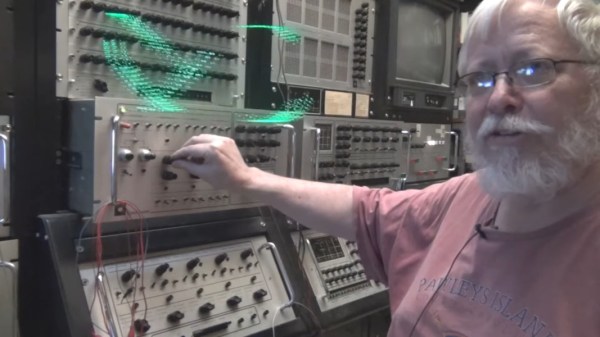
Why doesn’t this kind of stuff ever happen to us? One lucky day back in high school, [Dave Sieg] stumbled upon a room full of new equipment and a guy standing there scratching his head. [Dave]’s curiosity about this fledgling television studio was rewarded when that guy asked [Dave] if he wanted to help set it up. From that point on, [Dave] had the video bug. The rest is analog television history.

Today, [Dave] is the proud owner and maintainer of two Scanimate machines — the first R&D prototype, and the last one of only eight ever produced. The Scanimate is essentially an analog synthesizer for video signals, and they made it possible to move words and pictures around on a screen much more easily than ever before. Any animated logo or graphics seen on TV from the mid-1970s to the mid-80s was likely done with one of these huge machines, and we would jump quite high at the chance to fiddle with one of them.

Analog television signals were continuously variable, and much like an analog music synthesizer, the changes imposed on the signal are immediately discernible. In the first video below, [Dave] introduces the Scanimate and plays around with the Viceland logo a bit.

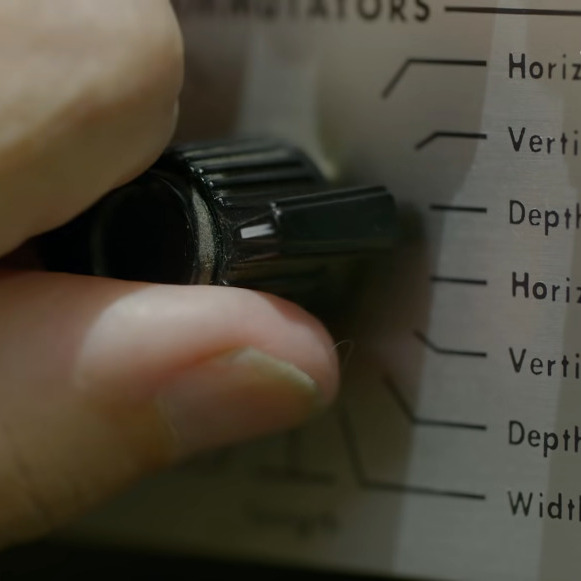
Stick around for the second and third videos where he superimposes the Scanimate’s output on to the video he’s making, all the while twiddling knobs to add oscillators and thoroughly explaining what’s going on. If you’ve ever played around with Lissajous patterns on an oscilloscope, you’ll really have a feel for what’s happening here. In the fourth video, [Dave] dives deeper and dissects the analog circuits that make up this fantastic piece of equipment.

Here’s another way to play with scan lines: delay the output to some of them and you have a simple scrambler.

Continue reading “Scanimate Analog Video Synths Produced Oceans Of Motion Graphics”

Oh Brother, Would You Look At This Cistercian Clock

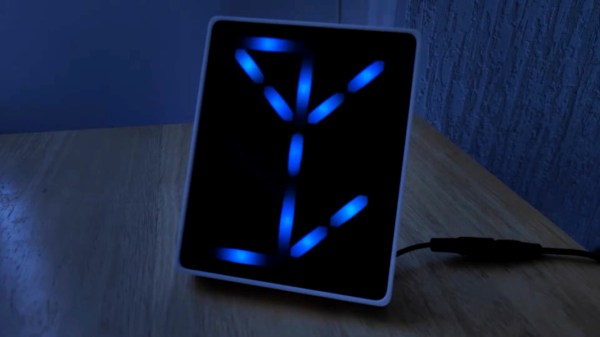
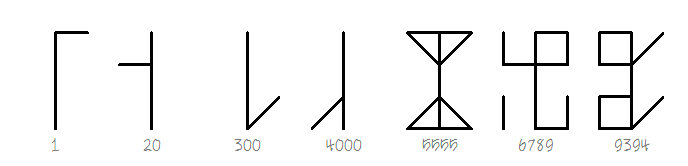
We were beginning to think we’d seen it all when it comes to RGB clocks, but [andrei.erdei] found a fast path back into our hearts and minds. This clock is a digital representation of an ancient numeral system used by 13th century Cistercian monks before the Indo-Arabic system that we know and love today took over. It’s a compact system (at least for numbers 1-9,999) that produces numerals which sort of look like 16-segment displays gone crazy.

Image via Wikipedia

Every numeral has a line down the middle, and the system uses the four quadrants of space around it to display the ones, tens, hundreds, and thousands positions starting in the upper right corner.

[andrei] adapted the system to show time by assigning tens of hours to the thousands quadrant in the bottom left, hours to the hundreds quadrant in the bottom right, tens of minutes in the upper left, and minutes in the top right. The tricky part is that the system has no zero, but [andrei] just darkens the appropriate quadrant to represent zero.

The timekeeping is done with an ESP-01, and there are a total of 31 RGB LEDs including the middle bit, which blinks like a proper digital clock and doubles as a second hand. As usual, [andrei] has provided everything you’d need to build one of these for yourself. We admit that the system would take a little time to learn, but even if you never bothered to learn, this would make a nice conversation piece or focal point for sitting and staring. Take a minute to check it out in action after the break.

We love a good clock build no matter how it works. Sink your teeth into this clock that’s driven by a tuning fork.

Continue reading “Oh Brother, Would You Look At This Cistercian Clock”

A Few Of My Favorite Things: Pens

Pens! They just might be the cheapest, most important piece of technology ever overlooked by a large group of people on a daily basis. Pens are everywhere from your desk to your car to your junk drawer, though they tend to blink out of existence when you need one. Where would we be without them? Probably still drawing on cave walls with dandelions and beets.

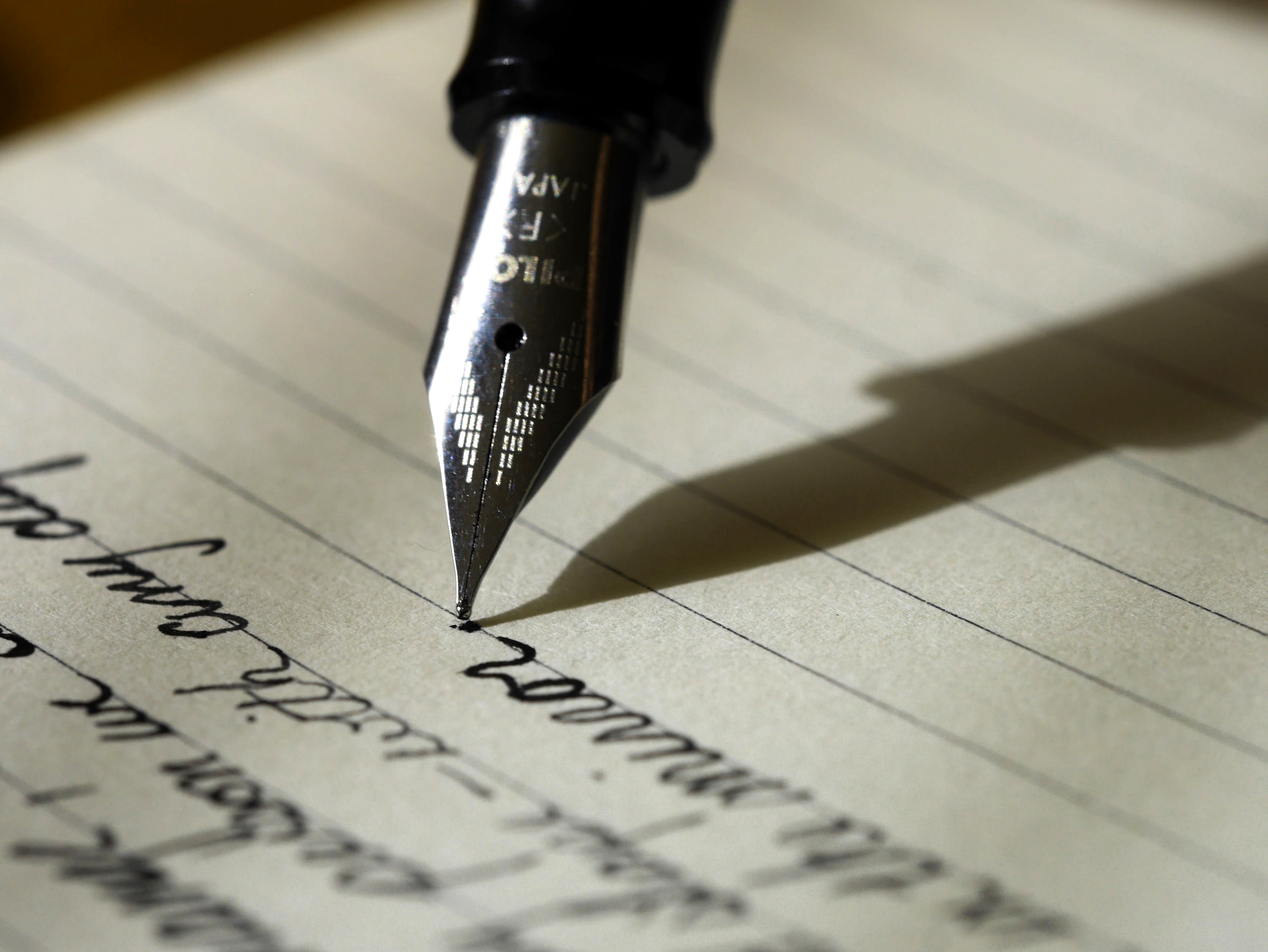
Photo of a Pilot Metropolitan by Aaron Burden on Unsplash

Why do I think pens are so great? Well, they’re a relatively cheap tool depending on the pen you get, but whatever you spend, you’re getting a lot for your money. Pens are possibility, pure and simple, and they’re even conveniently packaged in a portable device.

Aesthetically speaking, I like pens because of how different they can be both inside and out. Some of them make thick lines, some make thin lines, and in the case of flexible nibs, some alternate between thick and thin lines depending on pressure. I use pens for a number of reasons, most notably for writing. Everything you read here that bears my name began life as pen marks on paper.

Pens are revolutionary because they can be used to make ideas permanent and/or illustrate any concept. It’s up to you to use the pen wisely. You can use other, better tools later, but pens are always a great first tool. If you’re not encumbered by an uncomfortable grip, ink that skips, or a scratchy, draggy contact point, your ideas will flow more freely. When you find the right pen for you, you aren’t hindered by your tool — you’re elevated by it. Continue reading “A Few Of My Favorite Things: Pens”

Nixie Shot Timer Adds Useful Elegance To Espresso Machine

Once you’ve ground the beans and tamped the grounds just so, pulling the perfect shot of espresso comes down to timing. Ideally, the extraction should last 20-30 seconds, from the first dark drips to the tan and tiger-striped crema on top that gives the espresso a full aftertaste.

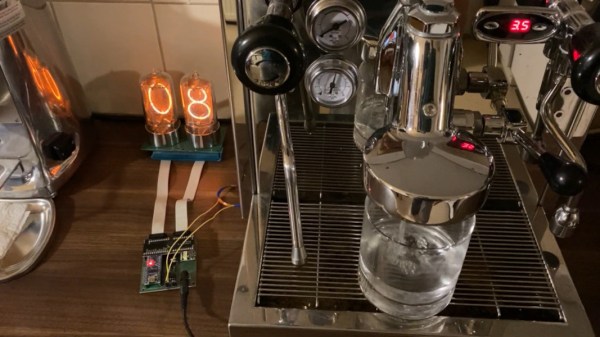
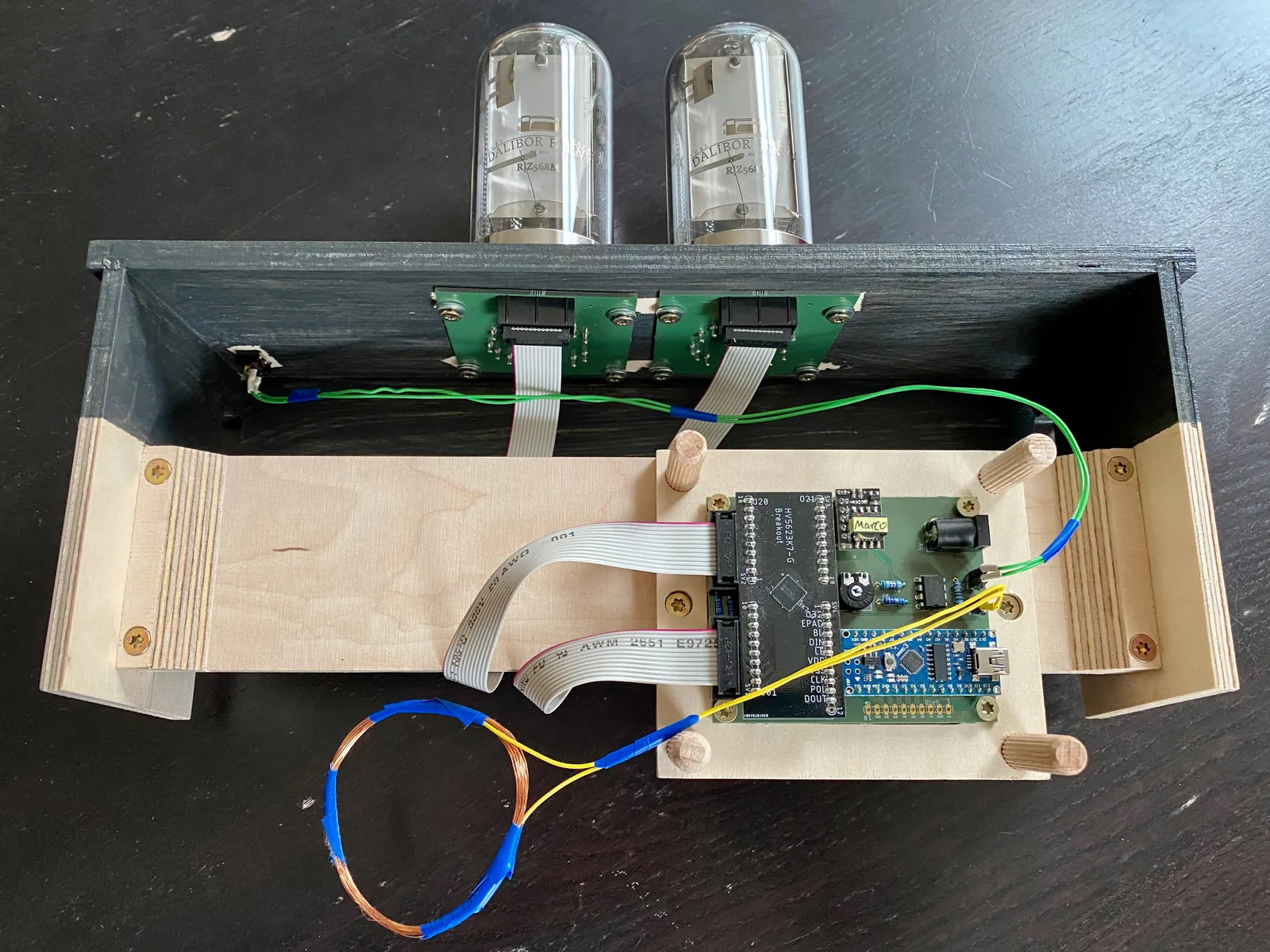
[Marco] has a beautiful espresso machine that was only missing one thing: an equally beautiful shot timer with a Nixie tube display. Instead of messing with the wiring, [Marco] took the non-invasive approach and is using a DIY coil to detect the magnetic field of the espresso machine’s pump and start a shot timer.

An LM358-based op-amp magnifies the current induced by the machine and feeds it to an Arduino Nano, which does FFT calculations. [Marco] found a high-voltage interface driver to switch 170 V to the Nixies instead of using two handfuls of transistors. Grab yourself a flat white and check it out after the break.

The last Nixies may have been mass-produced in the 1980s, but never fear — Dalibor Farny is out there keeping the dream alive and making new Nixies.

Continue reading “Nixie Shot Timer Adds Useful Elegance To Espresso Machine”

Earth Day Challenge: A Better Way To Wrangle Water

How far do you have to go for a glass of clean water? Not very? Just go to a sink and turn on the faucet? We would venture to guess that is the case for most Hackaday readers. Maybe you even have a water softener, or a filter on your tap to make your drinking water even more palatable and free of heavy metal.

In Ethiopia and many other countries, people do not have access to clean, flowing water and must walk several kilometers to fetch it from somewhere that does. And they’re not doing this on paved roads, either — these women are cutting treacherous paths across mountains and through muddy, rocky terrain that make wheeled transport nearly impossible. How do you comfortably lug around 25 kg (~55 lbs) worth of sloshing water? You don’t, unless you have [Anteneh Gashaw]’s ingenious jerrycan.

As you can see in the video below, the current crop of jerrycans are just big plastic jugs that have to be carried on top of the head or the shoulder, both of which are bad for bodies. [Anteneh]’s can evenly distributes the weight by wrapping it completely around the person carrying it and suspending it from both shoulders like a beer-and-peanuts vendor’s carrying case. Basically, it’s a PVC inner tube with shoulder straps. Simple, cheap, and effective = absolute genius in our book. Ideally, everyone would have free access to clean water, both cold and hot. Until that time, [Anteneh]’s entry into our Earth Day Challenge is a great workaround that will no doubt save a lot of spines.

Potable water may be closer than you think. Build a portable potability predictor and you might not have to travel so far.

Continue reading “Earth Day Challenge: A Better Way To Wrangle Water”