World’s First EVTOL Airport Will Land This November

We have to admit that flying cars still sound pretty cool. But if we’re ever going to get this idea off the ground, there’s a truckload of harsh realities that must be faced head-on. The most obvious and pressing issue might seem to be the lack of flying cars, but that’s not really a problem. Air taxis are already in the works from companies like Airbus, Rolls-Royce, and Cadillac, who premiered theirs at CES this year.

Where we’re going, we don’t need roads. But we do need infrastructure to support this growing category of air traffic that includes shipping drones that are already in flight. Say no more, because by November 2021, the first airport built especially for flying cars is slated to be operational in England.

Image via Hyundai

British startup Urban Air Port is building their flagship eVTOL hub smack dab in the center of Coventry, UK, a city once known as Britain’s Detroit due to the dozens of automobile makers who have called it home. They’re calling this grounded flying saucer-looking thing Air One, and they are building it in partnership with Hyundai thanks to a £1.2 million ($1.65M) grant from the British government. Hyundai are developing their own eVTOL which they are planning to release in 2028. Continue reading “World’s First EVTOL Airport Will Land This November”

Nissan’s Office Pod Concept Is A Productivity Paradise On Wheels

All this working from home is pretty great, but we have to admit that we miss packing up the Hackaday office and heading for the local coffeehouse once in a while to spend a few hours writing against the buzzing background. One thing we don’t miss about the experience is that you’re never guaranteed a place to sit and spread out. And unless you trust a friendly stranger to keep an eye on your stuff while you’re in the bathroom, you have to take it with you at the risk of losing your table.

If only we could afford one of Nissan’s mobile office pod concept vehicles. We’ve always wanted to pretend we’re doing surveillance and would probably have the thing wrapped with graphics for a fake flower shop or something. That would certainly make it easier to park somewhere and borrow someone’s open Wi-Fi network  — maybe even from the coffeehouse parking lot after we hit the drive-thru.

As you’ll see in the extended tour video below, Nissan seem to have thought of everything except restroom facilities. The cab-over-engine design and all-terrain tires would make it easier to drive out into nature and really get away from it all. Once you’ve found the perfect spot, you can open the lift gate for some fresh air, or get some sun while you work by pulling out the motorized unibody-constructed cubicle which includes a built-in Herman Miller Cosm chair. (Evidently the Aeron is old and busted now; we disagree). For some reason, the cubicle is edge-lit, and not in a way that would help you work at the desk. According to the video, it’s based on the Caravan NV350, which looks far more comfortable but not as cool when outfitted as an alternate mobility concept.

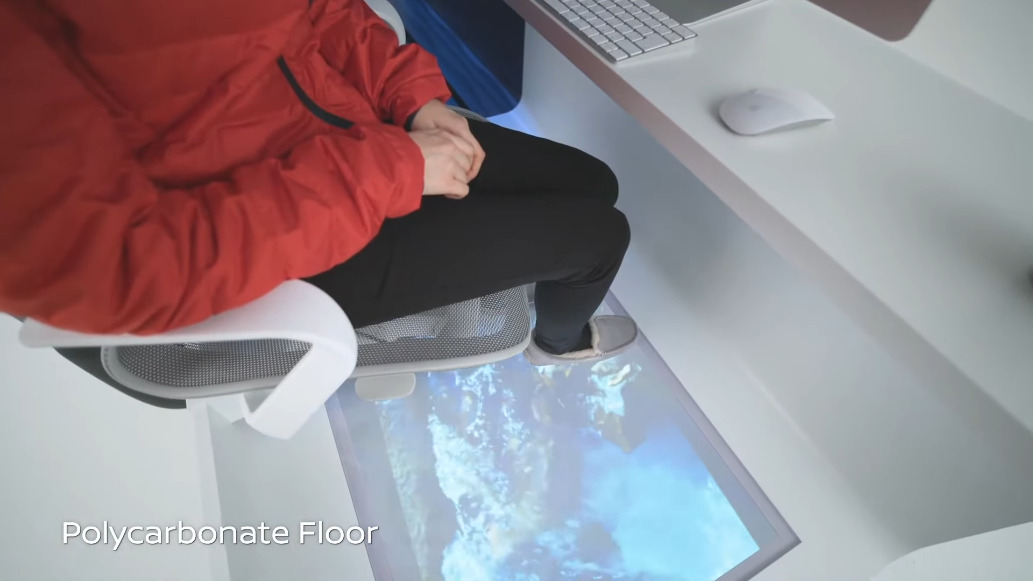
The office pod has some nice amenities like a DC-AC converter so you can run your Keurig or Nespresso, and there’s even a UV-disinfecting lamp in the glove box. The larger windows behind the cab can be electronically shaded so you don’t bake in the sun. Here’s where things get a bit ridiculous: the floor is made of clear polycarbonate in case you want to park lengthwise over a small stream and watch the surviving fish go by underneath your feet. And if you really want to take a break, climb up to the roof deck and stretch out in the chaise lounge beneath the deck umbrella.

If we lived anywhere but America, we might forego the flower shop graphics wrap and dress it up to look like a TV detector van instead.

Continue reading “Nissan’s Office Pod Concept Is A Productivity Paradise On Wheels”

How To Monitor Blood Pressure Without Raising It

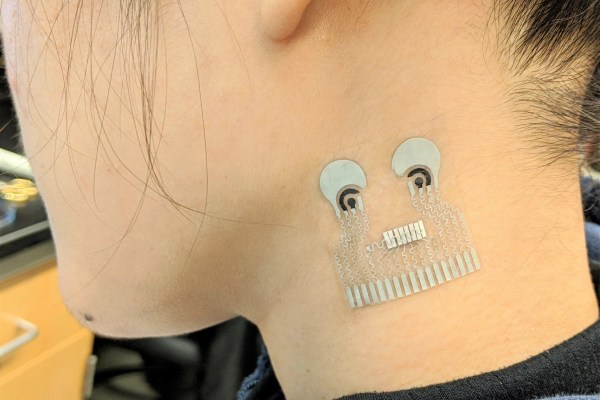
Does anyone actually enjoy the sensation of being squeezed by a blood pressure cuff? Well, as Mom used to say, it takes all kinds. For those who find the feeling nearly faint-inducing, take heart: researchers at UC San Diego have created a non-invasive medical wearable with a suite of sensors that can measure blood pressure and monitor multiple biochemicals at the same time.

The device is a small, flexible patch that adheres to the skin. So how does it manage to measure blood pressure without causing discomfort? The blood pressure sensor consists of eight customized piezoelectric transducers that bounce ultrasonic waves off the near and far walls of the artery. Then the sensor calculates the time of flight of the resulting echoes to gauge arterial dilation and contraction, which amounts to a blood pressure reading.

This patch also has a chemical sensor that uses a drug called pilocarpine to induce the skin to sweat, and then measures the levels of lactate, caffeine, and alcohol found within. To monitor glucose levels, a mild current stimulates the release of interstitial fluid — the stuff surrounding our cells that’s rife with glucose, salt, fatty acids, and a few minerals. This is how continuous glucose monitoring for diabetes patients works today. You can check out the team’s research paper for more details on the patch and its sensors.

In the future, the engineers are hoping to add even more sensors and develop a wireless version that doesn’t require external power. Either way, it looks much more comfortable and convenient than current methods.

San Jose Fry's Electronics

Fry’s Electronics Has Fizzled Out Completely

2020 and all its ills have claimed another stalwart among PC builders and electronics hobbyists: Fry’s announced yesterday that they have closed up shop for good after nearly 36 years in business both as a brick-and-mortar wonderland and an online mecca for all things electronic.

According to Fry’s website (PDF copy for posterity), all 31 stores across nine states were suddenly and permanently shuttered on Wednesday the 24th, citing changes in the retail industry and the widespread difficulties wrought by the pandemic. Signs of the retailer’s growing challenges were seen back in 2019 when the company began shifting toward a consignment model in an attempt to cut overhead and liability.

Burbank Fry’s electronics [Image source: Bryce Edwards CC-BY 2.0]
Sadly, I never set foot inside of a Fry’s though I hear it was an experience beginning with the themed entrances found at many of the locations. Now it seems I never will. Where I live, Microcenter is king, and it has been truly awesome to watch the hobby electronics section expand from a single four-foot panel in a dark corner to the multi-aisle marketplace it is today. I keep imagining that Microcenter suddenly went out of business instead, and it makes me want to cry.

So where can a person go to pick up some quick components now that Radio Shack and Fry’s are no more? Of course there’s the previously mentioned Microcenter, but you should also look for old-school supply stores in your area. They may not have an Adafruit section and they’re probably not open after 5:00PM or on the weekends, but these stores are still kicking and they need us now more than ever. We’ve previously reported on gems like Tanner’s Electronics which sadly closed its doors almost a year ago. Help spread the word about your favorites that are still open in the comments below.

Thank you [Ryan], [John], and [Jack] for tipping us off.

[Main image source: San Jose Fry’s by Bryce Edwards; CC-BY 2.0]

What If I Never Make Version Two?

When you make something, what does version one look like? What I mean is, how much thought do you put into the design? Do you try to make it look nice as you go along, or do you just build something that functions and say screw the presentation? Do you try to solve for everything upfront, or just plow through it and promise to fix your mistakes in version two? What if you never make version two?

No matter what you like to make, there’s a first time for everything. And it doesn’t seem to matter if you need the thing you’re making or just want to have it around: it’s a given that version one will probably be a bit rough around the edges. That’s just how it goes. Even if you’re well-versed in a skill, when you try a new type of project or a new pattern, it will be a new experience. For example, I’ve sewn a dozen different purses, but when I took on a new challenge I found I was only somewhat prepared to make my first backpack.

Great is the enemy of good, and perfection is the enemy of progress. Shooting for a pristine prototype on the first go steep and rocky path that never leads to finishing the build. So our goal here is to decide what makes rev1 good enough that we still love it, even if rev2 never happens.

Continue reading “What If I Never Make Version Two?”

Micro:bit Makes Cardboard Pinball More Legit

What have you been doing to ward off the winter blues? [TechnoChic] decided to lean in to winter and make a really fun-looking game out of it by combining the awesome PinBox 3000 cardboard pinball sandbox with a couple of Micro:bits to handle and display the player’s score. Check it out the build and gameplay in the video after the break.

The story of Planet Winter is a bittersweet tale: basically, a bunch of penguins got tired of climate change and left Earth en masse for a penguin paradise where it’s a winter wonderland all year round. There’s a party igloo with disco lights and everything.

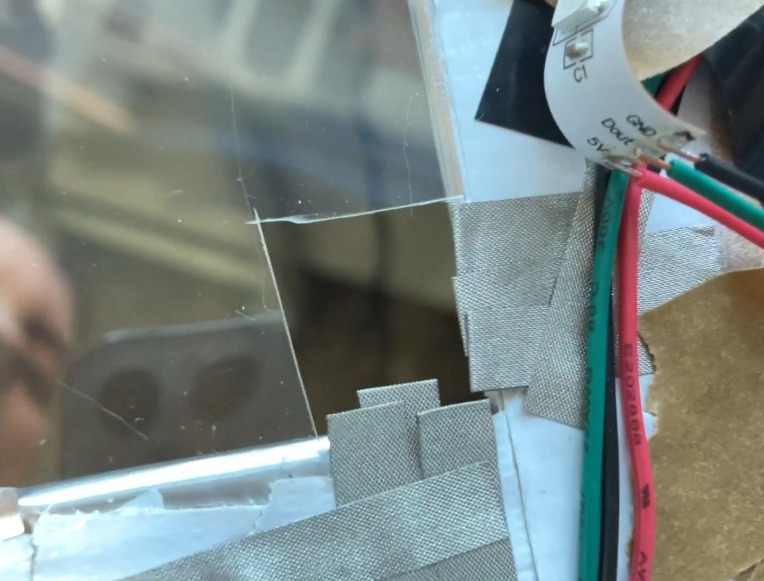
[TechnoChic] used a Micro:bit plugged into a Brown Dog Gadgets board to keep track of scoring, control the servo that kicks the ball back out of the igloo, and run the blinkenlights. It sends score updates over Bluetooth to a second Micro:bit and a Pimoroni Scrollbit display that sit opposite the pinball launcher. She went through a few switch iterations before settling on conductive maker tape and isolating the ball so it only contacts the tape tracks.

There are two ways to score on Planet Winter — the blizzard at the end of the ball launcher path nets you ten points, and getting the ball in the party igloo is good for thirty. Be careful on the icy lake in the middle of the playfield, because if the ball falls through the ice, it’s gone for good, along with your points. It’s okay, though, because both the party igloo and the ice hole trigger an avalanche which releases another ball.

Seriously, these PinBox 3000 kits are probably the most fun you can have with cardboard, even fresh out of the box. They are super fun even if you only build the kit and make a bunch of temporary targets to test gameplay, but never settle on a theme (ask us how we know). Not convinced? Hackaday Editor-in-Chief [Mike Szczys] explored them in depth at Maker Faire in 2018.

Continue reading “Micro:bit Makes Cardboard Pinball More Legit”

Motor-Driven Movement Modernizes POV Toy

Just as we are driven today to watch gifs that get better with every loop, people 100+ years ago entertained themselves with various persistence of vision toys that used the power of optical illusions to make still images come to life. [jollifactory] recently recreated one of the first POV devices — the phenakistoscope — into a toy for our times.

The original phenakistoscopes were simple, but the effect they achieved was utterly amazing. Essentially a picture disk with a handle, the user would hold the handle with one hand and spin the disk with the other while looking in a mirror through slits in the disk. Unlike the phenakistoscopes of yore that could only be viewed by one person at a time, this one allows for group watching.

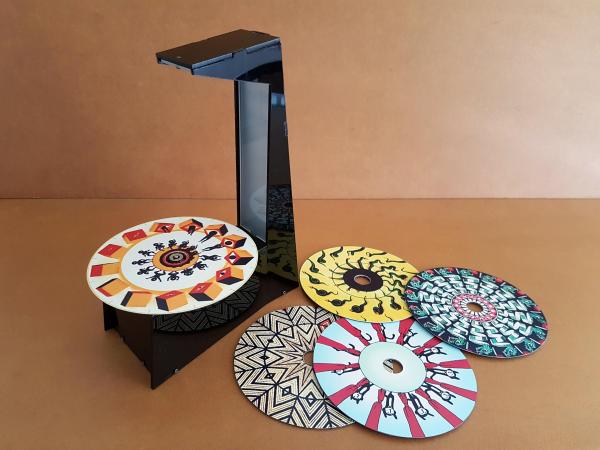
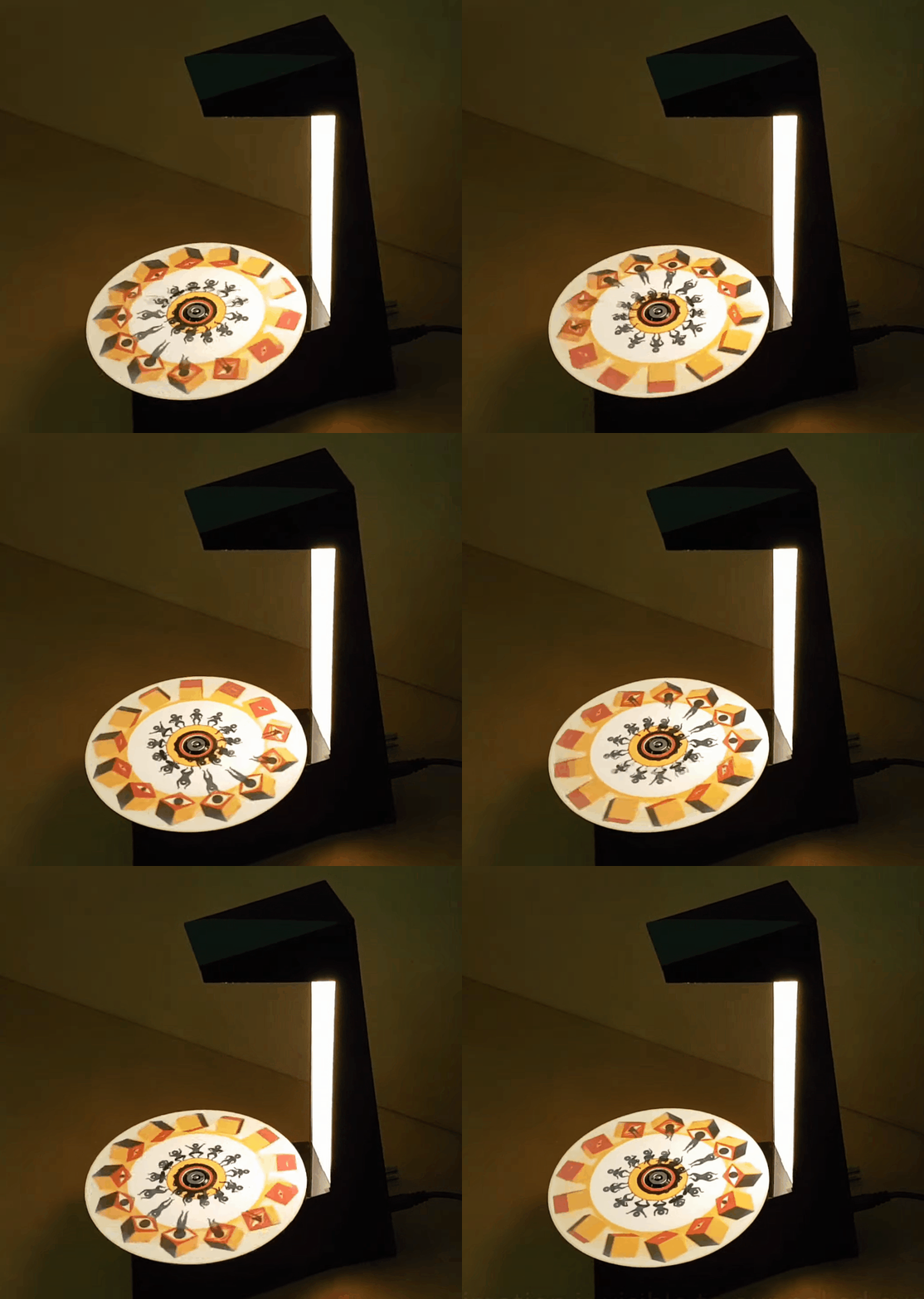
Here’s how it works: an Arduino Nano spins a BLDC motor from an old CD-ROM drive, and two strips of strobing LEDs provide the shutter effect needed to make the pictures look like a moving image.The motor speed is both variable and reversible so the animations can run in both directions.

To make the disks themselves, [jollifactory] printed some original phenakistiscopic artwork and adhered each one to a CD that conveniently snaps onto the motor spindle. Not all of the artwork looks good with a big hole in the middle, so [jollifactory] created a reusable base disk with an anti-slip mat on top to spin those.

If you just want to watch the thing in action, check out the first video below that is all demonstration. There be strobing lights ahead, so consider yourself warned. The second and third videos show [jollifactory] soldering up the custom PCB and building the acrylic stand.

There are plenty of modern ways to build old-fashioned POV toys, from all-digital to all-printable.

Continue reading “Motor-Driven Movement Modernizes POV Toy”