Retrotechtacular: Don’t Balk At Pitch-Up In The McDonnell F-101 Voodoo

The McDonnell aircraft corporation’s F-101 Voodoo was a lean, mean, supersonic machine capable of going from tarmac to 40,000 feet in about two minutes. But for all its innovation and engineering, the Voodoo had a common problem of pitch-up. That is, the swept-back wings of the Voodoo created a tendency for the plane to nose upward very sharply, negating the pilot’s control.

McDonnell assures Voodoo pilots that this problem is easily overcome with a cool head and a solid foundation of know-how about the issue. This training film is meant to provide that foundation, exploring the causes of pitch-up and the prescribed methods for recovery with and without deployment of the drag chute.

The drag chute is always the recommended route to help correct the craft. This is especially true for a full-scale pitch-up situation. Recovery is possible without the drag chute, however. The altitude lost in recovery is proportional to the altitude at the time that pitch-up occurs. That is, the lower the altitude of the craft when pitch-up occurs, the less altitude is lost in getting back to straight and level flight.

Continue reading “Retrotechtacular: Don’t Balk At Pitch-Up In The McDonnell F-101 Voodoo”

Neopixel Ring Compass Takes Things In A New Direction

A couple of years ago, [philo mech] came across [David Ratliff]’s NeoPixel compass project. Ever since then, he’s wanted to make his own. To his delight, [philo mech] was able to find time to do just that.

An Arduino Pro Mini drives an LSM303DLHC compass/accelerometer breakout board and a 12-LED NeoPixel ring. The heading is indicated with a red ‘Pixel between two yellow ones.  In the video after the break, [philo mech] gives several demonstrations of the ring’s red indicator in relation to a standard compass arrow.

This colorful compass currently boasts two very useful modes: one to track the whereabouts of North, and the other for determining the user’s current heading. Mk. II  will compensate for tilt and will employ a 16-Pixel ring to display finer degrees of directional change. Want to make your own? The code is pasted in the video’s comments.

Continue reading “Neopixel Ring Compass Takes Things In A New Direction”

Retrotechtacular: Making Porcelain Insulators

Here is a silent film produced by General Electric that depicts the making of many kinds of porcelain insulators for power lines. Skilled craftsmen molded, shaped, and carved these vital components of the electrical grid by hand before glazing and firing them.

Porcelain insulators of this time period were made from china clay, ball clay, flint, and feldspar. In the dry process, ingredients are pulverized and screened to a fine powder and then pressed into molds, often with Play-Doh Fun Factory-type effects. Once molded, they are trimmed by hand to remove fins and flashing. The pieces are then spray-glazed while spinning on a vertical lathe.

Other types of insulators are produced through the wet process. The clay is mixed in a pug mill, which is a forgiving machine that takes scrap material of all shapes, sizes, and moisture levels and squeezes out wet, workable material in a big log. Chunks of log are formed on a pottery wheel or pressed into a mold. Once they are nearly dry, the pieces get their final shape at the hands of a master. They are then glazed and fired in a giant, high-temperature kiln.

Continue reading “Retrotechtacular: Making Porcelain Insulators”

Retrotechtacular: Automatic For The People

Throughout their long history, American Machine and Foundry (AMF) have made forays into many areas of automation. And as the American cultural landscape of the 1950s and ’60s shifted toward fast, cheap, and convenient foodstuffs available for consumption inside of spacious, finned automobiles, AMF was there with AMFare, an (almost) completely automated system for taking orders, preparing food, and calculating bills.

AMF named the system “ORBIS” after its two main functions, ordering and billing. But ORBIS was not completely autonomous. A human operator received orders from a table-side telephones inside the restaurant and intercoms used by drive-in customers, and entered them on an enormous console. Orders were routed to several machines to prepare the food, cook it, and package it in various ways. We witness the odyssey of the burger in complete detail, from punching out perfect patties to their final, plastic-wrapped form.

Surprisingly, the AMFare selection wasn’t limited to delicious burgers, fries, and milkshakes. It could crank out sixteen different menu items, and do so pretty quickly. In the space of one hour, AMFare could produce more than 400 burgers, over 350 orders of fries, or about 700 milkshakes. Even so, collating the orders required human intervention. We imagine that the awful task of cleaning all that expensive Rube Goldberg-esque machinery did, too.

Continue reading “Retrotechtacular: Automatic For The People”

Pendulum MIDI Controller Really Swings

Once in a while, we see a project that makes us want to stop whatever we’re doing and build our own version of it. This time, it’s Modulum, a pendulum-based MIDI controller. It’s exactly what it sounds like. The swinging pendulum acts as a low-frequency oscillator. In the demo video configuration, you can hear it add a watery, dreamlike quality, sort of like a lap steel guitar on LSD.

The pendulum’s motion is detected by four pieces of stretchy, conductive cord. These are wired to an Arduino Nano in a voltage divider fashion. [Evan and Kirk] used the Maxuino library to determine x and y mapping of possible pendular positions as well as perform the necessary MIDI processing. Get your groove on after the break, and check out some of the many other fantastic MIDI controllers we’ve had the pleasure of covering.

Continue reading “Pendulum MIDI Controller Really Swings”

Retrotechtacular: Cover Your CONUS With OTH-B Radar

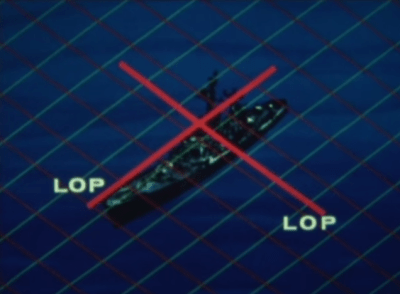
If you’re a ham, you already know that the ionosphere is a great backboard for bouncing HF signals around the globe.  It’s also useful for over-the-horizon backscatter (OTH-B (PDF)) radar applications, which the United States Air Force’s Rome Laboratory experimented with during the Cold War.

During the trial program, transmit and receive sites were set up ninety miles apart inside the great state of Maine. The 1/2 mile-long transmit antenna was made up of four arrays of twelve dipole elements and operated at 1MW. An antenna back screen and ground screen further expanded the signal’s range. Transmission was most often controlled by computers within the transmit building, but it could also be manually powered and adjusted.

The receive site had 50-ft. antenna elements stretching 3900 feet, and a gigantic ground screen covering nearly eight acres. Signals transmitted from the dipole array at the transmit site bounced off of the ionosphere and down to the receive site. Because of step-scanning, the system was capable of covering a 180° arc. OTH-B radar systems across the continental United States were relegated to storage at the end of the Cold War, but could be brought back into service given enough time and money.

Continue reading “Retrotechtacular: Cover Your CONUS With OTH-B Radar”

Dual Pet Food Dispenser Is Doubly Convenient

Does your dog or cat wake you up every morning, demanding to be fed? Maybe you feed Sparky in the evenings instead. But doesn’t that limit your spontaneity? It sure limited [Jorge]’s after-work plans. He has two dogs that eat the same type of food, but in different quantities. This was a big factor in the design and execution of his dual pet food dispenser.

[Jorge] started by modeling his requirements in 3D. Dispensing takes place in two stages as food moves from the storage hopper to the bowls. A 12V printer motor turns the 3D-printed auger, which transports the nuggets to the staging area. Here, a servo controls a ramp in a see-saw motion, sending the food sliding sideways into one bowl or the other.

The dispenser is designed around a PIC18F2420. Although this micro was [Jorge] ‘s second choice, it ticks all the boxes in the design. His acrylic enclosure features four push buttons for navigation and selection through the 16×2 LCD. [Jorge] has an issue with the food getting stuck in the first stage. A friend suggested that he use vibration to agitate the food, but that didn’t work. [Jorge] ultimately added a stirring shaft with spokes that helps keep the morsels moving. Take the tour after the break.

If you want to dispense single doses of food on a timer, check out this automatic cat feeder made from scavenged parts.

Continue reading “Dual Pet Food Dispenser Is Doubly Convenient”