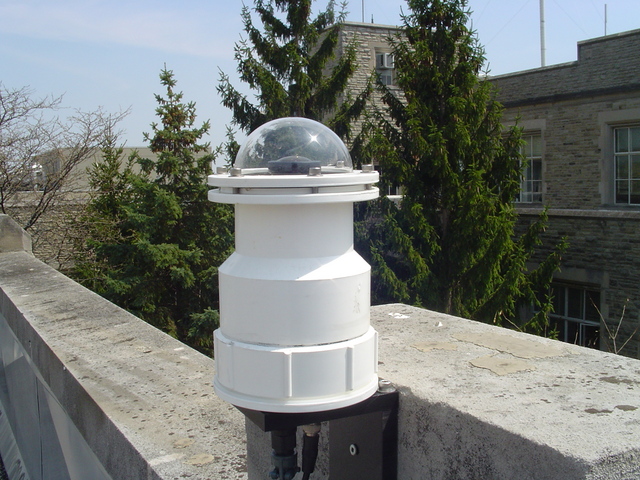
NASA has been tracking bright meteoroids (“fireballs”) using a distributed network of video cameras pointed upwards. And while we usually think of NASA in the context of multi-bazillion dollar rocket ships, but this operation is clearly shoe-string. This is a hack worthy of Hackaday.

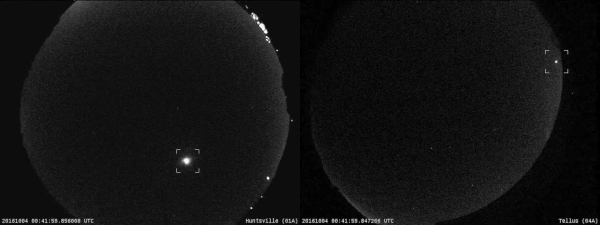
The basic idea is that with many wide-angle video cameras capturing the night sky, and a little bit of image processing, identifying meteoroids in the night sky should be fairly easy. When enough cameras capture the same meteoroid, one can use triangulation to back out the path of the meteoroid in 3D, estimate its mass, and more. It’s surprising how many there are to see on any given night.
You can watch the videos of a meteoroid event from any camera, watch the cameras live, and even download the meteoroid’s orbital parameters. We’re bookmarking this website for the next big meteor shower.
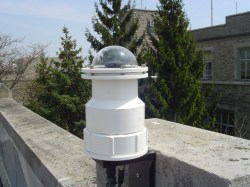 The work is apparently based on [Rob Weryk]’s ASGARD system, for which the code is unfortunately unavailable. But it shouldn’t be all that hard to hack something together with a single-board computer, camera, and OpenCV. NASA’s project is limited to the US so far, but we wonder how much more data could be collected with a network of cameras all over the globe. So which ones of you are going to take up our challenge? Build your own version and let us know about it!
Between this project and the Radio Meteor Zoo, we’re surprised at how much public information there is out there about the rocky balls of fire that rain down on us every night, and will eventually be responsible for our extinction. At least we can be sure we’ll get it on film.

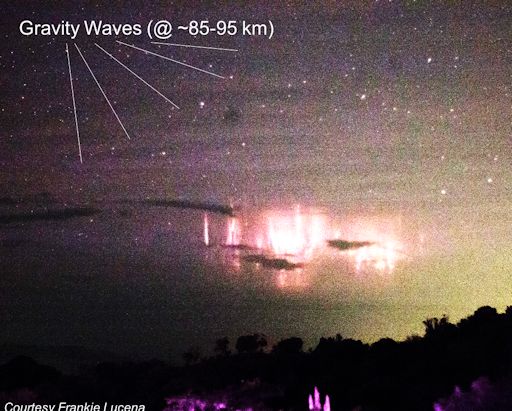 When you hear “gravity waves” or “sprites”, you’d think you would know what is being discussed. After all, those ripples in space-time that Einstein predicted would emanate from twin, colliding, black holes were recently observed to much fanfare. And who doesn’t love early 8-bit computer animations? So when we were browsing over at SpaceWeather we were shocked to find that we were wrong twice, in one photo (on the right). Continue reading “Two Words That Don’t Mean What You Think They Do”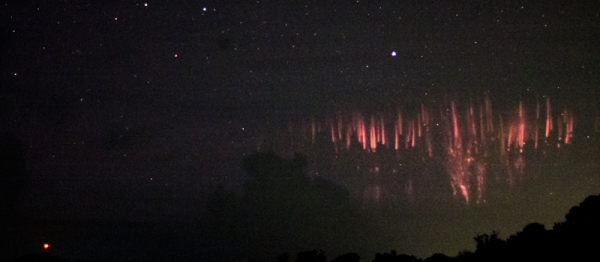
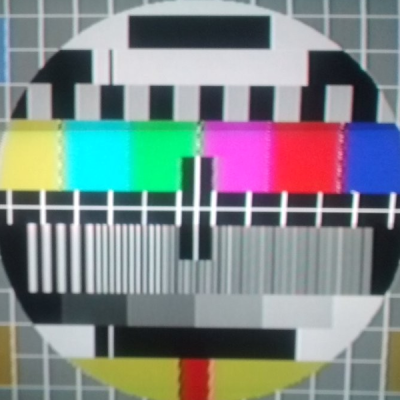 [Marble] wrote his flow for PAL, but it should be fairly easy to modify it to work with NTSC if you’re living in the US or Japan. Sending black and white is “easy” but to transmit a full color image, you’ll need to read up on color spaces. Check out [marble]’s