Why Did The Home Assistant Future Not Quite Work The Way It Was Supposed To?

The future, as seen in the popular culture of half a century or more ago, was usually depicted as quite rosy. Technology would have rendered every possible convenience at our fingertips, and we’d all live in futuristic automated homes — no doubt while wearing silver clothing and dreaming about our next vacation on Mars.

Of course, it’s not quite worked out this way. A family from 1965 whisked here in a time machine would miss a few things such as a printed newspaper, the landline telephone, or receiving a handwritten letter; they would probably marvel at the possibilities of the Internet, but they’d recognise most of the familiar things around us. We still sit on a sofa in front of a television for relaxation even if the TV is now a large LCD that plays a streaming service, we still drive cars to the supermarket, and we still cook our food much the way they did. George Jetson has not yet even entered the building.

The Future is Here, and it Responds to “Alexa”

An Amazon Echo Dot device
“Alexa, why haven’t you been a commercial success?” Gregory Varnum, CC BY-SA 4.0

There’s one aspect of the Jetsons future that has begun to happen though. It’s not the futuristic automation of projects such as Disneyland’s Monsanto house Of The Future, but instead it’s our current stuttering home automation efforts. We’re not having domestic robots in pinnies hand us rolled-up newspapers, but we’re installing smart lightbulbs and thermostats, and we’re voice-controlling them through a variety of home hub devices. The future is here, and it responds to “Alexa”.

But for all the success that Alexa and other devices like it have had in conquering the living rooms of gadget fans, they’ve done a poor job of generating a profit. It was supposed to be a gateway into Amazon services alongside their Fire devices, a convenient household companion that would help find all those little things for sale on Amazon’s website, and of course, enable you to buy them. Then, Alexa was supposed to move beyond your Echo and into other devices, as your appliances could come pre-equipped with Alexa-on-a-chip. Your microwave oven would no longer have a dial on the front, instead you would talk to it, it would recognise the food you’d brought from Amazon, and order more for you.

Instead of all that, Alexa has become an interface for connected home hardware, a way to turn on the light, view your Ring doorbell on models with screens, catch the weather forecast, and listen to music. It’s a novelty timepiece with that pod bay doors joke built-in, and worse that that for the retailer it remains by its very nature unseen. Amazon have got their shopping cart into your living room, but you’re not using it and it hardly reminds you that it’s part of the Amazon empire at all.

But it wasn’t supposed to be that way. The idea was that you might look up from your work and say “Alexa, order me a six-pack of beer!”, and while it might not come immediately, your six-pack would duly arrive. It was supposed to be a friendly gateway to commerce on the website that has everything, and now they can’t even persuade enough people to give it a celebrity voice for a few bucks.

The Gadget You Love to Hate

In the first few days after the Echo’s UK launch, a member of my hackerspace installed his one in the space. He soon became exasperated as members learned that “Alexa, add butt plug to my wish list” would do just that. But it was in that joke we could see the problem with the whole idea of Alexa as an interface for commerce. He had locked down all purchasing options, but as it turns out, many people in San Diego hadn’t done the same thing. As the stories rolled in of kids spending hundreds of their parents’ hard-earned on toys, it would be a foolhardy owner who would leave left purchasing enabled. Worse still, while the public remained largely in ignorance the potential of the device for data gathering and unauthorized access hadn’t evaded researchers. It’s fair to say that our community has loved the idea of a device like the Echo, but many of us wouldn’t let one into our own homes under any circumstances.

So Alexa hasn’t been a success, but conversely it’s been a huge sales success in itself. The devices have sold like hot cakes, but since they’ve been sold at close to cost, they haven’t been the commercial bonanza they might have hoped for. But what can be learned from this, other than that the world isn’t ready for a voice activated shopping trolley?

Sadly for most Alexa users it seems that a device piping your actions back to a large company’s data centres is not enough of a concern for them. It’s an easy prediction that Alexa and other services like it will continue to evolve, with inevitable AI pixie dust sprinked on them. A bet could be on the killer app being not a personal assistant but a virtual friend with some connections across a group of people, perhaps a family or a group of friends. In due course we’ll also see locally hosted and open source equivalents appearing on yet-to-be-released hardware that will condense what takes a data centre of today’s GPUs into a single board computer. It’s not often that our community rejoices in being late to a technological party, but I for one want an Alexa equivalent that I control rather than one that invades my privacy for a third party.
A Real-World Experience In PCB Dye-Sub Printing

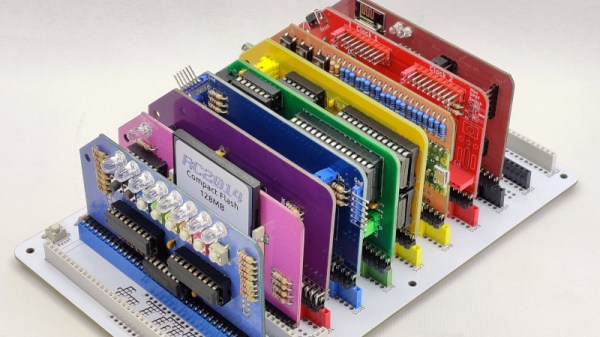
We all love PCB artwork, but those who create it work under the restriction of having a limited color palette to work with. If it’s not some combination of board, plating, solder mask, and silk screen, then it can’t easily be rendered on a conventional PCB. That’s not the end of the story though, because it’s technically possible to print onto a PCB and have it any color you like. Is it difficult? Read [Spencer]’s experience creating a rainbow Pride version of his RC2014 modular retrocomputer.

Dye-sublimation printing uses an ink that vaporizes at atmospheric pressure without a liquid phase, so a solid ink is heated and the vapor condenses back to solid on the surface to be printed. Commercial dye-sub printers are expensive, but there’s a cheaper route in the form of an Epson printer that can be converted. This in turn prints onto a transfer paper, from which the ink is applied to the PCB in a T-shirt printing press.

[Spencer] took the advice of creating boards with all-white silkscreen applied, and has come up with a good process for creating the colored boards. There is still an issue with discoloration from extra heat during soldering, so he advises in the instructions for the kit to take extra care. It remains however a fascinating look at the process, and raises the important point that it’s now within the reach of perhaps a hackerspace.

Regular readers will know we’ve long held an interest in the manufacture of artistic PCBs.

A Fresnel Lens Without The Pain

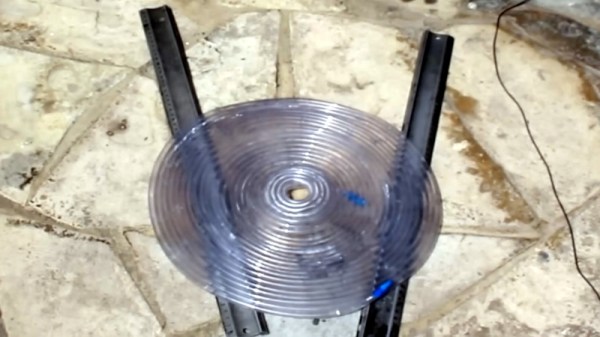
Making a traditional glass lens requires a lot of experience, skill, and patience grinding a piece of glass to the required shape, and is not for the casual experimenter. Making a glass Fresnel lens with its concentric rings requires even more work, but as the ever-resourceful [Robert Murray-Smith] shows us, a Fresnel lens can be made from far more mundane materials. He shows us a working lens made from transparent plastic tube, and even successfully smoulders a piece of paper with it under the anaemic British sun.

His lens, with its circular profile tube filled with water, is not perhaps the most efficient lens in terms of light focused per unit area of lens. From dredging up our highschool physics lessons we are guessing that half the light is diffracted outwards rather than inwards by the cylindrical profile of the coil, but for the cost of the whole device we’re not sure that matters. Next time we’re shipwrecked on a desolate island with a handy supply of clear plastic tube and fresh water, we know we can always raise a fire.

If Fresnel lenses interest you, we’ve taken a look in the past at their history.

Continue reading “A Fresnel Lens Without The Pain”

Is MINIX Dead? And Does It Matter?

Is MINIX dead? OSnews is sounding its death-knell, citing evidence from the operating system’s git log that its last updates happened as long ago as 2018. Given that the last news story on the MINIX website is from 2016 and the last release version, 3.3, came out in 2014, it appears they they may have a point. But perhaps it’s more appropriate to ask not whether or not MINIX is dead, but whether indeed it matters that the venerable OS appears no longer in development. It started as an example to teach OS theory before becoming popular in an era when there were no other inexpensive UNIX-like operating systems for 16-bit microcomputers, but given that its successors such as Linux-based operating systems have taken its torch and raced ahead, perhaps its day has passed.

No doubt many of you will now be about to point out that MINIX lives on unexpectedly baked into the management engine core on Intel microprocessors, and while there’s some debate as to whether that’s still the case, you may have a point. But the more important thing for us isn’t whether MINIX is still with us or even whether it’s a contender, but what it influenced and thus what it was responsible for. This is being written on a GNU/Linux operating system, which has its roots in [Linus Torvalds]’ desire to improve on… MINIX.

Read more about the tangled web of UNIX-like operating systems here.

What Next For The SBC That Has Everything?

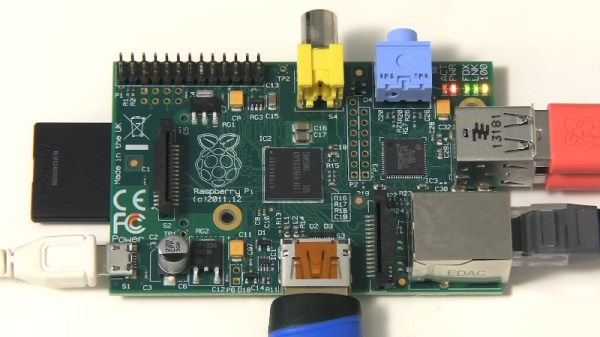
In the decade-and-a-bit since the first Raspberry Pi was launched we’ve seen an explosion of affordable single-board computers (SBCs), but as the prices creep up alongside user expectation and bloat, [Christopher Barnatt] asks where the industry will go next.

The Pi started with an unbeatable offer, $35 got you something similar to the desktop PC you’d had a decade earlier — able to run a Linux desktop on your TV from an SD card. Over the years the boards have become faster and more numerous, but the prices for ARM boards are now only nominally as affordable as they were in 2012, and meanwhile the lower end of x86 computing is now firmly in the same space. He demonstrates how much slower the 2023 Raspberry Pi OS distribution is on an original Pi compared to one of the early pre-Raspbian distros, and identifies in that a gap forming between users. From that he sees those people wanting a desktop heading towards the x86 machines, and the bare-metal makers at the lower end heading for the more powerful microcontrollers which simply weren’t so available a decade ago.

We have to admit that we agree with him, as the days when a new Raspberry Pi board was a special step forward rather than just another fast SBC are now probably behind us. In that we think the Pi people are probably also looking beyond their flagship product, as the hugely successful lunches of the RP2040 and the industrial-focused Compute Module 4 have shown.

What do you think about the SBC market? Tell us in the comments.

Continue reading “What Next For The SBC That Has Everything?”

Will Electric Tractors Farm Your Food?

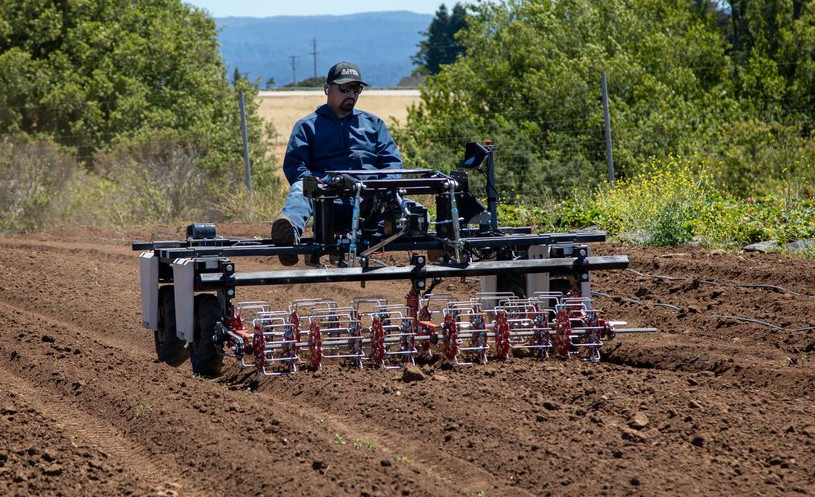
There are two professions used to driving single-seaters with hundreds of horsepower, one of which is very exclusive and the other of which can be found anywhere the ground is fertile enough to support agriculture. Formula One drivers operate fragile machines pushed to the edges of their performance envelope, while the tractor at the hands of a farmer is designed to reliably perform huge tasks on dodgy ground in all weathers. Today’s tractor is invariably a large machine powered by a diesel engine, and it’s the equal of all tasks on a modern farm. Against that backdrop then it’s interesting to read the Smithsonian magazine’s look at the emerging world of electric tractors. Will they replace diesel as the source of traction in the fields?

Farm-ng’s Amiga

The two firms they focus on first are Monarch Tractor, and Solectrac. Both manufacturers offer small machines of the type we’d be inclined to describe as an orchard tractor, and Monarch are offering an autonomous option as part of their package. They also feature Farm-ng, whose machine called amusingly the Amiga, is a much smaller affair which we are guessing would be super-useful on a very intensive operation such as market gardening. We’re especially pleased to see that the emerging small electric tractor industry is embracing right to repair, something the traditional manufacturers are famous for ignoring.

It’s obvious that none of these machines are going to revolutionize the world of large high-power tractors any time soon, as they are too small for the job and can’t offer the 24/7 operation required at busy times on a farm. But it’s obvious they would be very useful on a small farm, and in particular for those tractor applications where the machine is a platform which goes from place to place to aid static work, they could be better than their diesel equivalents.

It’s odd that over the years we’ve not covered any electric tractors before. Perhaps that is, until you search instead for agricultural robots.

Restoring Dot Matrix Printer Cartridges For 2023

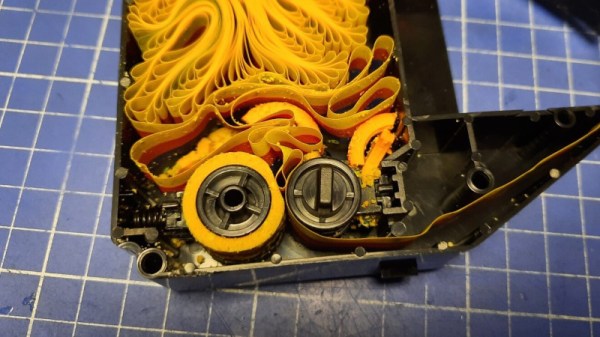
The noise of a dot matrix printer is probably as synonymous with 1980s computing as the modem handshake would become with the desktop experience a decade or more later. But unlike the computers that would have driven it, a dot matrix printer can still be a very useful device here in 2023. And why not? They’re cheap to operate and can produce surprisingly good quality when paired with suitable drivers. There is a snag though; while cartridges for popular models can still be found, there are plenty whose consumables are long gone. [Drygol] had an Apple ImageWriter II with exactly that problem, and after finding all his cartridges were non-functional, took a look at how to bring them back.

Inside a dot matrix cartridge is a fabric ribbon similar to the one that might once have been found on a typewriter. It’s not on a roll but folded into the space, and it’s drawn through by a pair of rollers. Not only had the ink on the fabric dried out, but the foam on the rollers had also disintegrated. Some careful dismantling, and a solution presented itself in the form of O-rings to replace the rollers. Those and a bit of mineral oil to soften the ink had the vintage Apple printing again as though it was the ’80s once more.

It’s a subject we’ve looked at before, as it turns out WD-40 makes a good ink solvent.