The McDonald’s Ice Cream Machine Saga And Calls For Right To Repair

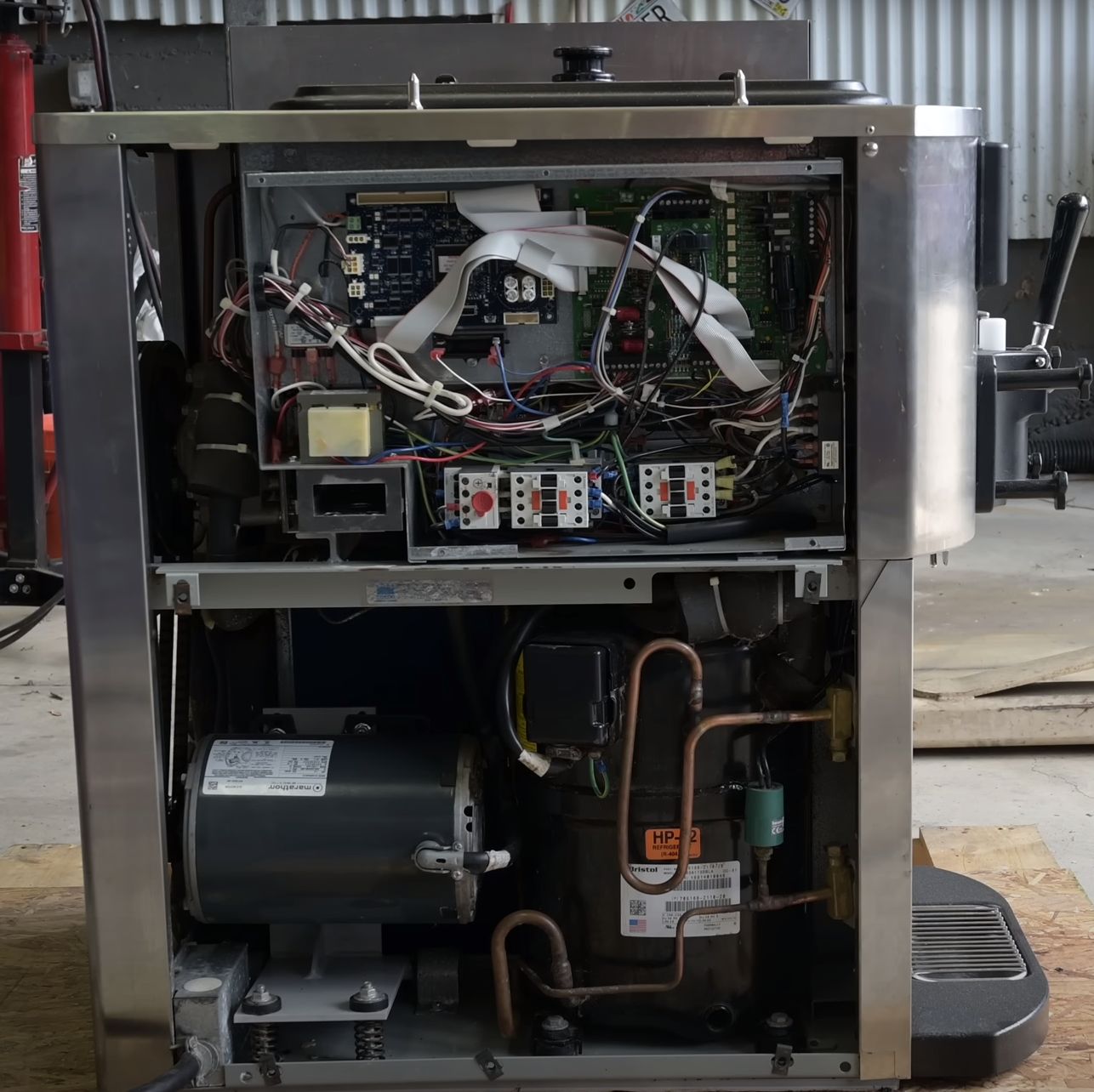
The inside of a Taylor C709 ice cream machine, as seen from the back with the cover on the electronics removed. (Credit: iFixit)
The inside of a Taylor C709 ice cream machine, as seen from the back with the cover over the electronics removed. (Credit: iFixit)

Raising a likely somewhat contentious topic, iFixit and Public Knowledge have challenged the manufacturer behind McDonald’s ice cream machines to make them easy to diagnose and repair. This is a subject that’s probably familiar to anyone who is vaguely familiar with US news and the importance of ice cream at McDonald’s locations to the point that a live tracker was set up so that furtive customers can catch a glimpse at said tracker before finding themselves staring in dismay at an ‘Out of Order’ sign on one of these Taylor ice cream machines.

The story is more complex than just a machine being “broken”, however. The maintenance contracts are lucrative, the instruction manual is long, and the error codes are cryptic. When you add to that the complexity of cleaning and maintaining the machines, it’s tempting to just claim the machine is out of order. These Taylor machines (the C602 and the C709 from the iFixit video) are a bit more complex than your usual ice cream maker in that they also have a pasteurization element that’s supposed to keep already poured mix safe to use the next day.

Continue reading “The McDonald’s Ice Cream Machine Saga And Calls For Right To Repair”

The 2003 Northeast Blackout And The Harsh Lessons Of Grid Failures

The grid failure in 2003 which reverted much of the eastern US and Canada back to a pre-electrification era may be rather memorable, yet it was not the first time that a national, or even international power grid failed. Nor is it likely that it will be the last. In August of 2023 we mark the 20th anniversary of this blackout which left many people without electricity for up to three days, while costing dozens of  people their lives. This raises the question of what lessons we learned from this event since then.

Although damage to transmission lines and related infrastructure is a big cause of power outages – especially in countries where overhead wiring is the norm – the most serious blackouts involve the large-scale desynchronization of the grid, to the point where generators shutdown to protect themselves. Bringing the grid back from such a complete blackout can take hours to days, as sections of the grid are reconnected after a cascade scenario as seen with the 2003 blackout, or the rather similar 1965 blackout which affected nearly the same region.

With how much more modern society relies today on constant access to electrical power than it did twenty, let alone fifty-eight years ago, exactly how afraid should we be of another, possibly worse blackout?

Continue reading “The 2003 Northeast Blackout And The Harsh Lessons Of Grid Failures”

Microelectrode (Utay) array and the decoding of the corresponding actions. (Francis R. Willet et al., 2023)

Restoring A Person’s Voice Using A Brain-Computer Interface

Being able to vocalize is one of the most essential elements of the human experience, with infants expected to start babbling their first words before they’re one year old, and much of their further life revolving around interacting with others using vocalizations involving varying degrees of vocabulary and fluency. This makes the impairment or loss of this ability difficult to devastating, as is the case with locked-in syndrome (LIS), amyotrophic lateral sclerosis (ALS) and similar conditions, where talking and vocalizing has or will become impossible.

In a number of concurrent studies, the use of a brain-computer interface (BCI) is investigated to help patients suffering from LIS (Sean L. Metzger et al., 2023) and ALS (Francis R. Willett et al., 2023) to regain their speaking voice. Using the surgically implanted microelectrode arrays (Utah arrays) electrical impulses pertaining to the patient’s muscles involved in speaking are recorded and mapped to phonemes, which are the elements that make up speech. Each of these phonemes requires a specific configuration of the muscles of the vocal tract (e.g. lips, tongue, jaw and larynx), which can be measured with a fair degree of accuracy. Continue reading “Restoring A Person’s Voice Using A Brain-Computer Interface”

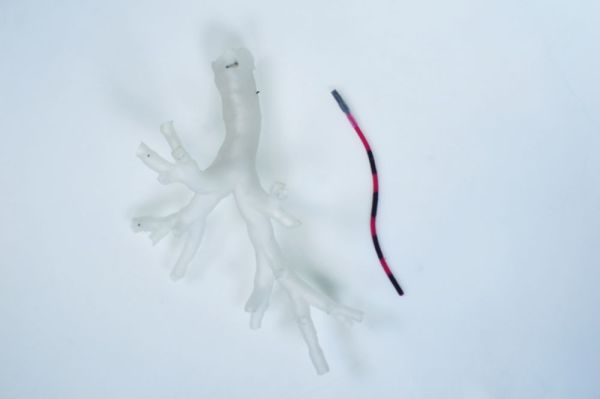
Close-up of a magnetic tentacle robot next to a phantom bronchiole (Credit: University of Leeds)

The Healing Touch Of Magnetic Tentacles In Photothermal Lung Cancer Therapy

Of the body’s organs, the lungs are among the trickiest to take a biopsy and treat cancer in, both due to how important they are, as well as due to their inaccessibility. The total respiratory surface within the average human lungs is about 50 to 75 square meters. Maneuvering any kind of instrument down the endless passages to reach a suspicious area, or a cancerous region to treat is nearly impossible. This has so far left much of the lungs inaccessible.

The standard of care for lung cancer is generally surgical: remove parts of the lung tissue. However, a proposed new method using magnetic tentacles may soon provide a more gentle approach, as described in Nature Engineering Communications by Giovanni Pittiglio and colleagues (press release).

The tentacles are made out of a silicone substrate with embedded magnets that allow for it to be steered using external magnetic sources. With an embedded laser fiber, the head of the tentacle can be guided to the target area, and the cancerous tissue sublimated using an external laser source. In experiments on cadavers with this system, the researchers found that they could enter 37% deeper into the lungs than with standard equipment. The procedure was also completed with less tissue displacement.

Considering the high fatality rate of lung cancers, the researchers hope that this approach could soon be turned into a viable therapy, as well as for other medical conditions where a gentle tentacle slithering into the patient’s body could effect treatments previously considered to be impossible.

Heading image: Close-up of a magnetic tentacle robot next to a phantom bronchiole (Credit: University of Leeds)

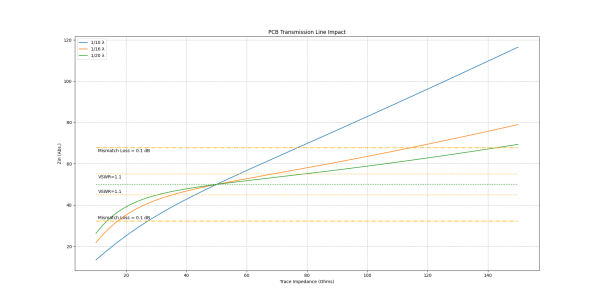
Input impedance plottet as a function of trace impedance for trace lengths of 1/10, 1/16 and 1/20 of a wavelength. (Credit: Baltic Labs)

When Does Impedance Matching A PCB Trace Become Unavoidable?

A common joke in electronics is that every piece of wire and PCB trace is an antenna, with the only difference being whether this was intentional or not. In practical terms, low-frequency wiring is generally considered to be ‘safe’, while higher frequency circuits require special considerations, including impedance (Z) matching.  Where the cut-off is between these two types of circuits is not entirely clear, however, with various rules-of-thumb in existence, as [Sebastian] over at Baltic Lab explains.

A popular rule is that no impedance matching between the trace and load is necessary if the critical length of a PCB trace (lcrit) is 1/10th of the wavelength (λ). Yet is this rule of thumb correct? Running through a number of calculations it’s obvious that the only case where the length of the PCB trace doesn’t matter is when trace and load impedance are matched.

According to these calculations, the 1/10 rule is not a great pick if your target is a mismatch loss of less than 0.1 dB, with 1/16 being a better rule. Making traces wider on the PCB can be advisable here, but ultimately you have to know what is best for your design, as each project has its own requirements. Even when the calculations look good, that’s no excuse to skip the measurement on the physical board, especially with how variable the dielectric constant of FR4 PCB material can be between different manufacturers and batches.

Heading image: Input impedance plotted as a function of trace impedance for trace lengths of 1/10, 1/16, and 1/20 of a wavelength. (Credit: Baltic Labs)

Continue reading “When Does Impedance Matching A PCB Trace Become Unavoidable?”

Random Access Memory From A Rotating Drum In A Bendix G15

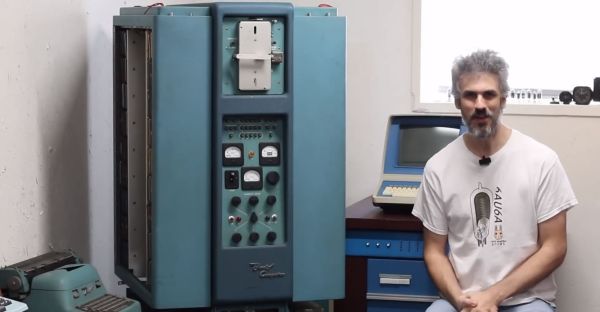
When it’s the 1950s and you are tasked to design a computer system that features not only CPU registers but also a certain amount of RAM, you do not have a lot of options. At this point in time, discrete logic was the rule, and magnetic core memory still fairly new and rather expensive. This is where the rotating drum comes in, which is somewhat like a cross between an old-style cylinder record and a hard drive. In a recent [Usagi Electric] video, a 1950s Bendix G15 system is demonstrated, which features such a rotating drum device, alongside both tube-based circuits and newfangled diode-based circuitry.

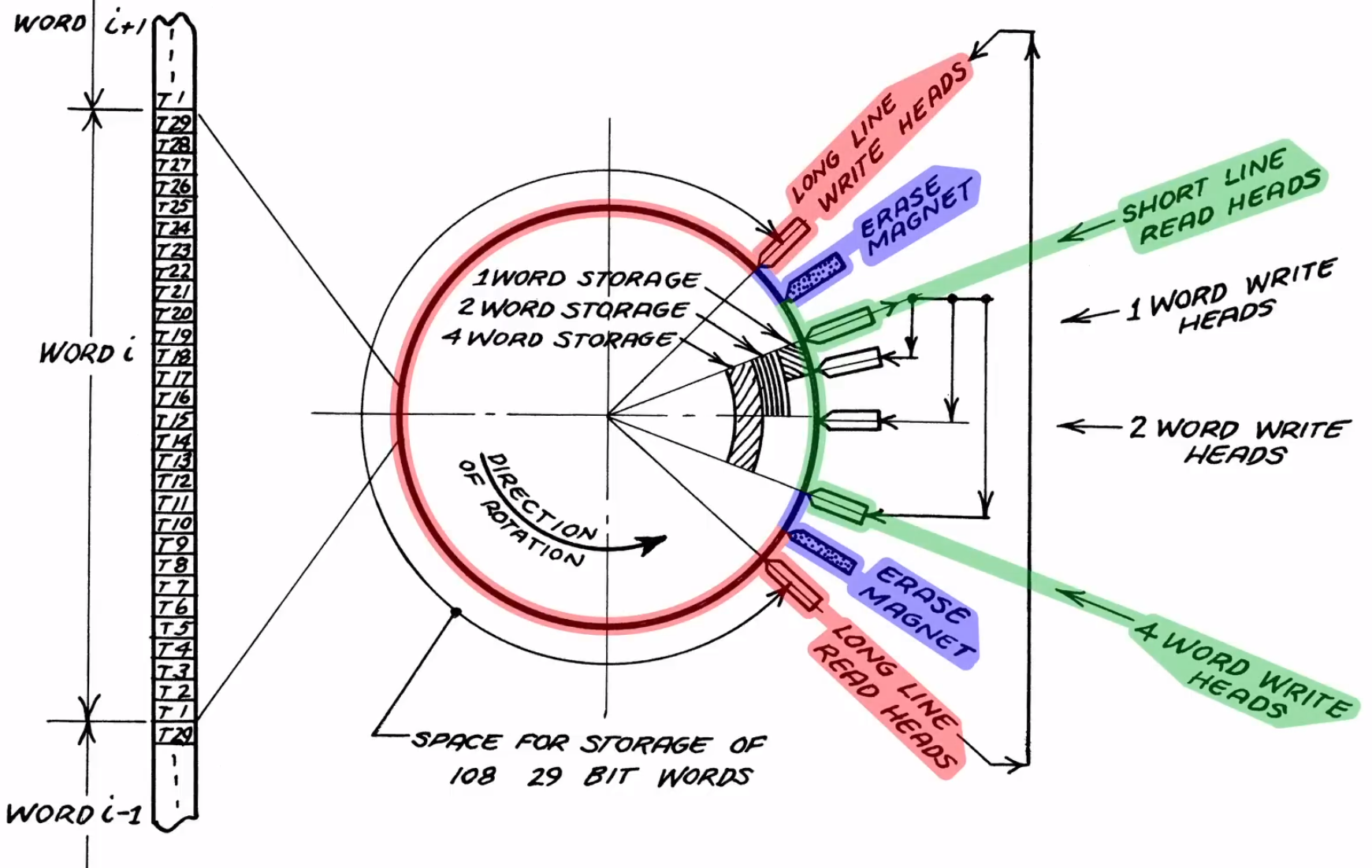
Simplified diagram of a rotating drum random access memory unit, showing the read-erase-write process as the drum spins.

This particular unit was borrowed from the System Source museum, with the intent to restore it to a working condition. Part of this process involved figuring out the circuitry, which was made easy by the circuit schematic drawings that came with the original machine. According to the official brochure by the manufacturer, the ‘short lines’ that are intended for the CPU registers, the access time was less than 1 millisecond, which is pretty darn fast considering the era and the discrete CPU’s clock speed.

For the drum itself, however, popping the cover off the unit showed that it had suffered some damage that had resulted in the multiple heads contacting the surface. Despite this disappointment, it’s not the end of the restoration, however. The museum has one more Bendix G15 standing around, with a rotating drum unit that looks to be in mint condition. The damaged magnetic coating on the other rotating drum may conceivably be resurfaced, which if successful could provide new hope to a lot of retro systems out there that also use magnetic media, whether in drum or disk format.

Continue reading “Random Access Memory From A Rotating Drum In A Bendix G15”

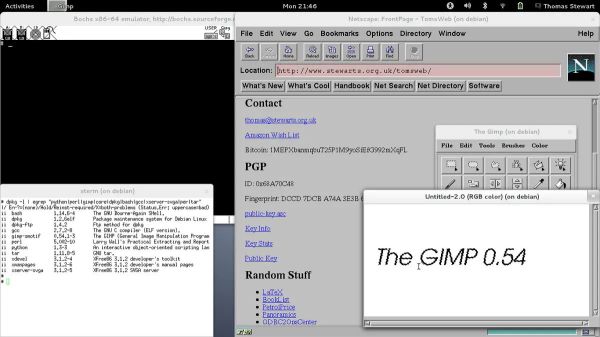
Debian Buzz (1.1) running under Bochs. (Credit: Thomas Stewart)

Looking Back On 30 Years Of Debian

The early history of Linux is a rather murky period to most, long before the era of glitzy marketing and proclamations of ‘the Linux desktop’ being the next hot thing. This was also the era when the first Linux distributions were born, as the Linux kernel never came as a whole OS package – unlike the BSDs – which necessitated others to package it with the elements that make up kernel and user space, such as the GNU tools.

One of these original distributions was Debian, which this month celebrates its 30th birthday. Its entire history, starting with the initial 0.01 release is covered in great detail on the Debian website. After the first release of the Linux kernel in 1991, it would take until August of 1993 when [Ian Murdock] embarked on the Debian project, sponsored by the GNU Project of the Free Software Foundation. This was a pretty rough period, with much of 1994 spent figuring out the basics of the system, the package manager and establishing a release system. Continue reading “Looking Back On 30 Years Of Debian”