In a recent blog post Google announced that the early access phase of its Android Developer Verification program has commenced, as previously announced. In addition to this new announcement Google also claims to be taking note of the feedback it has been receiving, in particular pertaining to non-commercial developers for whom these new measures are incredibly inconvenient. Yet most notable is the ’empowering experienced users’ section, where Google admits that to developers and ‘power users’ the intensive handholding isn’t required and it’ll develop an ‘advanced flow’ where unverified apps can still be installed without jumping through (adb) hoops. Continue reading “Android Developer Verification Starts As Google Partially Retreats On Measures”
Author: Maya Posch1714 Articles
Tiny386 On An Espressif ESP32-S3
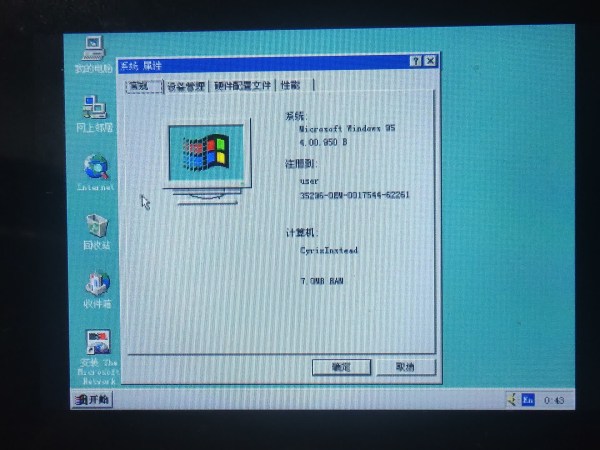
Some people may remember the joys of trying to boot Linux on an 8-bit AVR microcontroller, which was an absolute exercise in patience. In comparison [He Chunhui]’s Tiny386 emulator running on an ESP32-S3 MCU is positively zippy when it boots and runs Windows 95. The provided video (also embedded below) makes clear that while you can comfortably waddle off to prepare and pour a fresh cup of tea, it’s actually borderline usable.
The source code can be obtained via GitHub, which contains not just the basic emulated 80386 CPU written in C99, but also peripherals borrowed from TinyEMU and QEMU, along with a SeaBIOS ROM. In addition to the Windows 95 demo it’s claimed that Tiny386 should be able to run most 16/32-bit software.
Right now the ESP32-S3 version targets the JC3248W535 board, which is a roughly $30 development board featuring a built-in display with touch screen and an ESP32-S3 module. Although it has a USB-C port, it appears that this one is just for programming and not for the USB peripheral of the ESP32-S3. With the USB OTG peripheral used, one could conceivably make a small 386 system based around an ESP32-S3 that features a USB hub to plug a keyboard, mouse, etc. into.
Considering that the Tiny386 emulator is a very simple and straightforward approach to emulating an early-90s PC, some optimization might enable a pretty zippy general purpose PC for early 90s software. Quite a boost from watching Linux struggle into a command line on an AVR, indeed.
Running A Minecraft Server On A WiFi Light Bulb
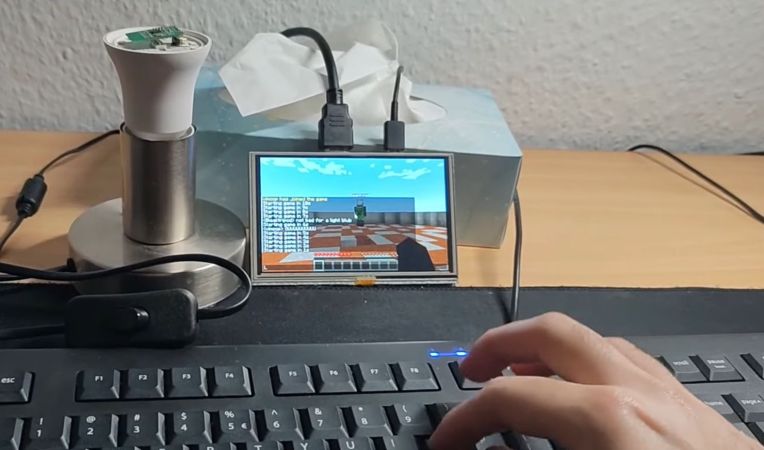
WiFi-enabled ‘smart’ light bulbs are everywhere these days, and each one of them has a microcontroller inside that’s capable enough to run all sorts of interesting software. For example, [vimpo] decided to get one running a minimal Minecraft server.

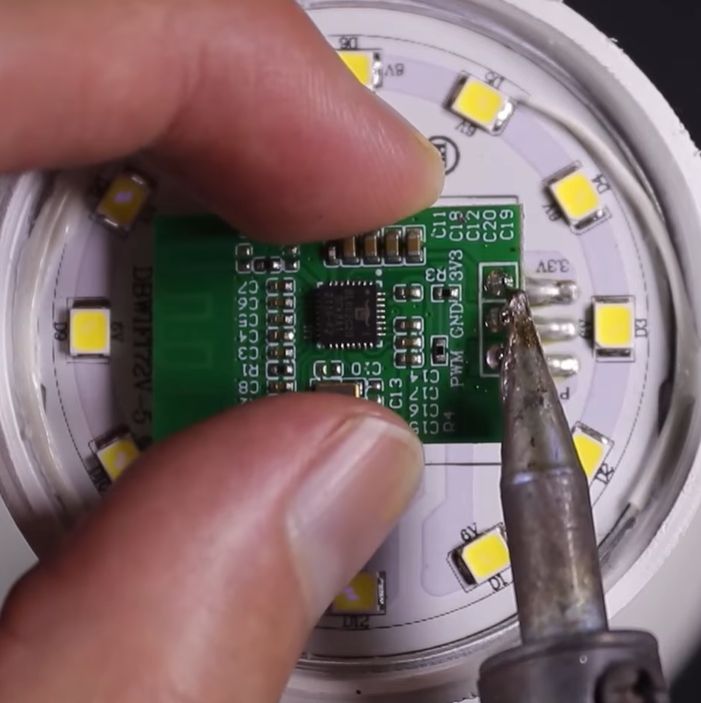
Inside the target bulb is a BL602 MCU by Bouffalo Lab, that features not only a radio supporting 2.4 GHz WiFi and BLE 5, but also a single-core RISC-V CPU that runs at 192 MHz and is equipped with 276 kB of RAM and 128 kB flash.
This was plenty of space for the minimalist Minecraft server [vimpo] wrote several years ago. The project says it was designed for “machines with limited resources”, but you’ve still got to wonder if they ever thought it would end up running on a literal lightbulb at some point.
It should be noted, of course, that this is not the full Minecraft server, and it should only be used for smaller games like the demonstrated TNT run mini game.
Perhaps the next challenge will be to combine a large set of these light bulbs into a distributed computing cluster and run a full-fat Minecraft server? It seems like a waste to leave the BL602s and Espressif MCUs that are in these IoT devices condemned to a life of merely turning the lights on or off when we could have them do so much more.
Continue reading “Running A Minecraft Server On A WiFi Light Bulb”
Wayland’s Never-Ending Opposition To Multi-Window Positioning
There are many applications out there that use more than one window, with every modern-day platform and GUI toolkit offering the means for said application to position each of its windows exactly where it wants, and to restore these exactly in the configuration and location where the user saved it for that particular session. All toolkits but one, that is, for the Wayland project keeps shooting down proposals. Most recently merge request #264 for the ext-zones protocol by [Matthias Klumpp] as it descended into a 600+ comments spree.
This follows on an attempt two years prior with MR#247, which was rejected despite laying out sound reasons why the session protocol of Wayland does not cover many situations. In the breakdown video of the new ext-zones protocol discussion by [Brodie Robertson] the sheer absurdity of this whole situation becomes apparent, especially since KDE and others are already working around the Wayland project with their own extensions such as via KWin, which is being used commercially in e.g. the automotive world.
In a January 2024 blog post [Matthias] lays out many of his reasonings and views regarding the topic, with a focus on Linux desktop application usage from a scientific application perspective. When porting a Windows-, X11- or MacOS application to Wayland runs into compatibility issues that may necessitate a complete rewrite or dropping of features, the developer is more likely to stick to X11, to not port to Linux at all, or to use what eventually will amount to Wayland forks that patch around these missing API features.
Meanwhile X11 is definitely getting very long in the tooth, yet without it being a clean drop-in replacement it leaves many developers and end-users less than impressed. Perhaps the Wayland project should focus more on the needs of developers and end-users, and less about what it deems to be the One True Way?
Continue reading “Wayland’s Never-Ending Opposition To Multi-Window Positioning”
Moving From Windows To FreeBSD As The Linux Chaos Alternative
Back in the innocent days of Windows 98 SE, I nearly switched to Linux on account of how satisfied I was with my Windows experience. This started with the Year of the Linux Desktop in 1999 that started with me purchasing a boxed copy of SuSE Linux and ended with me switching to Windows 2000. After this I continued tinkering with non-Windows OSes including QNX, BeOS, various BSDs, as well as Linux distributions that promised a ‘Windows-like’ desktop experience, such as Lindows.
Now that Windows 2000’s proud legacy has seen itself reduced to a rusting wreck resting on cinderblocks on Microsoft’s dying front lawn, the quiet discomfort that many Windows users have felt since Windows 7 was forcefully End-Of-Life-d has only increased. With it comes the uncomfortable notion that Windows as a viable desktop OS may be nearing its demise. Yet where to from here?
Although the recommendations from the peanut gallery seem to coalesce around Linux or Apple’s MacOS (formerly OS X), there are a few dissenting voices extolling the virtues of FreeBSD over both. There are definitely compelling reasons to pick FreeBSD over Linux, in addition to it being effectively MacOS’s cousin. Best of all is not having to deal with the Chaos Vortex that spawns whenever you dare to utter the question of ‘which Linux distro?’. Within the world of FreeBSD there is just FreeBSD, which makes for a remarkably coherent experience.
Continue reading “Moving From Windows To FreeBSD As The Linux Chaos Alternative”
Testing Whether Fast Charging Kills Smartphone Batteries, And Other Myths

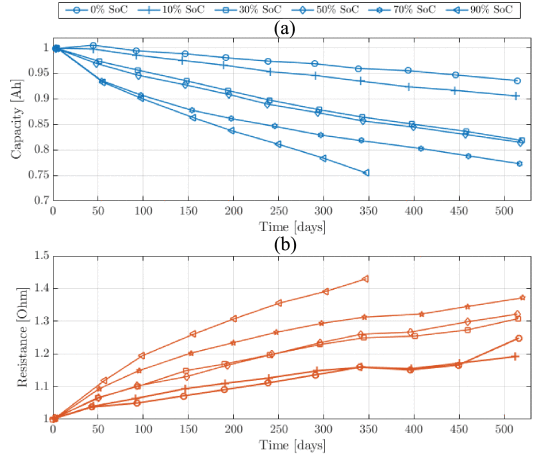
With batteries being such an integral part of smartphones, it’s little wonder that extending the period between charging and battery replacement has led to many theories and outright myths about what may affect the lifespan of these lithium-ion batteries. To bust some of them, [HTX Studio] over on YouTube has spent the past two years torturing both themselves and a myriad of both iOS and Android phones to tease out some real-life data.
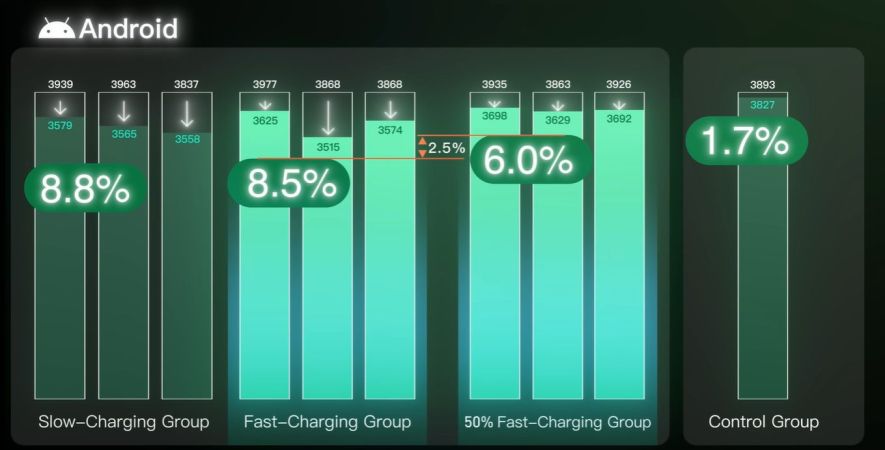
After a few false starts with smaller experiments, they settled on an experimental setup involving 40 phones to investigate two claims: first, whether fast charging is worse than slow charging, and second, whether limiting charging to 80% of a battery’s capacity will increase its lifespan. This latter group effectively uses only 50% of the capacity, by discharging down to 30% before recharging. A single control phone was left alone without forced charge-discharge cycles.
Continue reading “Testing Whether Fast Charging Kills Smartphone Batteries, And Other Myths”
Recreating The Destroyed Case Of LGR’s Rare 1980s Laptop
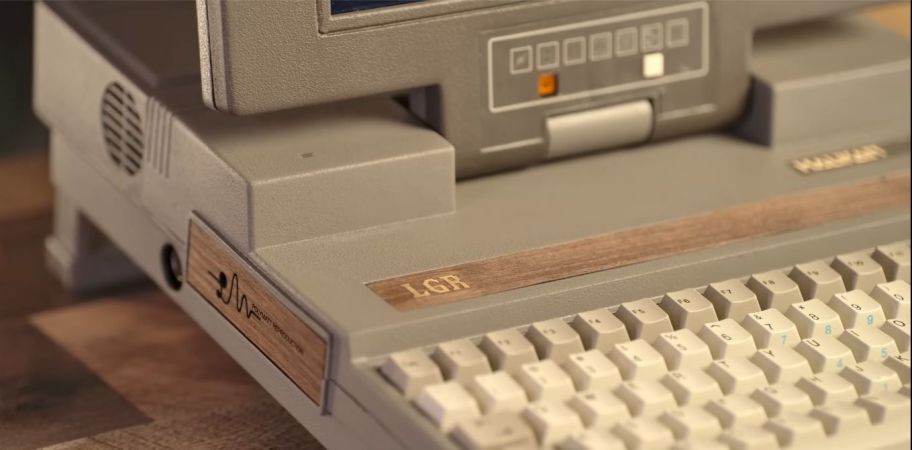
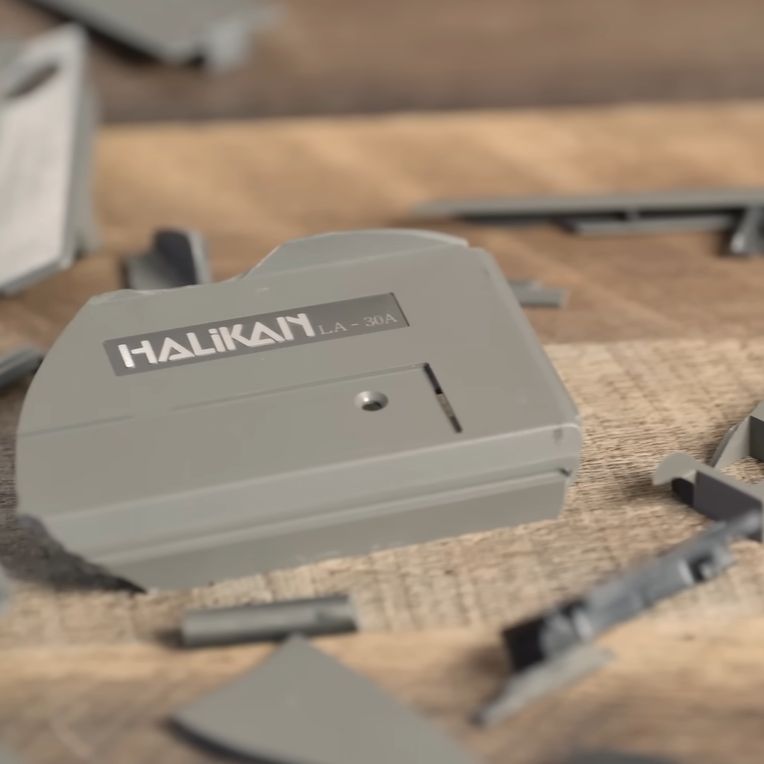
A while back [Clint Basinger] of Lazy Game Reviews fame purchased a rare 1980s Halikan laptop. When he received the parcel, at first glance, everything seemed in order. Upon opening the original laptop bag, however, it was found that the combination of the heavy power supply in a side pocket and the brittle plastic of the laptop’s case had turned the latter into sad fragments of regret. At the time [Clint] wasn’t sure what he’d do, but fortunately [polymatt] stepped in with the joyful news: we can rebuild it; we have the technology.
Obviously, the sad plastic fragments of the original case weren’t going together again in any meaningful way, nor would this have been helpful, but the pieces, along with photos of an intact laptop, helped with the modelling of a digital model of the case. One model and one 3D printer is all you need. For this case, the print used ABS, with gaps between the segmented prints filled with an ABS slurry, as the case was too large to be printed without jumping through some hoops.
Continue reading “Recreating The Destroyed Case Of LGR’s Rare 1980s Laptop”