Fixing The Control Scheme For An Aftermarket Headlight Assembly

The headlight enclosures on [Bill Porter’s] 2004 Passat had yellowed with age and were not outputting the kind of light they should. He decided to replace them with some aftermarket modules that also incorporated LED strips. When they arrived he was surprised at how easy there were to drop into place. But when testing he was certainly not satisfied with how they worked. The day-driving mode used the HID bulbs at full power, where the factory assembly had dimmed them during the day. He set out to alter the electronics to work as he prefers.

Always the mad scientist, [Bill] started off by making a truth table showing how the lights reacted to the various states of the ignition and headlight switches. What he came up with is an AND gate built from a relay and diode. It allows him to have the LEDs on as the running lights (without the HIDs on at all), and leaves the rest of the functionality unaffected.
Robot Takes Voice Commands Via Open Source CSR

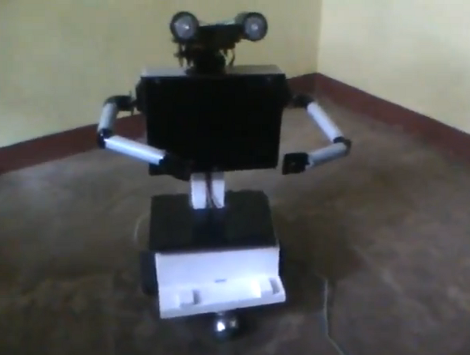
This is Chippu, a robot that [Achu] has been working on for some time. His most recent addition was to give the robot the ability to respond to voice commands. This is accomplished using a variation of the open source Continuous Speech Recognition package called Julius.

The package depends on two main parts, a set of acoustic models which let it match incoming sounds and a reference library of grammar which is built from those sounds. [Achu] published another post which goes into detail about using Julius on a Linux box. It seems like this is possible with less robust hardware (ie: on an embedded system) if you narrow down the number of acoustic and grammer models that need to be matched.

For now, Chippu is getting commands from a computer that runs the CSR. But this was only used as a proof-of-concept and [Achu] plans to transition the bot over to smaller hardware like the BeagleBoard.

Check out the demonstration of Chippu responding to voice commands in the video after the break.

Continue reading “Robot Takes Voice Commands Via Open Source CSR”

DHT11 Humidity And Temperature Sensor Package

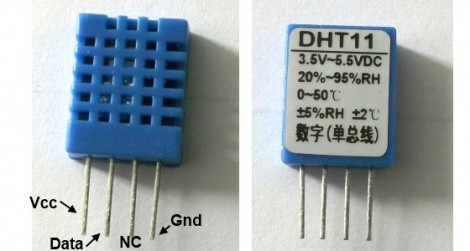
Temperature and humidity measurements are a nice addition to many hobby projects. But [Rajendra Bhatt] makes the point that many of these sensors have a price tag that is well above what most hobbiests are willing to spend. He decided to take an in-depth look at the DHT11 sensor; which you can get your hands on for under $3 if you know where to look.

The four-pin device uses a 1-wire protocol. [Rajendra] discusses the ins and outs of the communications, demonstrating the part using a PIC 16F628. It’s a snap to connect to your project, requiring VCC, GND, and a pull-up resistor on the single data line. We’ve already seen it used on at least one project, and hope to see more of this little guy in your own hacks.

Now we found this part listed on eBay for less than $3 (buy it now price including shipping… how can they do that?). But Octopart didn’t come up with any options. If you know how to get this through traditional parts suppliers let us know in the comments.

Adjustable Rapid Fire For Xbox 360 Controller

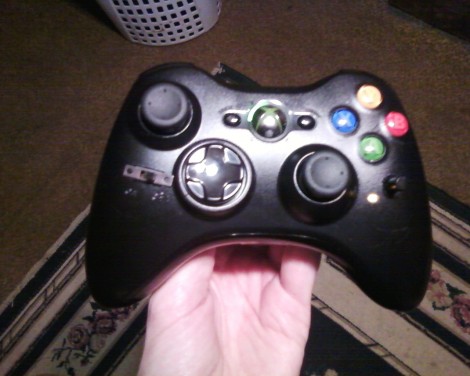
[Shawn] wrote in to share his post outlining the addition of rapid fire to an Xbox 360 controller. He’s going all out with this mod by including a pretty beefy microcontroller. But you get a lot of functionality for that. You can just make out the trimpot below and to the right of the green A button. This tweaks the speed at which your right trigger repeats. Next to the trimmer is an amber LED which indicates whether the hack is enabled or not. The switch to the left of the D-pad simply patches the add-on circuit into the right trigger hardware.

Some might raise an eyebrow when we call the ATtiny85 used here beefy. But considering the job at hand, we’re sure a lot of the lower end of the ATtiny family will work just as well. [Shawn] soldered everything up on a piece of protoboard and removed one of the rumble motors to make room inside the controller. The video after the break is pretty shaky and out of focus, but you can clearly hear him explain how the hack works.

If you’re looking for a rapid fire mod that doesn’t require programming a chip, perhaps you could just repurpose the PWM from the LED. Continue reading “Adjustable Rapid Fire For Xbox 360 Controller”

Building An EEPROM Programmer

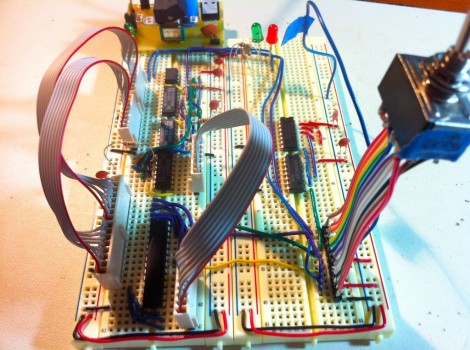
Behold this ATtiny85 based EEPROM programmer. It seems like a roundabout way of doing things, but [Quinn Dunki] wanted to build to her specifications using tools she had on hand. What she came up with is an ATtinyISP USB programmer, pushing data to an ATtiny85, which then programs an EEPROM chip with said data.

The hardware is the next module for her Veronica 6502 computer build. When we last saw that project [Quinn] was planning to add persistent storage for the operating firmware. This will be in the form of an EEPROM programmed with this device. Using ISP and an ATtiny as a go-between means that she should have no problems reflashing the OS without removing the chip. But it all depends on how she designs the interface.

For example, she blew a whole bunch of time troubleshooting the device because garbage data was being written to the chip. In the end, having her manual bus programmer hooked up during the flashing operation was the culprit. Lesson learned, it’s onward and upward with the build.

We’ve been featuring [Quinn’s] projects a lot lately. That’s in part because they’re really interesting, but also because she does such a great job of documenting her experience.

Microcontroller Based Audio Volume Level Compressor

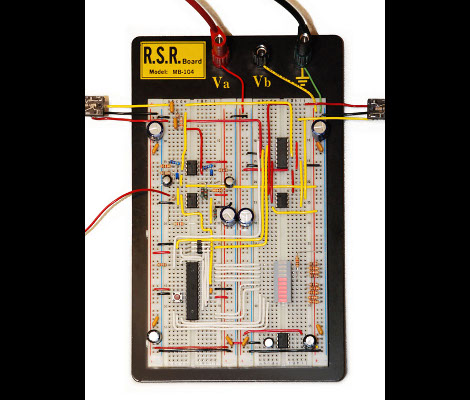
In an effort listen to his music on shuffle without the need to touch the volume knob [Mike] build his own automatic volume leveling hardware. He knows what you’re thinking right now: there’s software to do that for you. But building the feature in hardware is a great stepping off point for a project.

He started the prototype using LabVIEW along with a Mobile Studio development board and a Bus Pirate. This project will be a mix of digital and analog components and it’s a bit easier starting off the exploration with these tools rather than jumping right into the AVR code.

The circuit will sample the incoming audio, modify it accordingly, and output the result. The output side is where the Bus Pirate really shines. He’s using some MCP42010 digital potentiometer chips to make the necessary changes to the levels. They communicate via SPI and it’s nice to have the Bus Pirate’s terminal to issue commands without the need to reflash a microcontroller.

[Mike] made a video showing an audio waveform with and without the hardware leveling. Sound quality is still great, and each clip is played at a reasonably comfortable listening level. We’ve embedded that demonstration after the break.

Continue reading “Microcontroller Based Audio Volume Level Compressor”

Matchbox Launcher Reacts To Emergency Band Radio Dispatcher

[Jeff] and his wife put together a firefighter themed birthday celebration for their son. As he’s not entirely handy in the kitchen, [Jeff] decided not to lend a hand with the baking or cake decorating. But he didn’t forego the opportunity to combine a couple of different projects to make a Matchbox car launcher that responds to emergency band radio.

Since he’s an amateur radio enthusiast he already had a scanner to monitor the air waves. Apparently there’s a band just for relaying dispatch messages to emergency vehicles. He set the radio equipment to only monitor that channel. An Arduino was added to the mix, taking measurements of the voltage level on the scanner’s audio output. When it’s driven high enough the Arduino trips the toy car launcher.

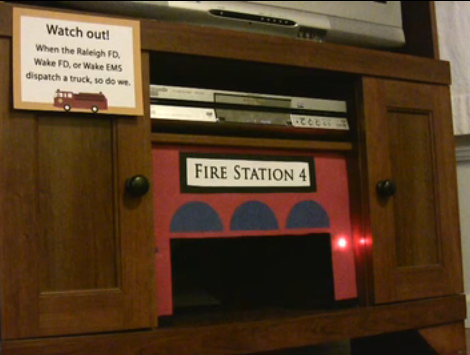
The car launcher itself is a pretty nifty setup. There are five chutes at the top of a ramp that each fit a car. A sliding gate holds them in place, but can be removed one slot at a time by a geared motor. The addition of a poster board facade and two flashing red LEDs makes the setup look right at home with the other party decorations.

See a call come into the station in the clip after the break. We don’t have a category called “fun parenting” so “toy hacks” will have to do.

Continue reading “Matchbox Launcher Reacts To Emergency Band Radio Dispatcher”