You Can Keep Your Mints Safe; We Have The Technology

After having his mints disappear for quite some time [Quinn Dunki] came up with an idea to get back a the fresh-breath thieves. A bit of circuit design, parts scavenging, and free-form construction led to the creation of his mint-tin burglar system.

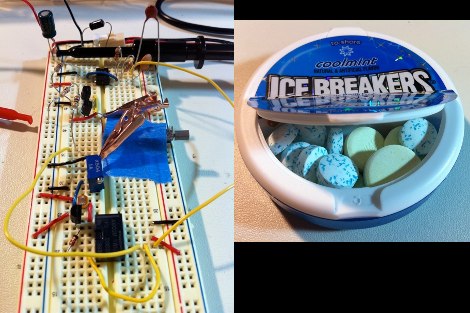
Here’s how it works. Flip the on/off switch in the base of the mint tin before you head off for lunch or a coffee break. When the foul-mouthed pilferer hits up your stash they’ll get what they were looking for at first. But by opening the tin they tripped a timer circuit that will send the mints vibrating across the table soon after having been opened.

The breadboard above holds the prototype timer circuit, built around or friend the 555 timer. The vibration motor from a cellphone is a perfect choice for this hack as it’s very small and is just waiting to run from a low-voltage source. We especially liked the use of the cells from inside a 9V battery as a power source and the compact assembly that manages to fit inside the mint container.

Disco Isn’t Dead: Diy Dance Floor Spotted At Student Parties

Your party is lame if it doesn’t include interactive blinking lights on the dance floor. [Mario] and [Lukas] didn’t want to have lame parties, so they enlisted some fellow students to build an interactive dance floor (translated). The finished party-piece is 4 meters by 2.5 meters (that’s about 13’x8′ for us yanks) and includes 160 lighted squares. But it’s the electronics that really make this a heavy project.

Milled into the underside of the pressboard base are a series of pockets and channels to hold various components. If you look hard enough, you’re going to find eight AVR microcontrollers which control the LEDs, 8 CPLDs to manage the weight sensors which make the floor interactive, and an FPGA and embedded computer to tie everything together. It’s movable, a hit at parties, and so far it seems to hold up to the occasional spilled beverage.

You can’t share a project like this without some video. See it after the break.

Continue reading “Disco Isn’t Dead: Diy Dance Floor Spotted At Student Parties”

Devboard Deal: TI Experimenter Board For $15 (50% Off)

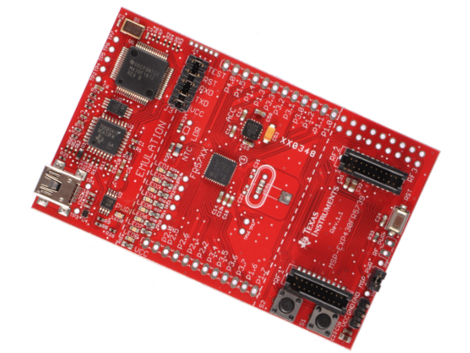
Cheap things come to those who wait. If you’ve had your eye on a TI Experimenters Board (MSP-EXP430FR5739) now’s the time to pull the trigger. You can use the coupon code MSP430_FRAM to get 50% off. This pulls the total price down to $14.50 plus shipping with several readers reporting free shipping.

The board features an upgraded MSP430. Instead of using flash memory, it’s got  ferroelectric random access memory (FRAM) which boots the power savings of these aready lean-mean chips.

We’ve posted a few deals from Texas Instruments before, like the announcement of the Launchpad which was just $4.30, as well as a coupon-deal gone awry with the evalBot. There were huge threads in those posts reporting back how long shipping took, as well as how well the codes worked. So feel free to share your thoughts on this deal by leaving a polite comment.

Of course if you get one, we want to see what you do with it. Don’t forget to write up your projects and send in a tip.

Slot Car Lap Timer/counter

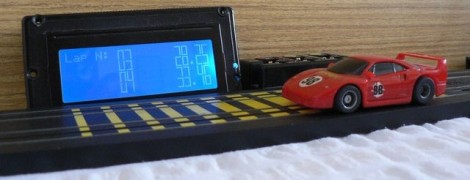
For his first project using the TI Launchpad [VOJT4] built a lap timer and counter for slot cars. For us it’s always hardest to come up with the idea of what to build and we think he found a great one here.

Each time a car passes the finish line of the track it trips a reed switch that was hot glued to the underside of the track segment. Both reed switches have a capacitor to smooth out the inputs (is this acting as a hardware debounce?). The time and lap number are then pushed to a graphic LCD by the MSP430G2553.

You must be logged into the forum where [VOJT4] posted the project in order to see the images. Because of this, we’ve embedded them (including the schematic) after the break along with a demo video. But do take a look at his project thread to hear his thoughts and peruse the code he wrote.

Continue reading “Slot Car Lap Timer/counter”

Keypad Uses A PIC’s Built In Capacitance Functionality

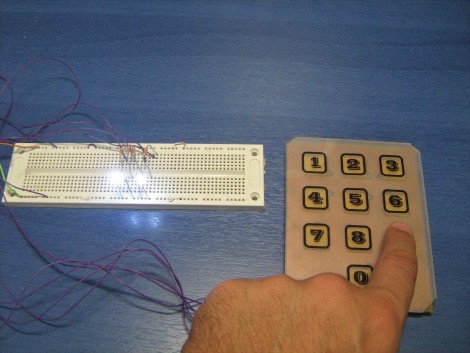
[Giorgos Lazaridis’] most recent project was to build a capacitive touch pad. Since he’s using a PIC 16F1937 it will be relatively easy. That’s because it has a 16 channel capacitance sensing module built right in. But there are still some design considerations that make the development a bit touching.

This isn’t the first time he’s worked with capacitance sensing. Through past experience he has found that it is very important to position the microcontroller as close to the button pads as possible. Because of this, the chip is soldered on the back of the PCB used for the keypad itself. Because he’s hand soldering vias, he also used some foam tape to raise the button pads just a bit. This way they will be flush with the acrylic overlay, which cannot sit flat on the board due the via solder joints.

Check out the video after the break to hear [Giorgos] walk us through the project.

Continue reading “Keypad Uses A PIC’s Built In Capacitance Functionality”

Making Your Own Lab Instruments

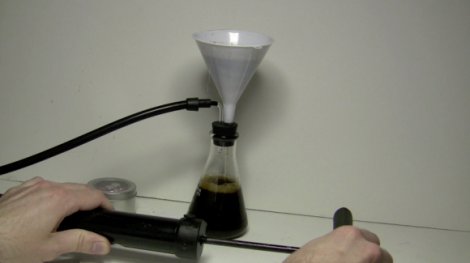
[Andrey Mikhalchuk] is trying to gather a base set of lab instruments. Specifically, he’s looking for hardware that will let him quickly filter solids out of a liquid. He first started by adding a cotton disk to a plastic funnel. It does the job, but when left to gravity it’s quite slow. He needed a way to speed up the flow even when the filter is heavily clogged with particulates.

There’s already a solution to this problem. It’s a glass container called a Büchner Flask. These feature a glass tube coming out from the neck. By hooking a vacuum pump up to this tube, reduced pressure inside the flask will pull the liquid through the filter in no time. Rather than purchase the specialty item, [Andrey] altered a rubber stopper to accept both the funnel, and a glass tube. This is a cheaper version because it uses a common conical flask but it works just as well. To create the vacuum, an altered bike pump was used. Check out videos of both hacks after the break. Continue reading “Making Your Own Lab Instruments”

360 Degree Photography Uses Very Easy Post-processing

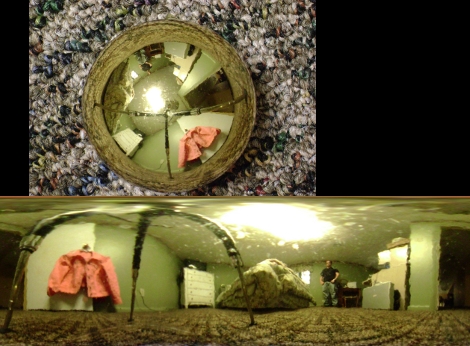
[Pixel_Outlaw] has been working on a method to capture 360 images with his camera. He’s using a shiny Christmas ball ornament to reflect the entire room into the lens of the camera. In the unwrapped image you can make out the three legs of his tripod. In that snapshot he laid the ornament on the floor and pointed the camera straight down from above.

What catches our attention is the post processing he used to unwrap the image. He loaded up The Gimp, an open source image manipulation program, and used just three steps to unwrap the image. First he cropped the picture so that it was square and the spherical ornament was perfectly centered. Then he ran the polar coordinates filter. Finally he scaled the image, setting the width to be Pi times the height. Works pretty darned well for something that doesn’t take much fiddling.

The ornament wasn’t perfectly smooth (or maybe it was a bit dirty) but you can get a much better starting image if you use a bulb with a silver reflector like we saw in this older hack.