2-axis Motion Timelapse Photography

[Milapse] picked up a motorized telescope base a few years ago. He’s using it to add motion to time-lapse photography. The base provides two-axis rotation controlled with a handheld keypad. Custom firmware and a bit of software allow for computer control. [Milapse] is pretty well-known in the time-lapse photography circles of the Inter-web. He’s posted a ten minute video explaining his setup and programming work for the hardware.

His use of a quality camera produces some nice video.However cost at $200 for the base, if you just want to play around with the concept you might want to stick to a webcam and LEGO setup.

[Thanks Jack]
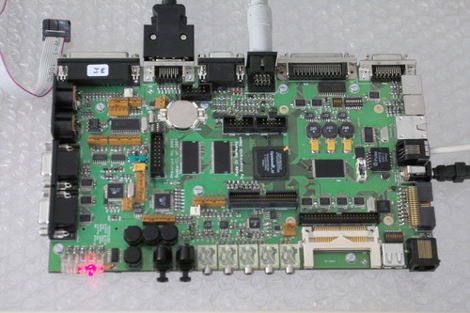
Suska Open Source Atari ST

Got a special place in your heart for Atari computing? Now you can quench that need using new hardware. The Suska project has achieved complete hardware emulation of the Atari ST using an FPGA. The project’s progress tracker shows implementation of the major chips at 100%. They are running EmuTOS, an Atari emulator, as the operating system because running the original would violate copyright. The chip used is an Altera Cyclone III. You could load up the code on your own hardware but judging from the number of connections needed it might be less of a headache to buy a board from these guys.

[Thanks Erik]

Version Control For Eagle

[Jeff] set up version control for Eagle libraries and projects. He mentions that Eagle has become the standard for open source hardware projects and he’s absolutely right. We use it for our projects, and we’ve grown to expect that the posts we feature have Eagle files available in most cases.

But Eagle falls short in its library management. There is some amazing work from SparkFun to support a usable parts library, but who hasn’t added parts themselves? [Jeff] setup libraries using github so that changes and additions to the libraries can benefit all and cut the amount of time spent making custom footprints for new components and packages.

Fun Theory Grant Is 25k For A Fun Project

First the bad news, it’s too late for you to apply for this grant. The good news is that you can vote for the projects you think deserve money to do some good.

The Fun Theory is the group that produced the musical subway stairs and the bottle bank arcade. Now they’ve put out the call to arms on the Internet for submissions that make life more fun and our communities better places. All of the submissions for the fun-theory-award are in and available for your perusal. Some of the most popular submissions include a vending machine that uses recycled cans to play a slot-machine game, a hand sanitizer that makes funny sounds when used, and putting a giant crossword puzzle at bus stops to encourage ridership and make waiting more fun.

[Thanks Matthew][see Matthew’s entry in the contest]

[cash photo credit]

Reverse Engineering The Telly Terminator

[Oliver] received the Telly Terminator as a gift and decided to take a closer look at it. This key fob has two buttons; one shines an LED like a flashlight and the other turns off televisions. Sound familiar? Yeah, it made [Oliver] think of the TV-B-Gone as well.

He cracked open the case to find just a few components. The brain behind the IR signals is a Helios H5A02HP. Only a few pins are used for outputs so he connected a logic analyzer and recorded the signals. His writeup covers the process quite well. He takes a known IR transmitter protocol and compares it to the capture from the logic analyzer. It turns out that the fob generates 46 different signals and with further analysis concludes that there’s a chance the code used here is from an older version of the TV-B-Gone source.

Pulse Oximeter

[youtube=http://www.youtube.com/watch?v=GdN5IRVJOXI]

[Mike] is building his own Pulse Oximeter which uses light to measure the oxygen saturation in blood. One collateral benefit of this measurement is that pulse rate can be calculated from the same data. The parts used for the detector include a red LED, infrared LED, and a TSL230R light intensity measuring chip. As explained in the video above, each LED is shined through the tip of your finger and onto the light sensor. The IR LED is used as a baseline and compared to the red LED, which has some of its intensity absorbed by the red blood in your finger. This is a pretty approachable biometric concept so you may want to start here before moving on to more involved biometric interfaces.

[Thanks Russ]

Update: More Pink Wireless-terminal Hacking

[Dave] poked around inside of an IM-ME wireless toy and compiled his findings. He read about the device when we covered it in November and picked up a couple to see what he could do. He patched into the debug port in the CC1110 processor and enabled it by performing a chip erase. He then began mapping out how the processor connects and communicates with the qwerty keyboard, the wireless radio, and the LCD screen. The board is full of test points which make the hardware easy to access. [Dave’s] experiments show that this hackable device is full of potential so let’s see what you can do!