Hackaday Podcast Episode 375: Rebuilding Tech On Our Terms And The Hero Nerd

In this episode, Hackaday editors Elliot Williams and Tom Nardi start off by taking a trip down the Raspberry Pi memory lane and then tackle a fresh pile of listener mail. The discussion moves on to hacking bike counter, homebrew upgrades to the Nintendo Entertainment System, and building RAM from whats in the parts bin. You’ll hear about the latest drop-in upgrade for a classic Casio watch, hosting light bulbs that host subversive literature, and loading Wii U games from a weird disk drive from the 1980s. They’ll wrap things up with a dive into the evolving portrayals of brilliant rebels in media, and all the things you can do with a cheap router.

Check out the links if you want to follow along, and as always, tell us what you think about this episode in the comments!

Direct download in DRM-free MP3.

Continue reading “Hackaday Podcast Episode 375: Rebuilding Tech On Our Terms And The Hero Nerd”

A Custom PCB For The Casio G-Shock

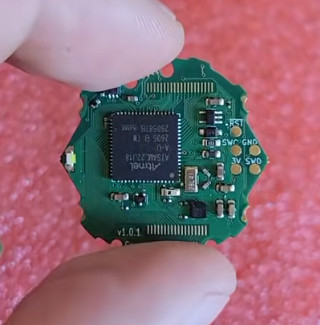
With the PCB fabrication services available to the modern hobbyist, it’s become increasingly common to see replacement boards designed for all sorts of devices. Even so, it’s sometimes still a little difficult to believe that we’re at the point where hardware hackers are now producing advanced replacement PCBs for commercial wristwatches such as this drop-in upgrade for the iconic Casio G-Shock by [David Volovskiy].

Honestly, we’d have been impressed if the thing could just tell the time. But the replacement board combined with the open source firmware brings new capabilities that far exceed anything the G-Shock was capable of originally. The upgraded watch now offers several applications, such as a pedometer and a number of games including simplified versions of Blackjack and Wordle. The watch can tell you the phase of the Moon, calculate sunrise and sunset, and display values pulled from the internal thermometer.

Even if you don’t have a G-Shock in need of a new PCB, [David] has put together a web-based emulator that lets you play around with the firmware. The online tool that lets you visualize how the watch’s LCD is mapped is also very slick. For those interested in getting a board of their own, you can join the project’s Discord server and get your name on the list for an upcoming production run.

If some of this sounds familiar, it’s because [David] based his project on [Joey Castillo]’s Sensor Watch, which is a replacement PCB for the Casio F-91W. With these two projects available for others to build from, one wonders how many other Casio watches might get their own upgraded hardware in the future.

Status Display Keeps Eye On Your Prusa Fleet

Whether you’ve been dragging an old MK2 or MK3 kicking and screaming into the present through the available upgrade paths, or recently picked up a CORE One, pretty much any of the 3D printers still being actively supported by Prusa are able to connect to the network for the purposes of remote monitoring and control. Although their printers can work entirely offline, Prusa offers a smartphone application as well as web interface that makes it easy to keep tabs on all the hot plastic action.

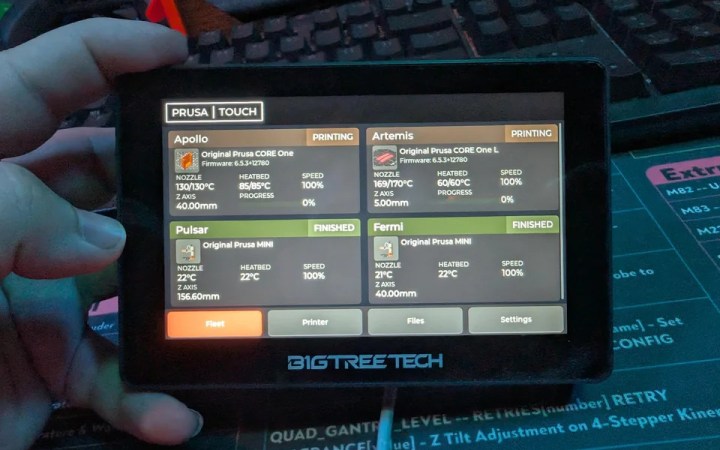
If you’ve got a few Prusa printers on the net and would like a dedicated interface for controlling them, check out this custom firmware for the BigTreeTech K-Touch and Panda Touch devices. These touch screen gadgets were originally intended for controlling printers running Klipper, but thanks to [Nomads Galaxy], they can now talk to Prusa printers either directly over the local network or through the Prusa Connect cloud API with a user interface that mimics the aesthetics of the official offerings.

Continue reading “Status Display Keeps Eye On Your Prusa Fleet”

Hackaday Links Column Banner

Hackaday Links: June 21, 2026

Today marks the summer solstice, the longest day of the year and the start of astronomical summer in the Northern Hemisphere. This doesn’t really have much to do with hacking hardware or building gadgets other than the fact that from this point on you’ll have progressively less daylight hours to do it in each day. Of course, if you do your best work in the middle of the night this won’t impact things much.

If you’re as likely to find a controller in your hand as a soldering iron in the evenings, you might be interested in a recent filing against Sony. Lawyers representing a group of four gamers allege that the entertainment giant is violating a California law that says digital storefronts need to make it clear that buyers don’t technically own the games in question but are merely licensing them — a license which, as we’ve seen in the past, can be revoked or modified at any time with no restitution made to the purchaser.

Now while we agree conceptually that selling gamers a license rather than an actual copy of the game is clearly a one-sided deal, we’re still not sure this case has a lot of merit. As far as we can tell, Sony does make it clear in the fine print that you’re not really going to own anything once they take your money. Or, at the very least, they make it equally as clear as any other company that’s selling digital downloads these days. Should the court actually find that said fine print is a little too fine, it could conceivably have ramifications throughout the entertainment industry. This is certainly a case to keep an eye on.

Continue reading “Hackaday Links: June 21, 2026”

What Happens If Russia Shuts The Door On Their Leaky ISS Module?

There was a particularly tense moment aboard the International Space Station earlier this month, with NASA directing their astronauts to secure themselves in the Dragon capsule and prepare for a potential return to Earth while their Russian counterparts engaged in what we now know to have been some impromptu demolition work on their side of the orbiting complex.

Despite objections from their American partners, Roscosmos had given their cosmonauts the go-ahead to drill and cut into the walls of the Zvezda module — one of the core components of the ISS which has been in orbit since 2000 — to try and identify and ultimately repair persistent leaks that have been venting the Station’s atmosphere out into space for several years. We may never know the exact nature of the behind-the-scenes communication that went on between the two space agencies, but in the end the Russians abandoned their plan and NASA’s personnel were told to resume their normal duties.

But where do things go from here? Although it’s true the International Space Station is entering its final years, the mission isn’t over yet, and that means the two countries need to continue to work together if they hope to get any science done in the time they have left.

At this point there hasn’t been any official word from either agency, but sources that wish to remain anonymous have been dropping hints, and that’s got the rumors swirling. With the understanding that anything is still possible, at this point it looks like Russia is going to abandon any further attempts to repair the leak and instead seal off the crippled compartment of the Zvezda module. This won’t solve all the problems, and in fact will create some new ones. But if that’s what it will take to keep the peace with NASA until Station operations wind down, it’s apparently a bargain they’re willing to make.

Continue reading “What Happens If Russia Shuts The Door On Their Leaky ISS Module?”

Ask Hackaday: What Ever Happened To The Hero Nerd?

Knowing absolutely nothing about you other than the fact that you’re currently reading Hackaday, I can predict with a high degree of certainty that we’re both fond of at least a few of the same movies. That’s not to say they’re necessarily our favorite works of art. Indeed, in some cases they may even be objectively bad films. But the memory of them has stuck with us — and by extension nearly everyone else in the hacker and maker community — for decades.

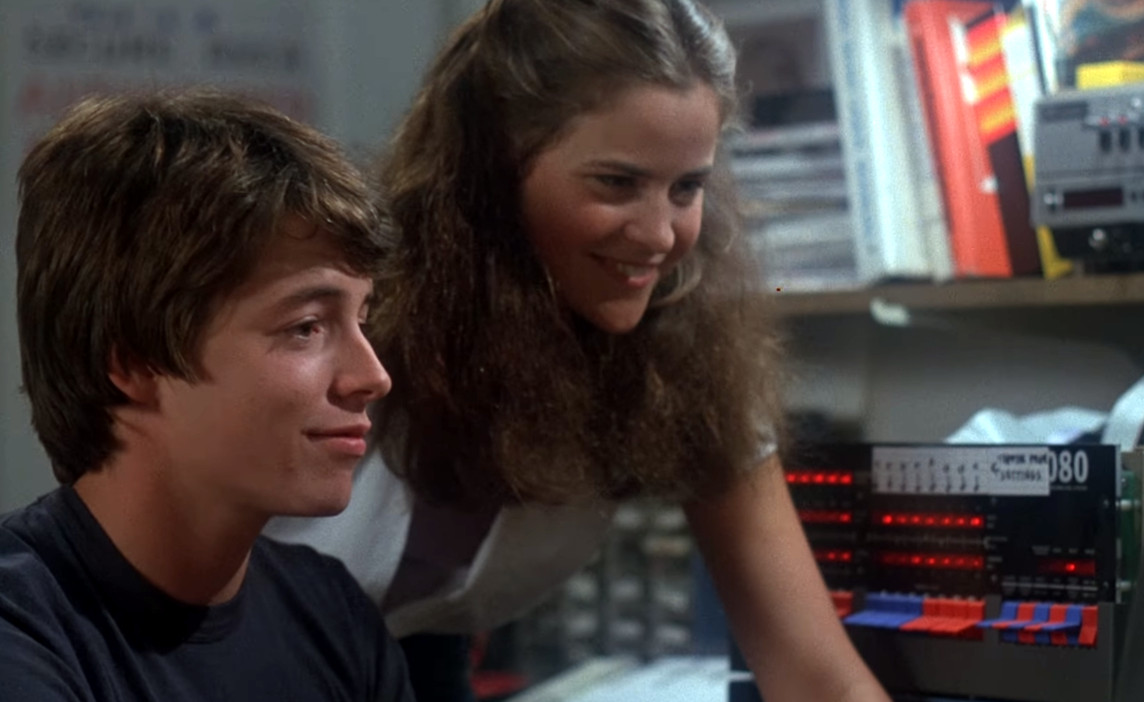
Even if you don’t remember all the little details, you’ll never forget the names: movies like WarGames, Ghostbusters, Back to the Future, and Short Circuit. Stories that showed smart people using their intellect and a bit of cobbled together hardware to triumph over the bad guys. The tech wasn’t always believable, sometimes it was downright farcical. But they made it seem real, and by the end of the story when they won the day using brains and a soldering iron rather than fists or a gun, the minutia of how it all worked wasn’t really that important anyway.

It’s not a stretch to say that films such as these helped put many of us on a path towards science and technology. For those with an interest in more cerebral pursuits, seeing a scientist or an engineer save the day was hugely influential. How many engineers got their start watching Scotty frantically eke just a bit more power out of the Enterprise?

But as we recently discussed some of these classic movies behind the scenes here at Hackaday, it struck us that all of the best examples we could come up with were now 20, 30, or even 40 years old. That’s not to say there aren’t a few contemporary standouts, but they mostly seem to be biopics or other historical dramatizations which don’t quite scratch the same itch. Even so, none of them appear to have had the cultural impact necessary to stand the test of time in the same way their predecessors have.

So where have all of Hollywood’s heroic nerds gone, and what does it mean for future generations if these niche role models are no longer represented?

Continue reading “Ask Hackaday: What Ever Happened To The Hero Nerd?”

Hackaday Links Column Banner

Hackaday Links: June 14, 2026

Times are tough out there, and many are starting to feel the pressure at the grocery store checkout line or the gas pump. But whenever you start to worry about affording life’s necessities, take comfort in the knowledge that somebody is so flush with cash that on Friday they decided to treat themselves and spend $3 million for a sealed copy of Super Mario Bros for the Nintendo Entertainment System.

Although we’re not going to say it necessarily justifies the insane price — a new record for the most ever paid for a video game, incidentally — Heritage Auctions does note in their press release that this is an exceptionally rare version of what’s admittedly one of the most iconic pieces of software ever produced. This is only one of three copies of this particular variant known to exist, which Nintendo apparently distributed to test markets in the United States ahead of the game’s official 1985 release.

In slightly more modern gaming news, Asha Sharma, the new head of Microsoft’s Xbox division, has been making some big swings to try and get Microsoft’s gaming division back on track after years of declining sales. As part of that effort, she recently penned an article detailing some of the challenges the company is facing, which includes some interesting hardware details.

According to the blog post, she claims that in February, the cost of memory and storage components for the Xbox console had doubled compared to the previous year. But those numbers have jumped again, and by the time the holidays roll around, she expects they’ll be paying five times what they did in 2024. That’s bad news for anyone looking to put an Xbox under the tree come Christmas, but even worse news as the company works on the console’s successor. Considering that today’s hardware from Sony and Microsoft can already set you back $700 USD depending on which version you get, it seems like we’re approaching a point where gaming consoles could price themselves out of the market.

Continue reading “Hackaday Links: June 14, 2026”