Glassblowing For The Lab

There was a time when ordering some glassware from a distributor meant making a sizable minimum order, sending a check in the mail and waiting weeks for a box full of — hopefully intact — glassware to arrive. In those days, blowing your own glassware from glass tubes was fairly common and [Wheeler Scientific] has been doing a series on just how to do that. Even if you aren’t interested in building a chemistry lab, you might find the latest episode on making a gas discharge tube worth a watch. There are several videos and you can see a few of them below.

Of course, blowing glass is literally playing with fire, so be careful. Most important rule? Don’t inhale. Then again, for a lot of things, blowing glass doesn’t involve you actually blowing, but it is more like bending and shaping and — technically — what he shows is lampwork, not actual glassblowing, but that’s a technicality.
Continue reading “Glassblowing For The Lab” →

Automated Chess Board Plays You

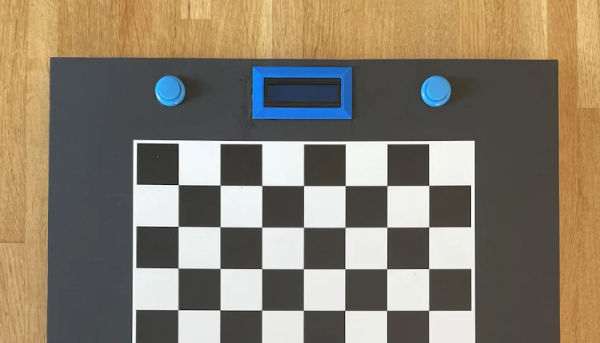
If you’ve ever played chess or even checkers, you’ve probably thought about making a board that lets a computer play you without having to enter your moves and look at the board on a screen. [Greg06] not only thought about it, but he built it.

The board looks great and uses foamboard which makes it easy to reproduce. Each piece has a small magnet within and an electromagnet on an XY motion system can selectively pick up and move pieces. In addition, a reed switch under each square can tell if a square is occupied or not.

Continue reading “Automated Chess Board Plays You” →

The Return Of SCSI

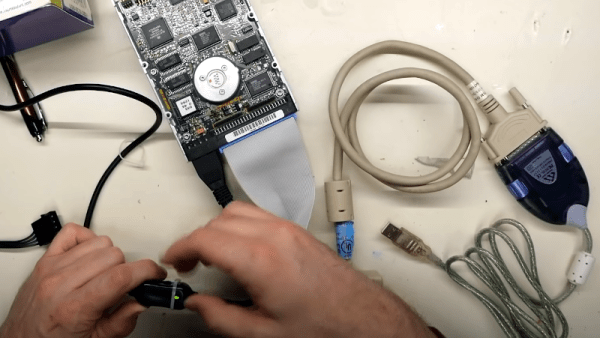
There was a time when high-performance disk drives used SCSI — the Small Computer System Interface — and everything else was kid stuff. Now, advanced forms of SCSI are still around but there are other high-performing disk interfaces, too. But some old gear really loves their classic SCSI ports, and [Adrian] decided to try hooking some of them up to some modern computers. You can see how he did in the video below.

The key to the attempt is a USB to SCSI adapter which was unusual but not unheard of, and [Adrian] came across one from 1999. Of course, you have to wonder if a modern computer will support the device or will be able to load the drivers from the old CD.

Continue reading “The Return Of SCSI” →

3D Printed Shoes Make Bigfoot Tracks

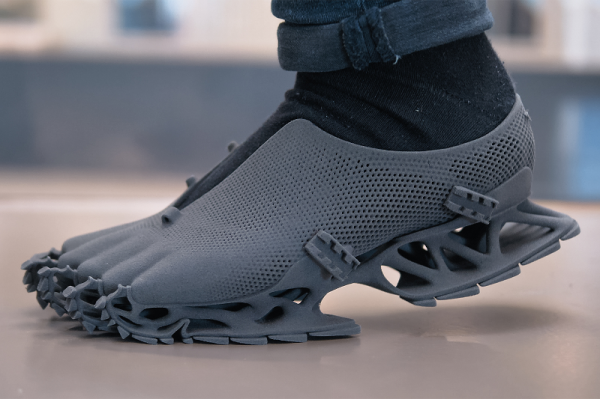
[Stephan Henrich] is probably going to set off a wave of bigfoot sightings if his new shoe, the Cryptide sneaker takes off. The shoe is completely 3D printed in flexible TPE using a laser sintering printer from Sintratec. The shoe takes a name from cryptozoology and, in fact, would leave a puzzling footprint due to its articulated toes and scaly-looking sole.

Judging from the look of the sole, it should be pretty cushy and we presume if you were 3D printing these, you’d scan or precisely measure the intended foot for a perfect fit. You can see a video about the shoe below.

Continue reading “3D Printed Shoes Make Bigfoot Tracks” →

Human Power, Past And Future

We will assume you’ve seen The Matrix — it was from 1999, after all. The surprise, at the end, was that humans were being used as human batteries to power a civilization of intelligent machines. But aside from just putting out some heat, the idea does have some precedent. After all, humans powered machines like mills, sewing machines, and pumps for centuries before there were good alternatives.

History

Galley ship
Reconstruction of a squadron of ancient Greek galley ships.

Early machines used hand cranks, treadwheels, treadles, and even pedal power to harness energy from humans. Consider, for example, an ancient galley ship with many oarsmen providing an engine. This wasn’t a great use of human power. An oarsman on a galley used his arms and back but didn’t much use his legs. The legs, though, have larger muscles and are often stronger. A pedal boat or racing shell would have been much more efficient, but without mass production of strong metal parts, it would have been difficult to build and maintain such machines in ancient times.

There was a time when pedals or treadles operated lots of machines from sewing machines to lathes. There were even old radios able to transmit and receive with no external power thanks to pedals as late as the 1940s.

Continue reading “Human Power, Past And Future” →

Art of 3D printer in the middle of printing a Hackaday Jolly Wrencher logo

3D Printering: Giants

Newton famously said, “If I see further than others, it is by standing upon the shoulders of giants.” For 3D printing, though, it might be the reverse. If a printer prints larger than others, it is probably using work developed for smaller printers. There are a variety of very large 3D printers out there now and you frequently see claims in the press of “world’s largest 3D printer.” Roboze, for example, makes that claim with a build volume of 1 meter on each axis.

Continue reading “3D Printering: Giants” →

$60 PC Oscilloscope Review

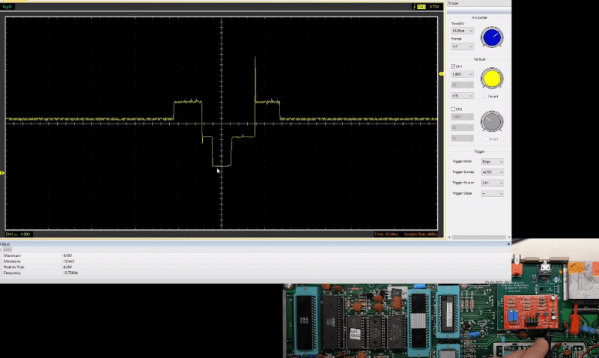
Owning an oscilloscope is a real gamechanger and these days, scopes are more capable and less expensive than ever before. However, there is a big difference between scopes that cost several hundred dollars which are usually quite good and many of the very inexpensive — below $100 — instruments that are often — but not always — little more than toys. [Adrian] looks at a PC-based scope from Hantek that costs about $60. Is it a toy? Or a useful tool? He answers the question in the video below.

The Hantek 6022BE sports two channels with a 20 MHz bandwidth and 48 million samples per second. The device included probes, too. Of course, you also need a PC, although there is apparently third-party software for Android if you don’t want to lug a laptop around.

Continue reading “$60 PC Oscilloscope Review” →