Sad clown holding melted ice cream cone

Freezing Out Ice Cream Machine Competition

We always knew that McDonald’s soft serve (you can’t really call it ice cream) machines are known to be finicky. There’s even a website that tracks where the machines are broken and, apparently, it is usually about 10% or more of them at any given time. But when we saw a news article about a judge issuing a restraining order, we knew there must be more to the story. Turns out, these $18,000 soft serve machines are in the heart of something we are very interested in: when do you own your own technology?

Cold Tech

There are apparently 13,000 or so of these machines and they are supposedly high-tech marvels, able to produce soft serve and milkshakes at the same time. However, they are also high maintenance. Cleaning the machine every two weeks (try not to think about that) involves a complete teardown. Worse, if anything breaks, you need a factory-authorized service person.

Continue reading “Freezing Out Ice Cream Machine Competition”
3D Printing Liquid Crystal

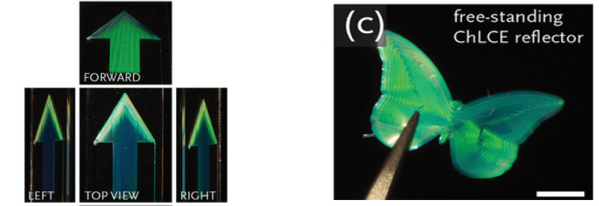
If you think at all about liquid crystals, you probably think of display technology. However, researchers have worked out a way to use an ink-jet-like process to 3D print iridescent colors using a liquid crystal elastomer. The process can mimic iridescent coloring found in nature and may have applications in things as diverse as antitheft tags, art objects, or materials with very special optical properties.

For example, one item created by the team is an arrow that only appears totally green when viewed from a certain angle. The optical properties depend on the thickness of the material which, being crystalline, self-organizes. Controlling the speed of deposition changes the thickness of the material which allows the printer to tune its optical properties.

The ink doesn’t sound too exotic to create, although the chemicals in it are an alphabet soup of unpronounceable organic compounds. At least they appeared available if you know where to shop for exotic chemicals.

The iridescent coloring is common in nature, so art objects like butterfly wings are natural with this method. While inkjet printers aren’t common in the hacker community, they aren’t that hard to create, so this seems like it would be repeatable in a garage lab.

Liquid crystals have all kinds of interesting properties and we wonder if this material would help you print those sorts of things. If you want to experiment, we have seen a few hacked inkjet printers.

Thanks [jscotta] for the tip.

radio direction finding

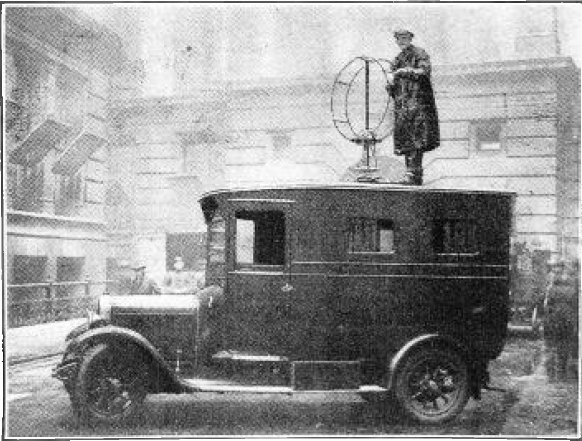
Where’s That Radio? A Brief History Of Direction Finding

We think of radio navigation and direction finding as something fairly modern. However, it might surprise you that direction finding is nearly as old as radio itself. In 1888, Heinrich Hertz noted that signals were strongest when in one orientation of a loop antenna and weakest 90 degrees rotated. By 1900, experimenters noted dipoles exhibit similar behavior and it wasn’t long before antennas were made to rotate to either maximize signal or locate the transmitter.

British radio direction finding truck from 1927; public domain

Of course, there is one problem. You can’t actually tell which side of the antenna is pointing to the signal with a loop or a dipole. So if the antenna is pointing north, the signal might be to the north but it could also be to the south. Still, in some cases that’s enough information.

John Stone patented a system like this in 1901. Well-known radio experimenter Lee De Forest also had a novel system in 1904. These systems all suffered from a variety of issues. At shortwave frequencies, multipath propagation can confuse the receiver and while longwave signals need very large antennas. Most of the antennas moved, but some — like one by Marconi — used multiple elements and a switch.

However, there are special cases where these limitations are acceptable. For example, when Pan Am needed to navigate airplanes over the ocean in the 1930s, Hugo Leuteritz who had worked at RCA before Pan Am, used a loop antenna at the airport to locate a transmitter on the plane. Since you knew which side of the antenna the airplane must be on, the bidirectional detection wasn’t a problem.

Continue reading “Where’s That Radio? A Brief History Of Direction Finding”

Boat Brings Bathers Beverages

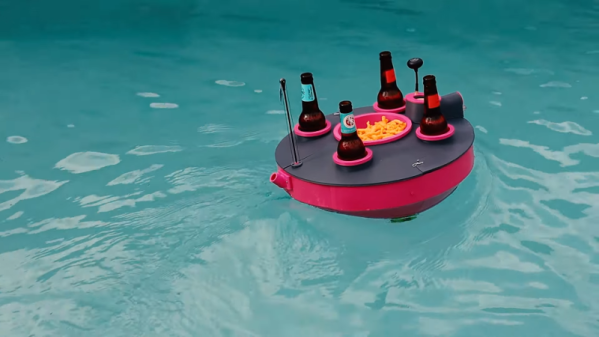
Chilling in the pool is great, but what a drag to have to get out to grab a cold brew. [Alister] had his eye on a commercial drink float, but the company was out of business. But 3D printing, of course, comes to the rescue in this video, also embedded below.

The payload amounts to four bottles and some snacks. Brushless thrusters allow the bartender to steer the little robot around the pool to deliver libations.

Continue reading “Boat Brings Bathers Beverages”

Packing Heat With A Homemade Portable Soldering Iron

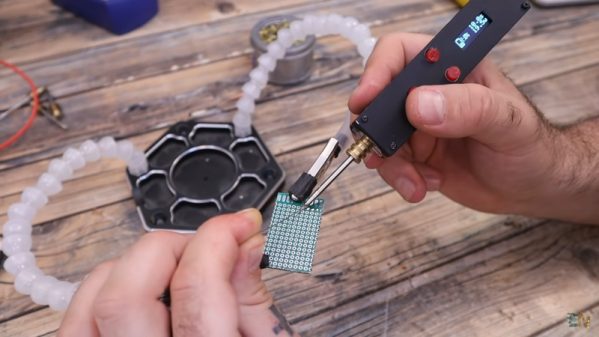
Small portable soldering irons are all the rage so [electronoobs] decided to build one on his own. While the design isn’t quite as sleek as a commercial unit, considering it holds its own batteries, it looks pretty good.

Of course, the question is: does it work? You can see in the video below that it does, melting solder in about ten seconds. The weight is about 100 g, so it should be very comfortable to use.

Continue reading “Packing Heat With A Homemade Portable Soldering Iron”

WWII Hydrogen Peroxide Rocket 3D Print

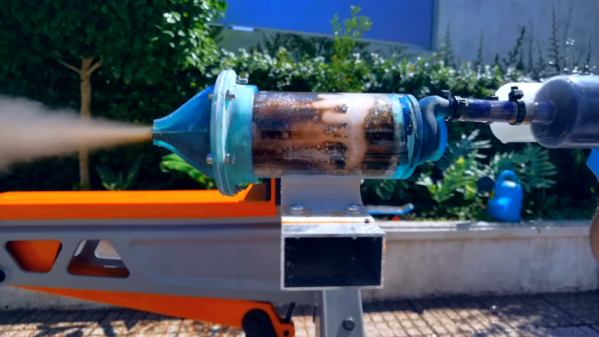
[Integza] was reading about a World War II-era rocket plane created near the end of the war by the Germans. The Heinkel He-176 wasn’t very practical, but he was intrigued when he read the rocket was cold and combustionless. He did a little research and found the engine was a monopropellent engine using hydrogen peroxide. This led to some interesting experiments and a 3D printed rocket engine, as you can see in the video below.

Usually, liquid-fueled rocket engines have a fuel and an oxidizer that mix and are either ignited or, in a hypergolic rocket, spontaneously combust on contact. With a monopropellent, the thrust comes from a chemical reaction between the propellant — hydrogen peroxide, in this case, and a catalyst.

Continue reading “WWII Hydrogen Peroxide Rocket 3D Print”

Tesla Automatic Driving Under Scrutiny By US Regulators

The US National Highway Traffic Safety Administration (NHTSA) has opened a formal investigation about Tesla’s automatic driving features (PDF), claiming to have identified 11 accidents that are of concern. In particular, they are looking at the feature Tesla calls “Autopilot” or traffic-aware cruise control” while approaching stopped responder vehicles like fire trucks or ambulances. According to the statement from NHTSA, most of the cases were at night and also involved warning devices such as cones, flashing lights, or a sign with an arrow that, you would presume, would have made a human driver cautious.

Qote from Tesla support page: "The currently enabled Autopilot and Full Self-Driving features require active driver supervision and do not make the vehicle autonomous."There are no details about the severity of those accidents. In the events being studied, the NHTSA reports that vehicles using the traffic-aware cruise control “encountered first responder scenes and subsequently struck one or more vehicles involved with those scenes.”

Despite how they have marketed the features, Tesla will tell you that none of their vehicles are truly self-driving and that the driver must maintain control. That’s assuming a lot, even if you ignore the fact that some Tesla owners have gone to great lengths to bypass the need to have a driver in control. Tesla has promised full automation for driving and is testing that feature, but as of the time of writing the company still indicates active driver supervision is necessary when using existing “Full Self-Driving” features.

We’ve talked a lot about self-driving car safety in the past. We’ve also covered some of the more public accidents we’ve heard about. What do you think? Are self-driving cars as close to reality as they’d like you to believe? Let us know what you think in the comments.