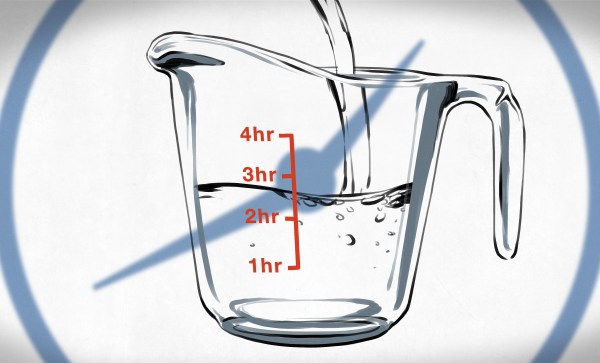
Historical Hackers: Ctesibius Tells Time

People are obsessed with the time and the weather. We’ve talked about the weather since we were all cave dwellers hunting with spears. But the time is a different matter. Sure, people always had the idea of the passage of time. The sun rising and setting gives a natural sense of days, but daylight and dark periods vary by the time of year and to get an accurate and linear representation of time turns out to be rather difficult. That is unless you are a Greek engineer living in Alexandria around 250 BC.
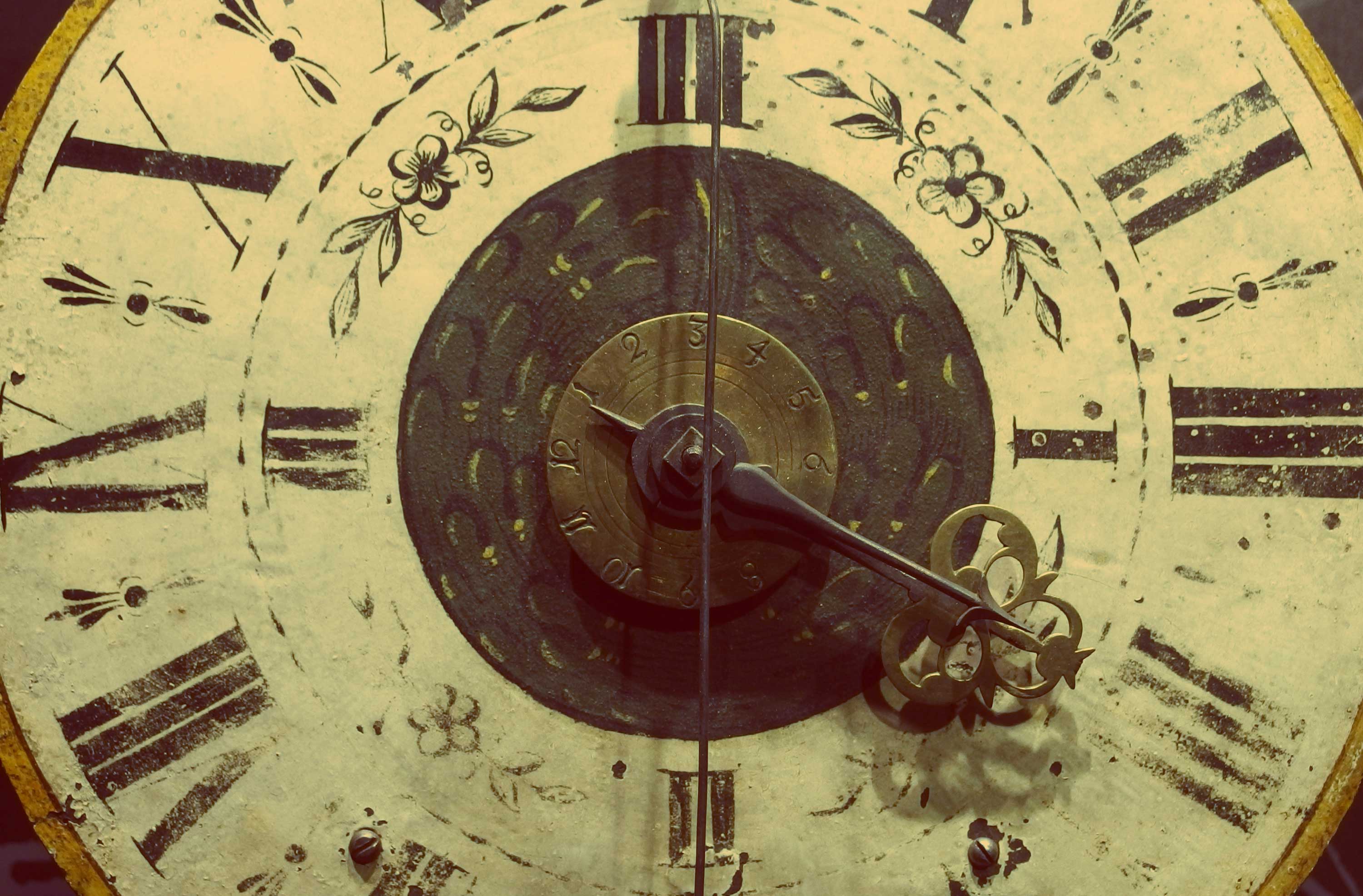
Legend has it that and engineer working in his father’s barbershop led him to discover not only the first working clock, but also the pipe organ, launching the field of pneumatics in the process. That engineer was named Ctesibius and while his story is mostly forgotten, it shows he has a place as a historical hacker.

You might think there were timekeeping devices before 250 BC, and that’s sort of true. However, the devices before Ctesibius had many limitations. For example, a sundial can tell time, but only if the sun is shining. At night or during a storm it is worthless.
Continue reading “Historical Hackers: Ctesibius Tells Time”

3D Printed Calipers Work Like Clockwork

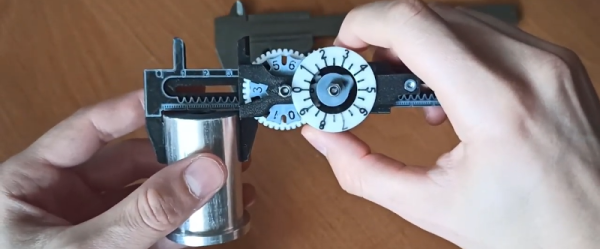
Most of us use calipers when working with our 3D printers. Not [Albert]. He has a clockwork caliper design that he 3D printed. The STL is available for a few bucks, but you can see how it works in the video below. We don’t know how well it works, but we’ll stick with our digital calipers for now.

The digital readout on this caliper is more like a sophisticated watch. A window shows 10s of millimeters and two dials show the single digits and the number after the decimal point.

Continue reading “3D Printed Calipers Work Like Clockwork”

Printer Uses Algae To Print Live Structures

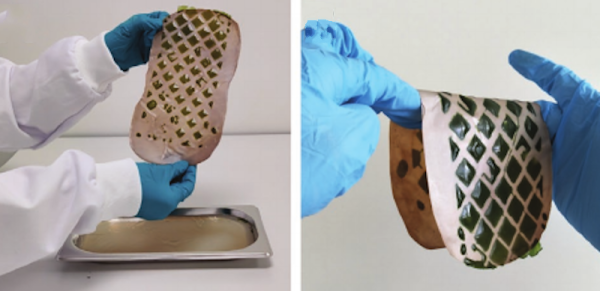
There’s a famous scene in the movie version of Frankenstein — but not in the book — where the doctor exclaims: “It’s alive!” We wonder if researchers at TU Delft had the same experience after printing living structures using algae. Of course, they aren’t creating life or even reanimating it. They are simply depositing living cells in artificial structures using a bio-compatible substrate. According to the paper, the living cells or bio ink can build up layers in a 3D printing fashion and the structures are “self-standing.”

There are some advantages, for example that the algae get their energy from sunlight. Of course they also have to eat, so unless you provide some snacks, your print will die off in about 3 days.

Continue reading “Printer Uses Algae To Print Live Structures”

Linux Fu: Databases Are Next-Level File Systems

It is funny how exotic computer technology eventually either fails or becomes commonplace. At one time, having more than one user on a computer at once was high tech, for example. Then there are things that didn’t catch on widely like vector display or content-addressable memory. The use of mass storage — especially disk drives — in computers, though has become very widespread. But at one time it was an exotic technique and wasn’t nearly as simple as it is today.

However, I’m surprised that the filesystem as we know it hasn’t changed much over the years. Sure, compared to, say, the 1960s we have a lot better functionality. And we have lots of improvements surrounding speed, encoding, encryption, compression, and so on. But the fundamental nature of how we store and access files in computer programs is stagnant. But it doesn’t have to be. We know of better ways to organize data, but for some reason, most of us don’t use them in our programs. Turns out, though, it is reasonably simple and I’m going to show you how with a toy application that might be the start of a database for the electronic components in my lab.

You could store a database like this in a comma-delimited file or using something like JSON. But I’m going to use a full-featured SQLite database to avoid having a heavy-weight database server and all the pain that entails. Is it going to replace the database behind the airline reservation system? No. But will it work for most of what you are likely to do? You bet. Continue reading “Linux Fu: Databases Are Next-Level File Systems”

Cold War Code Breaking Manual Teaches Impossible Puzzle Solving

Cryptologist [Lambros Callimahos] was a victim of his own success. He wrote a trilogy of books called Military Cryptanalytics covering code breaking in 1977. The first two volumes were eventually published, but the NSA blocked the public release of the third volume back in 1992. But last December, it finally saw the light of day.

Of course, some parts of the book are redacted, including parts of the table of contents. That’s pretty bad when even your chapter headings can be classified. [Richard Bean] over on Phys.org has some notes about the book along with some examples of hard-to-solve crypto puzzles.

Continue reading “Cold War Code Breaking Manual Teaches Impossible Puzzle Solving”

At MIT, Clothing Fiber Watches You

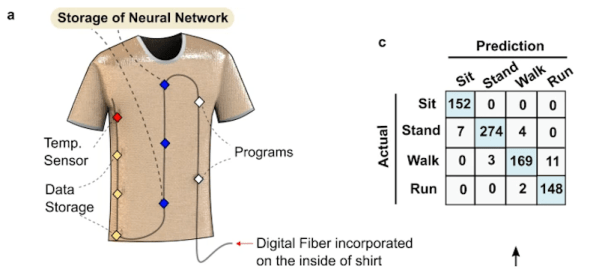
[Yoel Fink] and his team at MIT have announced their creation of a fiber that can sense and store data. In addition, they can use data from a shirt made of the material to infer the wearer’s activity with high accuracy. The fiber contains hundreds of microscale silicon chips into a preform used to create a polymer fiber that connects the chips using four 25 micron tungsten wires. You can read the paper directly in Nature Communications.

The fiber contains temperature sensors and enough memory (24CW1280X chips) to store a short movie for two months without power. It also contains 1,650 neural network elements, which means the fiber can train to infer activity itself without additional help.

Continue reading “At MIT, Clothing Fiber Watches You”

Optical Microscope Resolves Down To 40 Nanometers

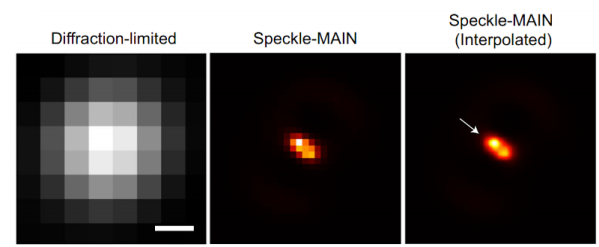
Optical microscopes depend on light, of course, but they are also limited by that same light. Typically, anything under 200 nanometers just blurs together because of the wavelength of the light being used to observe it. However, engineers at the University of California San Diego have published their results using a hyperbolic metamaterial composed of silver and silica to drive optical microscopy down to below 40 nanometers. You can find the original paper online, also.

The technique also requires image processing. Light passing through the metamaterial breaks into speckles that produce low-resolution images that can combine to form high-resolution images. This so-called structured illumination technique isn’t exactly new, but previous techniques allowed about 100-nanometer resolution, much less than what the researchers were able to find using this material.

Continue reading “Optical Microscope Resolves Down To 40 Nanometers”