Printer Uses Algae To Print Live Structures

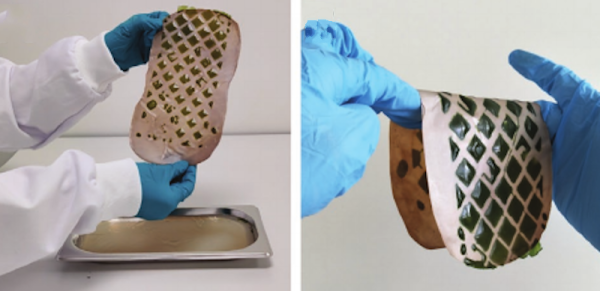
There’s a famous scene in the movie version of Frankenstein — but not in the book — where the doctor exclaims: “It’s alive!” We wonder if researchers at TU Delft had the same experience after printing living structures using algae. Of course, they aren’t creating life or even reanimating it. They are simply depositing living cells in artificial structures using a bio-compatible substrate. According to the paper, the living cells or bio ink can build up layers in a 3D printing fashion and the structures are “self-standing.”

There are some advantages, for example that the algae get their energy from sunlight. Of course they also have to eat, so unless you provide some snacks, your print will die off in about 3 days.

Continue reading “Printer Uses Algae To Print Live Structures”

Linux Fu: Databases Are Next-Level File Systems

It is funny how exotic computer technology eventually either fails or becomes commonplace. At one time, having more than one user on a computer at once was high tech, for example. Then there are things that didn’t catch on widely like vector display or content-addressable memory. The use of mass storage — especially disk drives — in computers, though has become very widespread. But at one time it was an exotic technique and wasn’t nearly as simple as it is today.

However, I’m surprised that the filesystem as we know it hasn’t changed much over the years. Sure, compared to, say, the 1960s we have a lot better functionality. And we have lots of improvements surrounding speed, encoding, encryption, compression, and so on. But the fundamental nature of how we store and access files in computer programs is stagnant. But it doesn’t have to be. We know of better ways to organize data, but for some reason, most of us don’t use them in our programs. Turns out, though, it is reasonably simple and I’m going to show you how with a toy application that might be the start of a database for the electronic components in my lab.

You could store a database like this in a comma-delimited file or using something like JSON. But I’m going to use a full-featured SQLite database to avoid having a heavy-weight database server and all the pain that entails. Is it going to replace the database behind the airline reservation system? No. But will it work for most of what you are likely to do? You bet. Continue reading “Linux Fu: Databases Are Next-Level File Systems”

Cold War Code Breaking Manual Teaches Impossible Puzzle Solving

Cryptologist [Lambros Callimahos] was a victim of his own success. He wrote a trilogy of books called Military Cryptanalytics covering code breaking in 1977. The first two volumes were eventually published, but the NSA blocked the public release of the third volume back in 1992. But last December, it finally saw the light of day.

Of course, some parts of the book are redacted, including parts of the table of contents. That’s pretty bad when even your chapter headings can be classified. [Richard Bean] over on Phys.org has some notes about the book along with some examples of hard-to-solve crypto puzzles.

Continue reading “Cold War Code Breaking Manual Teaches Impossible Puzzle Solving”

At MIT, Clothing Fiber Watches You

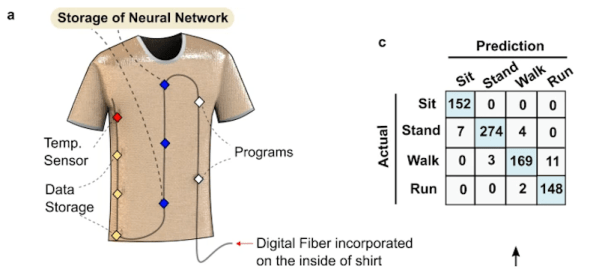
[Yoel Fink] and his team at MIT have announced their creation of a fiber that can sense and store data. In addition, they can use data from a shirt made of the material to infer the wearer’s activity with high accuracy. The fiber contains hundreds of microscale silicon chips into a preform used to create a polymer fiber that connects the chips using four 25 micron tungsten wires. You can read the paper directly in Nature Communications.

The fiber contains temperature sensors and enough memory (24CW1280X chips) to store a short movie for two months without power. It also contains 1,650 neural network elements, which means the fiber can train to infer activity itself without additional help.

Continue reading “At MIT, Clothing Fiber Watches You”

Optical Microscope Resolves Down To 40 Nanometers

Optical microscopes depend on light, of course, but they are also limited by that same light. Typically, anything under 200 nanometers just blurs together because of the wavelength of the light being used to observe it. However, engineers at the University of California San Diego have published their results using a hyperbolic metamaterial composed of silver and silica to drive optical microscopy down to below 40 nanometers. You can find the original paper online, also.

The technique also requires image processing. Light passing through the metamaterial breaks into speckles that produce low-resolution images that can combine to form high-resolution images. This so-called structured illumination technique isn’t exactly new, but previous techniques allowed about 100-nanometer resolution, much less than what the researchers were able to find using this material.

Continue reading “Optical Microscope Resolves Down To 40 Nanometers”

Anti-Gravity, Time Travel, And Teleportation: Dr. Hamming Gives Advice

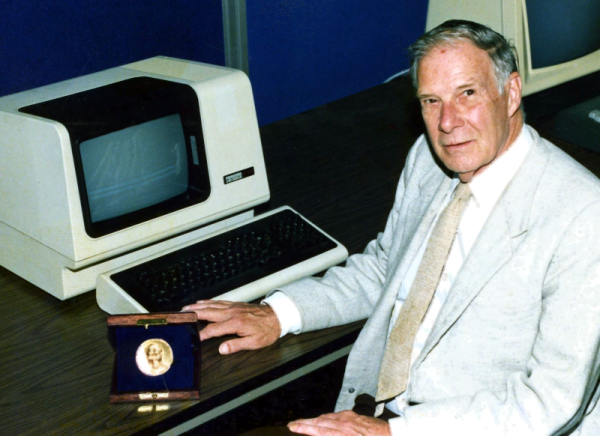
You may not know the name [Richard Hamming], but you definitely use some of his work. While working for Bell Labs, he developed Hamming codes — the parent of a class of codes that detect, and sometimes correct, errors in everything from error-correcting memory to hard drives. He also worked on the Manhattan Project and was a lecturer at the Naval Postgraduate school.

Turns out [Hamming] has an entire class from the 1990s on YouTube and if you are interested in coding theory or several other topics, you could do worse than watch some of them. However, those videos aren’t what attracted me to the lectures. As the last lecture of his course, [Hamming] used to give a talk called “You and Your Research” and you can see one of the times he delivered it in the video below. You might think that it won’t apply to you because you aren’t a professional academic or researcher, but don’t be too quick to judge.

Turns out, [Hamming’s] advice — even by his own admission — is pretty general purpose for your career or even your life. His premise: As far as we know, you have one life to live, so why shouldn’t it be a worthwhile one by your definition of worthwhile.

Along the way, he has an odd combination of personal philosophy, advice for approaching technical problems, and survival skills for working with others. If you are in the field, you’ll probably recognize at least some of the names he drops and you’ll find some of this technical advice useful. But even if you aren’t, you’ll come away with something. Some of it seems like common sense, but it is different, somehow, to hear it spoken out loud. For example:

If you don’t work on important problems, it’s not likely that you’ll do important work.

One piece of technical advice? Don’t waste time working on problems you have no way to attack. He points out that anti-gravity, time travel, and teleportation would be very lucrative. But why work on them when there appears to be no way to even remotely accomplish them today. Well, at least when he said that. There has been a little progress on a form of teleportation, but that wasn’t what he was talking about anyway.

While not a hack in the traditional sense, examining your life, career, and technical research to improve your own effectiveness is something to take seriously. We were hoping he would throw in a joke about error-correcting your career, but unless we blinked, no such luck.

Hamming’s work on block codes was followed about ten years later by the Reed-Solomon code which is found nearly everywhere now. Hamming is also associated with the term “hamming distance,” something we talked about when discussing Gray code.

Continue reading “Anti-Gravity, Time Travel, And Teleportation: Dr. Hamming Gives Advice”

Aircraft Compass Teardown

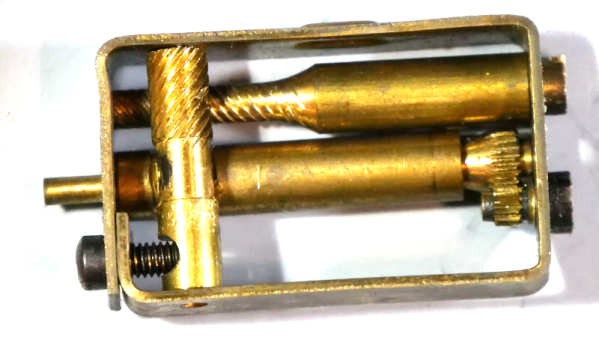
We didn’t know what a C-2400 LP was before we saw [David’s] video below, but it turned out to be pretty interesting. The device is an aircraft compass and after replacing it, he decided to take it apart for us. Turns out, that like a nautical compass, these devices need adjustment for all the metal around them. But while a ship’s compass has huge steel balls for that purpose, the tiny and lightweight aviation compass has to be a bit more parsimonious.

The little device that stands in for a binnacle’s compensators — often called Kelvin’s balls — is almost like a mechanical watch. Tiny gears and ratchets, all in brass. Apparently, the device is pretty reliable since the date on this one is 1966.

Continue reading “Aircraft Compass Teardown”