The World Is Your Green Screen

This year has been the year of home video conferencing. If you are really on the ball, you’ve managed to put some kind of green screen up so you can hide your mess and look as though you are in your posh upper east side office space. However, most of the consumer video conferencing now has some way to try to guess what your background is and replace it even without a green screen. The results, though, often leave something to be desired. A recent University of Washington paper outlines a new background matting procedure using machine learning and, as you can see in the video below, the results are quite good. There’s code on GitHub and even a Linux-based WebCam filter.

The algorithm does require a shot of the background without you in it, which we imagine needs to be relatively static. From watching the video, it appears the acid test for this kind of software is spiky hair. There are several comparisons of definitely not bald people flipping their hair around using this method and other background replacers such as the one in Zoom.
Continue reading “The World Is Your Green Screen”

C++ Compiler Targets The Web

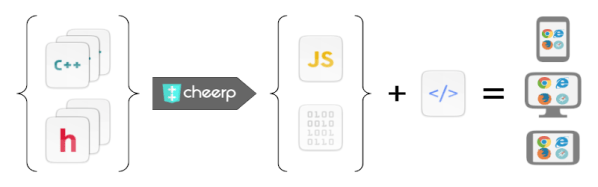
It is a common problem these days. You have a piece of code in C or C++. Maybe it is older code. Or maybe you prefer prototyping your ideas using C. But, inevitably, someone now wants your code to run in a Web browser. The options for making this happen have expanded quite a bit lately and one possibility is Cheerp, an open-source compiler that handles up to C++ 17 and can output to WebAssembly, JavaScript, or asm.js.

The compiler is free to use for GPLv2 projects. If you aren’t open yourself, it looks like you have to cut a deal to use Cheerp with its maker, Learning Technologies.

Continue reading “C++ Compiler Targets The Web”

Did ET Finally Call Us?

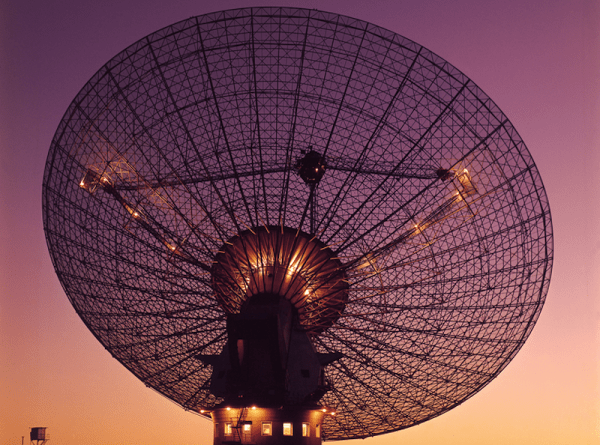
An Australian radio telescope picked up unusual signals back in 2019 and thinks they originated from Proxima Centauri, a scant 4.3 light years from our blue marble. Researchers caution that it almost certainly is a signal of human or natural origin and that more analysis will probably show it didn’t come from Proxima Centauri. But they can’t yet explain it.

The research is from the Breakthrough Listen project, a decade-long SETI project. The 980 MHz BLC-1 signal, as it’s called, meets the tests that identify the signal as interesting. It has a narrow bandwidth, it drifts in frequency consistent with a signal moving away or towards the Earth, and it disappears when the radio telescope points elsewhere.

Continue reading “Did ET Finally Call Us?”

Lidar House Looks Good, Looks All Around

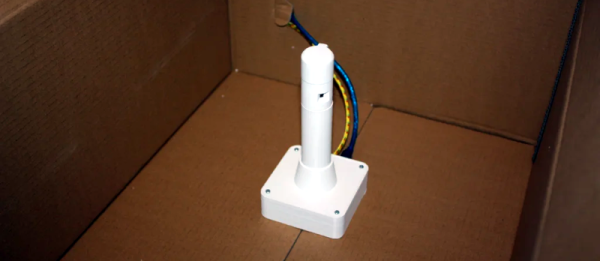
A lighthouse beams light out to make itself and its shoreline visible. [Daniel’s] lighthouse has the opposite function, using lasers to map out the area around itself. Using an Arduino and a ToF sensor, the concept is relatively simple. However, connecting to something that rotates 360 degrees is always a challenge.

The lighthouse is inexpensive — about $40 — and small. Small enough, in fact, to mount on top of a robot, which would give you great situational awareness on a robot big enough to support it. You can see the device in action in the video below. Continue reading “Lidar House Looks Good, Looks All Around”

Making A Little Smalltalk

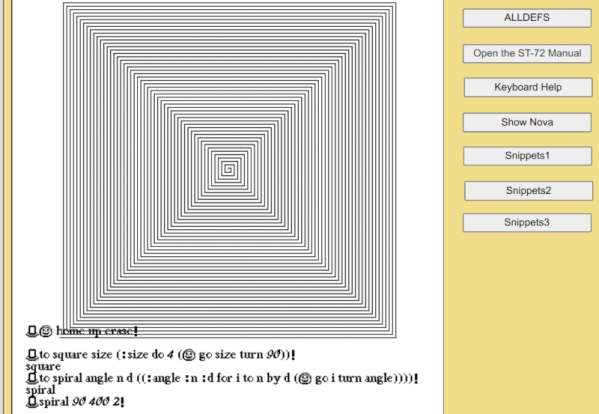
While things like object oriented computing and model-view-controller are old hat these days, when Smalltalk burst on the scene, many people had never heard of these new ideas. While the little language with roots at Xerox and based on Simula never caught fire, it was very influential in a number of ways. Now Smalltalk luminary [Dan Ingalls] has the Smalltalk Zoo, a collection of Smalltalk-related items including several historical simulations you can run in your browser.

We were especially impressed with the AltoSmalltalk-72 simulation since our chances of running a real Alto are pretty slim. The JavaScript behind it actually implements the Alto’s Nova instruction set. The emulator then runs a 45-year old memory dump from a real Alto. According to [Dan], there’s no file system and the microcoded music and animation instructions are missing, but he hopes someone will add them as a spare-time project.

Continue reading “Making A Little Smalltalk”

Old Thermostat Gets Smarts

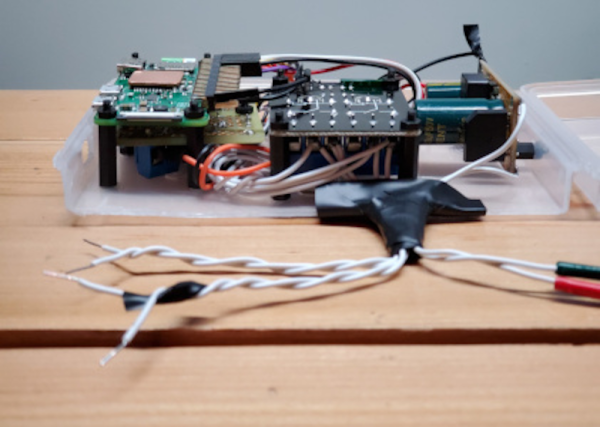
A smart thermostat is nothing new. But making one built a decade or more ago takes a few tricks. If you want to upgrade your thermostat without replacing it, [geektechniquestudios] shares their solution using a Raspberry Pi Zero to smarten up that dumb controller.

The hardware is decidedly simple: just a Pi Zero and a pair of relays. The relays act as button presses to the old thermostat. The software, though, is decidedly complex. There’s a React server and a Redis database along with some other bits and pieces.

Continue reading “Old Thermostat Gets Smarts”

Stacked Material Makes Kitchen Temperature Superconductors

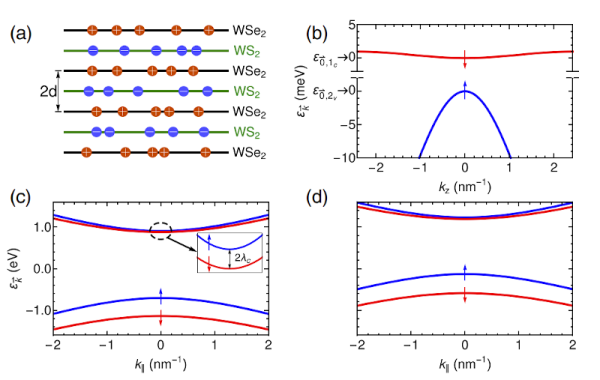
Belgian, Italian, and Australian researchers are proposing that by stacking semiconductor sheets, they should be able to observe superconducting behavior at what is known as “kitchen temperature” or temperatures you could get in a household freezer. That’s not quite as good as room temperature, but it isn’t bad, either. The paper is a bit technical but there is a very accessible write-up at Sci-Tech Daily that gives a good explanation.

Superconductors show no loss but currently require very cold temperatures outside of a few special cases. The new material exploits the idea that an electron and a hole in a semiconducting material will have a strong attraction to each other and will form a pair known as an exciton. Excitons move in a superfluid state which should exhibit superconductivity regardless of the temperature. However, the attraction is so strong that in conventional materials, the excitons only exist for the briefest blip of time before they cancel each other out.

Continue reading “Stacked Material Makes Kitchen Temperature Superconductors”