Your Next Robot Needs Googly Eyes, And Other Lessons From Disney

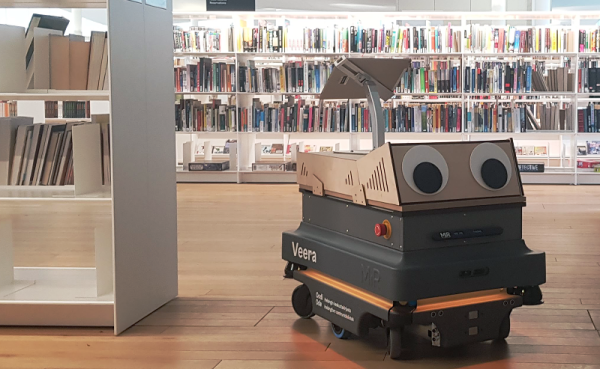
There are so many important design decisions behind a robot: battery, means of locomotion, and position sensing, to name a few. But at a library in Helsinki, one of the most surprising design features for a librarian’s assistant robot was googly eyes. A company called Futurice built a robot for the Oodi library and found that googly eyes were a very important component.

The eyes are not to help the robot see, because of course they aren’t functional — at least not in that way. However without the eyes, robot designers found that people had trouble relating to the service robot. In addition, the robot needed emotions that it could show using the eyes and various sounds along with motion. This was inspired, apparently, by Disney’s rules for animation. In particular, the eyes would fit the rule of “exaggeration.” The robot could look bored when it had no task, excited when it was helping people, and unhappy when people were not being cooperative.

Continue reading “Your Next Robot Needs Googly Eyes, And Other Lessons From Disney”

Linux Fu: Shell Scripts In C, C++, And Others

At first glance, it might not seem to make sense to write shell scripts in C/C++. After all, the whole point to a shell script is to knock out something quick and dirty. However, there are cases where you might want to write a quick C program to do something that would be hard to do in a traditional scripting language, perhaps you have a library that makes the job easier, or maybe you just know C and can knock it out faster.

While it is true that C generates executables, so there’s no need for a script, usually, the setup to build an executable is not what you want to spend your time on when you are just trying to get something done. In addition, scripts are largely portable. But sending an executable to someone else is fairly risky — but your in luck because C shell scripts can be shared as… well, as scripts. One option is to use a C interpreter like Cling. This is especially common when you are using something like Jupyter notebook. However, it is another piece of software you need on the user’s system. It would be nice to not depend on anything other than the system C compiler which is most likely gcc.

Luckily, there are a few ways to do this and none of them are especially hard. Even if you don’t want to actually script in C, understanding how to get there can be illustrative.

Continue reading “Linux Fu: Shell Scripts In C, C++, And Others”

RCA Created Video Records Too Late

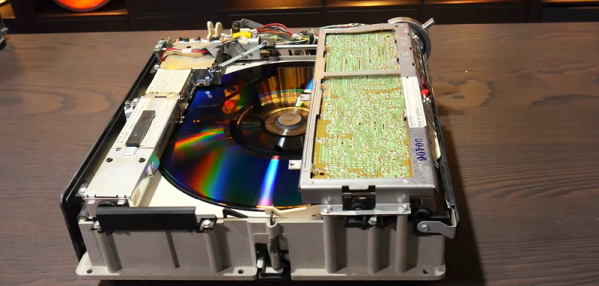
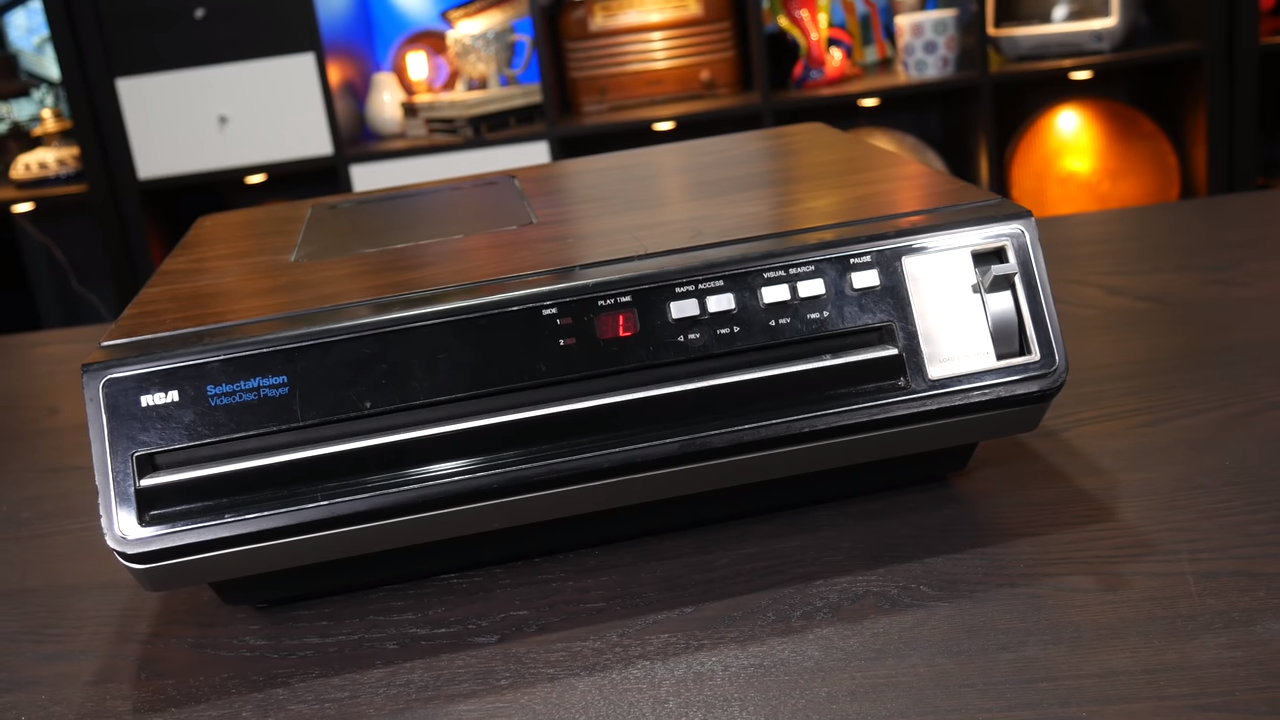
It is easy to find technology success stories: the PC, DVD, and cell phone are all well-documented tales. However, it is a little harder to find the stories behind the things that didn’t quite take off as planned. As the old saying goes, “success has many parents but failure is an orphan.” [Technology Connections] has a great video about RCA’s ill-fated SelectaVision video disc systems. You can see part one of the video below.

RCA started working on the system in the 1960s and had they brought it to market a bit earlier, it might have been a big win. After all, until the VCR most of us watched what was on TV when it was on and had no other options. You couldn’t record things or stream things and f you didn’t make it home in time for Star Trek, you simply missed that episode and hoped you’d get luckier when and if they reran it during the summer. That seems hard to imagine today, but a product like the SelectaVision when it was the only option could have really caught on. The problem was of course, that they waited too late to bring it to market. The video also makes the point that the system contained a few too many technical compromises.

Continue reading “RCA Created Video Records Too Late”

Peek Into The Compiler’s Code — Lots Of Compilers

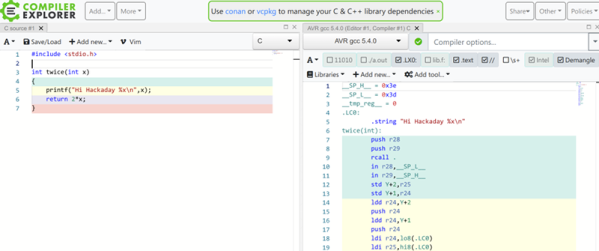
We don’t know what normal people argue about, but we know we spend a lot of time arguing about the best microcontroller, which editor is the best, and what language or compiler does the best job. The problem with all those compilers is getting them loaded and digging into the generated code. If you too spend your time thinking about those things, you ought to have a look at [Matt Godbolt’s] Compiler Explorer. We know that hosting an IDE-like web page and compiling code is old hat — although [Matt’s] site has been around quite some time. But [Matt’s] doing it differently. The code you build on the left hand pane shows up as assembly language on the right hand side.

There are plenty of options, too. For example, here’s a bit of C code from the site’s example:

int square(int num) {
   return num * num;
}

Here’s the corresponding assembly from gcc 9.2 for x86-64:

square:
  push rbp
  mov rbp, rsp
  mov DWORD PTR [rbp-4], edi
  mov eax, DWORD PTR [rbp-4]
  imul eax, eax
  pop rbp
  ret

Continue reading “Peek Into The Compiler’s Code — Lots Of Compilers”

Frequency Counting A Different Way

Counting frequency is one of those tasks that seems simple on the face of it, but actually has quite a bit of nuance. There are two obvious methods, of which the first is to count zero crossings for some period. If that period is one second you are done, otherwise it’s a simple enough case of doing the math. That is, if you count for half a second, multiply the result by 2, or if you count for 10 seconds, divide by 10. The other obvious method is to measure the period of a single cycle as accurately as you can. Then there’s this third method.from [WilkoL], which simultaneously counts a known reference clock alongside the frequency to be measured.  You can see the result in the video, below.

The first method is easy but the lower the frequency you want to measure, the longer you have to count to get any real resolution. Also, you need the time base to be exact. For the second method, you need to be able to make a highly precise measurement. The reason [WikolL] chose the third method is that it doesn’t require a very precise time base — a moderately accurate reference oscillator will do. The instrument gets good resolution quickly at both high and low frequencies.  Continue reading “Frequency Counting A Different Way”

Lambdas For C — Sort Of

A lot of programming languages these days feature lambda functions, or what I would be just as happy to call anonymous functions. Some people make a big deal out of these but the core idea is very simple. Sometimes you need a little snippet of code that you only need in one place — most commonly, as a callback function to pass another function — so why bother giving it a name? Depending on the language, there can be more to it that, especially if you get into closures and currying.

For example, in Python, the map function takes a function as an argument. Suppose you have a list and you want to capitalize each word in the list. A Python string has a capitalize method and you could write a loop to apply it to each element in the list. However, map and a lambda can do it more concisely:

map(lambda x: x.capitalize(), ['madam','im','adam'])

The anonymous function here takes an argument x and calls the capitalize method on it. The map call ensures that the anonymous function is called once for each item.

Modern C++ has lambda expressions. However, in C you have to define a function by name and pass a pointer — not a huge problem, but it can get messy if you have a lot of callback functions that you use only one time. It’s just hard to think up that many disposable function names. However, if you use gcc, there are some nonstandard C features you can use to get most of what you want out of lambda expressions.

Continue reading “Lambdas For C — Sort Of”

Does Your Home Assistant Know When You Are Sleeping?

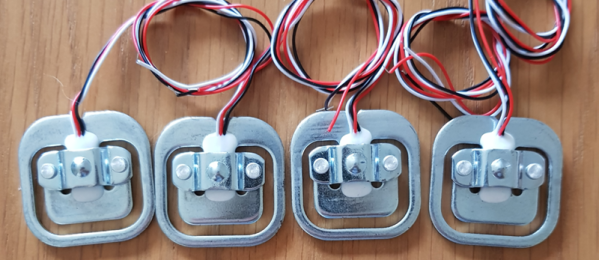
It always gives us a sense of wonder when we realize that what would be a simple task for a human child is a big deal for a computer. For example, if you asked someone if you or someone else was in bed, that’s a pretty simple thing to check. For you, that is. For a computer, it requires some sort of sensor. [Lewis] used load cells to tell if someone is in a particular bed or not. He uses Home Assistant and has a great post about how he created and interfaced the sensors. Of course, the sensors really only tell you if something heavy is in the bed. It doesn’t know who it is or even that it isn’t an overstuffed suitcase.

Load cells aren’t exactly high tech. There are several different types that use hydraulic pressure or pneumatics to measure force. However, the most common that we encounter use strain gauges. A strain gauge is a resistor that changes value when it deformed and a load cell usually has several strain gauges wired in a bridge configuration so that small forces create larger output changes.

Continue reading “Does Your Home Assistant Know When You Are Sleeping?”