Memristors On A Chip Solve Partial Differential Equations

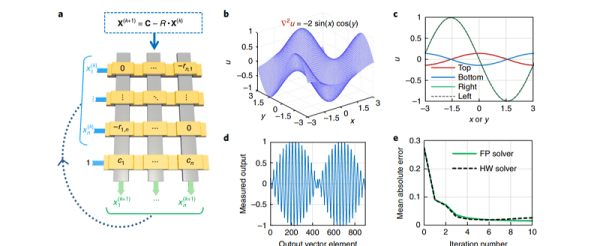
We were always taught that the fundamental passive components were resistors, capacitors, and inductors. But in 1971, [Leon Chua] introduced the idea of a memristor — a sort of resistor with memory. HP created one in 2008 and since then we haven’t really had the burning need to use one. In a recent Nature article, [Mohammed Zidan] and others discuss a 32 by 32 memristor array on a chip they call a memory processing unit. This analog computer on a chip is useful for certain kinds of operations that CPUs are historically not efficient at, including solving differential equations. Other applications include matrix operations used in things like machine learning and weather prediction. The paper is behind a paywall, although the usual places to find scholarly papers will probably have it soon.

There are several key ideas for using these analog elements for high-precision computing. First, the array is set up in a passive crossbar arrangement. In addition, the memristors are quantized so that different resistance values represent different numbers. For example, a memristor element that could have 16 different resistance values would allow it to operate as a base-16 digit.

Continue reading “Memristors On A Chip Solve Partial Differential Equations”
Measuring Energy Consumption

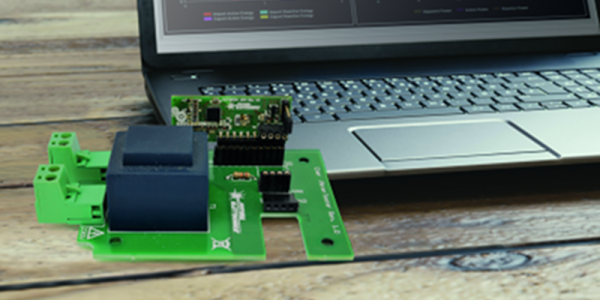
You would think that measuring a lot of sophisticated AC power parameters such as active and reactive power, RMS voltage and current, and line frequency would be a big job. As it turns out in so many cases, there’s a chip for that. The Microchip MCP39F511 can do all of that, but needs a little help from a few transformers. [Boris Landoni] has a two-part post that not only shows such a meter built with the chip but also has a very detailed description of the operation of the IC and how it works. The set-up takes two transformers. One to step the voltage down and another to measure the current.

Maybe it was just us, but we found the two schematics to be a little confusing. The schematic with two ICs on it is the actual board with the MCP39F511 (the other IC is a voltage regulator). The schematic with the transformer on it appears to have a single IC, U1, but that’s not really the case at all. U1 on that schematic is the entire circuit board from the first schematic. The “IC” pin numbers on the second schematic are the CN2 pins on the first schematic. The CN1 and CN2 on the two schematics are not related at all other than U1 is the actual board from the first schematic.

Continue reading “Measuring Energy Consumption”

Computer Programming Unplugged For Kids

There was a time when computers were far too expensive to let mere students use them. In those days, we wrote fake programs for fictitious machines and checked them by hand. That wasn’t fun, but it did teach you to think about the algorithm. You weren’t worried about how many tabs to indent code in the editor, or checking your social media feed, or changing the track on your Spotify playlist. Maybe that was the idea behind Computer Science Unplugged. The site is aimed at educators and gives them lesson plans to teach kids about computer concepts through activities that don’t use a computer.

The target ages are from 5 to 14 and topics range from binary numbers, sorting, searching, error detection, and robotics. For example, one exercise has students line up to be bits in a binary number. Each kid holds a card that is blank on one side or has the right number of dots on the other (for example, bit 0 has 1 dot, bit 2 has 4 dots, and so on).

Continue reading “Computer Programming Unplugged For Kids”

Web Pages Via Forth

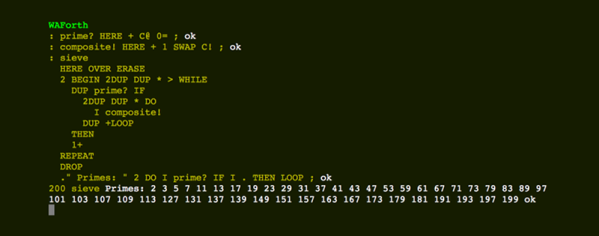
Forth. You either love it or you hate it. If you have struggled to work on tiny microcontrollers, you probably are in the first camp. After all, bringing up a minimal Forth system is pretty simple and requires very little resources on the CPU. Once you have such an environment it is then easy to extend Forth in Forth. [Remko] decided he wanted to build a Forth compiler that uses WebAssembly and runs in your browser. Why? We’ve learned not to think about that question too much.

The world has changed a lot since the first introduction of the WorldWideWeb browser in 1990. What started out as a way to show text documents over the network has become — for better or worse — an application platform. JavaScript won the browser scripting language wars and security concerns pretty much killed Java applets and Flash. But JavaScript isn’t always fast. Sure, there are ways to do just in time compiling, such as Google’s V8 engine. But that compile step takes time, too. Enter WebAssembly (or Wasm).

Continue reading “Web Pages Via Forth”

CD Image Via Twitter: A Handcrafted Game Disc

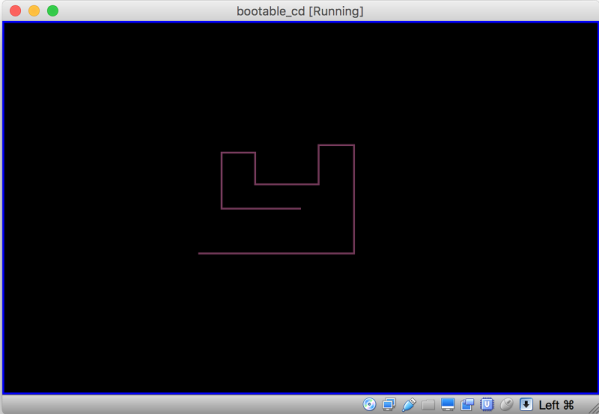
Humans can turn anything into a competition. Someone always wants to be faster or drive a ball farther. Technical pursuits are no different, which is why a lot of people overclock or play regular expression golf. [Alok Menghrajani] sets himself some odd challenges. A few years ago, he hand-built a bootable floppy image that had a simple game onboard and managed to fit it in a Twitter message. Twitter has increased their number of characters, so — you guessed it — this time he’s back with a CDROM image.

His tweet is a command line that starts with perl. The text is base64-encoded binary and if you run the Tweet from a shell — which is an odd thing to do with a Tweet, we grant you, you’ll be rewarded with a file called cd.iso. You could burn that to a CDROM, but it is more likely you’ll just mount in a virtual machine and boot that. [Alok] says it does work in QEMU, VirtualBox, and — yes — even a real CD.

Continue reading “CD Image Via Twitter: A Handcrafted Game Disc”

Raspberry Pi On The Go Powers Car System

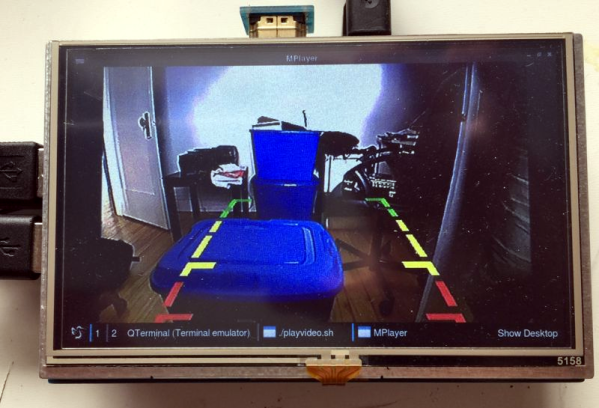
Most new cars have GPS, rear cameras, and all the other wonders an on-board system can bring. But what if you have an old car? [Fabrice Aneche] has a 2011 vehicle, and wanted a rearview camera. He started with a touch screen, a Raspberry Pi 3, and a camera. But you know how these projects take on a life of their own. So far, the project has two entries in his blog.

It wasn’t long before he couldn’t resist the urge to add a GPS. But that’s no fun without maps. Plus you need turn-by-turn directions. [Fabrice] did a lot of the user interface using Qt5 and QML. He started out running it with X11 but that was slow. It turns out though that Qt5 can drive the Pi’s video directly without using X11, so that’s what he wound up doing. The code that isn’t in QML — mainly dealing with the GPS location — is written in Go, while the code for MOCS (My Own Car System) is on GitHub.

Continue reading “Raspberry Pi On The Go Powers Car System”

Wolfram Alpha Electronic Tips

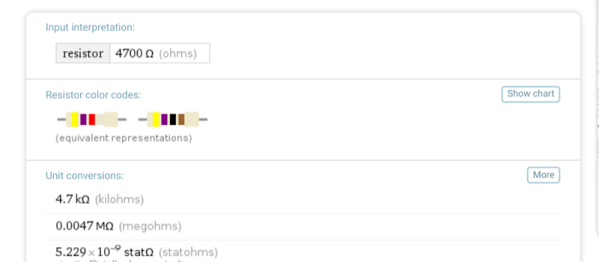
Electronics takes a lot of math. Once you’ve mastered all the algebra and calculus, though, it is sometimes a drag to go through the motions. It also can be error-prone. But these days, you have Wolfram Alpha which will do all the work for you and very easily. I use it all the time when I’m too lazy to solve an equation or do an integral by hand. But did you know it actually has some features specifically for electronics?

If you want to do a lot with electronics — or nearly any technical field — you are going to have to learn some math and you shouldn’t just rely on tools like Wolfram to skirt understanding the math. Unfortunately, schools often teach us that the point to math is to get a correct answer. For bookkeepers and at the very final stage of engineering, that may be true. But the real value to math for engineers and scientists is to develop intuition about things. If you increase a capacitor’s value does that make its reactance go up or down? Does a little change in load resistance make a corresponding small change in power consumption or is it a lot more? So you should understand why math works. But once you do, using a tool like Wolfram can free you to focus on the abstract questions instead of the detailed “grunt work.”


Tip #1: Split Personality

Wolfram can’t seem to decide if it is a symbolic math program or a search engine. Sometimes just putting a topic name in can lead to some interesting calculations. For example, look what happens when you enter the word opamp: Continue reading “Wolfram Alpha Electronic Tips”