Homebrew Pancreas Gets 30 Minutes Of Fame

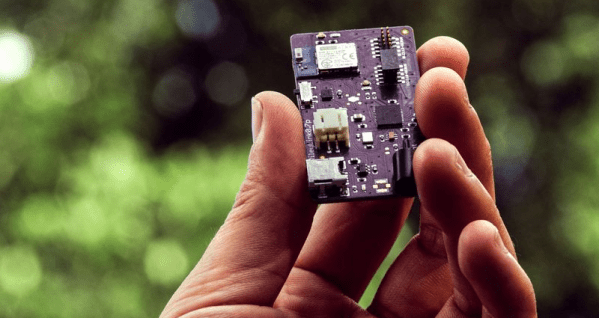
It is pretty unusual to be reading Bloomberg Businessweek and see an article with the main picture featuring a purple PCB (the picture above, in fact). But that’s just what we saw this morning. The story is about an open source modification to an insulin pump known as the RileyLink. This takes advantage of older Medtronic brand insulin pumps and allows you to control the BLE device from a smartphone remotely and use more sophisticated software to control blood sugar levels.

Of course, the FDA isn’t involved. If they were, the electronics would cost $7,000 instead of $250 — although, in fairness, that $250 doesn’t cover the cost of the used pump. Why it has to be a used pump is a rather interesting story. The only reason the RileyLink is possible is due to a security flaw and an active hacker community.

Continue reading “Homebrew Pancreas Gets 30 Minutes Of Fame”
Facebook Wants To Teach Machine Learning

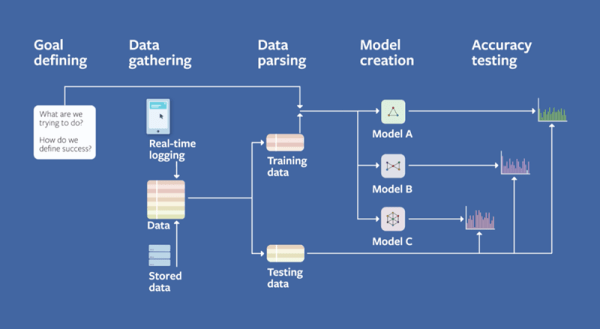
When you think of technical education about machine learning, Facebook might not be the company that pops into your head. However, the company uses machine learning, and they’ve rolled out a six-part video series that they say “shares best real-world practices and provides practical tips about how to apply machine-learning capabilities to real-world problems.”

The videos correspond to what they say are the six aspects of machine learning development:

  1. Problem definition
  2. Data
  3. Evaluation
  4. Features
  5. Model
  6. Experimentation

Continue reading “Facebook Wants To Teach Machine Learning”

Recorded Programming — Thanks To Bing Crosby

If you look up Bing Crosby in Wikipedia, the first thing you’ll notice is his real name was Harry. The second thing you’ll read, though, is that he is considered the first “multimedia star.” In 1948, half of the recorded music played on the air was by Bing Crosby. He also was a major motion picture star and a top-selling recording artist. However, while you might remember Bing for his songs like White Christmas, or for his orange juice commercials, or for accusations of poor treatment from his children, you probably don’t associate him with the use of magnetic tape.

In a way, Bing might have been akin to the Steve Jobs of the day. He didn’t power the technology for tape recording. But he did see the value of it, invested in it, and brought it to the market. Turns out Bing was quite the businessman. Want to know why he did all those Minute Maid commercials? He was a large shareholder in the company and was the west coast distributor for their products. He also owned part of the Pittsburgh Pirate baseball team and other businesses.

So how did Bing become instrumental in introducing magnetic tape recording? Because he was tired of doing live shows. You see, in 1936, Crosby became the host of a radio variety show, The Kraft Music Hall. This very popular program was live. That means you have to show up on time. If you go off on a tangent, you’ll run out of time. And if you make a mistake, there is no editing. Oh and one other thing. You have to do a nationwide live show twice: once for the east coast and another for the west. This was cutting into Bing’s “family time” which, as far as we can ascertain was a code phrase for golf.

Continue reading “Recorded Programming — Thanks To Bing Crosby”

FxSolver Is A Math Notebook For Engineers

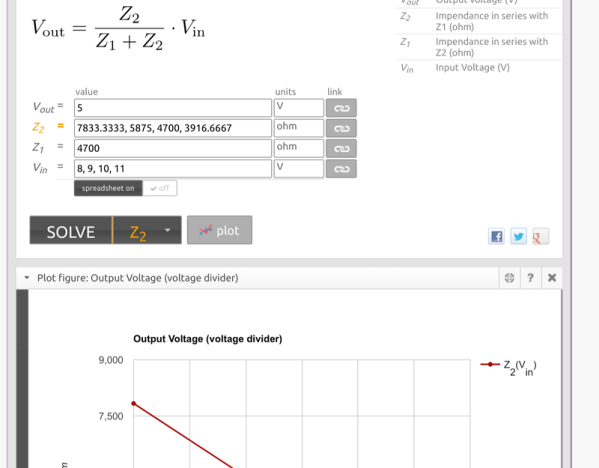
If you like to rely on the web to do your electronics and computer math, you’ll want to bookmark FxSolver. It has a wide collection of formulae from disciplines ranging from electronics, computer science, physics, chemistry, and mechanics. There are also the classic math formulations, too.

Continue reading “FxSolver Is A Math Notebook For Engineers”

Learn FPGA Fast With Hackaday’s FPGA Boot Camp

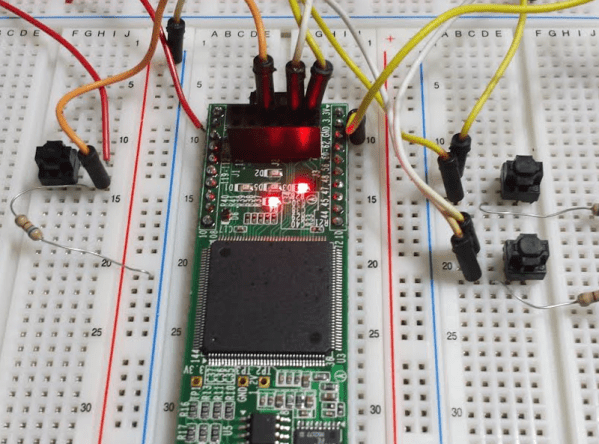
FPGAs have gone from being a niche product for people with big budgets to something that every electronics experimenter ought to have in their toolbox. I am always surprised at how many people I meet who tell me they are interested in using FPGAs but they haven’t started. If you’ve been looking for an easy way to get started with FPGAs, Hackaday’s FPGA boot camp is for you. There’s even a Hackaday.io chat in the group specifically for FPGA talk for questions and general discussion!

While it is true FPGAs aren’t for everything, when you need them you really need them. Using FPGAs you can build logic circuits — not software simulations, but real circuits — and reap major performance benefits compared to a CPU. For digital signal processing, neural networks, or computer vision applications, being able to do everything essentially in parallel is a great benefit. Sometimes you just need the raw speed of a few logic gates compared to a CPU plodding methodically through code. We expect to see a lot more FPGA activity now that Arduino is in the game.

These boot camps gather together some of the material you seen spread over many articles here before, plus new material to flesh it out. It’s designed for you to work through more like a training class than just some text to read. There’s plenty of screenshots and even animations to help you see what you are supposed to be doing. You’ll be able to work with simulations to see how the circuits we talk about work, make changes, and see the results. We’ll focus on Verilog — at least for now — as it is close to C and easier for people who know C to pick up. Still not convinced? Let’s run though the gist of the boot camp series.

Continue reading “Learn FPGA Fast With Hackaday’s FPGA Boot Camp”

Teardown Of A Fingerprint Padlock

We wouldn’t mind tearing down a fingerprint scanner, but we hate to bust up our expensive laptop or cell phone. [Julian], however, got a hold of a fingerprint scanning padlock and was willing to tear it apart for our benefit. The video appears below.

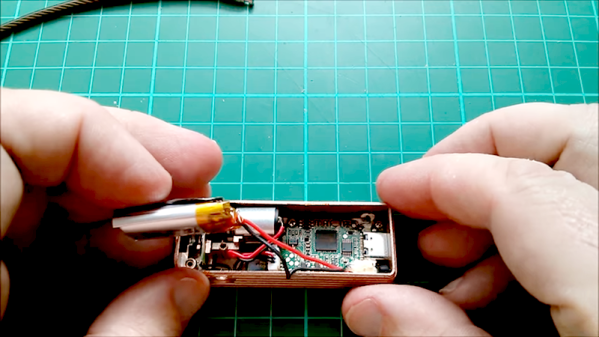
The padlock is a simple enough little device with a cable lock instead of a solid metal shackle, although we have seen similar devices with traditional shackles. Initially, the lock’s fingerprint storage is empty and it will open for any fingerprint. The first task is to set an administrator fingerprint. You’ll need that fingerprint to set up other fingerprints or to reset the unit. Of course, what we are really interested in is what’s inside.

Continue reading “Teardown Of A Fingerprint Padlock”

How Much Current Does That Thing Draw?

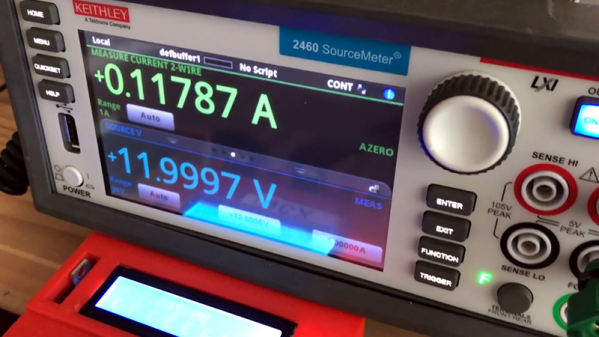
If you ask us how to measure the current draw from something, we’ll break a power lead and put a multimeter in series with the power supply. If that’s not handy, we’ve been known to take the fuse out of the power supply and replace it with the meter. Crude, but effective. But if you have about $8,000 sitting around, you could go grab a Keithley 2460 SourceMeter.

What’s a SourceMeter? Well, as far as we can tell it is a power supply with very accurate built-in current monitoring and a microprocessor that can display lots of interesting statistics and graphs. In all fairness, this looks like a souped up model, but they start at about half the price which is still a lot more than most hacker budgets.

Continue reading “How Much Current Does That Thing Draw?”